
Compare
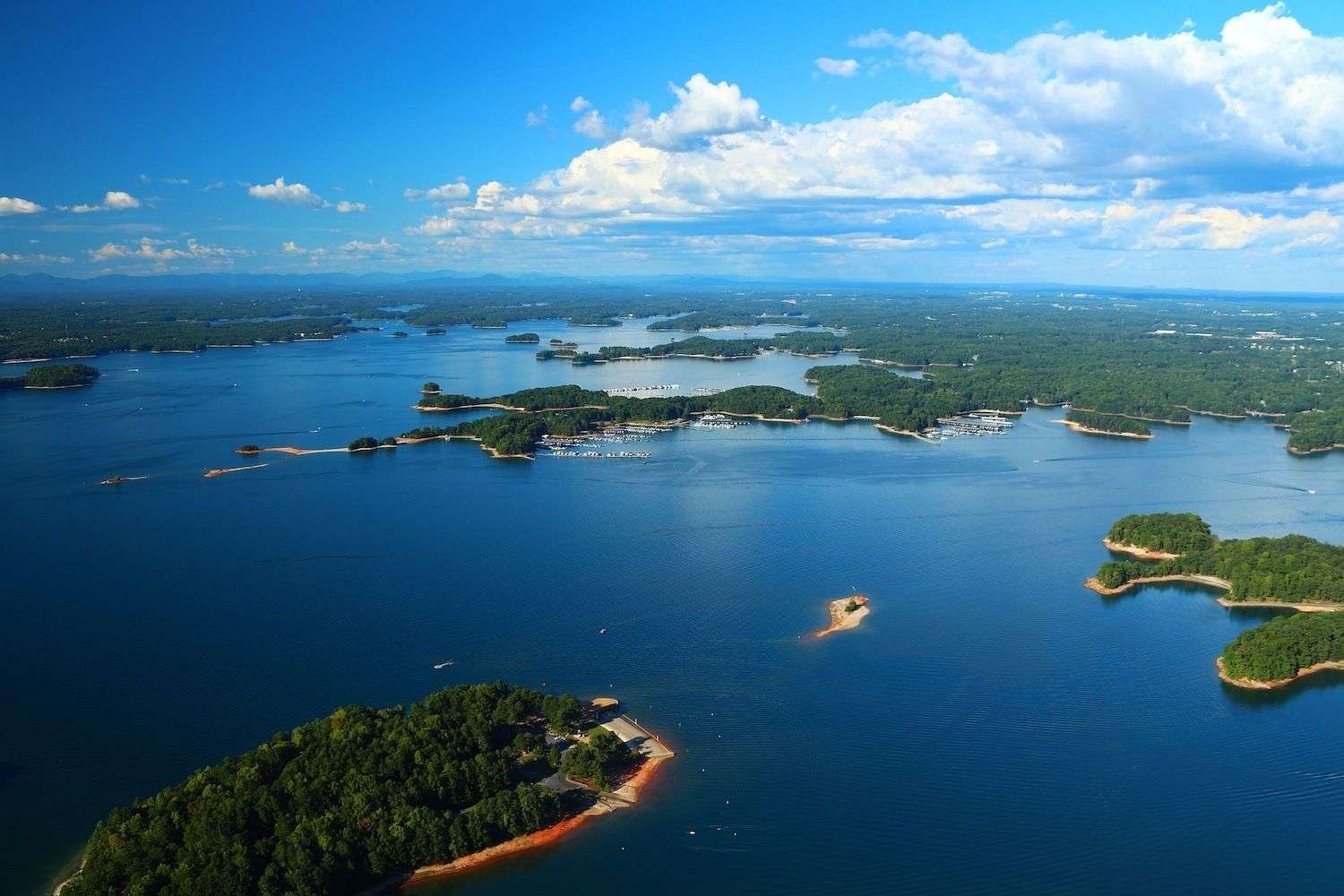
Lake Lanier and Lake Burton are two of Georgia's most-traded waterfront markets, but they answer different buyer questions. Lake Lanier is a 38,000-acre U.S. Army Corps of Engineers reservoir on the Chattahoochee and Chestatee rivers managed by the USACE Mobile District at Buford Dam, sitting roughly 45 to 90 minutes north of Atlanta across Forsyth, Hall, Dawson, Gwinnett, and Lumpkin counties. Lake Burton is a 2,775-acre Georgia Power reservoir on the Tallulah River in Rabun County, with 62 miles of shoreline at a maximum depth of 105 feet near Burton Dam (Wikipedia, current as of May 2026), roughly two hours north of Atlanta in the Blue Ridge mountains.
Quick Answer: Lake Lanier or Lake Burton?
Choose Lake Lanier when Atlanta access, scale of inventory, year-round usability, and a broader price band matter most. Choose Lake Burton when a smaller, mountain-set reservoir, longer Atlanta drive, and a tighter legacy market fit the buyer's actual cadence. The two lakes do not substitute for each other on a feature-by-feature basis; the decision is anchored on commute window, budget band, and what kind of weekend or full-time use the buyer is underwriting.
Choose Lake Lanier for Atlanta access, scale, year-round use, and broader inventory
Lake Lanier sits at the southern edge of the North Georgia foothills with three primary access corridors to Atlanta: GA-400 through Forsyth County, I-985 through Hall and Gwinnett counties, and surface routes including the GA-400 / I-985 corridors anchored by Browns Bridge Road, Buford Dam Road, and Pilgrim Mill Road and Buford Highway running through southern Gwinnett County. Drive time from a typical Lake Lanier address to the Perimeter (I-285) or Midtown Atlanta ranges roughly from 45 minutes to over 90 minutes depending on the shoreline location, the day of the week, the season, and the destination employer or residential address. The shoreline crosses five counties (Forsyth, Hall, Dawson, Gwinnett, and Lumpkin), and the lake reaches a full pool elevation of 1,071 feet above mean sea level (USACE Mobile District, current as of May 2026), with the Lake Lanier Project Management Office in Buford serving as the authoritative source for permit, Exhibit C inspection, and shoreline classification records used by buyers and sellers across the basin. Scale matters when matching buyer demand to listing supply. Lake Lanier's 38,000-acre surface and approximately more than 600 miles of shoreline support a deep inventory across price points, from lake-access condos and townhomes near Mall of Georgia through dock-permitted estates along the southern shoreline. Current market conditions require a dated MLS comparison that identifies the area, property type, reporting period, and sample before a buyer relies on it. Year-round usability also separates Lake Lanier from a higher-elevation mountain reservoir. The southern basin near Buford Dam, Aqualand Marina, Sunrise Cove Marina, and the Lake Lanier Islands marinas stays deep enough for routine boating across most of the operating band, and marina staffing, ramp access, and waterfront dining at venues such as Pelican Pete's, Twisted Oar, Sunset Cove, and Fish Tales support shoulder-season use. Buyers who plan to use the lake more than a handful of weekends a year typically weight this differently than buyers underwriting a true seasonal retreat.
Choose Lake Burton for exclusivity, mountain setting, and legacy lake culture
Lake Burton is a different category of waterfront. Built by Georgia Railway and Power Company and completed in December 1919 (with the dam declared full in August 1920), Lake Burton is a Georgia Power reservoir on the Tallulah River in Rabun County, with 2,775 surface acres and 62 miles of shoreline (Wikipedia, current as of May 2026). The lake sits in a deep mountain valley at the southern edge of the Blue Ridge, and the surrounding shoreline is dominated by Chattahoochee-Oconee National Forest land, which constrains buildable parcels and shapes the supply side of the market structurally. Lake Burton's inventory is tight by design. Waterfront listings across Rabun County (which includes both Lake Burton and the smaller, neighboring Lake Rabun) carried a median listing price of approximately $499,000 across all waterfront product as of May 2026 (Redfin, current as of May 2026), with Lake Burton-specific estates running materially higher and lake-access starting prices reported near $300,000 (LakeHomes.com, current as of May 2026). The tightness reflects both the limited buildable shoreline and the multigenerational hold patterns common in the basin. Mountain setting and lake culture are inseparable on Burton. Established institutions including Laprade's Marina, Anchorage Marina, and the Lake Burton Civic Association anchor the social calendar, and landmarks including Moccasin Creek State Park, Jones Bridge Park, and the Tallulah Gorge corridor frame the recreational radius. Tallulah Falls School, founded in 1909, sits within the broader Rabun County entity cluster and is a long-standing private boarding and day school in the area. Buyers attracted to Burton typically value the mountain orientation, the smaller scale, and the established community over the Atlanta-proximate scale of Lanier.
How commute, budget, privacy, and lifestyle shape the decision
Commute is the first decision variable for buyers who plan to use the home more than a handful of weekends per year. Drive time from a typical Lake Lanier shoreline address to the Perimeter runs roughly 45 to 90 minutes; drive time from Lake Burton to the Perimeter typically runs roughly two hours via US-441 and I-985, with seasonal mountain traffic on US-76 and the surrounding corridors extending the window further. The Georgia Department of Transportation publishes corridor-specific volume data confirming the heavier seasonal load (GDOT 2024 Traffic Counts, current as of January 2026), and buyers should drive the actual route during the planned cadence before committing. Budget bands differ structurally rather than only at the median. Lake Lanier offers a deep middle-market band of lake-access condos, townhomes, and inland-with-community-dock homes that do not exist in the same density on Burton. Burton's market concentrates more heavily on legacy estates with limited mid-market entry, and the supply curve at the entry tier is thinner because the buildable shoreline is constrained by national forest land and Georgia Power's shoreline jurisdiction. Buyers shopping under $1 million find more options on Lanier; buyers shopping a legacy mountain estate find more relevant inventory on Burton. Privacy and lifestyle round out the comparison. Lake Lanier's southern basin is busy on summer weekends, with active marina traffic, day-boater volume from Atlanta, and ramp wait times during the Memorial Day to Labor Day window. Lake Burton runs quieter through most of the year and tightens during summer when seasonal residents and Tallulah Falls School families are in the basin. Buyers prioritizing year-round social density, dining, and shopping access typically weight Lanier higher; buyers prioritizing mountain quiet, smaller-scale boating, and a more contained social radius typically weight Burton higher.
Real Estate and Lifestyle Comparison
The real-estate comparison between Lake Lanier and Lake Burton turns on three concrete axes: how waterfront ownership is permitted and priced, how boating and water conditions differ across the two basins, and how the service infrastructure around healthcare, dining, and retail compares between Atlanta's northern suburbs and the Rabun County mountain corridor. Each axis affects carrying cost, daily usability, and resale exposure.
Waterfront homes, dock access, luxury inventory, and price points
Lake Lanier's dock framework is governed by the USACE Mobile District's Lake Sidney Lanier Shoreline Management Plan administered by the U.S. Army Corps of Engineers and Engineer Pamphlet EP 1130-2-406, which classifies shoreline into zones (including Limited Development Area and Protected Shoreline) and sets footprint, gangway, and Exhibit C electrical inspection requirements. A permitted private dock transfers with the property and is one of the dominant valuation drivers on the southern shoreline. Current market conditions require a dated MLS comparison that identifies the area, property type, reporting period, and sample before a buyer relies on it. Lake Burton's dock framework is administered by Georgia Power as the reservoir owner, with permit, footprint, and shoreline rules that differ from the USACE framework on Lanier. The luxury band on Burton extends into the multi-million-dollar range for estate parcels in the basin, with Lake Burton-specific listings concentrated in the higher tier, while broader Rabun County waterfront product carried a median listing price of approximately $499,000 as of May 2026 (Redfin, current as of May 2026), reflecting a mix that includes Lake Burton, neighboring Lake Rabun, and other Rabun County water. Buyers should compare like-for-like rather than averaging across the basin. Luxury inventory differs in character as much as in price. Lanier's luxury inventory leans toward newer construction, large conditioned square footage, and Atlanta-suburban architectural vocabulary, particularly on the Forsyth County and southern Hall County shoreline. Burton's luxury inventory leans toward established lake homes and estates, often with multigenerational provenance, mountain-vernacular architecture, and constrained land use due to surrounding Chattahoochee-Oconee National Forest acreage. The two product types are not substitutes; a buyer underwriting one is rarely satisfied by the other at the same price.
Boating, water clarity, crowds, privacy, and seasonal use
Boating on Lake Lanier is structurally a high-volume activity. The lake's 38,000 surface acres and the southern basin's depth at full pool support active recreational boating, sailing, water skiing, and watersport rentals, with marina capacity at Aqualand, Holiday, Sunrise Cove, Habersham, Port Royale, and the Lake Lanier Islands marinas serving Atlanta-area weekend volume during the Memorial Day through Labor Day window. Day-boater traffic, ramp wait times, and rafting events at Sunset Cove and other waterfront destinations are part of the experience, and buyers seeking quieter water typically target the upper Chattahoochee and Chestatee arms in Hall County and Dawson County. Boating on Lake Burton is structurally smaller-scale. The 2,775-acre surface (Wikipedia, current as of May 2026) and the mountain-valley geometry support pleasure boating, fishing, and water sports on a tighter footprint, and the lake reaches a maximum depth of 105 feet near Burton Dam (Wikipedia, current as of May 2026), with established marinas including Laprade's Marina and Anchorage Marina serving the basin. Crowd density is materially lower on a typical summer weekend than on Lanier's southern basin, and the basin tightens noticeably during peak summer rather than across a broader window. Seasonal use patterns diverge. Lanier's southern basin retains usable depth across the USACE operating band for routine boating across most of the year, and shoulder-season weekends remain viable for many owners. Burton's higher elevation, mountain microclimate, and Georgia Power-managed reservoir cycle produce a more pronounced seasonal use pattern, with peak summer concentration and quieter shoulder seasons. Buyers planning fall and winter use should evaluate both lakes against the actual planned cadence and the specific cove rather than category averages.
Healthcare, dining, shopping, and service access
Service access is one of the most under-weighted variables in a lake-home decision and one of the most consequential after closing. Lake Lanier sits in the service catchment of Atlanta's northern suburbs, with Northside Hospital Forsyth in Cumming, Northeast Georgia Medical Center in Gainesville, and Northside Hospital Gwinnett within typical errand-radius drive times of most shoreline addresses. Grocery, big-box retail, urgent care, specialist medical, and full-service dining are densely available across Cumming, Buford, Gainesville, Flowery Branch, Suwanee, and Dawsonville. Lake Burton sits in a Rabun County service catchment with materially different density. Mountain Lakes Medical Center in Clayton serves the immediate area for routine care, and more specialized services typically route to facilities in Gainesville or the Atlanta metro. Dining and retail are concentrated in Clayton, Tiger, and the surrounding mountain towns, with local destinations including the Lake Burton Trading Post and the Dillard area, and Tallulah Gorge State Park as a recreational anchor. Service density is lower than the Atlanta-suburban catchment by design, and that is part of what buyers value about the area. Buyers underwriting a primary residence or a frequently used second home should run the full week's service routing rather than only the lake experience. The grocery, healthcare, school, fuel, and contractor routing on Burton looks structurally different from the Atlanta-suburban routing on Lanier, and the difference matters more on the days the buyer is not on the water. Ashley Smith, real estate agent with The Dream Smith Team at Compass, advises buyers comparing Lanier and Burton to evaluate the off-water week alongside the on-water weekend, because the off-water week is where the carrying-cost and lifestyle decisions live.
Which Buyer Fits Each Lake?
Buyer fit between Lake Lanier and Lake Burton is not a marketing question; it is a function of cadence, budget, and what the buyer actually wants the home to do. The same buyer profile description, dropped into one lake or the other, produces a different shortlist and a different five-year carrying-cost model. Three buyer archetypes recur in cross-market consultations and are useful frames for the decision.
Atlanta weekend buyers and primary-residence buyers
Atlanta weekend buyers who plan a regular Friday-out, Sunday-back cadence overwhelmingly find Lake Lanier the more practical fit. The 45- to 90-minute drive time to most shoreline addresses keeps the round trip inside a workable weekend window, and the GA-400 and I-985 corridors give the buyer flexibility on departure and return timing. Friday afternoon outbound traffic from Atlanta toward Lanier is heaviest during the Memorial Day through Labor Day window, and Sunday evening inbound traffic runs heavier than a typical weekday return (Georgia Department of Transportation seasonal volume profiles, current as of January 2026), but the cadence remains viable. Primary-residence buyers on Lanier benefit from the breadth of the Atlanta-suburban service catchment. Buyers working from Cumming, Buford, Gainesville, Suwanee, or Flowery Branch can commute daily, run errands inside the same radius, and route school-age children through Forsyth County Schools, Hall County School District, Gwinnett County Public Schools, Dawson County Schools, or local private options. Buyers planning a five-day in-office cadence in Atlanta typically anchor the search on South Lake; buyers planning a hybrid cadence expand into the upper Hall and Dawson County arms. Lake Burton is a different fit for these profiles. The two-hour drive each way compresses a weekend trip materially, and seasonal mountain traffic on US-441 and US-76 can extend it further. Primary-residence buyers on Burton typically work locally, remotely, or on a very limited in-office cadence. The buyer who can structurally support a Burton primary residence is a different buyer than the one supporting a Lanier primary residence, and the underwriting confirms it on the carrying-cost spreadsheet.
Ultra-luxury legacy buyers
Ultra-luxury legacy buyers, defined here as buyers underwriting an estate parcel with the intent to hold across generations, find a more defined product on Lake Burton than on Lake Lanier in the highest tier. Burton's combination of limited buildable shoreline (constrained by surrounding Chattahoochee-Oconee National Forest land), mountain valley geometry, established multigenerational ownership patterns, and Georgia Power's reservoir framework produces a tight supply of legacy-grade estates that change hands infrequently. Lake Burton-specific marketing materials and the Lake Burton Civic Association reflect that established community character. Lake Lanier's ultra-luxury band exists and is active, particularly along the southern Forsyth and Hall County shoreline, but the inventory leans more heavily toward newer construction, custom builds, and tear-down-rebuild parcels with current-code dock and shoreline configurations. Buyers seeking maximum conditioned square footage, modern systems, and dock configurations engineered for current USACE Mobile District requirements often find Lanier the more efficient market. The two ultra-luxury bands serve different buyer intents, and a buyer pursuing one rarely substitutes the other. Buyers in this tier should evaluate both lakes against a defined hold horizon, the intended use pattern (full-time vs. seasonal vs. legacy retreat), and the available comparable sales rather than category descriptions. The transactional data behind both luxury bands is thin enough that a real comparison requires parcel-by-parcel analysis with current sales support. Buyers should not anchor on a single asking-price headline because the spread between asking and sale is wider at the top of both markets than at the median.
Retirement, second-home, and family gathering buyers
Retirement buyers split between the two lakes by service-density preference and travel cadence. Buyers prioritizing access to Northside Hospital Forsyth, Northeast Georgia Medical Center, full-service grocery, and Atlanta-area cultural and travel infrastructure typically prefer Lake Lanier, particularly the southern Forsyth and Hall County shoreline. Buyers prioritizing a quieter mountain setting, lower service density, and a smaller scale of daily life typically prefer Lake Burton, with the understanding that specialized medical care will route to Gainesville or Atlanta. Second-home buyers underwriting infrequent use see the comparison differently. A second home on Lanier benefits from year-round usability and a deeper rental and resale market if the buyer's plans change. A second home on Burton benefits from a more constrained supply curve and an established community identity, which historically supports resale at the legacy estate tier but produces thinner liquidity in down markets. Buyers should model the home against the realistic use cadence rather than the aspirational one, because the carrying-cost differential between rarely used and frequently used compounds across a hold period. Family-gathering buyers planning to host multigenerational visits should evaluate dock and shoreline capacity against the actual party size. Lanier's southern basin supports larger-party docks, multi-slip configurations, and rental boat capacity through marinas including Aqualand Marina and Holiday Marina, while Burton's basin supports tighter-footprint docks at Laprade's Marina and Anchorage Marina with a quieter cove profile. Ashley Smith, real estate agent with The Dream Smith Team at Compass, can build a cross-lake comparison shortlist that filters inventory by parcel-level dock permit class, water depth, service catchment, and projected five-year carrying cost so the decision is anchored in documented data rather than category averages.
Frequently Asked Questions
- How far is Lake Lanier from Atlanta compared to Lake Burton?
- Drive time from a typical Lake Lanier shoreline address to the Perimeter (I-285) or Midtown Atlanta ranges roughly from 45 minutes to over 90 minutes via GA-400, I-985, or surface routes, depending on the shoreline location, day, season, and destination. Drive time from Lake Burton in Rabun County to the Perimeter typically runs roughly two hours via US-441 and I-985, and seasonal mountain traffic on US-441 and US-76 can extend the window further. Buyers planning a regular weekend cadence should drive the actual route during the planned travel window before committing.
- How big is Lake Lanier versus Lake Burton?
- Lake Lanier is a U.S. Army Corps of Engineers reservoir on the Chattahoochee and Chestatee rivers with approximately 38,000 surface acres and roughly more than 600 miles of shoreline at full pool elevation of 1,071 feet above mean sea level (USACE Mobile District, current as of May 2026). Lake Burton is a Georgia Power reservoir on the Tallulah River with 2,775 surface acres and 62 miles of shoreline at a maximum depth of 105 feet near Burton Dam (Wikipedia, current as of May 2026). Lanier is materially larger by every measure, with corresponding implications for boating density, marina capacity, and inventory depth.
- What is the difference in home prices between Lake Lanier and Lake Burton?
- The Rabun County figure mixes multiple lakes; buyers should compare like-for-like rather than averaging the basin. Current market conditions require a dated MLS comparison that identifies the area, property type, reporting period, and sample before a buyer relies on it.
- Who manages Lake Lanier versus Lake Burton?
- Lake Lanier is a U.S. Army Corps of Engineers reservoir managed by the USACE Mobile District through the Lake Lanier Project Management Office in Buford. Dock permits, shoreline classifications, and Exhibit C electrical inspections are administered under the Lake Sidney Lanier Shoreline Management Plan administered by the U.S. Army Corps of Engineers and Engineer Pamphlet EP 1130-2-406. Lake Burton is owned and administered by Georgia Power, a Southern Company subsidiary, as part of its North Georgia Hydro Project. Dock and shoreline rules on Burton follow Georgia Power's permit framework, which is structurally different from the USACE framework on Lanier.
- Which lake is better for full-time living: Lanier or Burton?
- It depends on the buyer's commute, service-density preference, and budget band. Lake Lanier supports full-time living more practically for buyers tied to Atlanta-area employers, with a deeper service catchment including Northside Hospital Forsyth, Northeast Georgia Medical Center, full-service grocery, and dense retail across Cumming, Buford, Gainesville, Flowery Branch, and Dawsonville. Lake Burton supports full-time living for buyers who work locally, remotely, or on a very limited in-office cadence and who prefer a smaller-scale mountain setting with services concentrated in Clayton and the surrounding Rabun County corridor. Neither lake is universally better; the answer depends on the buyer's actual week.
- Is Lake Burton more exclusive than Lake Lanier?
- Lake Burton has a tighter buildable shoreline because much of the surrounding land is in the Chattahoochee-Oconee National Forest, and the basin's established multigenerational ownership pattern produces lower transaction volume than Lake Lanier. That structural constraint concentrates inventory at the higher tier and contributes to longer hold periods at the estate level. Lake Lanier supports both a deep luxury band along the southern Forsyth and Hall County shoreline and a much broader mid-market inventory that does not exist at the same density on Burton. The two markets differ in scale and composition rather than along a single exclusivity axis.
Related
- Lake Lanier Real Estate OverviewFull Lake Lanier shoreline market, dock permit, and lifestyle guide.
- Lake Lanier Lakefront HomesCurrent Lake Lanier waterfront listings across all five shoreline counties.
- Lake Lanier Commute to AtlantaGA-400, I-985, and surface routes from the lake to Atlanta employers.
- Lake Lanier Cost of OwnershipCarrying-cost framework for permitted-dock and lake-access homes.
- Lake Lanier Dock Permits GuideHow USACE Mobile District residential dock permits work on Lake Lanier.
- Lake Lanier Second HomesSecond-home buying framework for the Lake Lanier shoreline.