DreamSmith Realty

Living in Roswell

Real estate, schools, the Historic Roswell district, and the neighborhoods that anchor north Fulton County.

Roswell is a north Fulton County city of roughly 95,000 residents, organized around a preserved antebellum downtown along Canton Street and a Chattahoochee River frontage that forms its southern boundary. People live here for a specific combination of conditions: a walkable historic core with restaurants and retail in 19th-century storefronts, residential neighborhoods served by Fulton County Schools, direct access to GA-400 for the Atlanta commute, and a riverside trail network that connects to the Chattahoochee River National Recreation Area. The housing inventory ranges from antebellum cottages inside the historic district to 1970s–1980s subdivisions west of GA-400 and new construction east of it.

History

From mill town to north metro anchor

Roswell was chartered in 1854, but its founding identity took shape two decades earlier when Roswell King relocated from coastal Georgia and established the Roswell Manufacturing Company along Vickery Creek in 1839. The mill harnessed the creek's fall line to power cotton and woolen production, and the families King brought with him — the Bullochs, the Smiths, the Dunwodys, the Pratts, and others — built the antebellum homes that still stand inside the historic district today.

The Civil War interrupted that arc. In July 1864 Union forces under General Kenner Garrard burned the Roswell mills and forcibly relocated roughly 400 mill workers, most of them women, north to Indiana, an event still marked locally as the Roswell Mill Women incident. The mill buildings were rebuilt after the war and operated into the 20th century. The original mill ruins along Vickery Creek and the surviving antebellum homes — Bulloch Hall (1839), the Smith Plantation (1845), and Barrington Hall (1842) — anchor the present-day Historic Roswell district.

Through the second half of the 20th century, Roswell shifted from a small mill town to a residential anchor of north metro Atlanta. The completion of GA-400 in the 1970s and the rapid expansion of Fulton County north of the Perimeter pulled population growth into Roswell's western neighborhoods, while preservation ordinances enacted in the 1970s and 1980s protected the antebellum core. Canton Street's transition from a quiet town center to a restaurant and retail destination came later, in the early 2000s.

Housing Market

What the Roswell market looks like today

The Roswell residential market splits cleanly into three pricing tiers shaped by location relative to GA-400 and the historic district. The citywide median sale price for single-family homes was approximately $710,000 as of April 2026 (Redfin, ZIP codes 30075, 30076, and 30077), up roughly 3.1 percent year over year over the same period. Homes inside the Historic Roswell district and along the Chattahoochee River corridor closed at a median near $895,000, while the older 1970s–1980s subdivisions west of GA-400 — Willow Springs, Steeplechase, Litchfield Hundred, Brookfield West — cleared at a median near $625,000. Days on market averaged 38 days citywide in Q1 2026, with historic district listings often clearing in under three weeks. Inventory averaged 2.1 months of supply across all tiers (Redfin, April 2026), still a seller-leaning balance by historical norms for this market.

The dynamics behind those numbers matter more than the medians alone. A lot inside the Historic Roswell preservation overlay carries renovation restrictions that affect both cost basis and exit value, and buyers either accept that tradeoff for walkability to Canton Street or shop a few streets outside the line. School-attendance boundaries do similar work in the western neighborhoods. For a current snapshot of available inventory, the Roswell listings page and the monthly market reports track these tiers in detail.

Schools

Schools serving Roswell neighborhoods

Roswell is served by Fulton County Schools across all grade levels. Attendance boundaries follow the underlying parcel and split primarily between the Roswell High School and Centennial High School feeder patterns, with Crabapple Middle School and Holcomb Bridge Middle School as the two most common middle-school assignments. Two homes within sight of each other on Holcomb Bridge Road can sit in different feeders, so buyers routinely walk a property with the Fulton County Schools attendance map open on a phone.

  • Roswell High School — Fulton County Schools, grades 9–12. GreatSchools rating of 7/10 as of January 2026 (source: GreatSchools.org).
  • Centennial High School — Fulton County Schools, grades 9–12. GreatSchools rating of 7/10 as of January 2026 (source: GreatSchools.org).
  • Crabapple Middle School — Fulton County Schools, grades 6–8. GreatSchools rating of 6/10 as of January 2026 (source: GreatSchools.org).
  • Holcomb Bridge Middle School — Fulton County Schools, grades 6–8. GreatSchools rating of 7/10 as of January 2026 (source: GreatSchools.org).
  • Mountain Park Elementary School — Fulton County Schools, grades K–5. GreatSchools rating of 8/10 as of January 2026 (source: GreatSchools.org).
  • Sweet Apple Elementary School — Fulton County Schools, grades K–5. GreatSchools rating of 9/10 as of January 2026 (source: GreatSchools.org). The Sweet Apple attendance zone overlaps a watched corridor of newer residential construction in west Roswell.

Lifestyle

Neighborhood character in Roswell

Daily life in Roswell is organized around two poles: the Canton Street commercial district inside Historic Roswell, and the Chattahoochee River trail system along the southern boundary. Weekday mornings move quickly because the residential population skews commuter-into-Atlanta, with GA-400 carrying traffic south by 7:30 a.m. Weekends shift the city's center of gravity north to Canton Street restaurants and east to Riverside Park and the Vickery Creek trails behind the Roswell Mill ruins. The Big Creek Greenway and the Chattahoochee River National Recreation Area frame the city's outdoor identity.

Walking Roswell neighborhoods, what stands out is how sharply pricing turns on the GA-400 line. Lots east of the highway, closer to the historic district and the river, carry a clear premium over lots in the western 1970s–1980s subdivisions, even at comparable square footage. School-boundary effects do the same work: the Roswell High and Centennial High feeders split a recognizable corridor along Holcomb Bridge Road, and homes a few hundred feet on either side trade differently. Listings inside the Canton Street preservation overlay tighten between February and May as buyers tour with the school-year cycle in mind, then soften through the late summer.

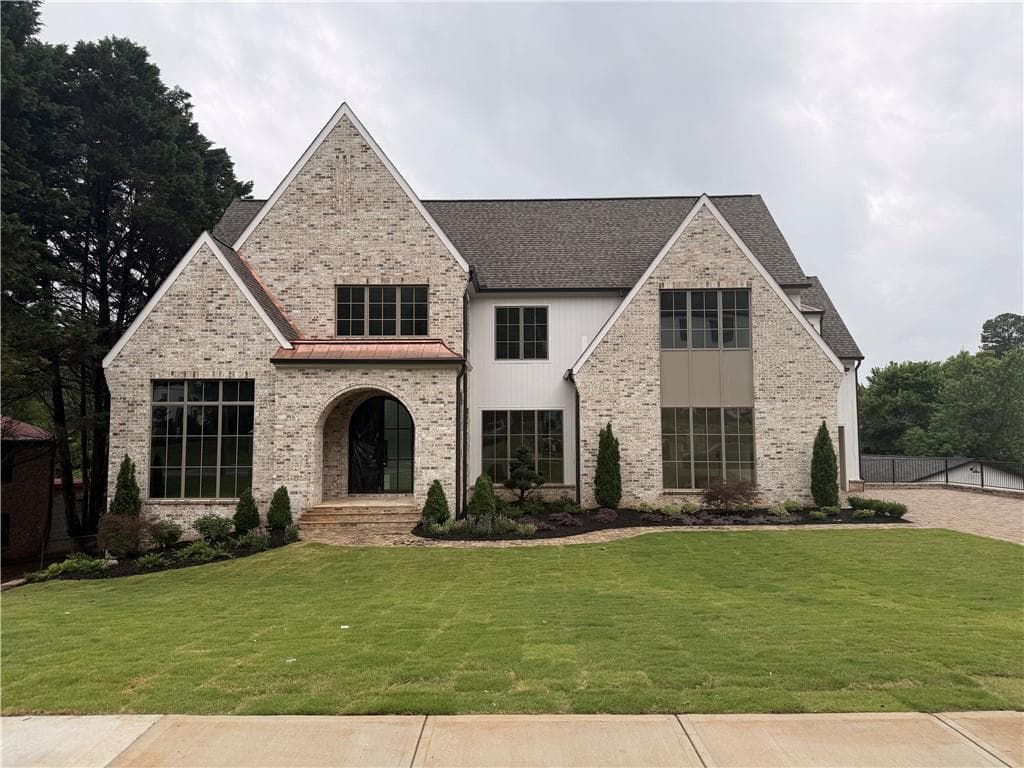
Single-family home on Thomas Circle in the downtown Roswell subdivision in Roswell, GA

Architecture

Architecture and the built environment

The Roswell housing stock is layered across roughly 180 years of construction. The Historic Roswell district holds the oldest inventory — Bulloch Hall, Barrington Hall, the Smith Plantation, and a corridor of antebellum cottages from the 1840s and 1850s, many of which carry the Historic Roswell preservation overlay that governs exterior renovations and additions. West of GA-400, the dominant inventory is 1970s and 1980s traditional and split-level construction in subdivisions like Willow Springs, Steeplechase, Litchfield Hundred, and Brookfield West, generally on half-acre to three-quarter-acre lots with mature tree canopy.

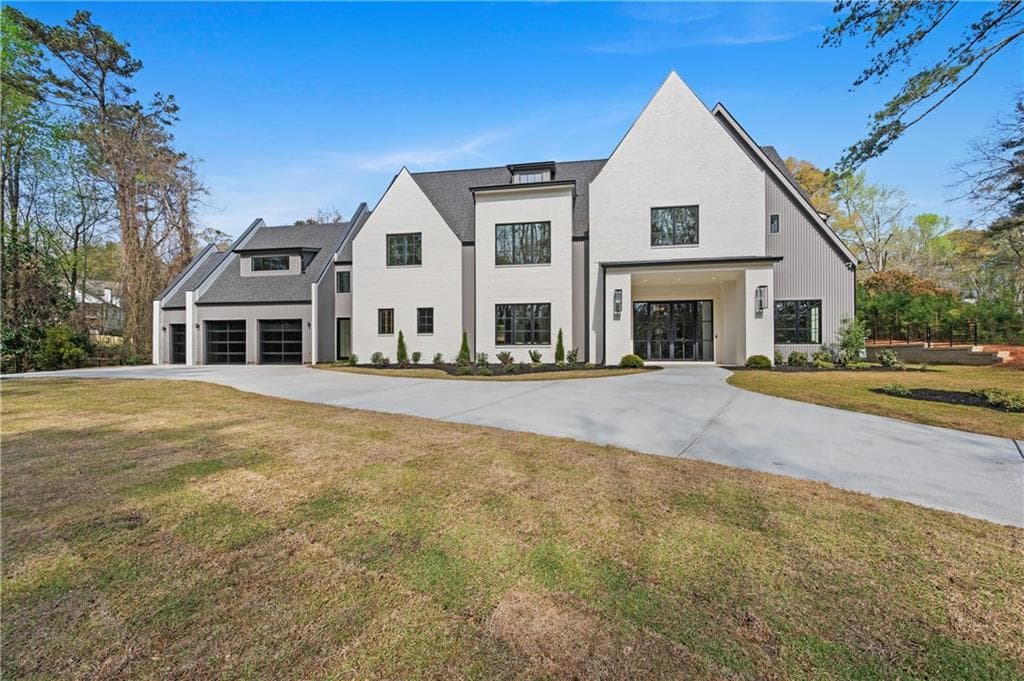
East of GA-400 and north along Crabapple Road, the inventory shifts toward 2000s and newer construction in neighborhoods such as Crooked Creek and the Country Club of Roswell, with brick-front traditional and transitional-style homes on smaller lots. The Preserve at Historic Roswell and the Roswell Farms corridor sit between those two zones with newer infill construction on streets that draw from the historic district's walkability. Current new construction across Roswell follows a predictable program of primary-floor-living layouts, finished terrace levels, and screened outdoor living space.

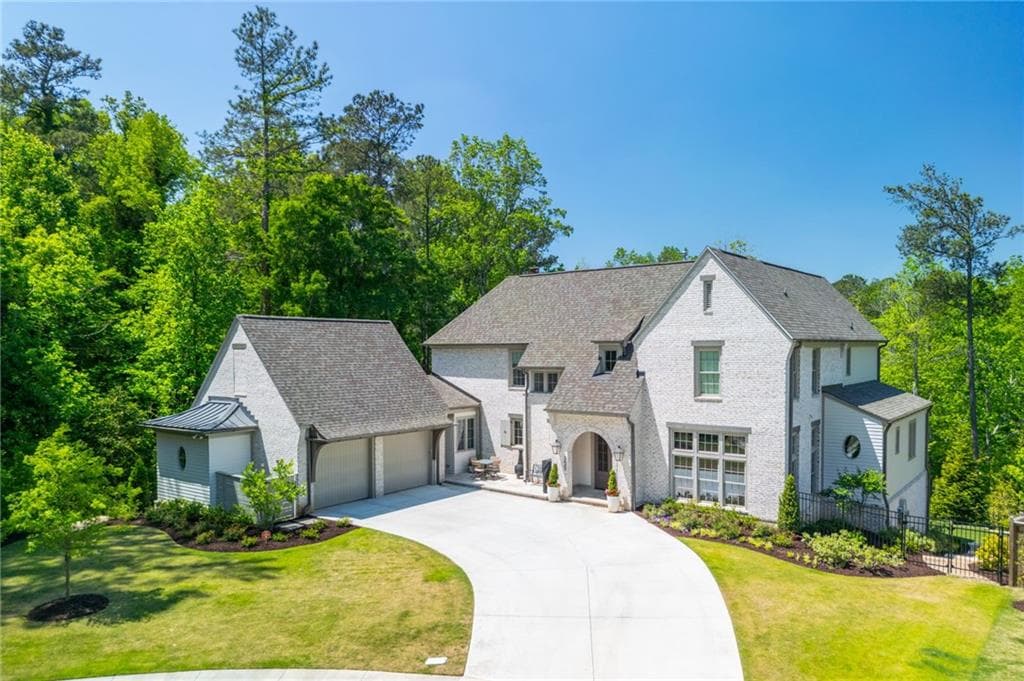
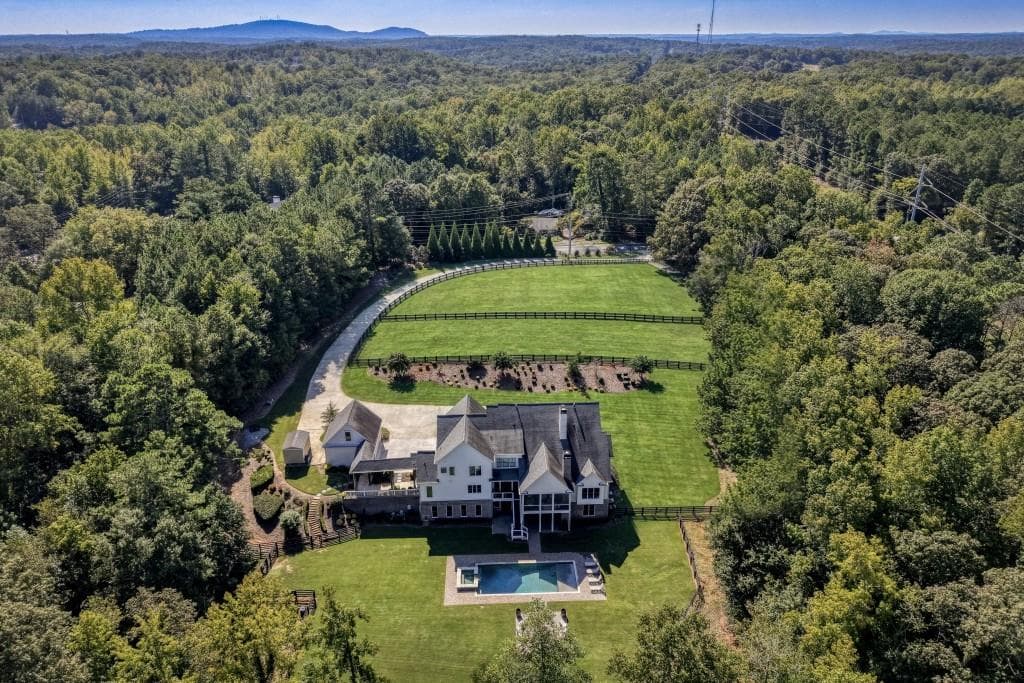
Front facade of a home in the Preserve at Historic Roswell in Roswell, GASingle-family home along Arnold Mill Road in Roswell, GA

Commute & Connectivity

Getting to and from Roswell

Roswell sits roughly 20 miles north of downtown Atlanta. GA-400 is the dominant commute corridor, with Holcomb Bridge Road (exit 7) and Northridge Road (exit 6) serving as the two primary entry points for Roswell residents heading south to Sandy Springs, the Perimeter (I-285), Buckhead, and Midtown Atlanta. Roswell Road (GA-9) runs north-south as the historic surface-street alternative, connecting Canton Street through Sandy Springs into Buckhead.

Inside the city, Holcomb Bridge Road, Crossville Road, Crabapple Road, Arnold Mill Road, and Hardscrabble Road act as the practical connectors between the historic district, the western subdivisions, and the eastern newer construction. The nearest MARTA heavy-rail station is North Springs in Sandy Springs, roughly 7 miles south of Canton Street, which functions as the standard park-and-ride into downtown Atlanta and to Hartsfield-Jackson Atlanta International Airport. Off-peak drive time from Roswell to the airport runs about 45 minutes; rush hour pushes that closer to 90 minutes.

Adjacent Communities

Where Roswell meets the rest of north Fulton

Roswell borders several distinct municipal markets along its northern, western, and southern edges. Each has its own commercial core, school-feeder feel, and price band, and buyers frequently shortlist across more than one before choosing.

Alpharetta

North-side corridor along GA-400 with Avalon, downtown Alpharetta, and the tech employment base at North Point.

Alpharetta Guide →

Milton

Northwest neighbor with equestrian estates, larger acreage lots, and the Crabapple crossroads district.

Milton Guide →

Sandy Springs

Southern neighbor on the inside of the Perimeter, served by North Springs MARTA and the Roswell Road corridor.

Guide in progress

Johns Creek

Eastern neighbor across the Chattahoochee with country-club neighborhoods and the State Bridge Road corridor.

Guide in progress

Browsing more broadly? Start from the Home Search hub for every covered area.

Frequently Asked

Roswell questions buyers and sellers ask

What is the average home price in Roswell, Georgia?

The median sale price for single-family homes in Roswell was approximately $710,000 as of April 2026, based on Redfin market reporting for ZIP codes 30075, 30076, and 30077. Year over year the median was up roughly 3.1 percent over the same period (Redfin, April 2026). Pricing inside the Historic Roswell district and along the Chattahoochee River corridor runs noticeably above the citywide median, while the older 1970s–1980s subdivisions west of GA-400 generally close beneath it.

What schools serve Roswell neighborhoods?

Roswell is served by Fulton County Schools, with attendance split primarily between Roswell High School and Centennial High School depending on the underlying parcel. Common feeder middle schools include Crabapple Middle School and Holcomb Bridge Middle School, with Mountain Park Elementary and Sweet Apple Elementary among the elementaries that draw the most buyer interest. Two homes on opposite sides of Holcomb Bridge Road can sit in entirely different feeder patterns, which is why buyers tour with an attendance-zone map open.

How long do homes stay on the market in Roswell?

Roswell single-family listings averaged 38 days on market in Q1 2026, per Redfin data pulled in April 2026. Properties inside the Historic Roswell district and walkable to Canton Street tend to transact faster than the citywide average, often clearing in under three weeks when priced at market. Listings posted between February and May consistently move quicker than fall and winter listings as the school-year buyer cycle drives activity.

What defines the Historic Roswell district?

Historic Roswell is the antebellum core of the city, anchored by Canton Street, Bulloch Hall, the Smith Plantation, and the Roswell Mill ruins along Vickery Creek. The district is protected by a local historic preservation ordinance that governs exterior renovations, additions, and new construction within its boundaries. Walkability to Canton Street restaurants and the Riverside Park trail system is the primary driver of premium pricing on lots inside the district line.

How is the commute from Roswell to Atlanta?

Roswell sits roughly 20 miles north of downtown Atlanta with GA-400 as the primary commute corridor, accessed via Holcomb Bridge Road and Northridge Road. Off-peak drive time to Midtown Atlanta runs about 30 minutes; rush hour can stretch that to 60 to 75 minutes southbound in the morning. The nearest MARTA heavy-rail station is North Springs in Sandy Springs, roughly 7 miles south, which many Roswell residents use as a park-and-ride into downtown.

Which landmarks define Roswell?

Canton Street is the commercial spine of Historic Roswell with restaurants and retail occupying preserved 19th-century storefronts. Bulloch Hall and the Smith Plantation are the two most-visited antebellum homes, both open as house museums. The Roswell Mill ruins, Vickery Creek Falls, and the Chattahoochee River National Recreation Area form a connected trail system, and the Big Creek Greenway north section provides paved access toward Alpharetta.

About Your Agent

Ashley Smith

REALTOR®  |  Georgia License #407881

Keller Williams Realty Atlanta Partners  |  Keller Williams Luxury Atlanta Partners

Ashley Smith is a licensed Georgia REALTOR® (license #407881) representing buyers and sellers across Roswell, Fulton County, and the north metro Atlanta corridor. Office address: 3840 Browns Bridge Rd, Cumming, GA 30041. To learn more about the brokerage and team, visit DreamSmith Realty or read the seller representation overview.

Start the Conversation

Looking at Roswell?

Browse current inventory, schedule a private tour, or ask a question about a specific neighborhood, school zone, or the Historic Roswell preservation overlay. We respond the same day.

Ashley Smith  |  (678) 485-8858  |  ashley@dreamsmithrealty.com