
Buyer Guide
A Lake Lanier second home is a non-primary residence on Lake Sidney Lanier, the U.S. Army Corps of Engineers reservoir north of Atlanta, used as a weekend retreat, seasonal getaway, or family-gathering property by households whose primary residence sits in Atlanta, Buckhead, Brookhaven, Sandy Springs, Alpharetta, or other metro neighborhoods. The category spans waterfront lake houses, lock-and-leave lake-access homes, and condos near marinas across Forsyth County, Hall County, Gwinnett County, Dawson County, and Lumpkin County. Drive times from Atlanta neighborhoods run roughly 45 to 90 minutes depending on origin, route, and traffic on GA-400 or I-985. Use profile, not just price, drives the right second-home choice.
Why Atlanta Buyers Choose Lake Lanier Second Homes
Atlanta households choose Lake Lanier as a second-home market because the lake is the closest large recreational reservoir to the metro and is reachable without flying, ferrying, or crossing a state line. The drive radius pulls owners from Buckhead, Brookhaven, Sandy Springs, Dunwoody, Alpharetta, Milton, and intown Atlanta, and the use-profile of each owner shapes both the property type and the cove they end up in.
Weekend escape without flying
A Lake Lanier second home is a non-primary residence on the U.S. Army Corps of Engineers reservoir north of Atlanta, typically used by Atlanta-area households for weekend, seasonal, or family-gathering trips. Drive times from Atlanta neighborhoods cluster between 45 and 90 minutes depending on origin and traffic: Buckhead and Brookhaven owners typically run 60 to 80 minutes up GA-400 to south Forsyth County exits; Alpharetta and Milton owners often clear the south shoreline in 35 to 55 minutes; Sandy Springs and Dunwoody owners usually plan 55 to 75 minutes; intown Midtown and Virginia-Highland owners commonly plan 70 to 95 minutes, with Friday-evening departures running longer. Lake Lanier second homes sit across Forsyth County, Hall County, Gwinnett County, Dawson County, and Lumpkin County, and the county of record affects taxes, septic permitting, short-term-rental rules, and school zoning even when the home is rarely occupied during the school week.
Boating, outdoor living, and family gathering space
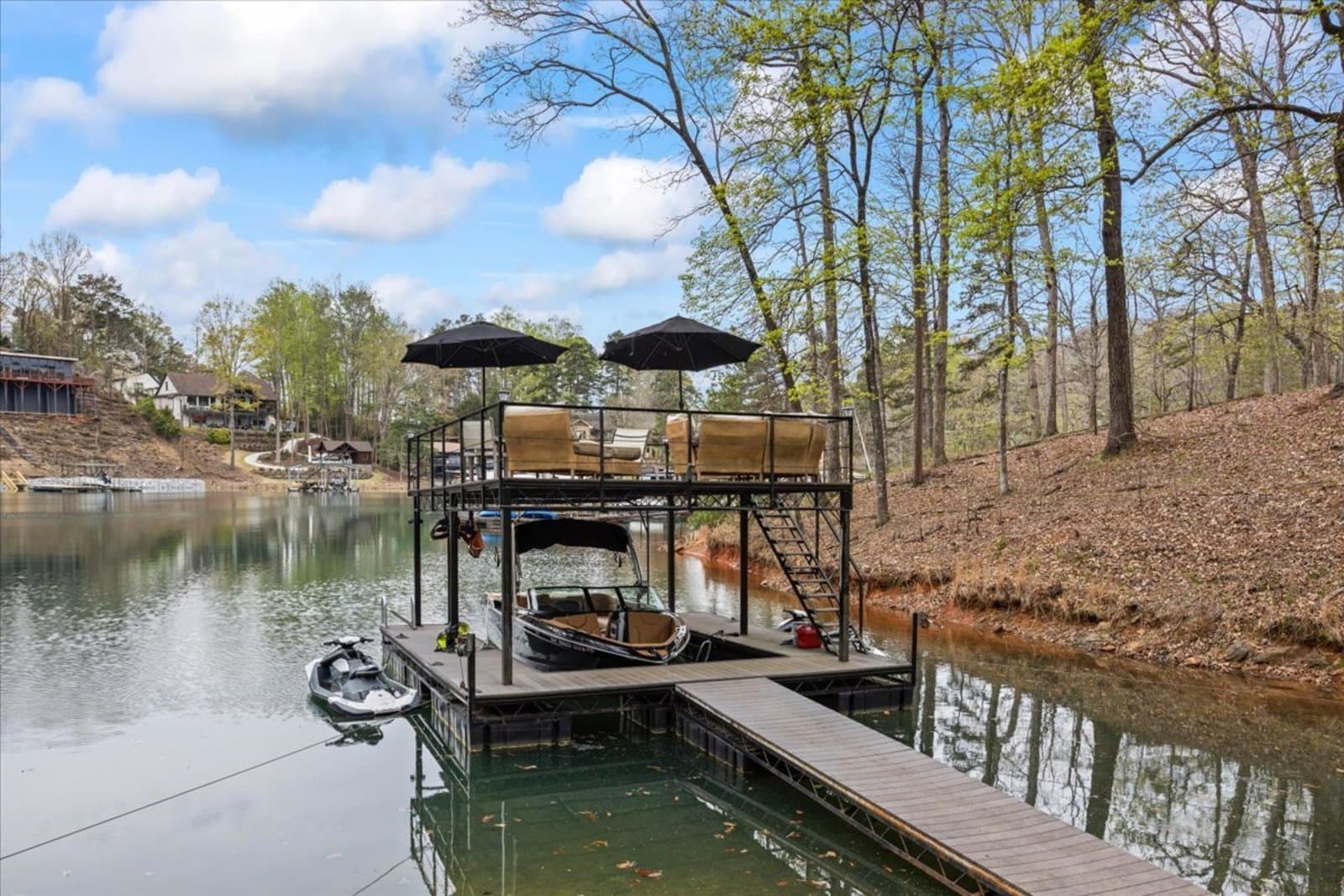
Second-home use at Lake Lanier centers on the dock more than on the interior. Owners who use the home primarily as a weekend retreat tend to prioritize a workable Corps of Engineers shoreline-use permit, deck and screened-porch space sized for hosting, and a kitchen layout that handles holiday-weekend traffic rather than daily cooking. Boating season at Lake Lanier runs roughly from mid-April to mid-October, with peak weekend traffic from Memorial Day through Labor Day, which means second-home owners typically winterize the boat, dock, and house systems for a six-month off-season. Family-gathering use is the recurring secondary pattern in the Lake Lanier second-home segment. Owners often select bedroom counts and bathroom counts based on how many adult children, grandchildren, or extended family they expect to host at peak weekends rather than on their own household size. That selection logic produces a different floor-plan filter than a primary-residence buyer applies in Buckhead or Alpharetta.
Proximity to Buckhead, Midtown, Alpharetta, and North Atlanta suburbs
GA-400 is the spine of the Atlanta-to-Lake-Lanier drive for buyers coming from Buckhead, Brookhaven, Sandy Springs, Dunwoody, Alpharetta, Milton, and Roswell. South Forsyth County exits on GA-400 — McFarland Parkway, Bethelview Road, and Pilgrim Mill Road — feed the south Cumming shoreline and the Two Mile Creek and Six Mile Creek arms of the lake. North Forsyth exits at GA-369 and GA-53 reach the Dawsonville and Lumpkin County shoreline. I-985 is the spine for buyers approaching from the east-side suburbs, intown Atlanta via I-85, and Gwinnett County. I-985 exits at Buford, Flowery Branch, Oakwood, and Gainesville feed the south Hall County and Buford City Schools shoreline, including the corridor near Aqualand Marina, Holiday Marina, and Sunrise Cove Marina. Owners commonly cross-shop between a GA-400 corridor property in south Forsyth County and an I-985 corridor property in south Hall County because the two corridors are similar in driving time from most Atlanta origins.
Best Second-Home Property Types
Second-home buyers at Lake Lanier sort property types by how much hands-on management the home will require during the workweek, when the owner is back in Atlanta. The maintenance load of a private-dock waterfront home differs meaningfully from that of a lock-and-leave lake-access townhome, and second-home buyers usually decide that question before they decide on price band.
Private dock lake houses
Private-dock lake houses are the most-requested second-home format at Lake Lanier and command the highest carrying cost. Current market conditions require a dated MLS comparison that identifies the area, property type, reporting period, and sample before a buyer relies on it. Second-home buyers in this format typically prioritize south-facing and west-facing coves for afternoon dock sun, deep-water frontage that holds boat depth at winter pool elevation of 1,071 feet, and a slip configuration sized for the boat the owner already owns or plans to buy. Dock days, seawall inspection, and shoreline-vegetation trimming sit on the owner's calendar even during workweeks when the house is closed.
Lock-and-leave lake-access communities
Lock-and-leave lake-access communities are the second-home format that scales best for owners who want lake use without weekday-absent maintenance. Lake-access homes sit in a subdivision that owns or leases a community dock, ramp, or shoreline parcel but do not themselves border the lake, and HOA dues typically cover landscaping, exterior upkeep, community-dock maintenance, and gate or security systems. Lake-access homes typically price 30 to 50 percent below comparable true-lakefront cottages on the same cove. Common lake-access community footprints around Lake Lanier include subdivisions near Sunrise Cove Marina, Aqualand Marina, and Holiday Marina, plus pockets in Flowery Branch, Buford, and south Forsyth County. Second-home buyers evaluating a lock-and-leave community should verify slip-to-home ratio at the community dock, whether slips rotate seasonally or are assigned by deed, HOA reserve health, and whether the HOA covenants restrict short-term rental. HOA dues continue to accrue during the off-season regardless of occupancy.
Condos, townhomes, and homes near marinas
Condos, townhomes, and small-lot homes near Lake Lanier marinas form the third second-home property type and are common among Atlanta buyers who keep the boat at a marina slip rather than at a residential dock. This format eliminates the residential-dock permitting and maintenance entirely and leans on the marina for fuel, slip storage, pump-out, and winterization. Near-marina inventory clusters at Aqualand Marina in Flowery Branch, Holiday Marina near Buford Dam, Sunrise Cove Marina in Gainesville, Lan Mar Marina, and Bald Ridge Marina in Cumming. Second-home buyers selecting this format typically pay a slip-rental fee to the marina in addition to home carrying costs, and slip waiting lists at the larger marinas can run multiple seasons. The trade-off is the lowest weekday-maintenance footprint of the three second-home formats, which suits owners who travel frequently or split time between Lake Lanier and a third home.
Second-Home Ownership Considerations
Second-home ownership at Lake Lanier carries a different carrying-cost profile than a primary residence, and most of the variables are not visible from a listing photo. The following items recur in post-closing conversations with Lake Lanier second-home owners during the first year of ownership.
Security, maintenance, insurance, and management
Second-home insurance typically classifies differently than a primary-residence policy because the home sits vacant much of the week, and Georgia carriers often require separate waterfront, dock, and watercraft endorsements at Lake Lanier. Carriers also commonly require visible security or monitored alarms for vacant-period coverage. Verify the carrier panel for the parcel before contract because not every Georgia insurer writes Lake Lanier waterfront, and observation among recent buyers is that the insurance review surprises more first-time second-home buyers than any other line item. Financing classification is the parallel variable. Lenders typically treat second-home loans differently than primary-residence loans and differently again from investment-property loans, with different down-payment, reserve, and rate expectations. Buyers planning to rent the home should be especially careful, because lender classification at origination affects underwriting and later refinance options. Buyers should consult their lender, CPA, and attorney for the specific second-home, primary-residence, or investment-property classification that fits their situation; this page is observational and not financial, tax, or legal advice.
Dock care, shoreline upkeep, and seasonal use
Dock maintenance is the calendar item second-home owners most frequently underestimate. A typical Corps of Engineers permitted dock at Lake Lanier requires periodic decking replacement, hardware inspection, flotation checks, bumper replacement, and seasonal reattachment of swim ladders, slides, and shade canopies. Owners who use the home roughly six months a year still carry twelve months of dock and shoreline upkeep, including winter-pool drawdown inspection. Septic maintenance is the parallel calendar item. Many Lake Lanier second homes built before 2000 carry septic systems sized for the original two- or three-bedroom build-out, and owners hosting peak-weekend gatherings should schedule septic inspections more frequently than an inland primary residence would require. The county environmental health office in Forsyth County, Hall County, Gwinnett County, Dawson County, or Lumpkin County handles permits and pump-out schedules depending on parcel location. Seawall inspection, shoreline-vegetation trimming, and Corps shoreline-use compliance reviews round out the seasonal calendar.
Decide whether rental income is part of the plan
Short-term rental rules at Lake Lanier are set at the county level — Forsyth County, Hall County, Gwinnett County, Dawson County, and Lumpkin County each maintain their own ordinances — and the rules around registration, occupancy, and minimum-night stays change frequently. HOA covenants in lake-access communities add a second layer of restriction that often supersedes the county rule. Buyers planning rental income should verify both layers with the county code office and the HOA before contract. Rental classification also feeds back into financing, insurance, and tax treatment, which often shift when a property is operated as an investment property rather than a pure second home. Ashley Smith of Mountain Rose Realty coordinates Lake Lanier second-home searches across Cumming, Buford, Gainesville, Flowery Branch, and Dawsonville and works with buyers' lenders, insurers, CPAs, and attorneys to surface the right verification questions before contract. Contact Ashley Smith to start a second-home shortlist.
Frequently Asked Questions
- How long is the drive from Atlanta to Lake Lanier?
- Drive times from Atlanta neighborhoods to Lake Lanier typically range from 45 to 90 minutes depending on origin and traffic. Buckhead and Brookhaven owners usually run 60 to 80 minutes up GA-400 to south Forsyth County. Alpharetta and Milton owners often clear the south shoreline in 35 to 55 minutes. Intown Midtown and Virginia-Highland owners commonly plan 70 to 95 minutes, with Friday-evening departures running longer due to GA-400 and I-985 commuter traffic.
- How do lenders classify a Lake Lanier second home versus an investment property?
- Lenders typically treat second-home loans, primary-residence loans, and investment-property loans differently, with different down-payment, reserve, and rate expectations. The classification depends on intended use, occupancy frequency, and whether the home will be rented. Lender classification at origination affects underwriting and later refinance options. This page is observational; buyers should consult their lender for the specific classification that fits their financing plan.
- What are the tax implications of owning a Lake Lanier second home?
- Property tax treatment at Lake Lanier depends on the county of record — Forsyth County, Hall County, Gwinnett County, Dawson County, or Lumpkin County — and on the parcel's classification. Federal and state tax treatment differs for primary residences, second homes, and investment properties, including how mortgage interest, property taxes, and rental income are handled. Tax law changes regularly. This page does not provide tax advice; buyers should consult their CPA or tax attorney for the treatment that applies to their situation.
- What insurance does a Lake Lanier second home typically require?
- Lake Lanier second-home insurance commonly includes the homeowners policy plus separate endorsements for the dock, watercraft coverage, and waterfront-specific deductibles, with vacant-period clauses that often require monitored security. Not every Georgia carrier writes Lake Lanier waterfront, so buyers should verify the carrier panel for the specific parcel before contract. Insurance classification also responds to whether the home is operated as a pure second home or as a short-term rental, which can change coverage and premiums materially.
- What does dock-day maintenance look like for a second-home owner?
- Typical dock maintenance at Lake Lanier includes seasonal decking inspection and replacement, hardware and fastener checks, flotation inspection, swim-ladder and slide reattachment in spring, canopy or cover replacement, and winter-pool compliance walks. Owners who use the home roughly six months a year still carry twelve months of dock and shoreline upkeep. The U.S. Army Corps of Engineers Lake Lanier office on Buford Dam Road maintains permit records and conducts shoreline-use compliance reviews.
- Can I rent out a Lake Lanier second home when I am not using it?
- Short-term rental at Lake Lanier is governed by county ordinance, and Forsyth County, Hall County, Gwinnett County, Dawson County, and Lumpkin County each set their own rules on registration, occupancy, and minimum-night stays. HOA covenants in lake-access communities often add a second layer of restriction. Buyers planning rental income should verify both the county ordinance and the HOA covenants before contract, and should review insurance and lender implications of rental use.
Related
- Lake Lanier Lock-and-Leave HomesLow-maintenance lake-access homes and HOA-covered exterior upkeep for owners who travel frequently.
- Lake Lanier Lake Houses for SaleSmaller-footprint cabins, cottages, and right-sized waterfront residences across the Lake Lanier shoreline.
- Lake Lanier Waterfront HomesFull waterfront inventory across all tiers, including private-dock cottages and luxury estates.
- Lake Lanier Community GuideFull community profile: history, market data, schools, lifestyle, and adjacent towns.
- Lake Lanier Active ListingsCurrent MLS inventory filtered to the Lake Lanier shoreline footprint.