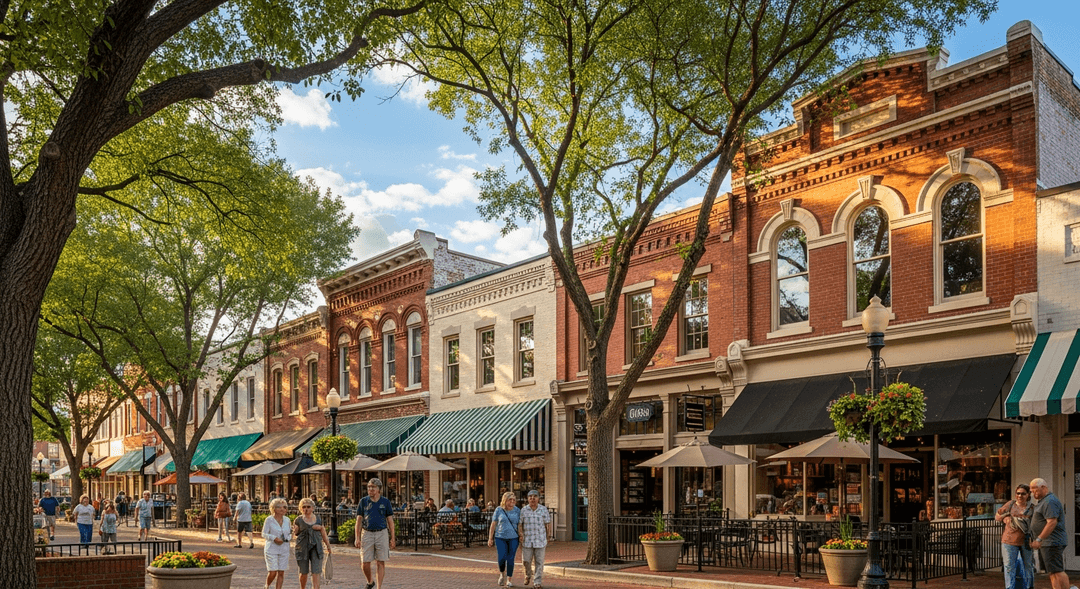
Cumming was incorporated in 1834, three years after the Georgia legislature carved Forsyth County out of Cherokee County following the federal land lotteries that redistributed Cherokee territory to white settlers. The town took its name from William Cumming, a Georgia attorney and War of 1812 officer, and was designated as the new county seat. For most of the 19th century, Cumming functioned as a small agricultural courthouse town built around a public square, with the Forsyth County Courthouse as its civic anchor.
The 20th century brought slow, then accelerating, change. Buford Dam closed across the Chattahoochee River in 1956, and the rising waters of Lake Lanier inundated the eastern edge of Forsyth County, creating a new shoreline economy and a recreational boundary that still shapes the city's neighborhoods. GA-400 was extended north of the Perimeter into Forsyth County in the 1990s, and that single piece of infrastructure converted Cumming from a rural county seat into a commuter market for the north metro.
The most recent chapter is master-planned: Vickery Village opened as a walkable mixed-use district in the early 2000s, The Collection at Forsyth opened along GA-400 in 2007, and the Cumming City Center civic-and-retail district has continued the same pattern at the downtown core. Forsyth County has consistently ranked among the fastest-growing counties in Georgia through this stretch, and the city's housing stock now reflects roughly four decades of layered build cycles.