
Journal
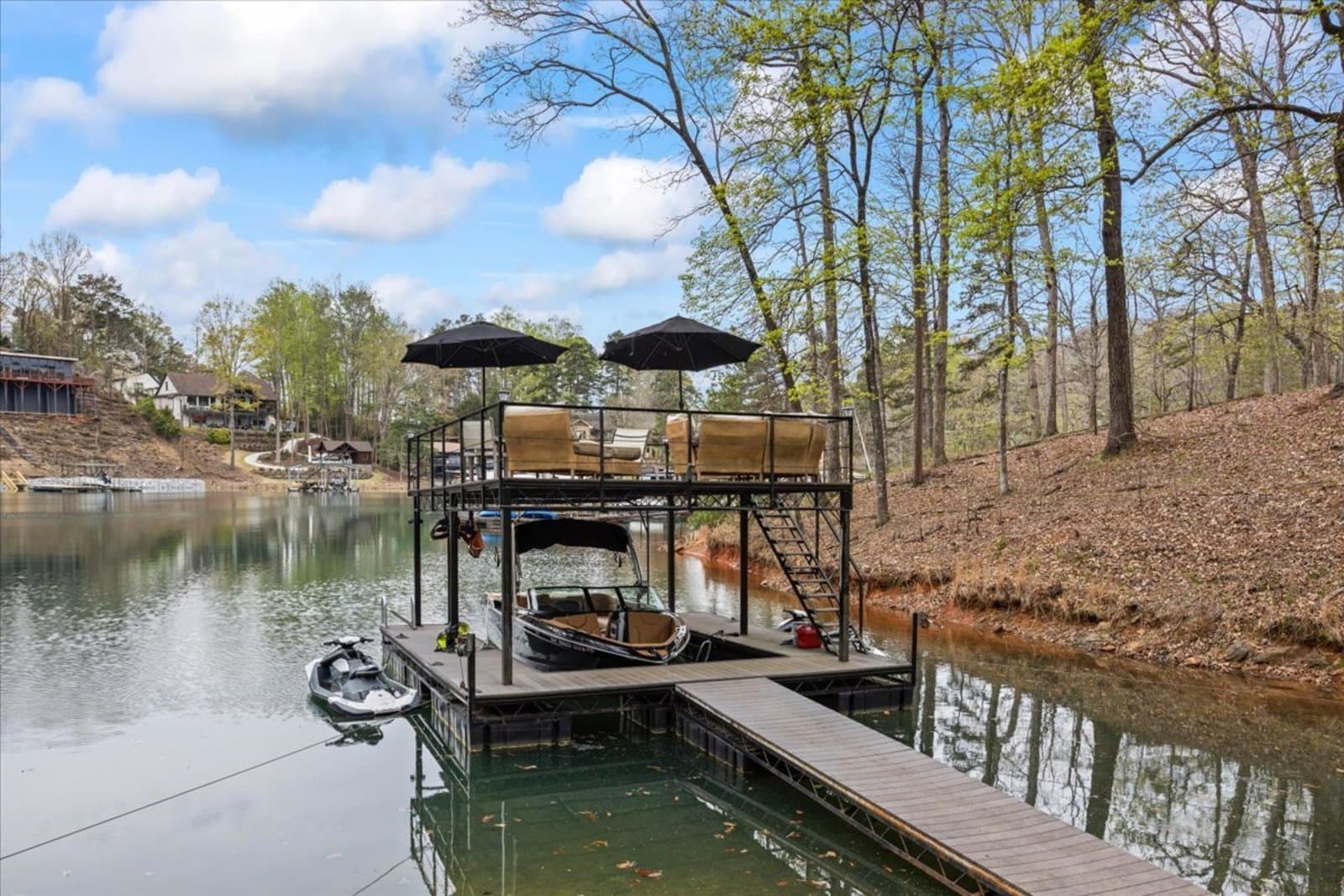
Lake Lanier dock permits are federal shoreline-use authorizations issued by the U.S. Army Corps of Engineers (USACE) Mobile District, which manages every foot of the 690-mile shoreline under the Lake Sidney Lanier Shoreline Management Plan administered by the U.S. Army Corps of Engineers. A dock permit is not a deed, a county zoning approval, or an HOA grant; it is a revocable USACE license attached to a single residential parcel that allows one permitted dock structure. Because the residential permit inventory has been capped in most coves around Cumming, Buford, Gainesville, Flowery Branch, and Dawsonville, the permit itself, not just the waterfront, carries the value at closing.
How Dock Permits Work on Lake Lanier
Dock permits on Lake Lanier operate under federal law because Lake Lanier is a USACE-managed reservoir created by Buford Dam, not a state or county-controlled body of water. The Mobile District's Lake Lanier Project Management Office in Buford administers every shoreline-use permit under the Lake Sidney Lanier Shoreline Management Plan administered by the U.S. Army Corps of Engineers and its subsequent amendments. The permit itself is what determines whether a Hall County, Forsyth County, Dawson County, Gwinnett County, or Lumpkin County waterfront parcel is dockable, lake-access, or non-dockable.
USACE authority and shoreline management
The U.S. Army Corps of Engineers, Mobile District, holds sole permitting authority over private and community docks on Lake Lanier. That authority traces back to the original 1956 Buford Dam project and is exercised today through the 2004 Lake Lanier Shoreline Management Plan, which divides the shoreline into use-allocation zones such as Limited Development, Public Recreation, Protected Shoreline, and Prohibited Access. Whether a parcel can hold a dock depends first on its shoreline zone classification, not on the size of the lot or the wishes of the owner. Permitted shoreline use is governed by Title 36 of the Code of Federal Regulations and Engineer Pamphlet EP 1130-2-406, which the Mobile District applies through the Shoreline Management Plan. The plan controls the permitted dock footprint, gangway length, slip count, walkway path width, vegetation modification, electrical service, and any hardscape between the home and the federal shoreline contour. Hall County and Forsyth County building rules apply on the residential side of that contour line, but USACE rules govern everything from the contour down to the water.
Why dock permits are limited and highly valuable
The Mobile District has not been issuing new residential dock permits across most of Lake Lanier since the Lake Sidney Lanier Shoreline Management Plan administered by the U.S. Army Corps of Engineers capped permitted dock density on the developed portions of the reservoir. In practical terms, the residential permit inventory along Cumming, Buford, Gainesville, and Flowery Branch shorelines is closed; a new buyer inherits an existing permit class rather than applying for a new structure. That cap is the reason a permitted-dock parcel in ZIP code 30518 or 30519 trades at a meaningful premium over an identical lake-access lot in the same school zone. When the permit lapses, becomes non-compliant, or fails the change-of-owner step, that capitalized value is exposed. Current market conditions require a dated MLS comparison that identifies the area, property type, reporting period, and sample before a buyer relies on it.
Difference between a permitted dock, community slip, and marina slip
A permitted private dock is a USACE structure tied to one single-family deeded parcel for that owner's exclusive use. A community slip is part of a USACE-permitted shared dock cluster held by an HOA or subdivision, with slip assignment, maintenance, and access governed by the community's covenants rather than by the individual homeowner. A marina slip at Aqualand Marina, Holiday Marina, Sunrise Cove Marina, or Habersham Marina is a commercial lease that does not transfer with any residential property and ends when the lease ends. USACE permits and licenses are nontransferable. A new owner of an existing facility may apply through the Lake Lanier Operations Management Office, and approval is not automatic. Confirm the property-specific record and current requirements before closing. A community slip, HOA access right, or marina lease is a separate arrangement; verify its ownership, assignment rules, fees, and availability in the applicable documents.
What Buyers Must Verify Before Closing
Buyers under contract on a Lake Lanier waterfront home should treat the dock permit as a parallel transaction to the deed transfer, not an afterthought to the home inspection. The USACE Mobile District does not appear on a standard title search, a county tax record, or an MLS listing report, so the permit's status, compliance condition, and transferability have to be verified through the Lake Lanier Project Management Office in Buford before the due-diligence period closes.
Permit status and compliance inspection issues
Step one is confirming the existing USACE permit number, the permit class (Class I single-slip, Class II double-slip, or a legacy oversized structure grandfathered under an earlier shoreline plan), and the date of the most recent USACE shoreline inspection. The Mobile District inspects permitted docks on a rotating schedule and will flag noncompliant electrical, structural, or vegetation conditions in a written notice. A dock under an open noncompliance notice at closing transfers that obligation to the new owner under the change-of-owner permit conditions, which means the buyer inherits the corrective work and the inspection timeline that goes with it. Common compliance issues on older Lake Lanier docks include outdated electrical service that does not meet current USACE and Hall County or Forsyth County code, unpermitted vegetation clearing inside the permitted path corridor, unpermitted hardscape such as added retaining walls or steps, oversized roof structures added after the original permit was issued, and floats that have lost buoyancy and now sit lower than the permitted elevation. None of these are catastrophic, but all of them become the buyer's responsibility once the change-of-owner filing clears with the Mobile District in Buford.
Change-of-owner process after sale
The USACE change-of-owner filing is the mechanism by which a permit follows the property from seller to buyer. It is signed by both parties, submitted to the Lake Lanier Project Management Office in Buford, and processed within the Mobile District's published window. The filing is not automatic at closing; it is a separate USACE administrative step, and the permit cannot be relied on by the new owner until the change-of-owner is recorded. Buyers and sellers should align the closing date with the change-of-owner process so the permit does not sit in limbo between the deed transfer and the USACE recording. If the dock is out of compliance at the time of the change-of-owner request, the Mobile District can require corrective work as a condition of approval, which becomes a buyer expense after closing. That is why buyers should request the existing permit, the as-built diagram, and any recent USACE inspection or correspondence during due diligence, then independently confirm the file with the Buford office. A clean compliance record at the time of transfer is the difference between a permit that simply re-titles and one that requires conditional repairs.
Dock size, electrical, vegetation, and shoreline rules
The Shoreline Management Plan specifies the permitted footprint, gangway length, slip count, roof dimensions, and walkway path width for each permit class. It also limits how much vegetation can be cleared between the home and the shoreline, how electrical service must be installed and grounded, and what hardscape is allowed on the permitted path. Setbacks from adjoining permitted docks and from the federal shoreline contour are specified per permit. Any modification that deviates from the permitted plan, however cosmetic it appears, can become an enforcement issue at the next inspection. On the residential side of the federal contour line, county rules take over. Hall County, Forsyth County, Dawson County, Gwinnett County, and Lumpkin County each have their own building, electrical, and stormwater codes that apply to the home, the driveway, and any structures inside the deeded parcel. The Mobile District does not enforce county code, and the county does not enforce USACE shoreline rules, so a Lake Lanier waterfront property is regulated by two separate authorities at the same time.
What Sellers Should Prepare Before Listing
Sellers of a Lake Lanier waterfront home with a dock permit can shorten the contract-to-close timeline and reduce buyer renegotiation risk by gathering the USACE paperwork and addressing visible compliance issues before the listing goes live. The dock file is what a careful buyer's agent will ask for first, and a complete file at listing typically removes the most common source of last-week-of-due-diligence concessions on Lake Lanier waterfront contracts.
Gather permit documents and dock records
The core file is the existing USACE Mobile District permit number, the as-built dock diagram, the most recent shoreline inspection notice, any prior correspondence with the Lake Lanier Project Management Office in Buford, and the electrical inspection record from Hall County, Forsyth County, Dawson County, Gwinnett County, or Lumpkin County depending on where the parcel sits. Sellers who can hand this file to a buyer's agent on day one of due diligence almost always close on the original timeline rather than the extended one. The completeness of the dock file at listing is one of the strongest predictors of a contract that closes without conditional repair language attached to the change-of-owner filing, because the Mobile District's review is documentary first and physical inspection second when the paper record is in order, and the Buford office processes a clean file faster than one that requires a back-and-forth on missing documents or unresolved inspection notes. If the seller does not have the original permit documents, the USACE Lake Lanier Project Management Office can provide a copy of the permit on file for the parcel. The office is located at the south end of the reservoir near Buford Dam and is the single point of authority for confirming the current permit class, slip count, gangway length, and compliance status. A pre-listing call to confirm the file is matched and current is one of the cheapest steps a seller can take to protect the listing price.
Address obvious compliance and safety concerns
Visible compliance issues are usually electrical, structural, or vegetation-related. An outdated dock electrical panel without current ground-fault protection, a roof addition that exceeds the permitted footprint, a path cleared wider than the permitted corridor, or a float that has lost buoyancy and sits below the permitted waterline are all items a USACE inspector will flag and a careful buyer's agent will price into the offer. Sellers who address these before listing avoid both a closing delay and the typical price concession that follows a buyer's independent compliance check. Repair scope varies. Electrical brought up to current USACE and county code usually runs into a defined low five-figure range for a Class I single-slip dock; structural repair on float replacement, gangway, or pilings can run wider depending on age and water depth; vegetation re-planting inside a previously over-cleared path corridor is generally the lowest-cost fix. None of these is a teardown decision, but each is a USACE-documented issue that compounds at the inspection and at the buyer's compliance review if it sits on the file at listing.
Direct buyers to USACE and licensed professionals for final confirmation
A seller's job is to present a complete, current dock file, not to certify it. Final confirmation of permit class, compliance status, change-of-owner eligibility, and any conditional repair obligations comes from the USACE Mobile District, a licensed Georgia electrician for the electrical inspection, and a licensed marine contractor for the structural review. Listing agents and seller's agents should consistently direct buyer questions to those three sources rather than answering substantive permit questions directly, both because the USACE record is the controlling document and because Georgia real estate license law limits what agents can represent about federal permits. Sellers should also flag the change-of-owner step to the buyer's agent early. The filing is signed at closing and submitted to the Lake Lanier Project Management Office in Buford, and a clean, current dock file at listing means the change-of-owner moves through without conditional repairs attached. The cleanest Lake Lanier waterfront closings are the ones where the dock paperwork was complete at listing, the inspection was current, and the change-of-owner was prepared as a parallel document set.
Frequently Asked Questions
- Who issues dock permits on Lake Lanier?
- Dock permits on Lake Lanier are issued by the U.S. Army Corps of Engineers, Mobile District, through the Lake Lanier Project Management Office in Buford. Lake Lanier is a federal reservoir created by Buford Dam, so shoreline use is governed by USACE under the Lake Sidney Lanier Shoreline Management Plan administered by the U.S. Army Corps of Engineers and Title 36 of the Code of Federal Regulations, not by Hall County, Forsyth County, Dawson County, Gwinnett County, or Lumpkin County. The counties regulate the residential side of the federal shoreline contour; USACE regulates everything from the contour down to the water.
- Can I add a new private dock to a Lake Lanier home that does not have one?
- USACE permits and licenses are nontransferable. A new owner of an existing facility may apply through the Lake Lanier Operations Management Office, and approval is not automatic. Confirm the property-specific record and current requirements before closing.
- Does a Lake Lanier dock permit transfer automatically at closing?
- No. The USACE Mobile District requires a change-of-owner filing signed by both seller and buyer and submitted to the Lake Lanier Project Management Office in Buford. The permit must be in compliance at the time of transfer for the change-of-owner to clear without conditional repair requirements. Buyers and sellers should treat the change-of-owner as a parallel transaction to the deed transfer, with the paperwork prepared as part of the closing package rather than addressed after the closing date.
- What documents should a buyer request to verify a Lake Lanier dock permit?
- Buyers should request the existing USACE permit number, the as-built dock diagram, the most recent USACE shoreline inspection notice, any open compliance correspondence with the Mobile District, and the electrical inspection record from the applicable Hall County, Forsyth County, Dawson County, Gwinnett County, or Lumpkin County inspector. Independent confirmation with the Lake Lanier Project Management Office in Buford before the due-diligence period closes is the only way to be sure that a listing description matches the permit record on file.
- What is the difference between a permitted private dock, a community slip, and a marina slip on Lake Lanier?
- A private dock may be associated with a specific waterfront property, but its USACE permit or license is nontransferable. A new owner of an existing facility may apply through the Lake Lanier Operations Management Office. Community slips and marina leases have separate HOA or marina rules.
- Why does a Lake Lanier home with a private dock cost more than a lake-access home?
- Private-dock parcels on Lake Lanier are a capped, federally permitted inventory under the USACE Mobile District's Lake Sidney Lanier Shoreline Management Plan administered by the U.S. Army Corps of Engineers, while lake-access homes share a community dock or community ramp rather than holding a deeded permit. Scarcity, deeded transfer, and year-round private boat keeping all drive the price premium. Current market conditions require a dated MLS comparison that identifies the area, property type, reporting period, and sample before a buyer relies on it.
Related
- How to Transfer a Lake Lanier Dock PermitChange-of-owner procedure, documents, fees, and timing for buyers and sellers.
- Lake Lanier Private Dock HomesSingle-family parcels with a deeded USACE permit and exclusive dock use.
- Deep-Water Dock Homes on Lake LanierPrivate-dock parcels in coves with year-round usable water depth.
- Lake Lanier Homes with DockBroader inventory including community-dock and shared-slip properties.
- Waterfront Homes by Dock TypeHow private, community, single-slip, double-slip, and party docks differ.
- Lake Lanier Community GuideFull neighborhood, market, school, and shoreline overview for Lake Lanier.