Living in Gainesville, Georgia
Real estate, schools, downtown Square, and the neighborhoods of Hall County's seat on the north shore of Lake Lanier.
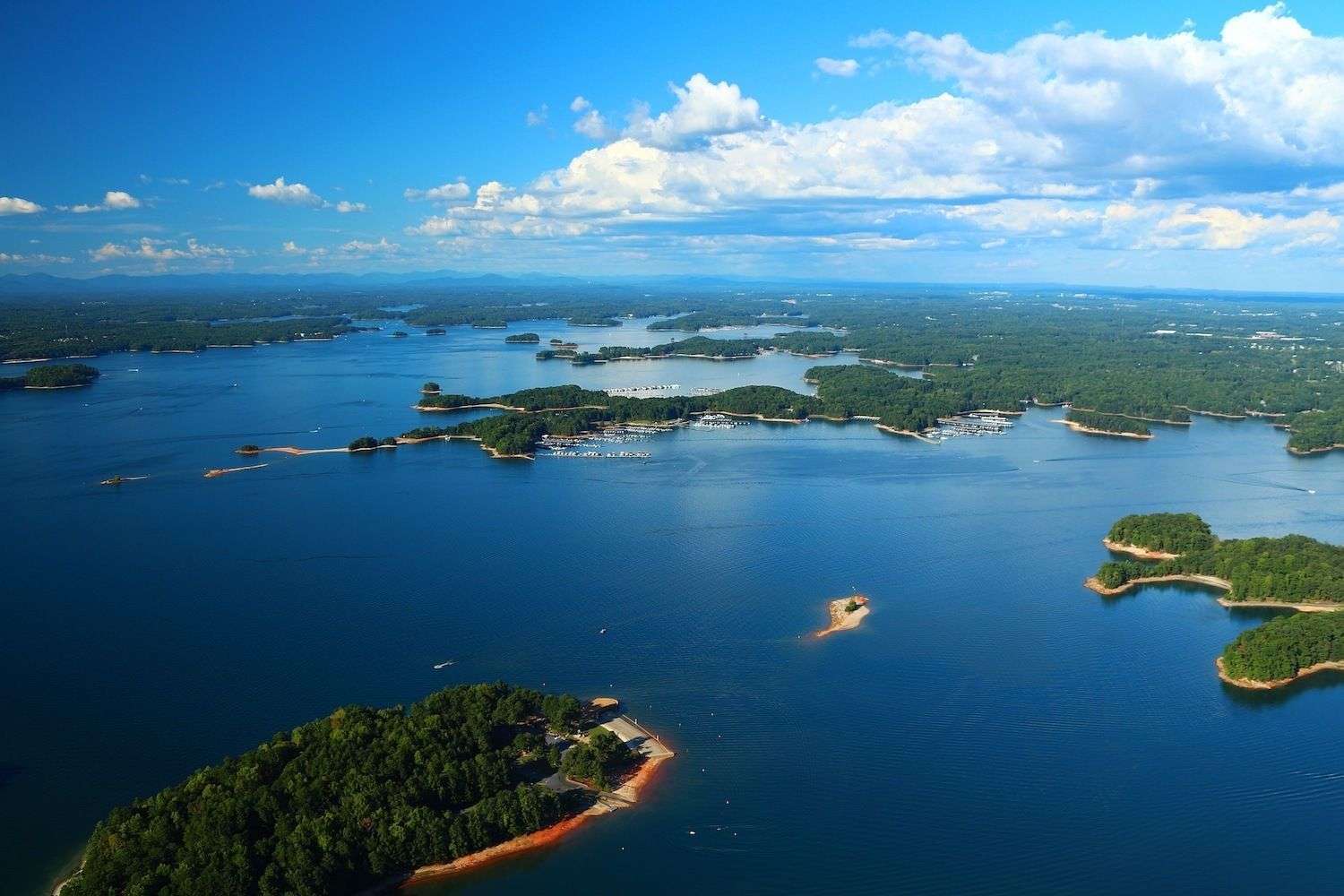
Gainesville is the county seat of Hall County, Georgia, a city of about 45,000 residents on the north shore of Lake Lanier roughly 55 miles northeast of downtown Atlanta. People live here for a specific combination of conditions: a walkable historic Square anchored by Brenau University, lake-access neighborhoods such as Sunrise Cove and Cresswind at Lake Lanier, the Northeast Georgia Medical Center employment base, and a school market that splits between the small Gainesville City Schools district and the larger Hall County Schools system. I-985 and GA-365 carry commuters south toward Atlanta, while the downtown core retains a small-city commercial identity.
History
How Gainesville came to be
Gainesville was incorporated in 1821 as the seat of newly formed Hall County, named for General Edmund P. Gaines of the U.S. Army. The town grew slowly through the antebellum decades as a foothills crossroads and was occupied by Union forces late in the Civil War. Reconstruction-era rail service connected the town to Atlanta and the upper Piedmont, setting the stage for an industrial and agricultural economy that would later center on poultry processing.
On April 6, 1936, an F4 tornado struck the city center, destroying most of the business district and killing more than 200 people in one of the deadliest tornadoes in U.S. history. President Franklin D. Roosevelt visited the rebuilt downtown in 1938 and dedicated the new square — now Roosevelt Square — at the heart of the rebuild. The poultry industry expanded sharply after World War II, and by the 1960s Gainesville had earned the title of Poultry Capital of the World, an identity still visible in the city's economy and signage.
Two later events reshaped the city: the closure of Buford Dam in 1956, which created Lake Lanier and gave Gainesville a freshwater coastline; and the 1996 Atlanta Summer Olympics, which staged the rowing and sprint-canoe events at Lake Lanier Olympic Park on Clarks Bridge Road. The decades since have shifted the city economy further toward healthcare, higher education, and lake-adjacent residential development.

Housing Market
What the Gainesville market looks like today
The Gainesville housing market separates into three working tiers that move on different rhythms. Lake-access homes on the north shore — including Sunrise Cove and Cresswind at Lake Lanier — posted a median sale price of approximately $625,000 as of March 2026 (Georgia MLS, ZIP codes 30506 and 30501). Inside the historic city limits, single-family homes in Gainesville City Schools attendance closed at a median near $415,000 over the same period. Hall County addresses outside the city, in Mundy Mill and the Chestatee corridor, cleared at roughly $385,000. Year over year, the lake-access tier was up about 3.8 percent (Georgia MLS, April 2026 report), while overall Hall County inventory averaged 2.6 months of supply — still a seller-leaning market by historical balance. Days on market for city-limits listings averaged 42 days in Q1 2026, with Hall County listings clearing slightly faster at roughly 38 days.
The dynamics behind those numbers matter as much as the medians. A parcel inside the Gainesville City Schools boundary does not price like a parcel one block over inside Hall County Schools, even when the homes are otherwise comparable. The Chattahoochee Country Club corridor near Riverside Drive prices differently from the downtown Square walking radius, which in turn prices differently from the Northeast Georgia Medical Center adjacency along Jesse Jewell Parkway. For a current snapshot of available inventory, the Gainesville listings page and the monthly market reports track these tiers in detail.
Schools
Schools serving Gainesville neighborhoods
Two separate public school systems serve Gainesville: Gainesville City Schools, which covers roughly six square miles inside the historic city limits, and Hall County Schools, which serves the surrounding county including the lake-access neighborhoods. Riverside Military Academy, a private boarding school founded in 1907, sits on the Chattahoochee River within the city. Attendance for any specific address follows the parcel boundary, not proximity, so two homes on the same street can feed different districts.
- Gainesville High School — Gainesville City Schools, grades 9–12. GreatSchools rating of 5/10 as of January 2026 (source: GreatSchools.org). The district's only traditional high school.
- Gainesville Middle School — Gainesville City Schools, grades 6–8. GreatSchools rating of 5/10 as of January 2026 (source: GreatSchools.org).
- Gainesville Exploration Academy — Gainesville City Schools magnet option for grades K–5. GreatSchools rating of 6/10 as of January 2026 (source: GreatSchools.org).
- North Hall High School — Hall County Schools, grades 9–12, serves much of the north shore lake-access residential base. GreatSchools rating of 7/10 as of January 2026 (source: GreatSchools.org).
- East Hall High School — Hall County Schools, grades 9–12. GreatSchools rating of 5/10 as of January 2026 (source: GreatSchools.org).
- West Hall High School — Hall County Schools, grades 9–12. GreatSchools rating of 6/10 as of January 2026 (source: GreatSchools.org).
- Riverside Military Academy — Private, all-male boarding and day school, grades 7–12, founded 1907. Located on the Chattahoochee River within Gainesville.
Lifestyle
Neighborhood character in Gainesville
Daily life in Gainesville is organized around three centers of gravity: the downtown Square, the Northeast Georgia Medical Center campus along Jesse Jewell Parkway, and the Lake Lanier shoreline at Clarks Bridge Road and Dawsonville Highway. Mornings move quickly because a significant share of residents commute either to the hospital system or south on I-985 toward metro Atlanta. Evenings on the Square fill with Brenau University students and restaurant traffic; weekends in the May-to-September boating window shift the population toward the lake, Don Carter State Park, and the marinas along the north shore. Off-season the lake quiets, and the city core regains its dominant share of weekend activity.
Walking Gainesville neighborhoods, what stands out is how sharply pricing turns on the Gainesville City Schools versus Hall County Schools boundary. Parcels inside the city district trade differently from parcels a block over, even with similar square footage. Lake-access streets on the north shore, especially Sunrise Cove and Cresswind at Lake Lanier, carry a clear premium over interior subdivisions like Mundy Mill. The downtown Square walking radius adds its own premium for buyers who want Brenau University and the Quinlan Visual Arts Center on foot. Commute distance to Northeast Georgia Medical Center is the single most common buyer filter from clinicians touring the market. Seasonally, lake-access listings tighten from March through June.

Architecture
Architecture and the built environment
Gainesville's housing stock layers across more than a century of construction with one sharp break: April 6, 1936. The tornado destroyed most of the antebellum and Victorian-era downtown, so the historic Square today is dominated by 1937–1940 brick commercial buildings and the surrounding residential streets carry a heavy share of late-1930s and 1940s frame houses. Pre-1936 architecture survives mostly in pockets along Green Street and on the Brenau University campus, including the Pearce Auditorium of 1897.
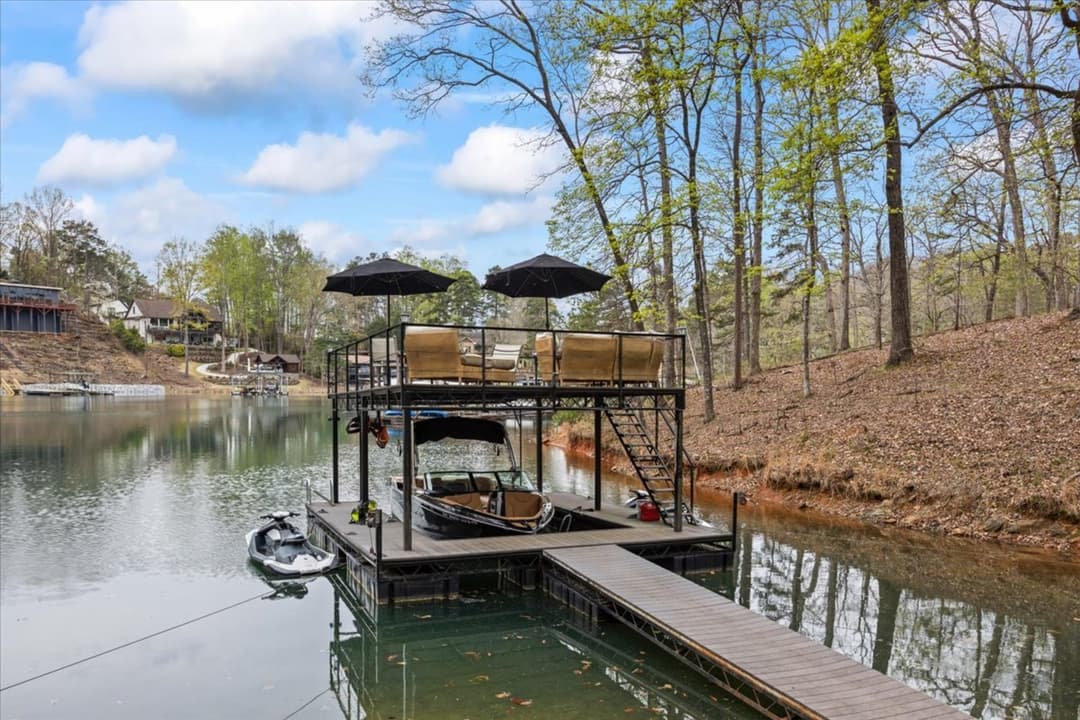
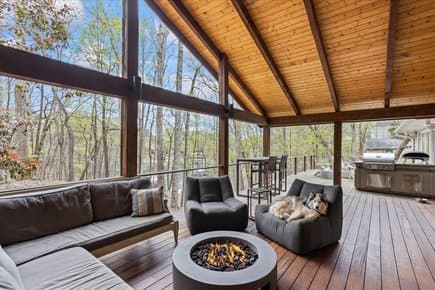
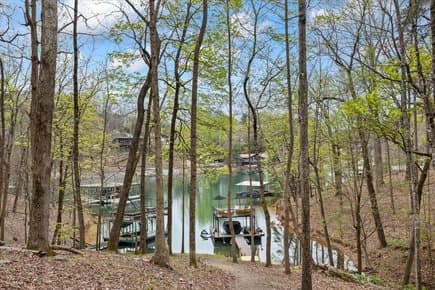
The lake-driven residential wave came in two phases. A 1970s and 1980s phase introduced ranch and split-foyer homes in subdivisions along Dawsonville Highway and McEver Road. From the early 2000s onward, master-planned developments such as Mundy Mill and Cresswind at Lake Lanier shifted the inventory toward craftsman and transitional styles on smaller lots, with full amenity packages. Current lake-access new construction on the north shore follows the broader Lake Lanier program: wide rear walls of glass, screened porches, finished terrace levels, and a path to a permitted single-slip or double-slip dock.


Commute & Connectivity
Getting to and from Gainesville
Gainesville sits roughly 55 miles northeast of downtown Atlanta, with three principal corridors carrying traffic. I-985 runs the city's southwest edge and connects Gainesville and Flowery Branch to I-85 and the metro Atlanta business districts. GA-365 continues I-985 north of the city toward Cornelia and Toccoa, opening the northeast Georgia mountains corridor. GA-53 runs east–west, linking Gainesville to Dawsonville and Dahlonega on the west and to Lula and Banks County on the east.
Inside the city, Jesse Jewell Parkway, Green Street, Dawsonville Highway, McEver Road, and Riverside Drive act as the practical connectors between the downtown Square, Northeast Georgia Medical Center, Brenau University, and the lake-access neighborhoods. Off-peak drive time from the Square to Hartsfield-Jackson Atlanta International Airport runs roughly 70 minutes via I-985 and I-85; rush hour pushes that closer to 100 minutes. The Lee Gilmer Memorial Airport on Aviation Boulevard provides general aviation access, and Amtrak's Crescent line stops in Gainesville with one northbound and one southbound train per day.
Adjacent Communities
Where Gainesville meets its neighbors
Gainesville transitions outward into several distinct markets along the lake, the I-985 corridor, and the GA-400 / GA-53 corridors toward the mountains. Buyers frequently shortlist across more than one before choosing.
Lake Lanier
The full 38,000-acre reservoir, dock dynamics, and waterfront submarkets across five counties.
Lake Lanier Guide →
Buford
South-end shoreline, Buford City Schools, and the Mall of Georgia retail corridor.
Buford Guide →
Flowery Branch
I-985 town between Gainesville and Buford with a growing waterfront-adjacent base.
Guide in progress
Oakwood & Dahlonega
Oakwood sits along I-985 just south of Gainesville; Dahlonega anchors the mountain wine corridor north on GA-400.
Guide in progress
Browsing more broadly? Start from the Home Search hub for every covered area.
Frequently Asked
Gainesville questions buyers and sellers ask
What is the average home price in Gainesville, GA?
The median sale price for single-family homes in Gainesville (ZIP codes 30501, 30504, 30506, and 30507) was approximately $395,000 as of March 2026, based on Georgia MLS reporting compiled in April 2026. Lake-access neighborhoods on the north shore, including Sunrise Cove and Cresswind at Lake Lanier, transact at a meaningful premium over comparable inland homes inside the city limits. Pricing also varies sharply by which school system serves the parcel — Gainesville City or Hall County.
What schools serve Gainesville neighborhoods?
Gainesville is served by two separate public school systems: Gainesville City Schools (which covers most parcels inside the historic city limits) and Hall County Schools (which covers most county-address parcels and the lake-access neighborhoods). Riverside Military Academy, a private boarding school founded in 1907, also draws families from across the southeast. Attendance for any specific address depends on the parcel boundary, not proximity, so buyers should verify the assigned school before contract.
How long do homes stay on the market in Gainesville?
Single-family listings inside Gainesville city limits averaged about 42 days on market in Q1 2026, per Georgia MLS data pulled in April 2026. Lake-access listings in the surrounding Hall County ZIP codes moved faster during the same period, closer to the mid-30s day range. Listings posted between March and June consistently transact quicker than fall and winter listings, mirroring the broader Lake Lanier seasonal pattern.
What is the difference between Gainesville City Schools and Hall County Schools?
Gainesville City Schools is a small, independent district covering roughly six square miles inside the historic city limits, with Gainesville High School as its only high school and Gainesville Exploration Academy as a magnet option. Hall County Schools is a much larger district covering the surrounding county, with East Hall, West Hall, and North Hall serving as the three traditional county high schools. The attendance boundary between the two systems runs along Gainesville’s annexation line, and assessed value premiums correlate visibly with which side of that line a lot sits on.
What landmarks define Gainesville, Georgia?
The historic downtown Square (officially Roosevelt Square, renamed after President Roosevelt’s 1938 visit following the 1936 tornado) anchors the city. Brenau University, founded in 1878, sits a few blocks north of the Square. Lake Lanier Olympic Park on Clarks Bridge Road hosted the 1996 Atlanta Olympic rowing and sprint-canoe events. Other defining landmarks include Northeast Georgia Medical Center, the Quinlan Visual Arts Center, the Atlanta Botanical Garden Gainesville campus, and Don Carter State Park at the lake’s north end.
Why is Northeast Georgia Medical Center significant to Gainesville real estate?
Northeast Georgia Health System is one of the largest employers in north Georgia and operates its flagship hospital on Jesse Jewell Parkway, a few minutes from the downtown Square. The presence of a Level II trauma center and a regional cancer institute draws a sustained pipeline of physicians, nurses, and clinical staff who shop the Gainesville housing market specifically for short hospital commutes. That demand is one reason inventory inside the city limits clears faster than the broader Hall County average.
About Your Agent
Ashley Smith
REALTOR® | Georgia License #407881
Keller Williams Realty Atlanta Partners | Keller Williams Luxury Atlanta Partners
Ashley Smith is a licensed Georgia REALTOR® (license #407881) representing buyers and sellers across Gainesville, Hall County, Lake Lanier, and the north metro Atlanta corridor. Office address: 3840 Browns Bridge Rd, Cumming, GA 30041. To learn more about the brokerage and team, visit DreamSmith Realty or read the seller representation overview.
Start the Conversation
Looking at Gainesville?
Browse current inventory, schedule a private tour, or ask a question about a specific neighborhood, school zone, or commute. We respond the same day.
Ashley Smith | (678) 485-8858 | ashley@dreamsmithrealty.com