
Buyer Guide
USACE permits and licenses are nontransferable. A new owner of an existing facility may apply through the Lake Lanier Operations Management Office, and approval is not automatic. Confirm the property-specific record and current requirements before closing.
Understanding the Lake Lanier Real Estate Market
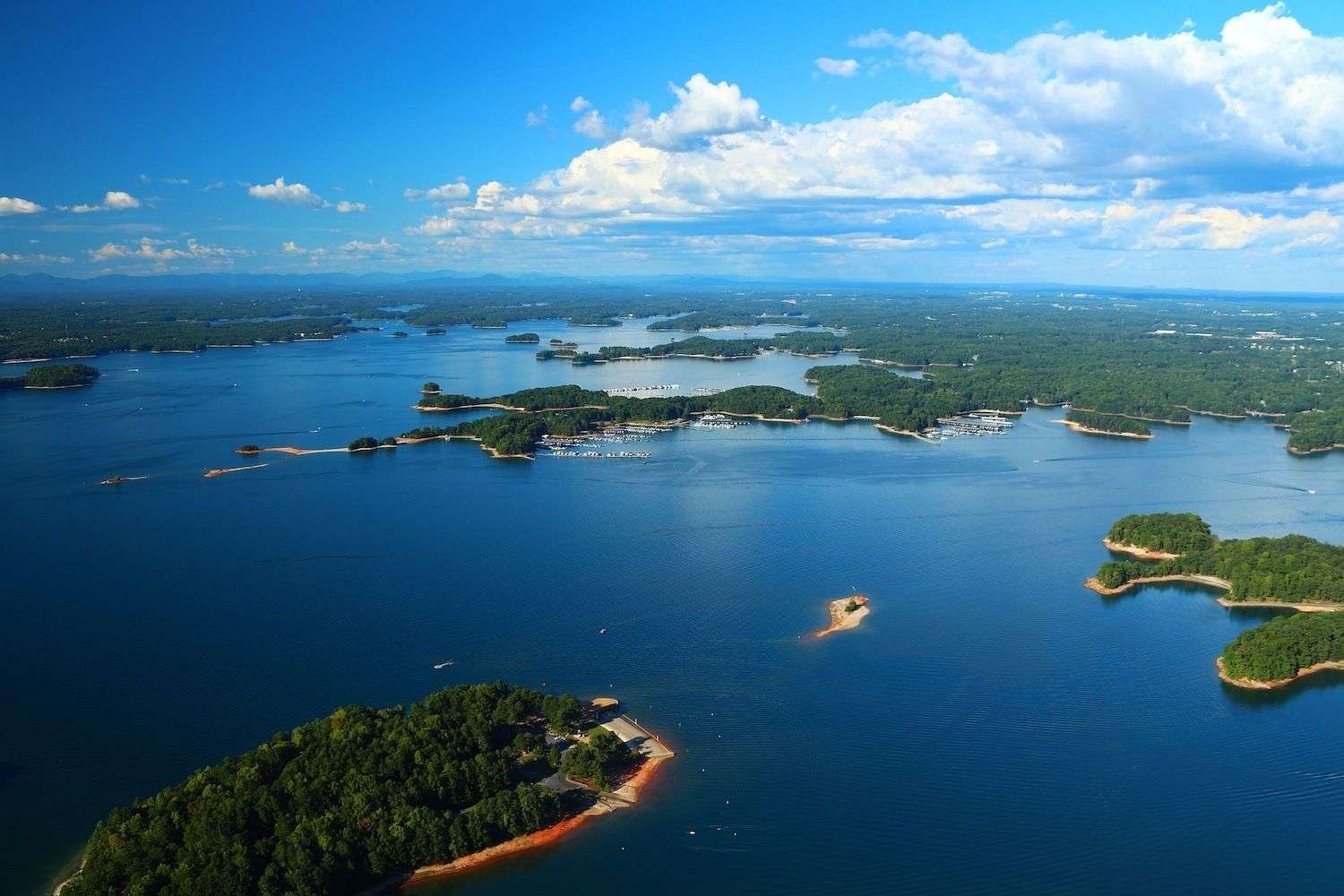
The Lake Lanier real estate market is defined by federal shoreline rules, dock permit status, and a residential population that lives at the water full-time rather than seasonally. Three pricing tiers — waterfront with a permitted dock, lake-access with community rights, and off-water within walking distance — move on different rhythms and reward different diligence work.
Why dock access, water depth, and location drive value
Dock access is the single biggest pricing variable on Lake Lanier, and it sorts the inventory into three clear tiers. Water depth at the dock matters separately from permit status; a single-slip permit in a shallow cove does not price the same as a double-slip permit in a deep-water cove at the end of a peninsula. Buyers concerned about drought-year boating pay specifically for cove depth, and that premium widens the band inside any neighborhood. Current market conditions require a dated MLS comparison that identifies the area, property type, reporting period, and sample before a buyer relies on it. Location inside the lake matters as much as location across the metro. The southern end of the lake near Buford Dam and Lanier Islands sits closer to the I-985 / GA-985 corridor and the Mall of Georgia retail base, while the north end near Gainesville and Don Carter State Park is quieter and tends to carry a different buyer mix. East-side shoreline (Hall County, Flowery Branch, Gainesville) and west-side shoreline (Forsyth County, Cumming) split along GA-400 versus I-985, and that commute geometry shows up in pricing whenever the buyer pool is Atlanta-bound.
Luxury, lakefront, lake-access, investment, and retirement segments
The Lake Lanier inventory breaks into five recognizable segments, each with its own buyer profile. Luxury waterfront — homes above the $2M tier with double-slip docks, deep-water coves, and current new construction — concentrates on the south end near Buford and the west side along select Cumming and Forsyth County peninsulas. Standard lakefront covers the broad $800K–$1.8M band of mid-size single-family homes with a permitted dock; this is the deepest segment of the market. Lake-access homes cover the $450K–$800K range for buyers who want shoreline proximity without the cost or maintenance of a dedicated dock. The investment segment overlaps with short-term-rental opportunities, though each county has different rules for vacation rentals along the shoreline — Hall County, Forsyth County, and Gwinnett County all regulate differently, and several lake-area HOAs prohibit STR outright. The retirement-oriented segment skews toward primary-floor-living new construction with a finished terrace level, often in golf-adjacent or marina-adjacent communities.
How Lake Lanier differs from standard North Atlanta real estate
The defining difference is that no Lake Lanier homeowner owns waterfront in the conventional sense. The shoreline itself is federal property held by the U.S. Army Corps of Engineers, Mobile District, and what transfers at closing is residential land that backs up to a federally controlled buffer plus a shoreline-use permit. That permit governs dock placement, vegetation clearing, gangway length, and seasonal access. Standard North Atlanta real estate — Roswell, Alpharetta, Johns Creek, Milton, Suwanee, Duluth — operates on conventional fee-simple lot lines all the way to the property edge, with no federal overlay. The second difference is school-district fragmentation. Most North Atlanta submarkets sit inside a single school system; Lake Lanier shoreline crosses Hall County Schools, Forsyth County Schools, Gwinnett County Public Schools, and the small high-performing Buford City Schools district. Attendance boundaries follow the underlying parcel, not proximity to the water, so two homes within sight of each other on opposite sides of a boundary can feed entirely different districts. The third difference is water-level risk. Lake Lanier is the metro Atlanta water supply, and pool elevation fluctuates with rainfall, releases through Buford Dam, and federal court rulings governing downstream flow. A dock that works at full pool may not work in a drought year, which is why gangway length and cove depth come up in every waterfront inspection.
Search Lake Lanier by City, County, and Lifestyle
Lake Lanier shoreline transitions into several distinct municipal markets, and buyers who shortlist across more than one city almost always do better than buyers who lock onto a single ZIP code. Each surrounding city has its own commercial core, school district, dock-density pattern, and price band.
Cumming and Forsyth County lake homes
Cumming is the largest municipal market on the west side of Lake Lanier and the county seat of Forsyth County. The Forsyth County shoreline runs along the lake's western and southwestern arms, with neighborhoods clustered around Browns Bridge Road, Keith Bridge Road, and the GA-400 corridor. Forsyth County Schools is the consistent draw — the district has carried strong ratings across its elementary, middle, and high school feeder patterns, with Lake Forest Elementary, Forsyth Central High School, and South Forsyth High School all reporting GreatSchools ratings of 7/10 or higher as of January 2026 (source: GreatSchools.org). Forsyth County lakefront inventory leans toward larger lots, longer driveways, and a higher share of recently built or renovated homes than the average Hall County street. The trade-off is distance from the marina districts on the south end; west-side shoreline residents typically rely on Lanier Islands Parkway or Browns Bridge for marina access. For active inventory in this segment, the Lake Lanier listings page and the Cumming community guide both track current pricing in detail.
Gainesville and Hall County lake homes
Gainesville is the county seat of Hall County and the practical capital of Lake Lanier. The city sits on the lake's north-central shoreline, holds the lake's largest concentration of public boat ramps, and contains Lake Lanier Olympic Park, which hosted the 1996 Atlanta Olympic rowing and sprint-canoe events. Hall County controls the majority of Lake Lanier's residential shoreline — more parcels touch Hall County than any other county on the lake — and the inventory ranges from 1970s lake cottages on Riverside Drive corridors to current waterfront new construction in the Cresswind and Sterling-area communities. Hall County Schools serves most of the Hall shoreline, with North Hall Middle School and other zoned schools holding GreatSchools ratings in the 6–7/10 range as of January 2026 (source: GreatSchools.org). Pricing on the Hall County side runs the full spectrum from sub-$500K off-water homes to $3M-plus deep-water peninsula estates. The Gainesville community guide breaks out specific corridors and price tiers in more detail.
Buford, Flowery Branch, Dawsonville, and Gwinnett lake areas
Buford anchors the south end of Lake Lanier and contains the Buford Dam itself, Aqualand Marina, and the lake's most-watched school district overlap. Buford City Schools is a small, separate-from-county district that overlaps a stretch of premium south-lake shoreline; Buford High School carried a GreatSchools rating of 8/10 as of January 2026 (source: GreatSchools.org), and the attendance area regularly drives a measurable price premium on lots inside its boundary. Buford shoreline sits in both Hall County and Gwinnett County depending on the parcel. Flowery Branch sits on the lake's east-central side along I-985 and has the fastest-growing residential base of any small lake city, with a strong concentration of new construction along the Spout Springs Road corridor and Atlanta Falcons training-camp-area communities. Dawsonville covers a small slice of north-lake shoreline in Dawson County, primarily along the lake's far northwestern arms, and trades at lower density than the Forsyth or Hall County sides. Gwinnett County shoreline is the smallest of the four major lake counties and concentrates on the lake's southern tip near Buford Dam.
Lake Lanier Buyer and Seller Due Diligence
Lake Lanier transactions carry a layer of diligence work that does not exist in standard north-metro Atlanta deals, and skipping any of it can turn a closed waterfront purchase into a non-functional one. The three categories below — dock permits, physical-site conditions, and market data — drive most of the surprises buyers and sellers encounter at the contract stage.
Dock permits and USACE shoreline rules
Every dock on Lake Lanier exists under a shoreline-use permit issued by the U.S. Army Corps of Engineers, Mobile District. The Corps stopped issuing new dock permits on Lake Lanier as a general practice years ago; today's waterfront purchases almost always involve the transfer of an existing permit attached to the shoreline-use designation on a specific lot. Buyers should verify the permit class (Class I single-slip, Class II double-slip, or community-dock), the maximum allowed slip count, the gangway length on file, and any open compliance issues before contract. USACE permits and licenses are nontransferable. A new owner of an existing facility may apply through the Lake Lanier Operations Management Office, and approval is not automatic. Confirm the property-specific record and current requirements before closing.
Septic, slope, insurance, and water-level questions
Most Lake Lanier residential parcels run on private septic systems rather than municipal sewer, particularly on the east and north sides of the lake. Septic location, drain-field condition, and the slope between the house and the shoreline affect both insurability and resale, and a current septic inspection is standard practice. Slope itself also matters separately: many waterfront lots drop 20 to 60 feet from street level to shoreline, which drives retaining-wall, foundation, and stormwater questions that flat-lot buyers do not encounter. Insurance on lakefront homes runs higher than comparable off-water homes in the same ZIP code, primarily because of dock structure replacement cost and the higher rebuild cost of stepped foundation construction. Water level is the final variable. Lake Lanier pool elevation moves with rainfall and downstream releases through Buford Dam, and droughts can pull water levels several feet below full pool, which exposes shoreline conditions a buyer should understand before purchase.
Market reports, home valuations, and private consultations
Lake Lanier pricing moves on a different rhythm than the broader north-metro Atlanta market because the buyer pool overweights second-home and lifestyle purchasers, and inventory turnover is driven by boating-season demand. The Lake Lanier waterfront tier was up roughly 4.2 percent year over year as of the April 2026 Georgia MLS report, with 2.4 months of supply across all three pricing tiers in Q1 2026 (Georgia MLS) — still a seller-leaning balance by historical measure. Days on market for waterfront listings averaged 58 days in Q1 2026 (Georgia MLS). For specific-property valuation, three inputs drive most of the variance: cove depth and dock permit class, school attendance zone (especially Buford City Schools versus surrounding county districts), and condition relative to the neighborhood's teardown threshold. The monthly market reports track tier-level pricing across all five lake counties, and a private consultation with Ashley Smith at DreamSmith Realty walks through the specific dock, slope, septic, and school-zone questions for a property under consideration.
Frequently Asked Questions
- What is the median home price at Lake Lanier?
- Pricing varies sharply by cove depth, dock permit class, and the underlying school attendance zone. Current market conditions require a dated MLS comparison that identifies the area, property type, reporting period, and sample before a buyer relies on it.
- What counties does Lake Lanier real estate cover?
- Lake Lanier shoreline spans five Georgia counties: Hall County (which holds the majority of residential shoreline and the lake headquarters in Gainesville), Forsyth County (west side, along the GA-400 corridor), Dawson County (small northwestern slice), Gwinnett County (southern tip near Buford Dam), and Lumpkin County (limited northern arms). Each county has its own millage rate, school district, and zoning rules, so two homes on opposite sides of the same cove can have very different tax and education profiles.
- Do I need a dock permit to use a dock on Lake Lanier?
- Yes. Every dock on Lake Lanier exists under a shoreline-use permit issued by the U.S. Army Corps of Engineers, Mobile District, which manages the entire shoreline as federal land. New dock permits are not generally issued; waterfront purchases today almost always involve the transfer of an existing permit attached to a specific lot. Confirming the permit class, slip count, and gangway length before contract is a standard step on every waterfront transaction.
- Which schools serve Lake Lanier neighborhoods?
- Lake Lanier shoreline crosses four school systems: Hall County Schools, Forsyth County Schools, Gwinnett County Public Schools, and Buford City Schools. Commonly assigned schools include Lanier Elementary, Lake Forest Elementary, North Hall Middle School, Forsyth Central High School, and Buford High School, which carried GreatSchools ratings between 6/10 and 8/10 as of January 2026 (source: GreatSchools.org). Buyers most often ask about the Buford City Schools attendance area, which overlaps a premium stretch of south-lake shoreline.
- How long do Lake Lanier homes stay on the market?
- Lake Lanier waterfront listings averaged about 58 days on market in Q1 2026 (Georgia MLS data, April 2026 report). Lake-access and off-water homes within the same ZIP codes move faster, in roughly the high-30s day range. Listings posted between March and June consistently transact more quickly than fall and winter listings because boating-season buyers are actively touring docks during that window.
- What cities are best for searching Lake Lanier real estate?
- Cumming and Gainesville are the two largest municipal markets on the lake, with Cumming covering most Forsyth County west-side shoreline and Gainesville anchoring the Hall County north-central shoreline. Buford covers the south end and overlaps the watched Buford City Schools attendance area. Flowery Branch sits on the east-central side along I-985 with a fast-growing residential base, and Dawsonville covers a small northwestern slice in Dawson County. Buyers typically shortlist across two or three of these cities before narrowing.
Related
- Lake Lanier Community GuideFull neighborhood guide covering history, market tiers, schools, architecture, and adjacent communities.
- Active Lake Lanier ListingsCurrent waterfront, lake-access, and off-water inventory across all five lake counties.
- Cumming Community GuideWest-side Forsyth County shoreline along the GA-400 corridor with Forsyth County Schools attendance.
- Gainesville Community GuideHall County seat, lake-area headquarters, and home to Lake Lanier Olympic Park.
- Buford Community GuideSouth-end shoreline, Buford City Schools attendance area, and Mall of Georgia retail base.
- About Ashley SmithBackground, credentials, and the lake-specific diligence approach behind every Lake Lanier transaction.
- Contact for a Private ConsultationWalk through dock, slope, septic, and school-zone questions on a specific property.