Living in Alpharetta
Real estate, schools, the GA-400 commute, and the neighborhoods that define north Fulton County's tech corridor.
Alpharetta is a city of roughly 67,000 residents in north Fulton County, Georgia, about 25 miles north of downtown Atlanta along the GA-400 corridor. People live here for a specific combination of conditions that is hard to assemble elsewhere in metro Atlanta: a dense concentration of technology employers along the GA-400 spine, two walkable mixed-use districts at Avalon and Halcyon, a historic downtown with new craftsman residential infill, Fulton County Schools attendance zones that include Alpharetta High, Cambridge High, and Milton High, and an 8+ mile Big Creek Greenway stitching neighborhoods together. The housing mix runs from 1990s traditional brick to current transitional new construction.
History
From 1858 cotton crossroads to the GA-400 tech corridor
Alpharetta was incorporated in December 1858 at the site of a former Cherokee trading path, in what was then Milton County. The early settlement grew as a cotton-era market town around a courthouse square at the intersection of present-day Main Street and Milton Avenue. Milton County was dissolved during the Great Depression in 1932 and absorbed into Fulton County, which is why Alpharetta today sits at the northern tip of Fulton rather than in a county of its own.
The city remained a small agricultural community well into the second half of the 20th century. The pivot point was the completion of GA-400 north of I-285 in 1993, which dropped the commute to Atlanta from a winding two-hour drive on surface roads to roughly thirty minutes on a controlled-access expressway. That single piece of infrastructure rewrote the development trajectory of the city. Office parks, single- family subdivisions, and corporate campuses followed the highway up the spine of north Fulton County throughout the 1990s and 2000s.
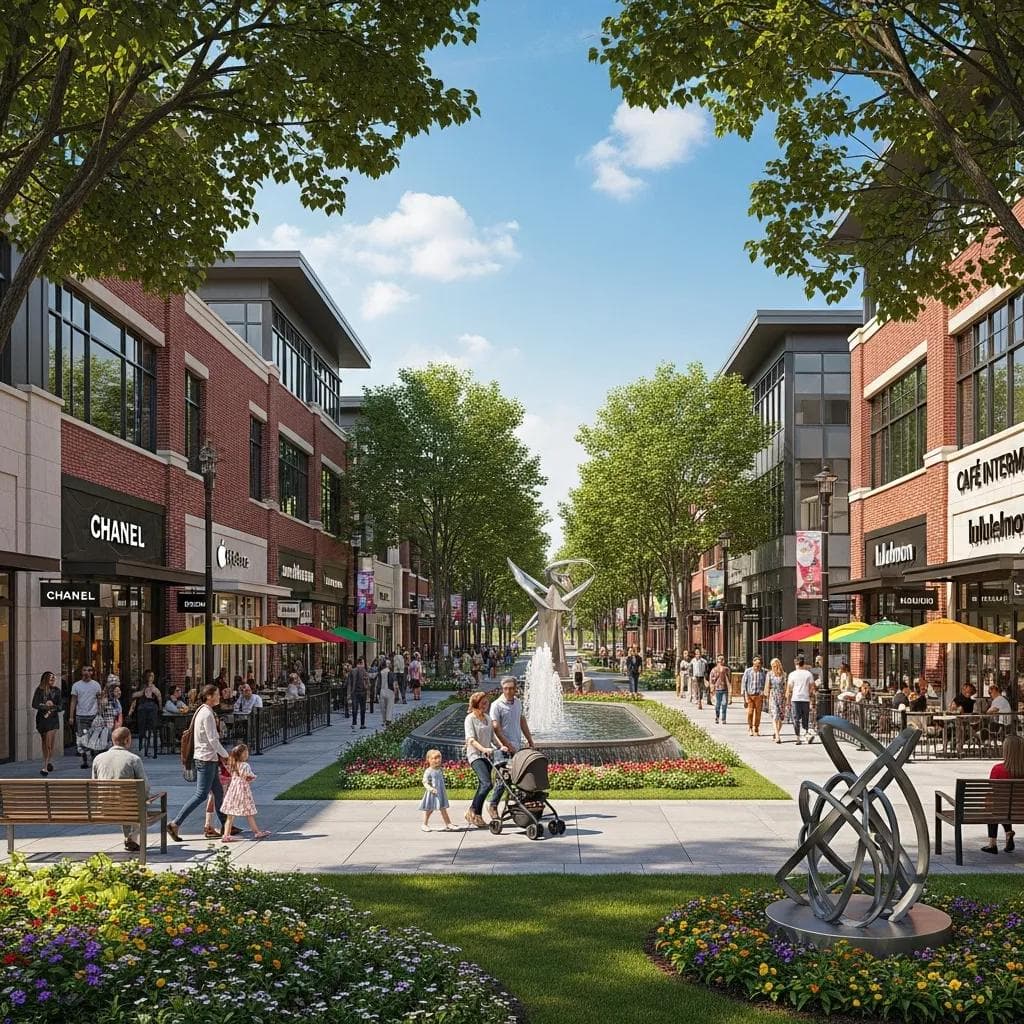
The third era began in 2014 with the opening of Avalon on Old Milton Parkway, which established a walkable, regional-draw mixed-use anchor on the east side of GA-400. Halcyon followed in 2019 on the Forsyth County line. In parallel, downtown Alpharetta was rebuilt around the Alpharetta City Center plaza, replacing surface parking with townhomes, craftsman new construction, and ground-floor retail.

Housing Market
What the Alpharetta market looks like today
The Alpharetta residential market organizes into three pricing tiers that move on different rhythms. Estate inventory in the Windward and Country Club of the South corridors posted a median sale price near $1,425,000 as of April 2026 (Redfin market data, ZIP codes 30004, 30005, 30009, and 30022). Move-up single-family inventory in the broader Alpharetta High and Cambridge High attendance zones closed at a median of approximately $735,000 over the same period, while townhomes and craftsman new-builds inside the Avalon, Halcyon, and downtown corridors cleared at roughly $625,000. Year over year, Alpharetta median sale prices were up about 3.1 percent (Redfin, April 2026 report), while inventory across all three tiers averaged 2.1 months of supply. Days on market averaged 32 days in Q1 2026, with Avalon-adjacent listings consistently transacting faster than estate inventory on larger lots in Windward.
The dynamics behind those numbers matter more than the numbers alone. A craftsman new-build inside the walking radius of Avalon is not priced the same as an identical home a mile east of GA-400 in the same school zone, and a Windward home with deeded Lake Windward access trades differently from an interior Windward lot of comparable square footage. School-attendance lines compound those effects sharply. For a current snapshot of available inventory, the Alpharetta listings page and the monthly market reports track these tiers in detail.
Schools
Schools serving Alpharetta neighborhoods
Alpharetta is served entirely by Fulton County Schools, the second-largest school district in Georgia. The city sits at the intersection of four high-school attendance zones, and buyers routinely walk a property with an attendance-zone map open on a phone because assessed-value premiums correlate visibly with which side of a boundary line a lot sits on. Cambridge High in Milton, Milton High, and Centennial High in Roswell all draw students from addresses inside Alpharetta city limits, in addition to Alpharetta High itself.
- Alpharetta High School — Fulton County Schools, grades 9–12. GreatSchools rating of 9/10 as of January 2026 (source: GreatSchools.org). The school anchors the central and eastern Alpharetta attendance footprint.
- Cambridge High School — Fulton County Schools, located in Milton and serving northwestern Alpharetta addresses. GreatSchools rating of 9/10 as of January 2026 (source: GreatSchools.org).
- Milton High School — Fulton County Schools, grades 9–12. GreatSchools rating of 9/10 as of January 2026 (source: GreatSchools.org). Serves western Alpharetta addresses adjacent to the Crabapple area.
- Centennial High School — Fulton County Schools, located in Roswell and serving the southern slice of Alpharetta. GreatSchools rating of 7/10 as of January 2026 (source: GreatSchools.org).
- Webb Bridge Middle School — Fulton County Schools, grades 6–8. GreatSchools rating of 8/10 as of January 2026 (source: GreatSchools.org). One of the primary middle schools feeding Alpharetta High.
- Hopewell Middle School — Fulton County Schools, grades 6–8. GreatSchools rating of 9/10 as of January 2026 (source: GreatSchools.org). Feeds the Cambridge High attendance zone in the northwestern Alpharetta corridor.
Lifestyle
Neighborhood character in Alpharetta
Daily life in Alpharetta is organized around two axes: the GA-400 commuter corridor and the Avalon-to-downtown walkable spine. Weekday mornings move quickly because a large share of the residential base works at offices along North Point Parkway, in the Sanctuary Park office submarket, or at corporate campuses in Sandy Springs, with GA-400 carrying traffic south by 8 a.m. Evenings and weekends shift toward Avalon, the Alpharetta City Center plaza downtown, and the Big Creek Greenway, with restaurants and the Ameris Bank Amphitheatre at Encore Park drawing both residents and regional visitors.
Walking Alpharetta neighborhoods, what stands out is how sharply pricing turns on the Big Creek Greenway connection and on the Cambridge-versus-Milton-versus- Alpharetta High boundary lines. Lots within a quarter-mile walking radius of Avalon carry a clear premium over comparable lots a mile east of GA-400, even with identical square footage. The Crabapple side, near Milton High, trades on a different curve than central Alpharetta around Webb Bridge Middle. Architecturally, the inventory layers cleanly across decades: 1990s traditional brick on slope-graded subdivision lots, 2010s-forward transitional new construction in Windward and Halcyon, and downtown craftsman infill replacing earlier ranch homes.

Architecture
Architecture and the built environment
The Alpharetta housing stock is layered across roughly four decades of construction activity. The earliest large-scale residential build cycle began in the 1990s after GA-400 opened, producing the traditional brick two-story homes on slope-graded subdivision lots that still define much of central and eastern Alpharetta. Windward, platted around Lake Windward and the Windward Golf Club, was a defining 1990s master- planned community and remains a recognizable inventory tier. A 2000s wave introduced larger stucco-and-stone traditional homes on cul-de-sac lots, common in the Country Club of the South corridor just south of the Johns Creek line.
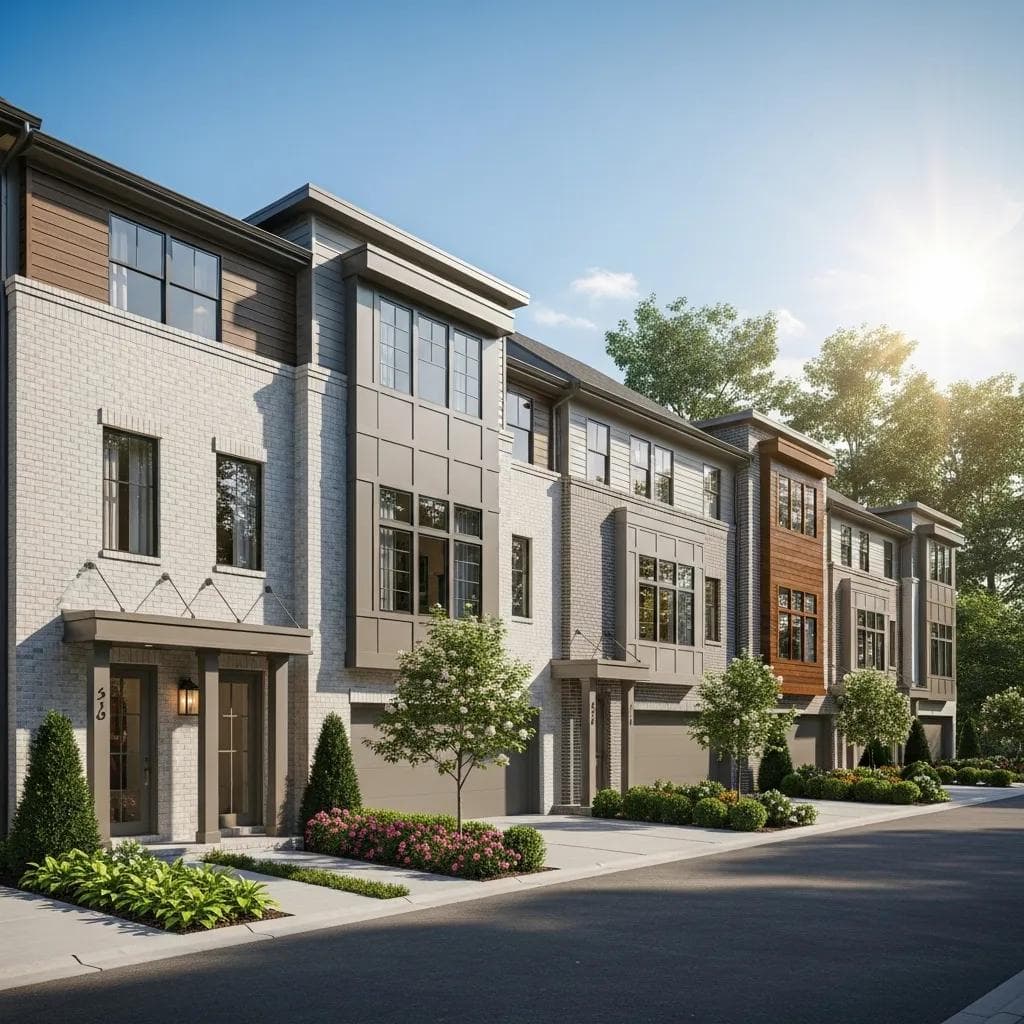
From roughly 2014 onward the inventory has shifted sharply toward transitional and craftsman new construction. Echelon and Halcyon brought modern townhome and luxury cottage product to the GA-400 corridor. Downtown Alpharetta filled in with craftsman new-builds and rowhouse townhomes replacing earlier surface-parking lots and ranch homes around the City Center plaza. Avalon-adjacent neighborhoods saw teardown activity on 1990s lots replaced with transitional primary-floor-living homes. Buyers shopping a specific Alpharetta neighborhood today frequently see two or three vintages of construction within the same cul-de-sac.


Commute & Connectivity
Getting to and from Alpharetta
Alpharetta sits roughly 25 miles north of downtown Atlanta along the GA-400 corridor. GA-400 is the dominant commuter artery, running north–south through the city and connecting to I-285 (the Perimeter) at Sandy Springs and then onward to Buckhead and downtown Atlanta. Off-peak drive time from downtown Alpharetta to Buckhead runs roughly 30 to 35 minutes; rush-hour southbound traffic in the 7 to 9 a.m. window extends that to 55 to 70 minutes. Express toll lanes added in 2026 have moderated peak congestion in the controlled-access lanes on portions of the corridor.
Inside the city, Old Milton Parkway, Windward Parkway, Haynes Bridge Road, North Point Parkway, and Mansell Road act as the practical connectors between residential subdivisions and the GA-400 interchanges. MARTA bus routes (Route 140 along Old Milton Parkway) connect Alpharetta to the North Springs rail station in Sandy Springs, where commuters can transfer to the heavy-rail Red Line. The Big Creek Greenway adds 8+ miles of paved trail connecting Alpharetta to Roswell and serves as a practical bike commute for residents working near North Point Parkway. Hartsfield-Jackson Atlanta International Airport runs roughly 45 to 60 minutes off-peak.
Adjacent Communities
Where Alpharetta meets its neighbors
Alpharetta shares attendance lines, retail corridors, and through-streets with three adjacent municipalities. Each has its own commercial core, school feed, and price band, and buyers shortlisting Alpharetta routinely cross-shop into at least one of these markets before choosing.
Milton
Northwest neighbor in Fulton County, anchored by Cambridge High and Milton High and the equestrian Crabapple corridor shared with Alpharetta.
Milton Guide →
Roswell
Southern neighbor along GA-400, sharing the Centennial High attendance area and the Big Creek Greenway corridor.
Roswell Guide →
Johns Creek
Eastern neighbor in Fulton County, home to the Country Club of the South corridor that runs along the Alpharetta line.
Guide in progress
Browsing more broadly? Start from the Home Search hub for every covered area, or read the seller representation overview for current market positioning.
Frequently Asked
Alpharetta questions buyers and sellers ask
What is the average home price in Alpharetta?
The median sale price for single-family homes in Alpharetta was approximately $735,000 as of April 2026, based on Redfin market data for ZIP codes 30004, 30005, 30009, and 30022. Prices vary meaningfully by neighborhood: Windward and Country Club of the South corridor estates trade well above the median, while downtown craftsman new-builds and Avalon-adjacent townhomes cluster closer to it. Year-over-year prices were up roughly 3.1 percent over the same period.
What schools serve Alpharetta neighborhoods?
Alpharetta is part of Fulton County Schools, the second-largest district in Georgia. The commonly assigned high schools serving Alpharetta-area addresses are Alpharetta High School, Cambridge High School, Milton High School, and Centennial High School, each drawing from a different geographic slice of the city. Webb Bridge Middle and Hopewell Middle are two of the larger middle schools in the area. The exact attendance zone follows the parcel address, not proximity, so two homes a quarter-mile apart can feed different high schools.
How long do homes stay on the market in Alpharetta?
Alpharetta single-family listings averaged about 32 days on market in Q1 2026, according to Redfin market reports pulled in April 2026. Avalon-adjacent townhomes and downtown craftsman new-builds typically move faster than that average, while estate properties on larger lots in the Windward and Country Club of the South corridors trend longer. Listings posted between March and June consistently transact quicker than fall and winter listings.
What is the commute from Alpharetta to Atlanta?
GA-400 is the primary commuter artery from Alpharetta into Atlanta, connecting downtown Alpharetta and the North Point corridor to I-285 (the Perimeter) and onward to Buckhead and Midtown. Off-peak drive time from Alpharetta to Buckhead runs roughly 30 to 35 minutes; rush hour can extend that to 55 to 70 minutes. MARTA bus service connects to the North Springs rail station in Sandy Springs, where commuters can transfer to the heavy-rail Red Line.
What is Avalon and how does it affect nearby home values?
Avalon is a 2.4-million-square-foot mixed-use development on Old Milton Parkway that opened in 2014 and expanded in 2017, combining retail, dining, residential, a hotel, and a conference center. It functions as the de facto town center for the GA-400 side of Alpharetta and draws regional traffic from Forsyth and Cherokee Counties. Single-family and townhome neighborhoods within walking and biking distance of Avalon command a clear premium over comparable inventory further from the development.
What landmarks define Alpharetta?
Avalon and Halcyon are the two largest mixed-use districts. Downtown Alpharetta, anchored by City Hall and the Alpharetta City Center, holds the historic core and the bulk of the new craftsman residential construction. The Big Creek Greenway provides 8+ miles of paved trail connecting much of the city. Ameris Bank Amphitheatre at Encore Park, Wills Park, North Point Mall, and Atlanta Tech Park are additional defining landmarks.
About Your Agent
Ashley Smith
REALTOR® | Georgia License #407881
Keller Williams Realty Atlanta Partners | Keller Williams Luxury Atlanta Partners
Ashley Smith is a licensed Georgia REALTOR® (license #407881) representing buyers and sellers across Alpharetta, Milton, Roswell, Johns Creek, and the north Fulton County corridor. Office address: 3840 Browns Bridge Rd, Cumming, GA 30041. To learn more about the brokerage and team, visit DreamSmith Realty or read the seller representation overview.
Start the Conversation
Looking at Alpharetta?
Browse current inventory, schedule a private tour, or ask a question about a specific neighborhood, school attendance zone, or commute corridor. We respond the same day.
Ashley Smith | (678) 485-8858 | ashley@dreamsmithrealty.com