
Journal
Vegetation and buffer rules at Lake Lanier are set by the U.S. Army Corps of Engineers (USACE) Mobile District under the Lake Lanier Shoreline Management Plan (SMP), and they govern what a waterfront owner may trim, clear, plant, or maintain on the federally managed shoreline that sits between the private property line and the lake. The shoreline itself is USACE land, not the homeowner's, so buyers in Cumming, Buford, Gainesville, Flowery Branch, and Dawsonville cannot assume tree removal, view clearing, or path cutting is permitted. Verification against the SMP, the recorded plat, and the USACE permit file is the operative step before listing or closing.
Why Vegetation Rules Matter on Lake Lanier
Vegetation rules matter on Lake Lanier because the shoreline buffer is federally managed land under the USACE Mobile District, not private property, and the buffer's primary function is water-quality protection for a drinking-water reservoir that serves metro Atlanta. The Lake Lanier Shoreline Management Plan (SMP) treats the vegetated strip between full pool elevation 1071 and the Corps line as a regulated zone with a presumption against clearing. Buyers and sellers who treat the buffer as private yard space inherit the consequences of any unauthorized work attached to the parcel.
USACE-managed shoreline and federal buffer restrictions
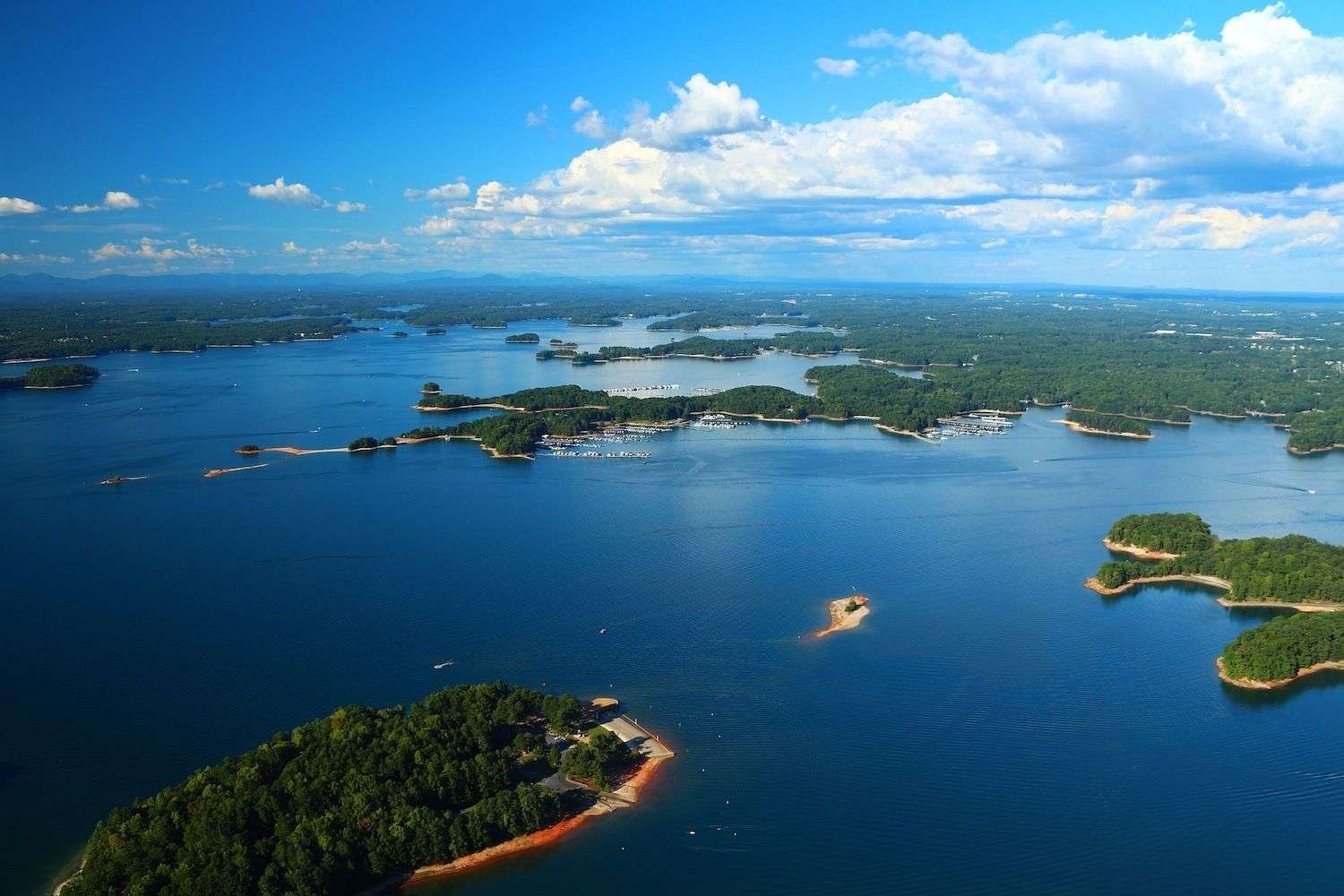
The U.S. Army Corps of Engineers Mobile District manages the Lake Lanier shoreline under the federal Flood Control Act authority that built Buford Dam in 1957. The reservoir spans roughly 38,000 surface acres at full pool elevation 1071 feet, with about 690 miles of shoreline across Hall, Forsyth, Dawson, Gwinnett, and Lumpkin counties, per USACE Mobile District public data as of Q2 2026. The land between full pool and the Corps line, often a strip 25 to 100 feet wide depending on topography, is USACE-owned and subject to the Lake Lanier Shoreline Management Plan. The SMP designates each segment of shoreline by classification, including Limited Development Area, Public Recreation Area, Protected Shoreline, and Prohibited Access, and the classification determines which activities, if any, the adjacent property owner may request through a shoreline-use permit.
Why buyers cannot assume trees can be cleared for a view
A wooded waterfront lot in Flowery Branch, Cumming, or Gainesville can look like an open-view property in waiting, but the trees are usually on USACE land rather than the buyer's parcel, and federal buffer rules treat removal as a regulated action rather than an owner's prerogative. The SMP generally prohibits the cutting of live trees with a diameter at breast height (DBH) of four inches or greater inside the buffer without written USACE authorization. Selective understory maintenance and the removal of hazardous, dead, or storm-damaged trees may be allowed under narrow conditions, but a written request to the Lake Lanier Project Management Office in Buford is the operative step. Buyers who proceed on the assumption that a view can be opened post-closing often find the regulatory door is closed.
How unauthorized work can create serious problems
Unauthorized vegetation removal inside the USACE buffer can trigger a written violation from the Mobile District, a restoration order that requires the property owner to replant native species at specified densities, and in some cases revocation of the adjacent shoreline-use permit. Restoration costs documented on Lake Lanier files have run from a few thousand dollars for a small understory infraction to mid-five figures for a cleared view corridor with mature canopy loss, per USACE Mobile District enforcement summaries reviewed in Q1 2026. A buyer who closes on a property with an unresolved vegetation violation inherits the open file and the restoration obligation. The cleanest position is to verify the buffer status, any open enforcement items, and any prior approved work before due-diligence expiration.
Buyer Questions About Vegetation and Views
Buyer questions about vegetation and views on Lake Lanier reduce to three operative items: what the SMP allows on this specific shoreline classification, what the existing USACE permit file shows for prior approved work, and what a documented view corridor or access path actually conveys. A confident answer requires the recorded plat, the USACE shoreline classification, and the permit history pulled directly from the Lake Lanier Project Management Office.
What can be trimmed, cleared, planted, or maintained?
The Lake Lanier Shoreline Management Plan distinguishes between routine maintenance, which is generally allowed without a permit, and modification, which requires written USACE authorization. Routine maintenance includes mowing existing grassed areas, removing invasive species such as kudzu and privet, hand-pulling weeds, and clearing storm debris. Modification includes any live-tree removal at four-inch DBH or greater, planting of non-native species, grading, mulching beds, installation of irrigation, and creation of a new path or view corridor. Native plantings consistent with USACE-published species lists may be authorized inside the buffer under specific conditions. Anything that changes the buffer's character, density, or canopy is treated as modification rather than maintenance and should be confirmed in writing before work begins.
How view corridors and access paths should be verified
A permitted view corridor or access path on Lake Lanier is documented in the USACE permit file with a sketch, a specified width, and a list of authorized maintenance actions. A view corridor is not a license to clear; it is a defined channel of selectively maintained vegetation that the permit holder agreed to keep within the dimensions on file. An access path is similarly bounded and typically limited to four to six feet of width for foot traffic to the dock. Buyers should request the existing permit, the approved sketch, and any correspondence from the Lake Lanier Project Management Office that references the corridor or path. If the on-the-ground condition is wider, more cleared, or differently routed than the permit shows, the gap is a finding that belongs inside the due-diligence period, not after closing.
Why wooded lots require extra diligence before purchase
Wooded waterfront lots in Hall County, Forsyth County, and Dawson County are often priced with an unstated assumption that the canopy can be thinned for a view, and that assumption is frequently incorrect under the current SMP. The diligence steps that protect a buyer are: pulling the USACE shoreline classification for the specific parcel, requesting any prior permit history attached to the address, walking the buffer with a USACE-familiar surveyor or shoreline contractor to identify the Corps line, and asking the Mobile District in writing whether a view-corridor permit would be considered on this classification. The answer to that last question is often no on Protected Shoreline classifications, and the value of the lot should reflect that constraint rather than an aspiration.
Seller Questions About Buffer Compliance
Sellers of Lake Lanier waterfront homes can reduce closing risk and protect listing price by treating the buffer record as a pre-listing item. A clean disclosure, a documented permit history, and a directed referral to USACE and licensed professionals position the buyer's due-diligence findings inside an expected file rather than a surprise.
Disclosing known shoreline or vegetation issues
Georgia's Seller's Property Disclosure Statement, issued through the Georgia Association of Realtors, asks the seller to disclose known material defects, and an open USACE buffer violation or unresolved vegetation enforcement letter qualifies. Sellers should also disclose any known prior unpermitted clearing, any restoration plantings still inside the establishment period, and any communications from the Lake Lanier Project Management Office that reference the shoreline. Withheld disclosures resurface during the buyer's due diligence or after closing through the USACE file, and the resulting renegotiation, terminated contract, or post-closing claim is a more expensive path than disclosure at listing. A documented, current disclosure is the operative protection for the seller's transaction posture.
Documenting approved work and maintenance history
Sellers should assemble the original USACE shoreline-use permit, the Exhibit C electrical attachment if a dock is present, the approved view corridor or access path sketch, any written authorization for prior plantings or removals, and dated invoices for routine maintenance such as invasive species removal and storm cleanup. A photo record of the buffer at multiple seasons is useful supporting documentation. A complete file shows the buyer's inspector that the property has been maintained inside the SMP regime rather than outside of it, which shifts the negotiating posture during the due-diligence period. The Lake Lanier Project Management Office in Buford is the source of record for the underlying permit history.
Directing buyers to USACE and licensed professionals
Sellers protect themselves and the transaction by directing buyer questions about buffer rules, view corridors, and clearing limits to the USACE Mobile District and to licensed Georgia professionals, rather than answering interpretively. The right professional set typically includes a Georgia-licensed land surveyor for the Corps line and parcel boundary, a USACE-familiar shoreline contractor for any buffer or structural work, and the Lake Lanier Project Management Office for permit and SMP questions. Local county environmental health offices in Hall County, Forsyth County, Dawson County, and Gwinnett County address shoreline-adjacent items such as septic setbacks and stormwater that intersect with the buffer. A clean referral list inside the seller's package reduces the volume of mid-contract questions and supports a faster path to closing.
Frequently Asked Questions
- Who owns the shoreline vegetation at Lake Lanier?
- The U.S. Army Corps of Engineers (USACE) Mobile District owns the land between full pool elevation 1071 and the Corps line at Lake Lanier, and the vegetation growing on that strip is federally managed. Adjacent homeowners hold the upland parcel only, and any maintenance, clearing, planting, or path-cutting on the USACE side requires a shoreline-use permit or falls under the limited routine-maintenance categories defined in the Lake Lanier Shoreline Management Plan. Buyers in Hall, Forsyth, Dawson, Gwinnett, and Lumpkin counties should treat the buffer as regulated federal land rather than private yard space.
- Can I clear trees for a view on my Lake Lanier lot?
- Live-tree removal of trunks four inches or greater in diameter at breast height inside the USACE buffer generally requires written authorization from the Lake Lanier Project Management Office. The Shoreline Management Plan does not treat view improvement as a per-se permitted purpose, and many shoreline classifications, including Protected Shoreline, do not allow view-corridor permits at all. Selective understory maintenance, hazardous-tree removal, and invasive species control may be allowed under specified conditions. Buyers who assume a wooded lot can be cleared for a big-water view after closing often find the regulatory door closed.
- What is a permitted view corridor on Lake Lanier?
- A permitted view corridor is a defined channel of selectively maintained vegetation documented in the USACE shoreline-use permit file, with a specified width, an approved sketch, and a list of authorized maintenance actions. It is not a license to clear-cut. The permit holder agreed to keep the corridor within the dimensions on file, and any expansion of width, depth, or routing without written USACE authorization is treated as a buffer violation. Buyers should request the approved sketch and walk the corridor against the document during the due-diligence period.
- What happens if previous owners cleared the buffer without a permit?
- Unauthorized clearing inside the USACE buffer can result in a written violation from the Mobile District, a restoration order requiring native replanting at specified densities, and, in some cases, revocation of the adjacent shoreline-use permit. The open file typically attaches to the parcel rather than the prior owner, so the buyer at closing inherits the restoration obligation. Buyers should request a current USACE status check on the shoreline before due-diligence expiration so that any open enforcement item is identified in time to renegotiate, remediate, or withdraw.
- Can I plant native species or build a path inside the Lake Lanier buffer?
- Native plantings consistent with USACE-published species lists may be authorized inside the buffer under specific conditions, and a foot-access path to a permitted dock is typically allowed within a narrow defined width, usually four to six feet. Both are treated as modifications rather than routine maintenance and should be confirmed in writing with the Lake Lanier Project Management Office before work begins. Non-native ornamentals, mulched beds, irrigation, and grading are generally not permitted inside the federally managed strip.
- Where do I confirm the current Lake Lanier vegetation and buffer rules?
- The operative source is the USACE Mobile District Lake Lanier Shoreline Management Plan, available through the Lake Lanier Project Management Office in Buford. The plan defines shoreline classifications, allowed and prohibited activities, the permit application process, and the maintenance categories that fall outside permit requirements. Buyers and sellers should confirm rules directly with the Mobile District rather than relying on a listing description, a contractor's verbal summary, or a prior owner's recollection, because the SMP has been updated since the original 1957 reservoir authorization and most parcel-level interpretations require a current file review.
Related
- Lake Lanier Community GuideNeighborhood, market, school, and shoreline overview for the full Lake Lanier reservoir.
- Lake Lanier Corps Line ExplainedHow the USACE-owned boundary between private parcels and the lake is established and verified.
- Can I Clear Trees on Lake Lanier?USACE shoreline rules, view assumptions, and what buyers should verify before purchase.
- Lake Lanier Dock Permits GuideUSACE Mobile District permit classes, transfer process, and compliance basics.
- Lake Lanier Survey and Title GuideCorps line, parcel boundary, and recorded plat workflow for waterfront due diligence.
- Lake Lanier Water Levels and Full Pool 1071How USACE manages reservoir elevation and how it intersects with the shoreline buffer.