
Journal
A Lake Lanier dock builder is a marine contractor who designs, repairs, and modifies private and community dock structures inside the U.S. Army Corps of Engineers (USACE) Mobile District permit envelope on the 690-mile federal shoreline managed under the Lake Sidney Lanier Shoreline Management Plan administered by the U.S. Army Corps of Engineers. This resource guide is a question-asking framework, not a contractor directory and not technical dock engineering advice: it helps Hall County, Forsyth County, Dawson County, Gwinnett County, and Lumpkin County buyers and sellers vet dock professionals around Cumming, Buford, Gainesville, Flowery Branch, and Dawsonville before scoping repair, flotation, electrical, or compliance work tied to a USACE-permitted dock at the Buford office.
When You May Need a Dock Builder or Dock Professional
A dock builder enters the picture any time a Lake Lanier waterfront parcel has a permitted USACE structure that needs repair, modification, or compliance work, or any time a buyer or seller needs an independent technical opinion on a structure tied to a federal shoreline-use permit. The 2004 USACE Mobile District Shoreline Management Plan controls what can be repaired in place, what counts as a modification, and what triggers a new submittal through the Lake Lanier Project Management Office in Buford. Understanding which situation applies determines whether a homeowner needs a marine contractor, an electrician, a permit-compliance consultant, or all three.
Repairs, maintenance, flotation, lifts, electrical, and structural concerns
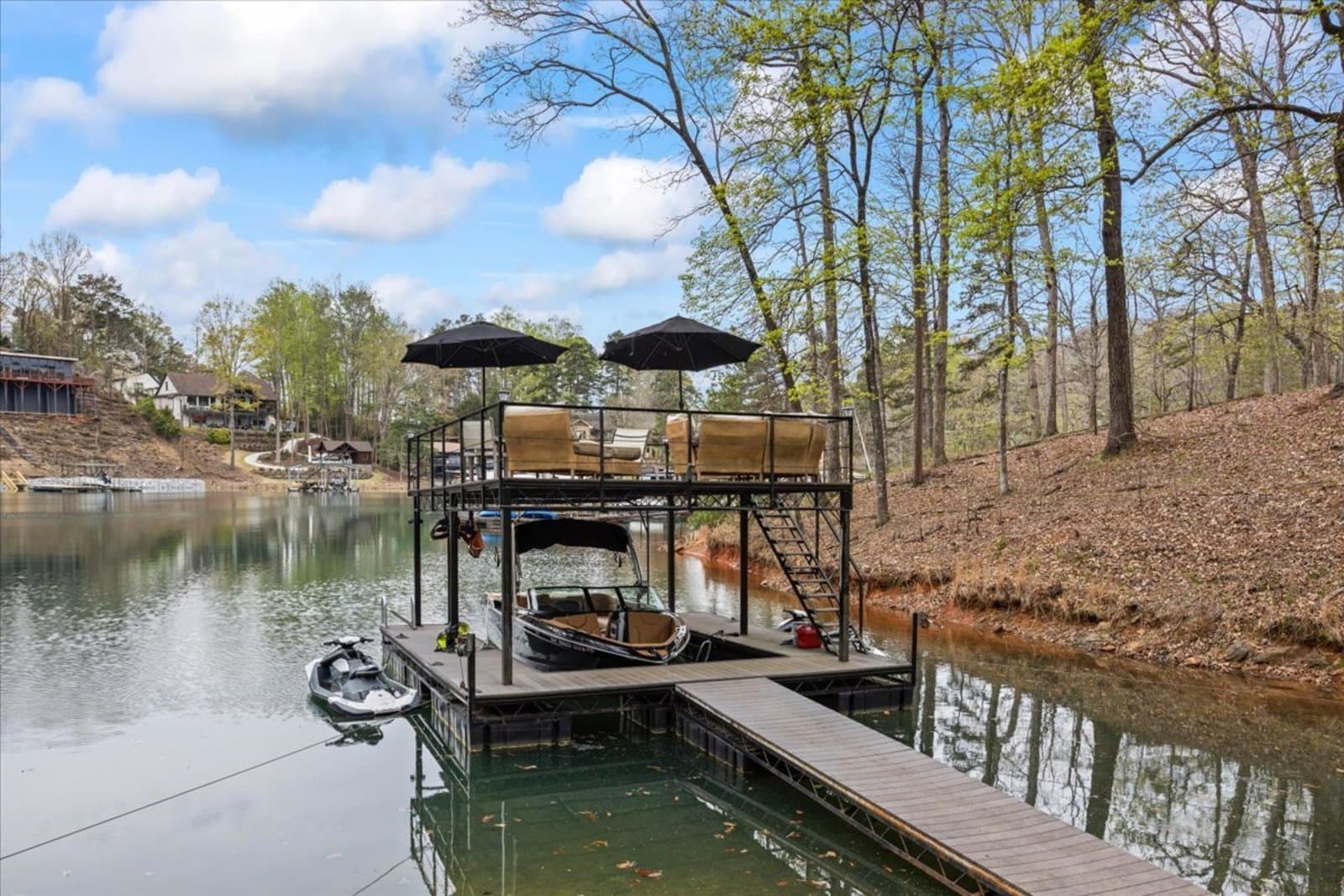
Most Lake Lanier dock work falls into a defined set of repair categories: float replacement when buoyancy drops below the permitted waterline, gangway repair or replacement, piling and frame rework, roof and decking repair, boat lift installation or service, and dock electrical service tied to USACE and county code. Each category has a different scope, a different cost band, and a different relationship to the permit on file. Float replacement and decking repair generally fit inside an existing permit envelope; a roof addition, a footprint expansion, or a slip-count change generally does not. Electrical work on a Lake Lanier dock is a category of its own. USACE Mobile District rules require the electrical service to meet the standards described in the Shoreline Management Plan and applicable National Electrical Code provisions, including ground-fault protection, conduit, grounding, and disconnect requirements. County electrical inspections in Hall County, Forsyth County, Dawson County, Gwinnett County, or Lumpkin County run parallel to the USACE requirement and are not interchangeable. A dock electrical panel that passed a county inspection in an earlier decade may still be flagged at the next USACE shoreline inspection if it does not meet current standards. Flotation, lifts, and structural elements drive most of the technical conversation with a dock builder. Older Lake Lanier docks were built with foam billets that lose buoyancy over time, especially after sustained drawdown years; newer permits typically specify encapsulated flotation. Lifts that were added without a permit revision can become enforcement issues at the next inspection. A qualified dock professional should be able to walk an owner through which conditions are repairs inside the existing permit, which conditions are modifications that require a new USACE submittal, and which conditions are documentation gaps that need to be resolved before any physical work begins.
Pre-listing preparation and buyer due diligence
Sellers preparing a Lake Lanier waterfront home for listing often engage a dock professional to walk the structure with the existing USACE permit and the most recent shoreline inspection notice in hand. The goal at this stage is documentary, not cosmetic: confirm that the as-built dock matches the permitted plan, identify visible conditions a buyer's inspector is likely to flag, and decide which items to address before the listing goes live and which items to disclose. A complete dock file at listing typically shortens the contract-to-close timeline because the buyer's side does not have to reconstruct the record from the Buford office on a contingency clock. Buyers under contract use a dock professional for a parallel reason. The home inspection contingency rarely covers the dock structure, the electrical service, or the compliance status of the USACE permit at the level of detail a Lake Lanier waterfront purchase requires. Independent technical opinions from a marine contractor, a licensed Georgia electrician, and where appropriate a structural engineer let the buyer's agent quantify any conditional repair scope and reflect it in negotiation rather than discover it after closing. The change-of-owner filing with the Mobile District is the moment compliance findings stop being the seller's problem and start being the buyer's, which is why due diligence at the dock matters as much as due diligence at the house.
Why dock work must align with current permit and USACE rules
Every Lake Lanier dock sits on a USACE-issued permit that specifies the permitted footprint, slip count, gangway length, roof dimensions, walkway path width, electrical service, and vegetation envelope. Repair work that stays inside that envelope is generally treated as maintenance. Work that changes the envelope, adds slips, extends the gangway, raises the roof, expands the walkway, or modifies vegetation beyond the permitted corridor is a modification that the Mobile District has to authorize before construction begins. A dock builder who understands the difference will route the homeowner to the Lake Lanier Project Management Office in Buford before pricing the job, not after. The practical risk of mismatched dock work is enforcement. A modification that proceeds without USACE authorization can trigger a noncompliance notice, a corrective-work order, or in extreme cases a removal directive, and the obligation runs with the parcel. That obligation transfers to the next buyer through the change-of-owner process, which is why pre-listing and pre-closing reviews focus on whether the structure on the water matches the structure described in the file. The Title 36 Code of Federal Regulations framework that governs USACE-managed reservoirs treats unauthorized shoreline modification as a federal compliance issue, not a county code issue, and county inspectors do not have jurisdiction to resolve it.
Questions to Ask Dock Builders
The right questions for a Lake Lanier dock builder are less about general construction experience and more about how the contractor handles the USACE permit envelope, the Mobile District submittal process, county electrical inspections, and the documentation a buyer or seller will need at closing. A short list of pointed questions tends to surface the difference between contractors who routinely work inside the Lake Lanier Project Management Office process and contractors who treat each project as standalone construction. The questions below are organized as a buyer-side or seller-side conversation guide, not as a hiring checklist.
Lake Lanier experience and USACE process familiarity
Start with how the contractor describes the Shoreline Management Plan and the role of the Lake Lanier Project Management Office in Buford. A contractor who routinely files paperwork with the Mobile District should be able to explain the difference between maintenance inside the existing permit, a modification that requires a USACE submittal, and a change-of-owner step at closing. Vague answers about whether a project needs a permit are a flag; specific answers that reference the Shoreline Management Plan's use-allocation zones, the permitted footprint on file, and the Mobile District's review timeline are typically a better signal of relevant experience. Follow with cove-level familiarity. Lake Lanier's shoreline behaves differently on the south end near Buford Dam, where deeper coves hold usable depth through summer drawdown, than on north-end coves and tributary arms where depth drops faster. A contractor who works the lake regularly will speak about float elevation, gangway angle, and pile depth in the context of the actual coves around Cumming, Buford, Gainesville, Flowery Branch, and Dawsonville rather than in general terms. Ask which Mobile District contacts they have worked with at the Buford office and how their last three projects on the lake interacted with the USACE inspection schedule.
Licensing, insurance, references, timelines, and written estimates
Confirm that the contractor holds the appropriate Georgia licensing for the scope of the project and carries current general liability and workers' compensation insurance with limits the homeowner can review on a certificate of insurance. Marine work on a USACE reservoir adds exposure that does not appear in a typical residential remodel, and a homeowner who is signing a contract for dock work should be able to see proof of coverage in writing rather than rely on a verbal answer. References from owners on Lake Lanier specifically, not on private lakes or other USACE reservoirs, give the most relevant picture of how the contractor performs inside the Mobile District process. Timelines and written estimates are the other half of the conversation. A clear written estimate should describe the scope of work, the materials, the relationship to the existing USACE permit, whether a Mobile District submittal is required, the expected schedule, the payment structure, and the warranty terms. Verbal estimates and handshake schedules are common in marine contracting but expose the homeowner to scope drift and unexplained change orders. Buyers who are planning to negotiate conditional repairs into a Lake Lanier purchase contract need written scope from a dock professional to bring numbers to the negotiation, not approximations.
Electrical, structural, flotation, and compliance coordination
Electrical work on a Lake Lanier dock typically requires a licensed Georgia electrician working alongside the dock contractor, with a county electrical inspection from Hall County, Forsyth County, Dawson County, Gwinnett County, or Lumpkin County depending on the parcel. Ask how the contractor coordinates with the electrician and the county inspector, whether the electrician is in-house or subcontracted, and how the final inspection record is delivered to the homeowner. A dock electrical service that meets current USACE standards and carries a current county inspection record is significantly easier to transfer at the change-of-owner step than one that does not. Structural and flotation questions follow the same pattern across the lake. For float replacement, ask which encapsulated flotation specification the contractor proposes and how it matches the elevation described in the permit on file. For gangway, piling, or frame work, ask how the contractor handles material specifications that may differ from the original construction and how that difference is reflected in the USACE record on file in Buford. For compliance coordination, ask how the contractor handles a job that uncovers an unpermitted condition mid-project, because that scenario triggers a Mobile District conversation rather than a continuation of construction, and the answer determines whether the project pauses for a submittal or continues into an enforcement risk. The compliance-coordination answer tends to separate contractors who treat the USACE permit as the controlling document from contractors who treat it as paperwork, and that distinction matters more on Lake Lanier than on private or state-managed lakes.
How Buyers and Sellers Should Use This Resource
This guide is a question-asking framework, not a contractor directory and not technical dock engineering advice. The right way to use it is as preparation: a buyer or seller walks into a conversation with a marine contractor, a Georgia-licensed electrician, a USACE Mobile District representative, or a real estate agent better prepared to ask specific questions and recognize specific answers. The decisions themselves belong to the licensed professionals and to the USACE record, not to a website.
Gather multiple professional opinions where appropriate
Material dock decisions on Lake Lanier almost always warrant more than one professional opinion. Structural work that involves pilings, gangway, or frame replacement; electrical work that involves panel replacement or service upgrade; flotation work that affects the permitted elevation; and any work that crosses into a USACE modification all benefit from a second written scope and a second written estimate. Multiple opinions also help separate scope items that are genuinely required from items that are recommended but optional, which matters when a buyer is allocating a closing credit or a seller is allocating a pre-listing repair budget. The second opinion should come from a contractor with comparable Lake Lanier experience, not from a general handyman or a private-lake contractor whose work does not touch the Mobile District process. A homeowner who has trouble finding a second qualified opinion can contact the Lake Lanier Project Management Office in Buford for guidance on the USACE process and a Georgia-licensed electrician for the electrical scope; the agent's role is to coordinate the conversation, not to substitute for the technical professionals.
Avoid relying on listing language alone
Lake Lanier listing language describes docks in a variety of phrases that do not map cleanly to the USACE permit record. Phrases such as 'dock,' 'dock-eligible,' 'community dock,' 'shared dock,' 'covered dock,' or 'lift in place' can each describe materially different conditions on the federal shoreline contour, and the listing photo rarely shows the full structure, the electrical service, or the vegetation envelope. Buyers who base their offer on the listing language alone, without independent confirmation from the Mobile District file and a walk-through with a dock professional, take on documentation risk that is not visible at the showing. The practical fix is sequencing. Buyers should request the existing USACE permit number, the as-built diagram, the most recent shoreline inspection notice, and the county electrical inspection record during due diligence, then have a dock professional walk the structure with those documents in hand. Sellers should make the same documents available at listing rather than waiting for the buyer's side to request them. In either direction, the conversation is faster and the negotiation is cleaner when the listing language is treated as a starting summary rather than as a substitute for the federal permit record.
Ask Ashley Smith for real estate strategy, not technical dock advice
Ashley Smith of The Norton Agency works the Lake Lanier waterfront market on the real estate side of the transaction: pricing strategy, market positioning, contract terms, due-diligence sequencing, change-of-owner coordination at closing, and how the dock condition affects the negotiation. Technical dock decisions belong to a licensed marine contractor, the dock electrical decisions belong to a licensed Georgia electrician, and the federal permit determinations belong to the U.S. Army Corps of Engineers Mobile District through the Lake Lanier Project Management Office in Buford. The clean version of the workflow uses each role for what it is qualified to decide. For a Lake Lanier buyer, that typically looks like a real estate strategy conversation with Ashley Smith of The Norton Agency, a contractor walk-through with a marine professional, an electrical inspection scope with a licensed Georgia electrician, and a documentary confirmation with the Mobile District. For a Lake Lanier seller, the same four-conversation structure runs in reverse: documentary confirmation first, technical scope second, electrical inspection third, and real estate strategy fourth. The strategy conversation is the one this site is built to support; the technical decisions are routed to the licensed professionals who carry the liability for them.
Frequently Asked Questions
- Does a Lake Lanier dock builder need to know the USACE Shoreline Management Plan?
- Yes. Every private and community dock on Lake Lanier sits on a USACE Mobile District permit issued under the Lake Sidney Lanier Shoreline Management Plan administered by the U.S. Army Corps of Engineers, and meaningful repair or modification work has to align with that permit's footprint, slip count, gangway length, roof, walkway, electrical, and vegetation envelope. A contractor who routinely files paperwork with the Lake Lanier Project Management Office in Buford should be able to describe the difference between maintenance inside the permit, a modification that requires a Mobile District submittal, and a change-of-owner step at closing.
- Who handles the electrical inspection on a Lake Lanier dock?
- Dock electrical work is typically performed by a licensed Georgia electrician and inspected by the county inspector for Hall County, Forsyth County, Dawson County, Gwinnett County, or Lumpkin County, depending on which county the parcel is in. USACE Mobile District rules under the Shoreline Management Plan run in parallel to the county inspection, including ground-fault protection, conduit, grounding, and disconnect requirements. A dock electrical panel that passed a county inspection years ago can still be flagged at the next USACE shoreline inspection if it does not meet current standards.
- Can a dock builder add a roof, expand the footprint, or add a slip without a new USACE permit?
- Generally no. The Shoreline Management Plan specifies the permitted footprint, slip count, roof dimensions, gangway length, and walkway corridor for each permit class, and any change to those elements is treated as a modification rather than maintenance. A modification has to be submitted to the Lake Lanier Project Management Office in Buford for Mobile District review before construction. A contractor who proposes those changes without referencing the USACE submittal process is a signal to ask follow-up questions.
- Should a buyer engage a dock professional during due diligence?
- Yes. A standard home inspection contingency rarely covers the dock structure, the dock electrical service, or the compliance status of the USACE permit at the level of detail a Lake Lanier waterfront purchase requires. Independent technical opinions from a marine contractor, a Georgia-licensed electrician, and where appropriate a structural engineer let the buyer's agent quantify any conditional repair scope before the change-of-owner filing with the Mobile District clears.
- How should a seller prepare the dock before listing?
- A seller should gather the existing USACE permit number, the as-built dock diagram, the most recent USACE shoreline inspection notice, any open compliance correspondence, and the county electrical inspection record from the applicable Hall County, Forsyth County, Dawson County, Gwinnett County, or Lumpkin County inspector. A pre-listing walk-through with a qualified dock professional, with those documents in hand, identifies any items a buyer's inspector is likely to flag and lets the seller decide which items to repair before listing and which items to disclose.
- Why is this guide a question framework rather than a contractor list?
- Marine contracting on a federal USACE reservoir involves liability, permitting, electrical, and structural decisions that the licensed professionals and the Mobile District are qualified to make. A real estate site can prepare a homeowner to ask better questions and recognize stronger answers, but the technical decisions belong to the licensed marine contractor, the Georgia-licensed electrician, and the USACE Lake Lanier Project Management Office in Buford. Ashley Smith of The Norton Agency handles the real estate strategy side of the conversation.
Related
- Lake Lanier Dock Permits GuideUSACE Mobile District permitting, classes, and transferability at closing.
- Transferring a Lake Lanier Dock PermitChange-of-owner procedure, documents, and timing for buyers and sellers.
- Lake Lanier Exhibit C Electrical InspectionHow dock electrical service is inspected under USACE and county code.
- Lake Lanier Dock Sizes and TypesSingle-slip, double-slip, party dock, and community dock distinctions.
- Buying a Home with an Unpermitted DockRisk, disclosure, and remediation when a dock is not on the USACE file.
- Lake Lanier Home Inspection ChecklistWaterfront due-diligence items beyond a standard home inspection.