
Journal
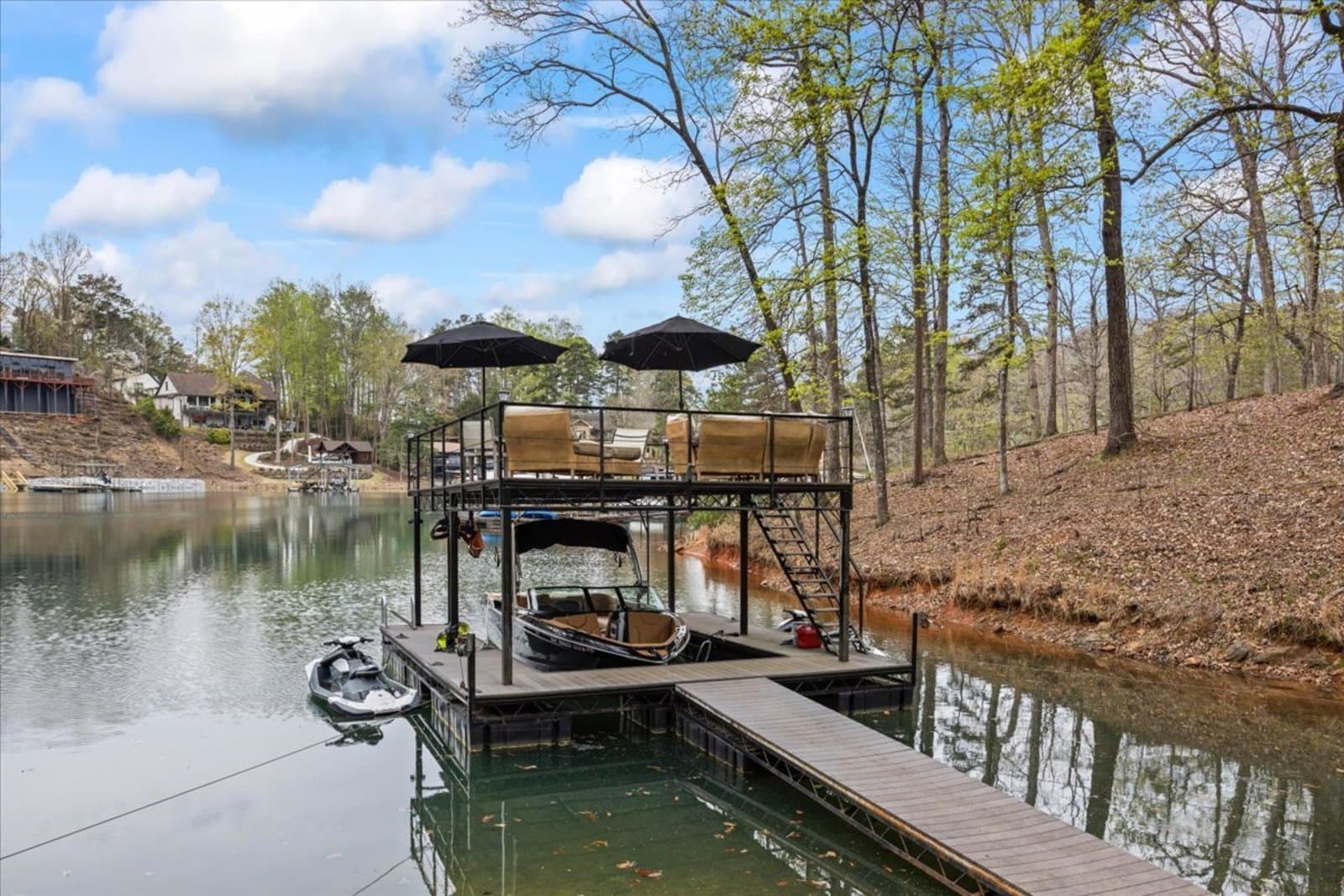
Buying a Lake Lanier home with an unpermitted dock means inheriting a federal compliance problem, not a fixable cosmetic flaw. Lake Lanier is a U.S. Army Corps of Engineers reservoir managed by the USACE Mobile District under the Lake Sidney Lanier Shoreline Management Plan administered by the U.S. Army Corps of Engineers, and any dock structure not tied to a current permit on file at the Lake Lanier Project Management Office in Buford is subject to removal, enforcement, or denial of a change-of-owner filing. The dock may look identical to a permitted neighbor's, but at closing the legal status, not the physical structure, controls value, financing, insurance, and the buyer's downstream options.
Why an Unpermitted Dock Is a Serious Issue
An unpermitted dock on Lake Lanier is a federal noncompliance issue first and a real estate issue second. Because the U.S. Army Corps of Engineers, Mobile District, holds sole shoreline authority, county records and MLS listing language do not reflect permit status, and a structure that appears identical to a neighbor's permitted dock can carry no permit, a lapsed permit, or an open enforcement notice that does not must be re-issued by USACE to the new owner.
Permit status, compliance, and USACE authority
The U.S. Army Corps of Engineers, Mobile District, administers every private and community dock on Lake Lanier through the Lake Lanier Project Management Office in Buford. Shoreline authority traces back to the original Buford Dam project and is exercised today through the Lake Sidney Lanier Shoreline Management Plan administered by the U.S. Army Corps of Engineers, Title 36 of the Code of Federal Regulations, and Engineer Pamphlet EP 1130-2-406. A permitted dock has a permit number, a permit class (Class I single-slip, Class II double-slip, or a legacy oversized structure), an as-built diagram on file, and a record of USACE shoreline inspections. An unpermitted dock has none of those, regardless of how long the structure has been in the water. Unpermitted status can come from several origins on Lake Lanier. A dock built before the current Shoreline Management Plan and never brought into the permitted inventory, a dock added or expanded after the permitted as-built without a USACE modification approval, a permit that lapsed on a prior change of ownership, or a structure that drifted into a Protected Shoreline or Prohibited Access zone after a shoreline reclassification each produce the same outcome: the structure is not on the USACE file for that parcel. Hall County, Forsyth County, Dawson County, Gwinnett County, and Lumpkin County tax records and building permits do not substitute for a USACE shoreline permit; the county and the federal authority regulate different jurisdictional lines on the same parcel.
Why buyers should not assume a dock can simply be legalized later
The Mobile District has not been issuing new residential dock permits across most of the developed Lake Lanier shoreline since the Lake Sidney Lanier Shoreline Management Plan administered by the U.S. Army Corps of Engineers capped permitted dock density. In the coves surrounding Cumming, Buford, Gainesville, Flowery Branch, and Dawsonville, the residential permit inventory is effectively closed, so a buyer cannot reliably plan on legalizing an unpermitted dock after closing the same way a homeowner might cure a county code violation through a retroactive permit application. The federal cap is a policy choice, not an administrative backlog. In limited cases, the Mobile District will evaluate an after-the-fact permit request for a structure that already exists, but the outcome depends on the shoreline zone classification, the cove's current permitted dock density, the type of modification, and whether the structure complies with current footprint, gangway length, slip count, electrical, and vegetation rules. Buyers should treat 'we can just apply for a permit later' as an unverified assertion until the Lake Lanier Project Management Office in Buford confirms eligibility in writing for that specific parcel and structure.
How dock issues can affect value, financing, insurance, and negotiations
An unpermitted dock affects value before it affects anything else. Current market conditions require a dated MLS comparison that identifies the area, property type, reporting period, and sample before a buyer relies on it. Financing and insurance compound the issue. A lender's appraiser may decline to credit the dock in the value reconciliation if the permit is not on file, and homeowner's insurance carriers can decline to cover the structure or exclude liability for use of a dock that does not appear in USACE records. The negotiation effect is downstream of those underwriting realities: a buyer who confirms unpermitted status during due diligence typically renegotiates against the lake-access comparable rather than the permitted-dock comparable, requests a price adjustment that reflects removal and replacement risk, or terminates under the inspection or financing contingency rather than carrying the federal exposure into closing.
Buyer Due Diligence Before Proceeding
Due diligence on a Lake Lanier home with an unpermitted dock runs on a parallel track to the standard home inspection. Title searches, county tax records, and MLS listing reports do not reveal USACE shoreline permit status, so the buyer's agent has to drive a separate documentary review through the Lake Lanier Project Management Office in Buford and licensed marine and electrical professionals during the due-diligence window.
Request all dock, permit, and shoreline records
The first written request to the listing agent should ask for the existing USACE Mobile District permit number, the permit class, the as-built diagram on file, the most recent USACE shoreline inspection notice, any open compliance correspondence, and the prior change-of-owner record from the most recent sale. If the seller cannot produce any of those documents, that absence itself is the signal: a permitted Lake Lanier dock generates a paper trail through the Buford office, and an unpermitted dock typically does not. Buyers should also request electrical inspection records from the applicable Hall County, Forsyth County, Dawson County, Gwinnett County, or Lumpkin County inspector, the deed, the legal description showing the parcel's relationship to the federal shoreline contour, and any HOA covenants that reference dock access or community shoreline use. A community slip held by an HOA is governed by covenants and by a separate USACE community permit; that distinction matters when the listing language uses 'dock access' or 'dock available' loosely. The combination of USACE file, county records, and HOA documents is what allows a buyer to confirm whether the dock is permitted, community-permitted, or unpermitted.
Contact USACE and appropriate licensed professionals
Independent confirmation from the Lake Lanier Project Management Office in Buford is the only authoritative source for permit status. The office can confirm whether a permit exists for the parcel, the permit class, the date of the most recent inspection, any open enforcement notices, and the status of the most recent change-of-owner filing. A buyer's agent should make that call during the due-diligence period and document the response in writing, because the verbal answer becomes part of the buyer's record of reasonable inquiry. A licensed Georgia marine contractor should walk the structure for structural condition, float buoyancy, gangway, piling, and roof. A licensed Georgia electrician should evaluate the electrical service against current USACE and county code, including ground-fault protection and bonding. Where the structure may sit in a Protected Shoreline or Prohibited Access zone, a survey or shoreline-zone confirmation through the Mobile District clarifies whether the dock could be permitted at all under the current Shoreline Management Plan. Each of these professionals reports against a defined standard, and their reports become part of the buyer's negotiation file.
Understand possible removal, repair, delay, or renegotiation outcomes
USACE enforcement outcomes for an unpermitted Lake Lanier dock fall into four practical categories that a buyer should understand before the due-diligence period closes. The Mobile District can issue a documentation notice requiring the owner to assemble records for the structure, a conditional after-the-fact permit that requires specific modifications to footprint, gangway, electrical, or vegetation before the permit is finalized, a denial of after-the-fact permitting that leaves the structure unpermitted, or a removal order with a defined deadline for the owner to take the dock out of the water at the owner's expense. A buyer who closes inherits whichever determination the Mobile District ultimately assigns, and the timing of that determination is not controlled by the buyer's closing schedule. Closing first and resolving the permit later is a structural exposure to a federal enforcement timeline, not a remodel decision. The practical buyer-side responses on Lake Lanier are typically four: renegotiate the contract against the same-ZIP lake-access comparable and price the dock out of the deal, condition closing on the seller obtaining USACE confirmation of after-the-fact permit eligibility, extend the due-diligence period to allow the Lake Lanier Project Management Office in Buford to assemble the record, or terminate the contract under the existing inspection or financing contingency. Each path is legitimate, and the right choice depends on the buyer's risk tolerance, the lender's appetite, the carrier's willingness to insure the structure, and the seller's willingness to engage with the Mobile District before the closing date. None of those paths is decided by the listing agent's characterization of the dock.
How to Structure the Buying Decision
Structuring a buying decision on a Lake Lanier home with an unpermitted dock means deciding in advance which version of the parcel the buyer is actually purchasing: a permitted-dock waterfront home, a lake-access home with a structure to be removed, or a non-dockable parcel under a federal enforcement timeline. The contract terms, contingencies, price, and post-closing budget follow from that decision, not from the listing photograph.
Risk tolerance, price adjustment, and contingency strategy
A buyer comfortable with federal compliance uncertainty can proceed on an unpermitted dock by treating the structure as zero-value in the price reconciliation. That means underwriting the offer against same-ZIP lake-access comparables, building in a removal-and-replacement budget, and writing inspection and financing contingencies broad enough to capture USACE outcomes that may not surface until after the standard due-diligence period closes. A buyer who needs certainty at closing should not proceed without a written USACE confirmation of permit eligibility for the existing structure. Contract structure matters as much as price. A dock-specific contingency tied to documentary confirmation of permit status from the Lake Lanier Project Management Office in Buford, an extended due-diligence period to allow the USACE record to be assembled, and a seller representation that no open enforcement notices exist on the parcel are the kind of provisions that move risk back to the seller where it belongs. None of these is exotic; they are standard contingency mechanics applied to a federal-permit fact pattern.
Alternatives to unpermitted dock properties
USACE permits and licenses are nontransferable. A new owner of an existing facility may apply through the Lake Lanier Operations Management Office, and approval is not automatic. Confirm the property-specific record and current requirements before closing. USACE permits and licenses are nontransferable. A new owner of an existing facility may apply through the Lake Lanier Operations Management Office, and approval is not automatic. Confirm the property-specific record and current requirements before closing. A community slip, HOA access right, or marina lease is a separate arrangement; verify its ownership, assignment rules, fees, and availability in the applicable documents.
Work with Ashley Smith before writing or waiving contingencies
An unpermitted dock surfaces in due diligence as documents that do not exist rather than as a defect that an inspector flags. The absence of a permit, the absence of an as-built diagram, the absence of a recent inspection notice, and the absence of a prior change-of-owner record are each individually possible to explain and collectively the pattern that defines an unpermitted structure on Lake Lanier. A buyer's agent who works the lake regularly knows which documents to ask for, in what order, and which silences to escalate to the Lake Lanier Project Management Office in Buford. Ashley Smith, real estate agent with The Dream Smith Team at Compass, advises buyers to align the contract's inspection and financing contingencies, the due-diligence period, the USACE documentary review, and the dock-specific contingency language before the offer is written, not after the deal is bound. Final permit determinations come from the USACE Mobile District, structural condition from a licensed Georgia marine contractor, electrical condition from a licensed Georgia electrician, and title and contract law from a Georgia closing attorney. The agent's role is to sequence those professionals and the documentary review against the closing calendar so the buyer keeps optionality through the decision points that matter.
Frequently Asked Questions
- What does it mean if a Lake Lanier dock is unpermitted?
- An unpermitted dock on Lake Lanier is a physical structure with no current shoreline-use permit on file at the U.S. Army Corps of Engineers, Mobile District, through the Lake Lanier Project Management Office in Buford. Because Lake Lanier is a federal reservoir created by Buford Dam, the USACE permit, not the county tax record or the MLS listing language, controls whether the structure is legally allowed in the water. An unpermitted dock is subject to a Mobile District enforcement determination that can range from a notice requiring documentation, to a conditional after-the-fact permit with required modifications, to a removal order.
- Can I get a permit for an unpermitted dock on Lake Lanier after I buy the home?
- Not reliably. The USACE Mobile District capped new residential dock permits under the Lake Sidney Lanier Shoreline Management Plan administered by the U.S. Army Corps of Engineers, so most coves around Cumming, Buford, Gainesville, Flowery Branch, and Dawsonville are at or near their permitted dock density. The Mobile District will evaluate after-the-fact requests for some existing structures, but eligibility depends on the shoreline zone classification, current permitted density, the type of modification, and whether the structure meets current footprint, gangway length, slip count, electrical, and vegetation rules. Buyers should not proceed on the assumption that an unpermitted dock can be legalized later without written confirmation from the Lake Lanier Project Management Office in Buford for that specific parcel.
- How does an unpermitted dock affect financing and insurance on a Lake Lanier home?
- A lender's appraiser may decline to credit the dock in the value reconciliation if no permit is on file with the USACE Mobile District, which can reduce the appraised value and the loan amount. Homeowner's insurance carriers can decline to cover the dock structure, exclude liability for use of the dock, or condition the policy on permit confirmation. Buyers should disclose the permit status to the lender and the insurer during due diligence and obtain written underwriting confirmation before waiving the financing contingency.
- What documents should I request to confirm whether a Lake Lanier dock is permitted?
- Request the existing USACE permit number, the permit class, the as-built diagram on file, the most recent USACE shoreline inspection notice, any open compliance correspondence, and the prior change-of-owner record from the last sale. Also request the electrical inspection record from the applicable Hall County, Forsyth County, Dawson County, Gwinnett County, or Lumpkin County inspector. Independent confirmation from the Lake Lanier Project Management Office in Buford is the only authoritative source; the listing agent's characterization is not a substitute for the USACE record.
- Can the USACE Mobile District require an unpermitted Lake Lanier dock to be removed?
- Yes. The Mobile District can issue a removal order for an unpermitted structure under Title 36 of the Code of Federal Regulations and the Lake Sidney Lanier Shoreline Management Plan administered by the U.S. Army Corps of Engineers, with a defined deadline for the owner to remove the dock at the owner's expense. A buyer who closes on an unpermitted dock inherits whichever enforcement outcome the Mobile District ultimately assigns to the structure, including a removal obligation if after-the-fact permitting is not available for that shoreline zone.
- Should I write a price adjustment into the offer if the dock is unpermitted?
- Most buyers underwrite an unpermitted dock at zero value, which means writing the offer against same-ZIP lake-access comparables rather than permitted-dock comparables. Buyers should also pair the price adjustment with dock-specific contingency language tied to documentary confirmation of permit status from the Lake Lanier Project Management Office in Buford. Current market conditions require a dated MLS comparison that identifies the area, property type, reporting period, and sample before a buyer relies on it.
Related
- Lake Lanier Dock Permits GuideHow USACE Mobile District residential dock permits work on Lake Lanier.
- How to Transfer a Lake Lanier Dock PermitChange-of-owner procedure, documents, and timing through the Buford office.
- Understanding the Corps Line on Lake LanierWhere federal shoreline jurisdiction ends and county jurisdiction begins.
- Deep-Water Dock Homes on Lake LanierPermitted private-dock parcels in coves with year-round usable water depth.
- Buford GA Lakefront HomesWaterfront inventory near Buford Dam and the south end of Lake Lanier.
- Lake Lanier Community GuideFull neighborhood, market, school, and shoreline overview for Lake Lanier.