
Journal
Lake Lanier boat slip options fall into four practical categories: a federally permitted private dock tied to a single-family parcel, a community slip inside an HOA-managed dock cluster, a commercial marina slip leased from operators like Aqualand Marina or Holiday Marina, and dry storage or public boat ramp access through Buford Dam, West Bank Park, or other USACE day-use areas. Each option carries different costs, transferability, waitlist exposure, and convenience tradeoffs. Buyers comparing waterfront homes around Buford, Cumming, Gainesville, Flowery Branch, and Dawsonville should treat boat access as a separate due-diligence track from the home itself, because USACE Mobile District rules, HOA covenants, and marina lease terms each control a different piece of that access.
Boat Slip Options on Lake Lanier
Boat slip options on Lake Lanier exist on a spectrum from deeded ownership to seasonal rental, with USACE Mobile District authority governing every permitted structure inside the federal shoreline contour. The four practical paths a buyer encounters are private permitted docks, community-managed slips, marina slips, and ramp-based access paired with dry storage. Each path involves a different document set, a different cost profile, and a different transferability outcome at resale.
Private docks and permitted slips
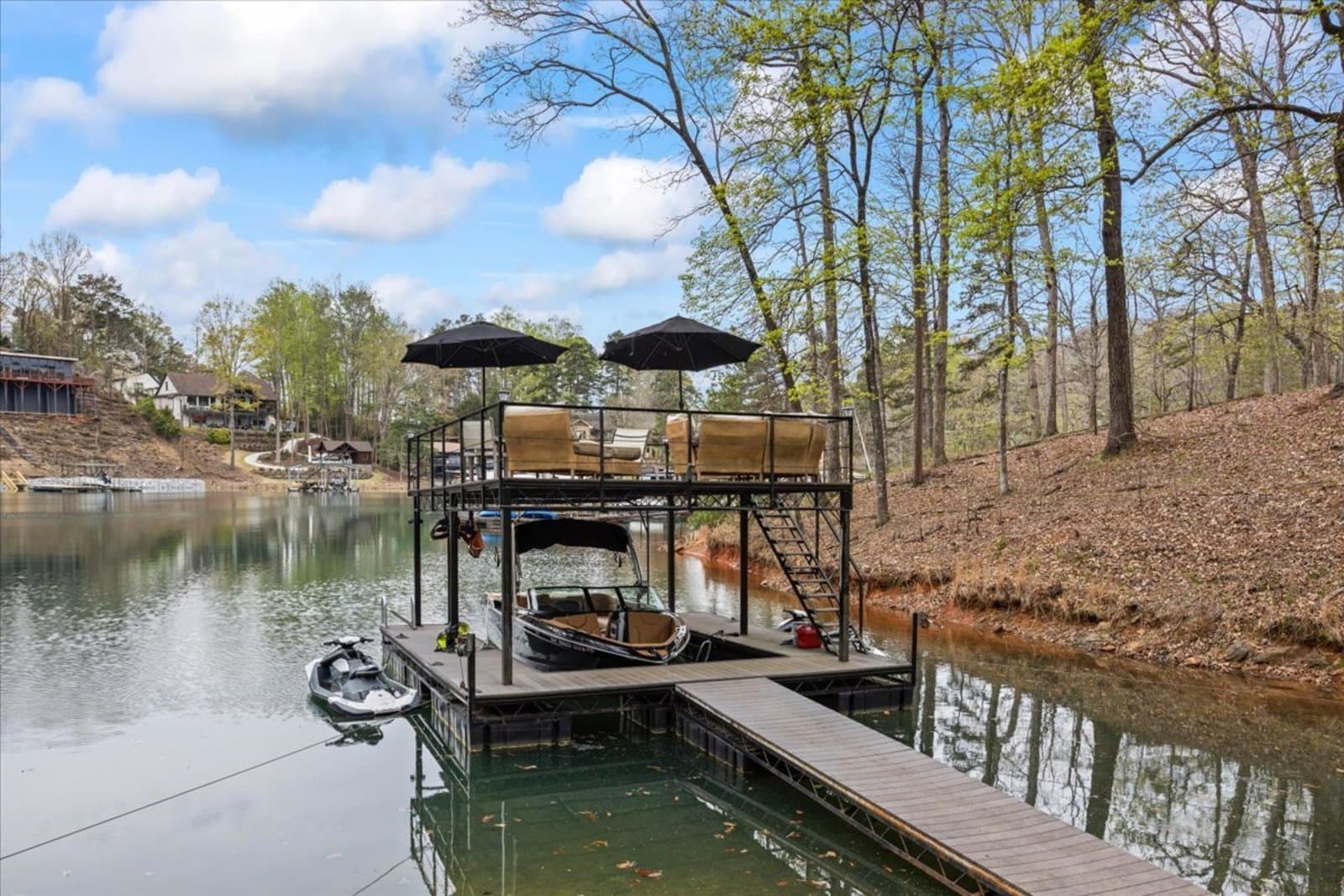
A private dock on Lake Lanier is a USACE Mobile District-permitted structure attached to a single-family deeded parcel for the exclusive use of that owner. The permit class identifies what the structure can hold: Class I authorizes a single-slip dock, Class II authorizes a double-slip dock, and a small set of legacy oversized structures remain grandfathered under earlier shoreline plans. The structure is permitted to the parcel, not to the boat owner, which is why it conveys at closing with a USACE change-of-owner filing processed through the Lake Lanier Project Management Office in Buford. The practical benefit of a private permitted slip is same-day, walk-down access from the home to the boat with no waitlist, no annual renewal, and no marina lease. The practical responsibility is ownership of the structure itself. The homeowner is accountable for float buoyancy, gangway condition, electrical service brought to current USACE and county code, vegetation maintenance inside the permitted corridor, and any compliance items flagged on the rotating Mobile District inspection cycle. Because the residential permit inventory on the developed portions of the reservoir has been capped under the Lake Sidney Lanier Shoreline Management Plan administered by the U.S. Army Corps of Engineers, a permitted private dock is not a structure a new buyer can build from scratch in most coves around Cumming, Buford, or Flowery Branch. The buyer inherits an existing permit class, which is why private-dock homes trade at a meaningful capital premium over otherwise comparable lake-access listings in the same Hall County or Forsyth County ZIP code.
Community slips and HOA-managed access
A community slip is part of a USACE-permitted shared dock cluster held by a homeowners' association, subdivision, or condominium regime around Lake Lanier. The permit lists the community as the holder; the slip itself is assigned, leased, or rotated among member households under the community's covenants, not under federal rules. Slip assignment policy, maintenance responsibility, and any priority for waterfront versus interior lots are set by the HOA documents and vary widely from one subdivision to the next. Buyers shopping condominium and townhome inventory near the lake in Buford, Cumming, Gainesville, Flowery Branch, or Dawsonville often encounter community slip arrangements rather than private docks. The benefit is access to a permitted shared structure without the capital premium of a single-family permitted parcel. The tradeoff is shared use: slip rotation may apply, peak-season availability may be constrained, boat size limits set by the community apply, and resale transferability depends on whether the slip right travels with the unit or with a separate HOA membership. Due diligence on a community-slip home should include the HOA covenants on slip assignment, the current waitlist or rotation rules, the dues structure that funds the shared dock's maintenance and USACE compliance, and verification that the community holds a current USACE permit in good standing through the Lake Lanier Project Management Office in Buford. None of those signals appear on a standard MLS listing remark.
Marina slips, dry storage, and boat ramp alternatives
Marina slips at Aqualand Marina, Holiday Marina, Sunrise Cove Marina, Habersham Marina, and Lanier Islands Marina are commercial leases operated under USACE Mobile District concession agreements. A wet slip is an in-water mooring rented by boat length; a covered slip is the same berth under a roof structure at a premium; dry storage is a rack-stored product inside a covered building with launches handled by a marina forklift on request. None of these arrangements convey with a residential property at closing. Lake Lanier also offers public boat ramps and day-use access through USACE-managed sites such as the West Bank Park ramp near Buford Dam, the Vann's Tavern ramp on the Forsyth County side, and additional ramps across Hall County, Dawson County, Gwinnett County, and Lumpkin County shorelines. Trailer-based access works for owners who store the boat at home and launch when they want to use it, which removes recurring slip rent at the cost of a launch-and-retrieve routine each outing. The ramp-plus-trailer path and the marina-plus-slip path serve different use patterns. Frequent boaters who keep the boat in the water generally pay marina rent; occasional or seasonal users who tow their own boat often choose ramp access. The choice belongs in the carrying-cost worksheet alongside any home with non-dockable or non-permitted shoreline, because the access decision determines the recurring cost for as long as the buyer owns the boat.
What Buyers Should Compare
Buyers comparing boat slip options on Lake Lanier should run four variables in parallel: cost, transferability, convenience, and risk. The same home can support three or four different access strategies, and the right answer depends on how often the boat goes in the water, how long the buyer plans to hold the home, and how much administrative work the buyer is willing to take on. None of these variables show up on a standard listing remark.
Availability, cost, waitlists, and boat size restrictions
Availability is the variable buyers most often underestimate. Marina slips at Aqualand Marina, Holiday Marina, Sunrise Cove Marina, Habersham Marina, and Lanier Islands Marina are rationed by waitlist, with deposits, renewal cycles, and priority rules set by each marina operator. Waitlists lengthen in spring and early summer as boating demand peaks on the reservoir, and shorten in late fall when end-of-season turnover frees up wet slips and covered berths. Community slips inside HOA-managed dock clusters have their own assignment rules, and a private permitted dock has no waitlist at all because it is tied to the parcel. Cost varies along a similar spectrum across the four access paths. A marina slip avoids that capital premium and pays a recurring lease quoted per foot per month; a community slip pays through HOA dues and any slip-specific assessment. Dry storage and ramp access carry their own fee structures inside the USACE Mobile District concession framework. Current market conditions require a dated MLS comparison that identifies the area, property type, reporting period, and sample before a buyer relies on it. Boat size restrictions cap which option a buyer can actually use. Private docks are permitted to a specific footprint and slip count; community slips often impose subdivision-level length and beam limits; marina slips price by length and may require specific widths for twin-engine, wide-beam, or pontoon configurations. A buyer who plans to upsize the boat later should price the upsize against the chosen access path before committing to a home that locks the access in.
Transferability, HOA rules, and marina policies
Transferability is the single largest difference among the four access paths. A USACE-permitted private dock conveys at closing with a change-of-owner filing through the Lake Lanier Project Management Office in Buford; the deed and the permit move together when the paperwork is in order. A community slip transfers only if the HOA covenants track the slip to the unit and the USACE permit lists the community as the holder; otherwise the slip is reassigned at the HOA's discretion. A marina slip is a commercial lease that does not transfer with the home; it either stays with the original tenant or terminates. HOA rules around Lake Lanier vary widely on whether the slip is deeded to the unit, leased through the association, rotated among members, or assigned by waterfront proximity. Two condominium projects on opposite sides of the same cove can run completely different slip systems, and the listing language does not always make the distinction clear. Buyers should request the HOA's slip assignment policy, the funding source for shared dock maintenance, and any current USACE compliance items in writing during due diligence. Marina policies are equally specific to the operator. Renewal cycles, deposit refunds, sublet rules, and the marina's authority to reassign slips for harbor maintenance all live in the lease and not in any public document. A buyer who depends on a specific slip at a specific marina should read the current lease and confirm the renewal terms before closing on a home built around that access.
Convenience, maintenance, security, and long-term usability
Convenience favors the private permitted dock because the boat sits at the home. The owner walks down a gangway, unties, and goes. A marina slip introduces a drive from the home to the harbor, parking, a walk down the dock, and a return trip at the end of the day. A community slip is somewhere in between, depending on whether the shared dock sits inside the subdivision or at a separate amenity. Ramp access is the least convenient daily but the cheapest to carry annually. Maintenance responsibility runs in the opposite direction. The marina handles dock infrastructure, breakwater repair, harbor dredging, and electrical service to the slip. The community handles the shared dock's structure, vegetation, and USACE compliance through the HOA. The private-dock owner handles the structure, float buoyancy, gangway, electrical, and vegetation work themselves, on the rotating Mobile District inspection cycle. The dry-storage and ramp paths shift maintenance back to the boat owner alone, with no shared dock to fund. Security, on-water amenities, and fueling generally favor marinas; immediacy and conveyance favor private docks; cost moderation favors community slips and ramp access. None of those answers is universally correct, which is why the comparison only resolves with the buyer's actual hold period, frequency of use, and boat size in front of the analysis.
Choosing the Right Boat Access Strategy
Choosing a boat access strategy on Lake Lanier is a use-pattern question first and a capital question second. The same buyer who would buy a permitted private dock home for a long hold of frequent use might choose a marina slip near Aqualand Marina or Lanier Islands Marina for occasional weekend use, and vice versa. The home selection should follow the access decision, not the other way around.
Best fit for frequent boaters
Frequent boaters who plan to put the boat in the water most weekends from April through October generally find a USACE-permitted private dock or a deeded community slip aligned with their use pattern. The walk-down convenience matters when the boat goes out twice a weekend; the absence of waitlists, parking, and lease renewals matters when the use is regular rather than occasional. The capital premium for a permitted private dock home prices that convenience and capital ownership into the purchase. The practical tradeoff for the frequent-boater path is ongoing responsibility for the permitted structure and the corresponding compliance file. The homeowner manages float maintenance, electrical service to current USACE and Hall County or Forsyth County code, vegetation work inside the permitted corridor, and the rotating Mobile District inspection through the Lake Lanier Project Management Office in Buford. Buyers who prefer to outsource that work to a marina operator may still rationally choose a marina slip even with frequent use, accepting the recurring rent in exchange for offloading the structure. Boat size and configuration also shape the frequent-boater decision. A wide-beam pontoon, a twin-engine cruiser, or a wakeboat with extra freeboard may not fit a Class I single-slip dock or a community slip with subdivision-level beam limits, which pushes the search toward Class II permitted docks or marina end-tie configurations. The boat's dimensions should drive the access decision before the home search narrows.
Best fit for second-home and occasional-use buyers
Second-home and occasional-use buyers who split time between Atlanta and Lake Lanier often run the comparison differently. A marina slip or a community slip can be more efficient than a permitted private-dock home when the boat goes out a handful of times each season, because the capital premium for the permitted dock does not earn out against the actual use. The lower carrying cost of a lake-access or non-dockable home plus a marina slip can match the buyer's pattern more closely. The practical risk on the second-home path is access certainty. Marina waitlists and HOA slip rotations introduce a layer of dependency that the private-dock path does not have. A buyer who books a long weekend in July expects the boat to be in the water on arrival, and a slip that is on a waitlist or assigned to another household that week defeats that plan. Confirming current marina lease terms or HOA assignment rules before closing on a home built around shared access is the cleanest way to avoid that mismatch. Dry storage and ramp access serve a third occasional-use pattern. Owners who tow their boat from Atlanta or another primary residence, store it at the home or in dry storage, and launch at West Bank Park, Vann's Tavern, or another USACE day-use ramp avoid both the permit premium and the marina lease. The tradeoff is launch-and-retrieve time at the start and end of each outing, which compounds when use is frequent but is acceptable when use is occasional.
Work with Ashley Smith to compare access options
USACE permits and licenses are nontransferable. A new owner of an existing facility may apply through the Lake Lanier Operations Management Office, and approval is not automatic. Confirm the property-specific record and current requirements before closing. A community slip, HOA access right, or marina lease is a separate arrangement; verify its ownership, assignment rules, fees, and availability in the applicable documents. With those three shortlists in hand, the buyer can run a carrying-cost worksheet that includes principal and interest, county property tax (Hall County, Forsyth County, Dawson County, Gwinnett County, or Lumpkin County depending on the parcel), homeowner's insurance, HOA dues where applicable, marina rent or HOA slip assessment where applicable, boat insurance, and end-of-season haul-out. Ashley Smith of Berkshire Hathaway HomeServices Georgia Properties can coordinate the USACE permit verification, the HOA document review, and the marina rate confirmations alongside the home tours so the comparison resolves before an offer goes out. The goal is to match the access path to the buyer's actual planned use, not to default to the highest-amenity listing. A permitted private dock is correct for some buyers; a marina slip is correct for others; a community slip or ramp access is correct for a third group. The right comparison structure makes the answer clear at the showing stage rather than after closing.
Frequently Asked Questions
- What boat slip options exist on Lake Lanier?
- Buyers on Lake Lanier choose among four practical boat access paths: a USACE Mobile District-permitted private dock tied to a single-family parcel, a community slip held inside an HOA-managed dock cluster, a commercial marina slip leased from operators like Aqualand Marina or Holiday Marina, and dry storage paired with ramp access at USACE day-use sites such as West Bank Park or Vann's Tavern. Each path involves a different document set, a different cost profile, and a different transferability outcome at resale. The right choice depends on use frequency, hold period, and boat size.
- Does a private dock convey with a Lake Lanier home sale?
- Yes, when the USACE Mobile District change-of-owner filing is completed correctly through the Lake Lanier Project Management Office in Buford. A USACE-permitted private dock is tied to the deeded parcel, not to the boat owner, so the permit moves with the home at closing once the paperwork is filed and approved. Buyers should verify the existing permit class, the date of the most recent shoreline inspection, and any open compliance items before the due-diligence period closes, because noncompliant docks transfer the corrective work to the new owner.
- How does a community slip differ from a marina slip on Lake Lanier?
- A community slip is part of a USACE-permitted shared dock cluster held by an HOA, subdivision, or condominium regime, with slip assignment and maintenance governed by the community's covenants. A marina slip at Aqualand Marina, Holiday Marina, Sunrise Cove Marina, Habersham Marina, or Lanier Islands Marina is a commercial lease operated under a USACE Mobile District concession agreement and does not transfer with a residential property. Community slips may travel with the unit depending on the HOA documents; marina slips do not.
- Are there waitlists for boat slips on Lake Lanier?
- Yes, for marina slips and many community slip arrangements. Larger marinas around Buford, Cumming, Gainesville, Flowery Branch, and Dawsonville ration available wet and covered slips through waitlists with their own deposit, renewal, and priority rules. Waitlists typically lengthen in spring and early summer and shorten in late fall when seasonal turnover frees up berths. HOA-managed community slips often have rotation or assignment policies that limit peak-season availability. A USACE-permitted private dock has no waitlist because it is tied to the parcel and conveys at closing.
- Can buyers launch their own boat at a public ramp on Lake Lanier?
- Yes. The USACE Mobile District operates day-use ramps and boat launches around the reservoir, including West Bank Park near Buford Dam, the Vann's Tavern ramp on the Forsyth County side, and additional ramps across Hall County, Dawson County, Gwinnett County, and Lumpkin County shorelines. Ramp access works for owners who tow the boat from home or dry storage and launch when they want to use it. The tradeoff is launch-and-retrieve time at each outing, which compounds with frequent use but works well for occasional weekend or seasonal use.
- What should buyers verify before relying on marina or community slip access?
- Buyers should verify three things in writing during due diligence. For marina slips, they should request the current per-foot wet slip rate, covered-slip premium, dry-storage rate, deposit terms, waitlist length, and renewal policy directly from the marina operator. For community slips, they should obtain the HOA's slip assignment policy, the dues structure that funds shared dock maintenance, and confirmation of a current USACE permit in good standing. For both paths, they should treat the access as separate from the home purchase so the carrying cost is priced before the offer.
Related
- Lake Lanier Dock Permits GuideHow USACE Mobile District dock permits work, transfer, and price into a sale.
- Lake Lanier Marina Slip CostsWet slip, covered slip, and dry-storage costs across Lake Lanier marinas.
- Lake Lanier Private Dock HomesSingle-family parcels with a deeded USACE permit and exclusive dock use.
- How to Transfer a Lake Lanier Dock PermitChange-of-owner procedure, documents, fees, and timing for buyers and sellers.
- Waterfront Homes by Dock TypeHow private, community, single-slip, double-slip, and marina slips differ.
- Lake Lanier Lake-Access HomesHomes that share community docks, ramps, or marina-adjacent access.