
Compare
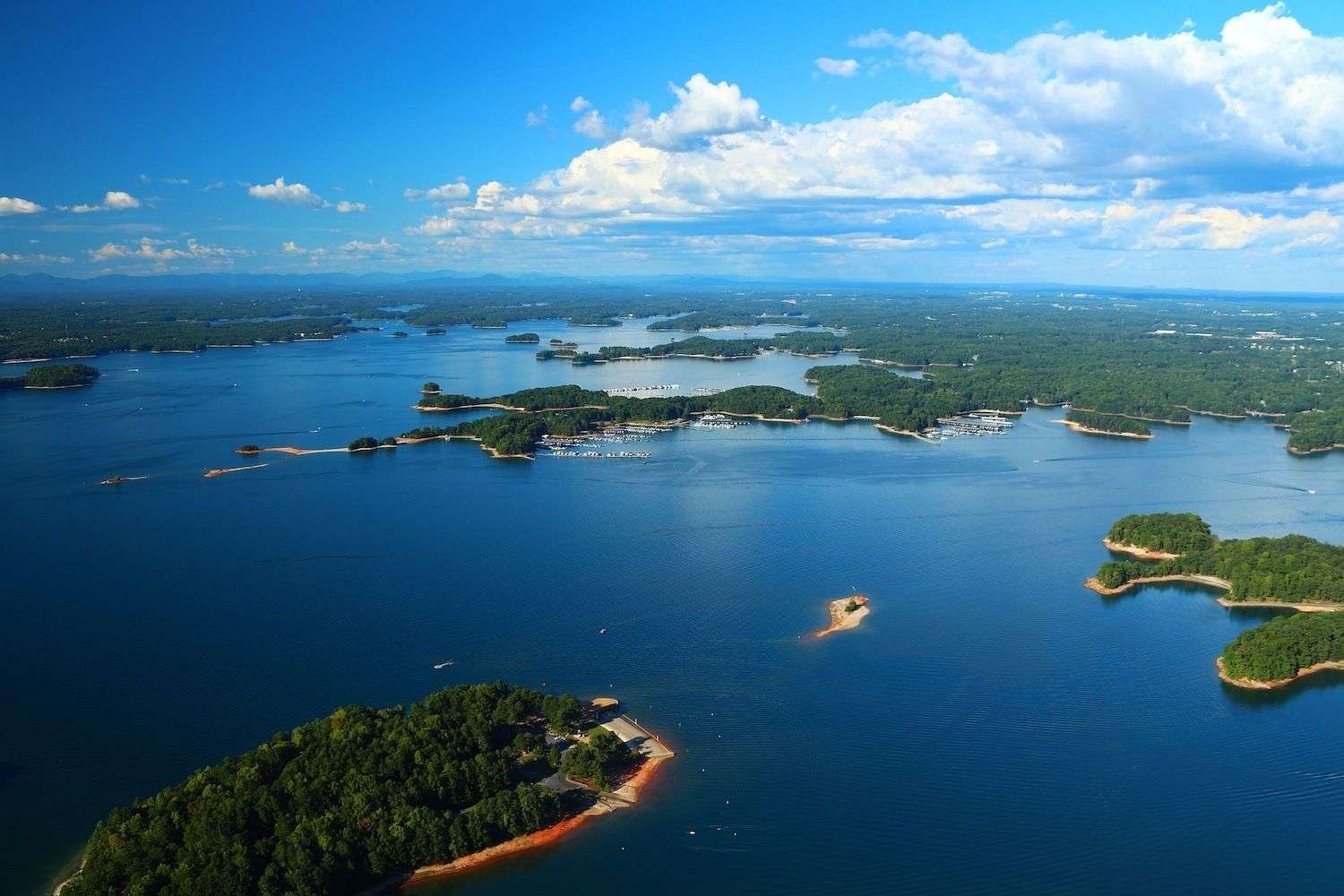
Dawsonville and Gainesville sit on opposite ends of Lake Lanier in north Georgia and represent two structurally different versions of lake ownership on the same federal reservoir. Dawsonville, in Dawson County, anchors the upper Chestatee River arm with quieter coves, lower density, and retreat-style inventory along the GA-400 corridor. Gainesville, the seat of Hall County and the lake's city of record, anchors the broader north-shore market with deeper services, Northeast Georgia Medical Center, downtown amenities, and a wider waterfront inventory pool. Choosing between them is mostly a tradeoff among privacy, convenience, healthcare access, school zoning, short-term rental rules, and the type of dock and shoreline a buyer actually wants.
Quick Answer: Dawsonville or Gainesville?
The short answer is that Dawsonville suits buyers who weight privacy, quiet coves, and retreat-style living on the upper end of Lake Lanier, while Gainesville suits buyers who weight services, healthcare access, downtown amenities, and a broader waterfront inventory across the north-shore market. Both submarkets share the same U.S. Army Corps of Engineers shoreline rules under the 2004 Lake Sidney Lanier Shoreline Management Plan, but the surrounding county infrastructure, the school systems, and the typical buyer pool differ meaningfully.
Choose Dawsonville for quiet coves, privacy, and retreat-style living
Dawsonville sits in Dawson County along the upper Chestatee River arm of Lake Lanier, with shoreline concentrated on the north and northwest sides of the reservoir. Dawson County's population was 30,099 as of the 2024 American Community Survey 5-year estimate (U.S. Census Bureau, current as of May 2026), which is roughly one-seventh of Hall County's population and produces a meaningfully lower density across the lake-adjacent neighborhoods. The county carries a single public school system, Dawson County Schools, which simplifies the attendance-zone question for buyers comparing properties across the area. Waterfront inventory in Dawsonville concentrates on the Chestatee River arm and the coves off Six Mile Creek, War Hill Park Road, and the upper sections accessed through Dawson Forest Road. Lakefront and lake-access homes in Dawson County transact in a separate higher tier from the broader Dawson single-family market; lakefront parcels in ZIP code 30534 routinely clear $1.0 to $1.6 million for permitted deep-water dock access as of April 2026 (Georgia MLS, ZIP code 30534). The cove pattern on the Dawsonville side runs to longer, narrower fingers with shallower entry points and steeper walks to the water on many lots, which is the structural reason the inventory reads as quieter and more private than the Browns Bridge and south-shore sections. Day-to-day services in Dawsonville center on the GA-400 corridor and the North Georgia Premium Outlets exit. The county seat carries Dawson County Government offices, a smaller hospital footprint at Northside Hospital Forsyth's Dawson location in nearby Cumming, and a comparatively short list of full-service marinas. Buyers who want a smaller-town daily routine, lower density at the lake, and access into the Blue Ridge foothills toward Amicalola Falls State Park and the Chattahoochee National Forest consistently weight Dawsonville more heavily than Gainesville.
Choose Gainesville for services, healthcare, downtown amenities, and broader lake inventory
Gainesville is the seat of Hall County and serves as the city of record for Lake Lanier across the upper basin. Hall County's population was 217,316 as of the 2024 American Community Survey 5-year estimate (U.S. Census Bureau, current as of May 2026), which produces a deeper services bench, a denser commercial spine along Jesse Jewell Parkway and Dawsonville Highway, and a broader employment base than the Dawsonville market can support. The city itself runs its own school system, Gainesville City Schools, while the surrounding lake-adjacent areas feed Hall County Schools, which means attendance zoning has to be verified at the parcel address. Waterfront inventory in Gainesville covers a much wider section of the lake than the Dawsonville arm. True lakefront parcels concentrate along the Chestatee River arm, the Browns Bridge segment, Lake Lanier Olympic Park, and the coves north of Thompson Bridge Road, with the 30506 ZIP code carrying a meaningful share of the city's permitted-dock inventory. The lake-access tier inside subdivisions like Cresswind at Lake Lanier and Sunrise Cove broadens the entry into lake living without the carrying cost of a private permitted dock. Current market conditions require a dated MLS comparison that identifies the area, property type, reporting period, and sample before a buyer relies on it. Healthcare and amenity infrastructure is the single largest structural difference between the two submarkets. Northeast Georgia Medical Center on Jesse Jewell Parkway anchors the regional medical bench, with a Level II trauma center, a cardiovascular service line, and a wide outpatient network across Hall County. Downtown Gainesville carries a Main Street historic district around the Square, a working performing arts venue at the Brenau University campus, and a denser dining and retail set than any other lake-adjacent city. Buyers who weight healthcare access, walkable downtown amenities, and a broader medical and professional services bench consistently weight Gainesville more heavily than Dawsonville.
The best fit depends on privacy, convenience, investment goals, and daily-life needs
The honest framing of this comparison is that neither submarket is universally better; they sort buyers along four axes. The first axis is privacy versus convenience: Dawsonville carries lower density, longer drives to grocery and medical services, and a quieter lake baseline, while Gainesville carries denser services and amenities at the cost of a busier commercial spine. The second axis is healthcare proximity: Gainesville's Northeast Georgia Medical Center is the largest medical campus in the upper basin, and households with active healthcare needs almost always favor the Gainesville side. The third axis is investment and rental-use goals. Short-term rental rules differ between the City of Gainesville, Hall County, and Dawson County, and they have changed in recent years. The City of Gainesville regulates short-term rentals under its city code with a permit and tax framework administered through the city, while Dawson County and Hall County each have their own approach with zoning overlays and permit requirements that buyers should verify directly with the planning and zoning office of the parcel's jurisdiction (City of Gainesville Code of Ordinances and Dawson County Code of Ordinances, both current as of May 2026). Buyers underwriting a short-term rental strategy should confirm the rule set at the parcel address before contract. The fourth axis is daily-life needs and school zoning. Households with school-aged children sort first by which system the parcel feeds — Gainesville City Schools, Hall County Schools, or Dawson County Schools — because the boundary lines do not follow the city limits in obvious ways and they affect both daily routing and resale price. Households without school-aged children weight commute direction, neighborhood texture, and dock configuration more heavily than school zone. Buyers should map their actual daily routine against both submarkets before treating either as a substitute for the other.
Real Estate and Lifestyle Comparison
Real estate on the Dawsonville and Gainesville sides of Lake Lanier diverges on inventory depth, dock and cove geometry, services density, and buyer pool. Both submarkets sit on the same U.S. Army Corps of Engineers reservoir under the Lake Sidney Lanier Shoreline Management Plan administered by the U.S. Army Corps of Engineers, but the surrounding county infrastructure, the school systems, and the typical lot pattern create different ownership experiences.
Waterfront homes, dock access, and cove settings
Waterfront inventory on the Dawsonville side concentrates on the upper Chestatee River arm and the coves off Six Mile Creek, War Hill Park Road, and the upper sections accessed through Dawson Forest Road. Lot patterns lean toward longer, narrower fingers with steeper walks to the water, which is why a meaningful share of the Dawsonville waterfront inventory reads as gentle-slope-with-a-tram rather than grass-to-water. Dawson County lakefront parcels routinely clear $1.0 to $1.6 million for permitted deep-water dock access as of April 2026 (Georgia MLS, ZIP code 30534), with active luxury listings in the $2M-plus tier when an estate-scale parcel and a deeper cove come together. Waterfront inventory on the Gainesville side covers a structurally wider section of the lake. True lakefront parcels concentrate along the Chestatee River arm where it broadens into the main basin, the Browns Bridge segment, the coves around Lake Lanier Olympic Park, and the north-shore frontage off Thompson Bridge Road. Current market conditions require a dated MLS comparison that identifies the area, property type, reporting period, and sample before a buyer relies on it. USACE permits and licenses are nontransferable. A new owner of an existing facility may apply through the Lake Lanier Operations Management Office, and approval is not automatic. Confirm the property-specific record and current requirements before closing.
STR considerations, taxes, services, and amenities
Short-term rental rules differ by jurisdiction and have changed in recent years on both sides of the lake. The City of Gainesville administers a short-term rental permit and tax framework through its code of ordinances, and the county jurisdictions of Hall County and Dawson County each maintain their own zoning overlays and permit requirements (City of Gainesville Code of Ordinances and Dawson County Code of Ordinances, both current as of May 2026). The practical implication for buyers underwriting a rental strategy is that the rule set has to be verified at the parcel address, not at the lake or the city, because the regulatory line between incorporated and unincorporated property changes the rule stack. Property taxes and millage rates differ by county. Dawson County's tax structure is administered through the Dawson County Tax Commissioner, and Hall County's tax structure is administered through the Hall County Tax Commissioner, with separate millage rates layered on top of the school district, fire district, and any city overlay (Dawson County Tax Commissioner and Hall County Tax Commissioner, current as of May 2026). A waterfront parcel inside the City of Gainesville carries the city millage on top of the Hall County and Gainesville City Schools rate, while a comparable Dawson County parcel carries only the county millage and the Dawson County Schools rate, which can move the all-in carrying cost by several thousand dollars annually depending on assessed value. Services and amenities favor Gainesville on raw density and Dawsonville on retail anchors. Gainesville carries Northeast Georgia Medical Center, the downtown Square, Brenau University, a fuller grocery and dining bench along Jesse Jewell Parkway and Dawsonville Highway, and the Hall County government complex. Dawsonville carries the North Georgia Premium Outlets at the GA-400 northern terminus, Atlanta Motorsports Park, the gateway to Amicalola Falls State Park, and a smaller-town daily routine with fewer healthcare options. Buyers who weight healthcare and downtown amenities sort toward Gainesville; buyers who weight retail anchors, motorsports, and Blue Ridge access sort toward Dawsonville.
Retirement, relocation, second-home, and investor buyer fit
Retirement buyers split between the two submarkets along healthcare proximity and lifestyle preference. Buyers prioritizing medical access typically weight Gainesville because Northeast Georgia Medical Center sits inside the city limits with full inpatient, emergency, cardiovascular, and outpatient services, while the nearest comparable campus to Dawsonville is Northside Hospital Forsyth in Cumming. Buyers prioritizing quiet, lower-density living with retreat-style inventory typically weight Dawsonville, with the tradeoff that medical visits route through Cumming or Gainesville rather than staying inside Dawson County. Cresswind at Lake Lanier in Gainesville is a long-running 55-plus master-planned community on the lake for buyers who want a turnkey retirement layer. Relocation and second-home buyers weight commute and travel patterns. Hartsfield-Jackson Atlanta International Airport is roughly 75 to 95 minutes from either submarket depending on traffic, so airport access is rarely the deciding factor. The cleaner sorting variable is whether the household routes into the lake along GA-400 from the northwest metro and points south, which favors Dawsonville's northern terminus, or along I-985 from the northeast metro, which favors Gainesville. Households planning a fifteen-to-twenty-weekend-per-year second-home use pattern often favor Dawsonville for the privacy and lower density; households planning forty-plus weekends and primary-residence use often favor Gainesville for services depth. Investor buyers underwriting a Lake Lanier position should anchor on three diligence items rather than the headline submarket. The first is the parcel's USACE shoreline allocation category and dock permit status under the 2004 Lake Sidney Lanier Shoreline Management Plan. The second is the jurisdiction's current short-term rental rule set at the parcel address, verified with the City of Gainesville, Hall County, or Dawson County planning office as applicable (current as of May 2026). The third is the county millage stack, school district, and any HOA carrying cost layered onto the parcel. The submarket choice matters less than the parcel-level diligence on these three items.
How to Choose Between the Two
Choosing between the Dawsonville and Gainesville sides of Lake Lanier comes down to documented variables a buyer can verify before contract: water depth and dock eligibility at the corps line, road access and slope from the building pad to the water, services and healthcare proximity, and the privacy-versus-convenience tradeoff. Both submarkets are durable Lake Lanier positions, but they reward different priorities.
Compare water depth, road access, services, and property condition
Water depth at the corps line is the first variable to verify on either side of the lake. Both submarkets carry coves with summer water depth of 20-plus feet at the dock and coves with seasonal shallow conditions, particularly during the documented drawdown years on Lake Lanier when full pool elevation 1,071 feet above mean sea level is not maintained (USACE Mobile District, Lake Sidney Lanier project page, current as of May 2026). Buyers should pull the USACE shoreline allocation map for any prospect parcel and confirm dock category, permitted footprint, and water depth at the corps line before treating any waterfront parcel as a true deep-water property. Road access and slope are the second pair of variables. The Dawsonville side carries a meaningful share of longer driveway runs, gravel access, and steeper grades from the road to the building pad, particularly on the upper Chestatee arm and the parcels accessed through Dawson Forest Road and War Hill Park Road. The Gainesville side carries more paved-road frontage, more developed subdivision access, and a denser overlap with municipal water and sewer service inside the city limits. The slope from the building pad to the dock varies on both sides; gentle-slope inventory exists on both, and so does steep-slope inventory that requires a tram permit under the USACE shoreline rules. Services proximity and property condition complete the comparison checklist. Buyers should map distance from each prospect parcel to a grocery store, an emergency room, a marina with fuel, a public boat ramp, and the household's commute corridor, because those five distances drive daily routine. Property condition matters because both submarkets carry a wide spread of construction vintages from 1960s and 1970s lake cabins to 2020s new construction, and the inspection and dock permit transfer issues can move a deal by tens of thousands of dollars at close. The condition spread is wider on the Dawsonville side because of the cabin and retreat tier; the new construction depth is greater on the Gainesville side because of the city's master-planned communities.
Evaluate privacy vs. convenience
Privacy and convenience trade off cleanly on Lake Lanier, and the Dawsonville-versus-Gainesville decision is one of the cleanest expressions of that tradeoff on the reservoir. Dawsonville's lower density, longer driveways, narrower cove fingers, and smaller-town daily routine support a privacy baseline that the Gainesville market simply cannot match at any price point. Gainesville's denser commercial spine, walkable downtown Square, deeper healthcare bench, and broader school options support a convenience baseline that the Dawsonville market does not match without driving south on GA-400 to Cumming or east on GA-53 to Gainesville. The practical implication for buyers is that the privacy premium on the Dawsonville side is paid in daily routing rather than in headline price. A grocery run, a routine medical visit, a school drop-off, or a restaurant night that takes ten minutes in central Gainesville often takes thirty to forty minutes from the upper Chestatee arm in Dawsonville. Households that value the quieter cove pattern, the slower weekend cadence, and the retreat texture often consider that routing cost a fair trade. Households that value the daily-routine compression of central Gainesville often consider the trade unfavorable within the first season of ownership. Weekend cadence and household use pattern complete the privacy-versus-convenience math. A household planning forty-plus weekends a year of lake use and a primary-residence pattern typically weights convenience more heavily, because daily routine compounds across a multi-year hold. A household planning fifteen-to-twenty weekends a year, particularly a second-home buyer from outside metro Atlanta, typically weights cove privacy and view quality more heavily because the routing cost is absorbed across fewer trips. Buyers should pressure-test the actual use pattern before treating either submarket as a substitute.
Ask Ashley Smith for a North Lake comparison
A North Lake comparison between the Dawsonville and Gainesville sides of Lake Lanier is most useful when it is anchored on documented parcel-level variables rather than category assumptions. Ashley Smith, a real estate agent with The Dream Smith Team at Compass, focuses on the Lake Lanier market across Hall County, Forsyth County, Dawson County, and Gwinnett County and works on both the Dawsonville and Gainesville sides of the lake. A useful comparison consultation walks through the USACE shoreline allocation map for any prospect parcel, the dock permit status under the 2004 Lake Sidney Lanier Shoreline Management Plan, the school zoning at the parcel address, the county millage stack, and the short-term rental rule set at the jurisdiction of record. Buyers comparing the two submarkets benefit from running both a Dawsonville candidate and a Gainesville candidate through the same diligence checklist before committing to a side. The same checklist surfaces the structural differences in a way the headline price comparison does not, and it lets buyers see the carrying-cost stack, the services proximity, and the lifestyle profile next to each other on the same page. Sellers benefit from the same exercise in reverse: understanding which buyer pool a Dawsonville cove parcel attracts versus a Gainesville Browns Bridge parcel changes the pricing and marketing approach. The consultation is set up to give buyers and sellers a documented, source-cited basis for the submarket decision rather than a sales pitch. Walking both candidates through the same framework — water depth, road access, services proximity, school zoning, millage stack, dock permit status, and STR rules — produces a comparison that holds up to inspection, financing review, and resale planning. Buyers shortlisting Lake Lanier on the north end of the reservoir can reach Ashley Smith with The Dream Smith Team at Compass for the parcel-level walkthrough on either side of the lake.
Frequently Asked Questions
- Which side of Lake Lanier is quieter, Dawsonville or Gainesville?
- Dawsonville is structurally the quieter side. Dawson County's population was 30,099 as of the 2024 American Community Survey 5-year estimate (U.S. Census Bureau, current as of May 2026), compared with Hall County's population of 217,316 over the same period. The lower density, the longer driveways, the narrower cove geometry on the upper Chestatee River arm, and the smaller commercial footprint produce a quieter daily and weekend baseline than the Gainesville side, which sits along a denser commercial spine and a longer stretch of shoreline.
- Which side has better healthcare access for retirees on Lake Lanier?
- Gainesville carries the stronger healthcare bench. Northeast Georgia Medical Center on Jesse Jewell Parkway in Gainesville anchors the regional medical campus with a Level II trauma center, a cardiovascular service line, and a broad outpatient network across Hall County. The nearest comparable campus to Dawsonville is Northside Hospital Forsyth in Cumming, about 20 to 30 minutes south on GA-400. Retirees with active medical needs almost always weight Gainesville more heavily for that reason.
- How do short-term rental rules differ between Dawsonville and Gainesville on Lake Lanier?
- Short-term rental rules differ by jurisdiction and have changed in recent years on both sides of the lake. The City of Gainesville administers a short-term rental permit and tax framework through its code of ordinances, while Hall County and Dawson County each maintain their own zoning overlays and permit requirements (City of Gainesville Code of Ordinances and Dawson County Code of Ordinances, both current as of May 2026). Buyers underwriting a rental strategy should verify the rule set at the parcel address with the applicable jurisdiction before contract, because the rule stack changes between incorporated and unincorporated property.
- How does waterfront pricing compare between the Dawsonville and Gainesville sides of Lake Lanier?
- The headline gap on permitted-dock inventory between the two sides is narrower than buyers often expect. Current market conditions require a dated MLS comparison that identifies the area, property type, reporting period, and sample before a buyer relies on it.
- Are dock permits handled the same way on both sides of Lake Lanier?
- Yes. Dock permits on Lake Lanier are administered by the U.S. Army Corps of Engineers Mobile District through the Lake Lanier Project Management Office in Buford under the 2004 Lake Sidney Lanier Shoreline Management Plan (USACE Mobile District, current as of May 2026). The plan applies uniformly to the Dawsonville and Gainesville sides of the lake, including shoreline allocation categories, permitted dock footprint, the Exhibit C electrical inspection cycle, and the vegetation buffer rules along the corps line. Cove geometry and water depth at the corps line vary between the two sides, but the permitting framework does not.
- Which side is better for school zoning on Lake Lanier?
- It depends on the parcel address, not the side of the lake. Dawson County is served by a single public system, Dawson County Schools, which simplifies attendance-zone questions. Gainesville carries two overlapping systems: Gainesville City Schools inside the city limits and Hall County Schools across the surrounding unincorporated area, with boundary lines that do not follow the city limits in obvious ways. Buyers comparing schools should pull the assigned-schools record at the parcel address through the applicable district's locator rather than infer attendance from the mailing address.
Related
- Dawsonville GA Homes for SaleSingle-family, lakefront, cabin, and retreat inventory across Dawson County.
- Gainesville GA Homes for SaleSingle-family, lakefront, downtown, and master-planned inventory across Hall County.
- Dawsonville GA Lakefront HomesLake Lanier waterfront inventory on the Dawson County and Chestatee River arm side.
- Gainesville GA Lakefront HomesLake Lanier waterfront inventory on the Hall County and north-shore side.
- North Lake Lanier HomesCommunity guide to the north end of Lake Lanier across Dawson and Hall counties.
- Lake Lanier Real Estate OverviewFull overview of the Lake Lanier market, communities, and waterfront inventory.
- Lake Lanier Dock Permits GuideUSACE Mobile District dock permitting framework under the Lake Sidney Lanier Shoreline Management Plan administered by the U.S. Army Corps of Engineers.