
Compare
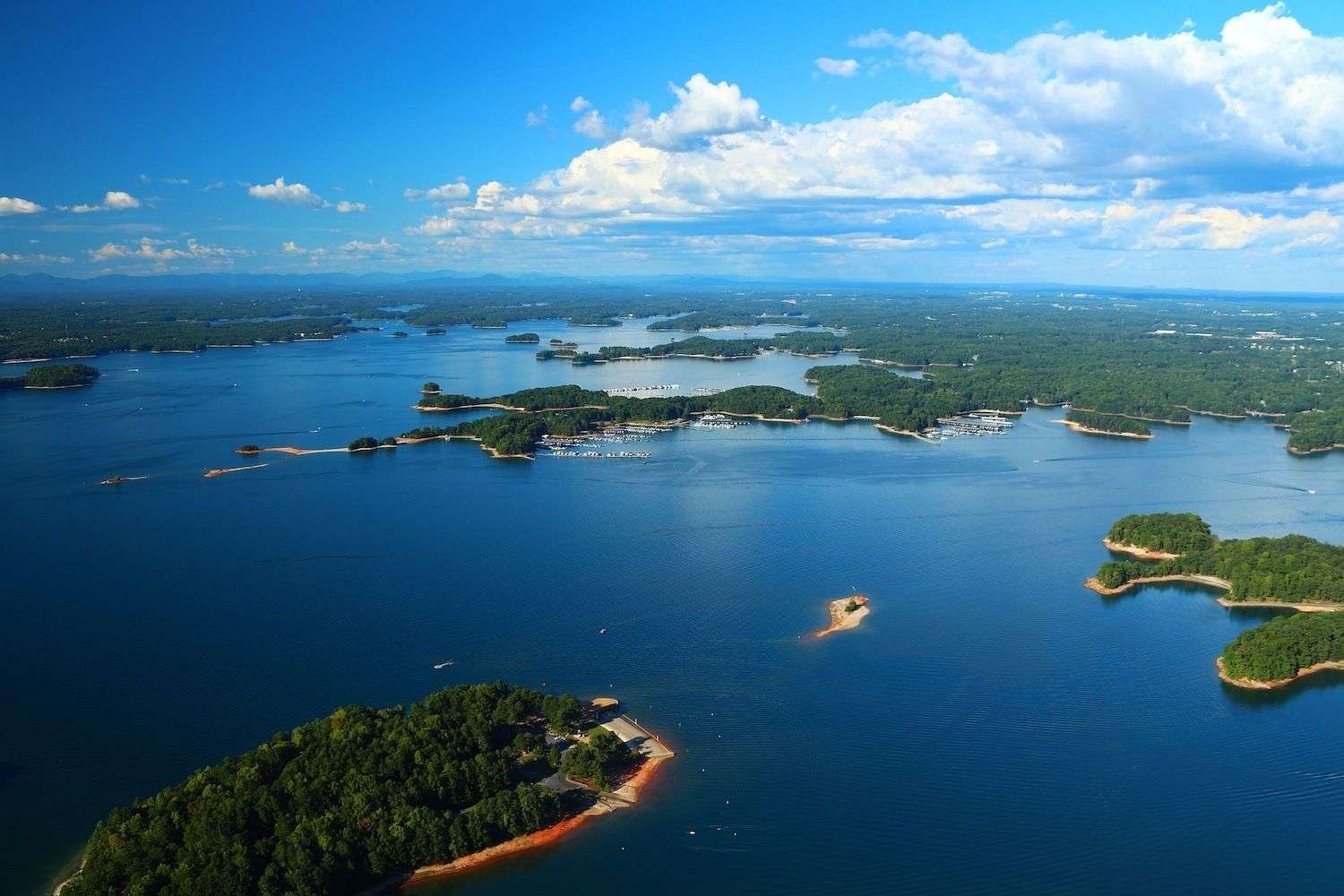
Lake Lanier and Lake Keowee are two of the Southeast's most-compared lake real estate markets, but they serve different buyers. Lake Lanier is a 38,000-acre U.S. Army Corps of Engineers reservoir on the Chattahoochee River north of Atlanta, managed by the USACE Mobile District at Buford Dam, with roughly more than 600 miles of shoreline across Hall, Forsyth, Dawson, Gwinnett, and Lumpkin counties (USACE Mobile District, current as of May 2026). Lake Keowee is a Duke Energy reservoir in Oconee and Pickens counties, South Carolina, with about 18,372 acres at full pond and approximately 388 miles of shoreline at 800 feet above mean sea level (Duke Energy Keowee-Toxaway Project, as of May 2026). The right choice usually comes down to drive time from Atlanta, club lifestyle, and water clarity.
Quick Answer: Lake Lanier or Lake Keowee?
The fastest way to decide between Lake Lanier and Lake Keowee is to weigh Atlanta drive time, lifestyle preference, and luxury inventory against each other rather than ranking the lakes head to head. Lake Lanier is closer to Atlanta and carries a larger transaction volume, while Lake Keowee is a smaller, deeper, and clearer reservoir built around private gated communities in the South Carolina Blue Ridge foothills.
Choose Lake Lanier for Atlanta access and a larger Georgia transaction market
Lake Lanier sits roughly 35 to 60 miles north of downtown Atlanta along Interstate 985 and Georgia 400, depending on whether a buyer is looking at the Buford and Flowery Branch side in Hall and Gwinnett counties or the Cumming and Dawsonville side in Forsyth and Dawson counties. The lake is reachable from Hartsfield-Jackson Atlanta International Airport in roughly an hour and a half outside peak traffic, which is a meaningful difference for buyers who plan to use the home on weekends rather than as a permanent residence. The Lake Lanier transaction market is also larger in absolute terms. Across the lake as a whole, monthly transaction volume typically outpaces Lake Keowee by a wide margin because of the larger surrounding population and the broader inventory base. Current market conditions require a dated MLS comparison that identifies the area, property type, reporting period, and sample before a buyer relies on it. For buyers whose calculus starts with how often they will actually drive to the lake, Lake Lanier tends to win on the math. A second home in Cumming, Buford, Gainesville, Flowery Branch, or Dawsonville is realistic for a Friday-night arrival and Sunday-night return without burning a vacation day, while Lake Keowee typically requires a longer commitment to make the trip worthwhile.
Choose Lake Keowee for clear water, resort communities, and South Carolina lake lifestyle
Lake Keowee is a Duke Energy reservoir built primarily for hydroelectric and cooling-water use, fed by Lake Jocassee through the upper basin, and the result is a deeper, clearer water column than buyers find on most Southeastern reservoirs. Visibility frequently exceeds what swimmers, divers, and boaters experience on Lake Lanier, which is shallower, more developed along the shoreline, and more sediment-loaded near the major creek arms. The Lake Keowee real estate market is concentrated inside private gated communities, most notably The Cliffs at Keowee Springs, The Cliffs at Keowee Falls, The Cliffs at Keowee Vineyards, Keowee Key, and The Reserve at Lake Keowee (Cliffs Communities and Reserve at Lake Keowee, as of May 2026). Current market conditions require a dated MLS comparison that identifies the area, property type, reporting period, and sample before a buyer relies on it.
How travel time, luxury inventory, and community preferences drive the choice
Atlanta drive time is usually the first filter. Lake Lanier sits within an hour of most northern Atlanta suburbs, while Lake Keowee runs roughly 2 hours and 20 minutes from downtown Atlanta along Interstate 85 north through Greenville, South Carolina, and west on U.S. 76 toward Clemson (Rome2Rio drive estimate, as of May 2026). For a buyer who works in midtown Atlanta or Buckhead and wants the lake to feel like a weekly option rather than a quarterly destination, Lake Lanier removes friction that Lake Keowee cannot match. Luxury inventory is the second filter. Buyers who want a turnkey resort experience built around golf, wellness, marina access, and concierge programming usually find Lake Keowee a closer fit because the Cliffs Communities and similar clubs deliver that bundle by design. Lake Lanier delivers waterfront, dock permits, and proximity to Atlanta but does not match the resort-club density that Lake Keowee carries inside its gates. Community preference is the third filter. Some buyers want a private dock, an independent parcel, and the flexibility to host or fish without a club ruleset; that profile leans Lake Lanier. Other buyers want a posted community with consistent architectural standards, a club calendar, and a wellness-and-golf social structure; that profile leans Lake Keowee.
Lifestyle and Ownership Comparison
Day-to-day ownership on Lake Lanier and Lake Keowee differs in concrete, checkable ways: how docks are permitted, how the lake is managed, how communities are organized, and how tax and service costs land on the household. Buyers comparing the two should treat the lakes as different regulatory environments first and lifestyle environments second, because the regulatory layer drives what an owner can actually build, store, and use along the water.
Waterfront homes, private docks, community rules, and luxury estates
Lake Lanier waterfront homes are governed by the USACE Mobile District through the Lake Lanier Project Management Office in Buford, with shoreline use, dock footprint, and electrical service controlled under the Lake Sidney Lanier Shoreline Management Plan administered by the U.S. Army Corps of Engineers, Title 36 of the Code of Federal Regulations, and Engineer Pamphlet EP 1130-2-406. A buyer evaluating a Lake Lanier home with an existing dock should verify the USACE permit number, the shoreline zone classification, the Exhibit C electrical inspection status, and the as-built diagram during due diligence rather than at closing. Lake Keowee waterfront homes are governed by Duke Energy through the Keowee-Toxaway Shoreline Management Plan, which sets dock classification, shoreline use, and vegetation rules around the Duke Energy hydroelectric license. Dock permits are issued and managed by Duke Energy's Lake Services group rather than the federal Corps of Engineers, and within the Cliffs Communities and Keowee Key, layered community covenants narrow what the Duke Energy plan otherwise allows. Luxury estates exist on both lakes but cluster differently. On Lake Lanier, high-end inventory tends to appear in deep-water coves around Flowery Branch, Buford, and Gainesville on standalone parcels with private docks; on Lake Keowee, luxury inventory concentrates inside The Cliffs at Keowee Springs, The Cliffs at Keowee Falls, The Cliffs at Keowee Vineyards, The Reserve at Lake Keowee, and Keowee Key, where the home is one component of a club membership rather than a freestanding asset.
Boating, water clarity, marinas, dining, and year-round use
Boating culture differs meaningfully between the two lakes. Lake Lanier carries heavier recreational boating traffic, particularly on summer weekends and holidays, with full-service marinas including Aqualand Marina, Holiday Marina, Sunrise Cove Marina, Lanier Islands marinas, and Habersham Marina supporting wakeboarding, ski boats, pontoons, and large cruisers across a 38,000-acre water body. Crowded conditions in the major basins are part of the Lake Lanier experience during peak season. Lake Keowee boating runs at a different density because the lake is smaller, less developed, and concentrated around fewer access points. Marinas including Mile Creek Park, High Falls Marina, Crescent Resources marinas tied to the Cliffs Communities, and Keowee Marina serve a smaller boating population, and water clarity is meaningfully higher than on Lake Lanier because of the upstream Jocassee inflow and the lake's depth profile. Dining and year-round use also differ. Lake Lanier supports a broader waterfront dining and entertainment ecosystem tied to Atlanta-area population density, including Margaritaville at Lanier Islands, Pelican Pete's, Twisted Oar, and Fish Tales Lakeside Grille. Lake Keowee's waterfront dining is anchored more by club houses inside The Cliffs Communities, restaurants in Seneca and Clemson, and a smaller, lower-density independent waterfront scene around Salem and Sunset.
Taxes, services, healthcare, and ownership logistics
Property tax structure differs at the state level. Lake Lanier properties pay Georgia property tax assessed by the county tax assessor in Hall County, Forsyth County, Dawson County, Gwinnett County, or Lumpkin County, with millage rates and exemptions set under Georgia law. Lake Keowee properties pay South Carolina property tax assessed in Oconee County or Pickens County, where South Carolina's primary-residence assessment ratio is 4 percent and the non-primary (second-home) ratio is 6 percent, which materially changes the tax bill for buyers who do not establish the property as a primary residence (South Carolina Department of Revenue, current as of May 2026). Healthcare access is another logistical input. Lake Lanier owners are within reach of Northeast Georgia Medical Center in Gainesville and the broader Atlanta hospital system, including Northside Hospital, Emory Healthcare, and Piedmont Healthcare. Lake Keowee owners rely on Prisma Health Oconee Memorial Hospital in Seneca and the larger Prisma Health and Bon Secours St. Francis systems in Greenville, plus Duke Health and Atrium Health Wake Forest Baptist for tertiary care farther afield. Ownership logistics, including services, contractors, and emergency response, tend to be denser around Lake Lanier because of the surrounding metro Atlanta population. Lake Keowee's contractor and service network is smaller and more concentrated around Seneca, Salem, Sunset, Six Mile, and Clemson, which can affect scheduling for routine maintenance and after-hours response.
Which Buyer Fits Each Lake?
Buyer fit is the most useful framing for choosing between Lake Lanier and Lake Keowee, because each lake serves a different mix of weekend, resort, retirement, and relocation buyers. A buyer who maps their actual use case against the two markets makes a different decision than a buyer who compares the lakes on amenities alone.
Atlanta-based second-home buyers
Atlanta-based second-home buyers usually fit Lake Lanier better than Lake Keowee. The drive from intown Atlanta to a home in Cumming, Buford, Gainesville, Flowery Branch, or Dawsonville is short enough to support frequent weekend use, and a permitted private dock on Lake Lanier offers the same core waterfront experience that draws buyers to lake markets generally. The second-home math also leans Lake Lanier when the buyer plans to rotate weekend guests, host extended family from out of town, or split the home with siblings or partners. Proximity to Hartsfield-Jackson Atlanta International Airport at roughly 90 minutes outside peak traffic makes a Lake Lanier home reachable for fly-in guests in a way that Lake Keowee's roughly 2-hour-20-minute drive from Atlanta does not. Buyers should still verify dock permit status, Exhibit C electrical inspection, and shoreline zone classification through the USACE Lake Lanier Project Management Office in Buford before committing. Atlanta-based buyers who specifically want a resort-club experience rather than a private parcel sometimes still choose Lake Keowee despite the longer drive, accepting fewer trips per year in exchange for a different ownership category.
Resort-community and club-lifestyle buyers
Resort-community and club-lifestyle buyers fit Lake Keowee more naturally because the lake's real estate market is organized around private gated clubs. The Cliffs at Keowee Springs, The Cliffs at Keowee Falls, The Cliffs at Keowee Vineyards, and The Reserve at Lake Keowee bundle golf courses, marinas, beach clubs, wellness facilities, equestrian access, and concierge services into the ownership package in a way that Lake Lanier does not duplicate at the same density (Cliffs Communities and Reserve at Lake Keowee, as of May 2026). These buyers typically prioritize the membership and community standard over independent control of the parcel. They want consistent architectural review, posted dock and shoreline rules administered by Duke Energy and the community, predictable club programming, and access to amenities that scale beyond what a private dock can deliver. The trade-off is a layered cost structure: club initiation, annual dues, food and beverage minimums, and assessments sit on top of property taxes, insurance, and shoreline upkeep. For buyers who specifically want Tom Fazio or Jack Nicklaus signature golf integrated with lake life, Lake Keowee's resort-club concentration is the closer fit. Lake Lanier's golf inventory exists but does not bundle into the dock-and-club package the same way.
Retirement, luxury, and relocation buyers
Retirement and relocation buyers split between the two lakes based on cost of living, healthcare network preference, climate, and proximity to family. South Carolina's primary-residence 4 percent property tax assessment ratio creates a meaningful cost-of-ownership advantage for buyers who establish a Lake Keowee home as their primary residence rather than a second home, and the upstate South Carolina climate runs slightly milder year-round than the North Georgia foothills around Lake Lanier (South Carolina Department of Revenue, current as of May 2026). The spread reflects the resort-club bundle on Lake Keowee and the larger, more diverse inventory base on Lake Lanier, not a quality ranking. A turnkey custom home in The Cliffs at Keowee Springs and a turnkey custom home in a deep-water Flowery Branch cove can both deliver a comparable interior experience at different total costs. Current market conditions require a dated MLS comparison that identifies the area, property type, reporting period, and sample before a buyer relies on it. Relocation buyers moving to either market should plan the move around healthcare network, tax residency, and family geography rather than the lakes alone. Ashley Smith, real estate agent with The Dream Smith Team at Compass, recommends that buyers comparing Lake Lanier and Lake Keowee draft a use-case profile before touring either market so the comparison runs on actual ownership patterns rather than first-impression aesthetics.
Frequently Asked Questions
- Is Lake Lanier or Lake Keowee closer to Atlanta?
- Lake Lanier is closer. The drive from downtown Atlanta to a home around Cumming, Buford, Gainesville, Flowery Branch, or Dawsonville on Lake Lanier typically runs 45 minutes to 90 minutes depending on traffic and which side of the lake the home sits on. Lake Keowee runs roughly 2 hours and 20 minutes from downtown Atlanta along Interstate 85 north through Greenville and west on U.S. 76 toward Clemson, South Carolina (Rome2Rio drive estimate, as of May 2026).
- Which lake has more waterfront homes for sale?
- Lake Lanier has a larger active waterfront inventory in absolute terms because it is a 38,000-acre USACE reservoir with roughly more than 600 miles of shoreline across five Georgia counties (USACE Mobile District, as of May 2026). Lake Keowee is approximately 18,372 acres with about 388 miles of shoreline in Oconee and Pickens counties, South Carolina, and most of the luxury inventory is concentrated inside private gated communities such as The Cliffs at Keowee Springs, The Cliffs at Keowee Falls, The Cliffs at Keowee Vineyards, and Keowee Key (Duke Energy and Cliffs Communities, as of May 2026).
- Which lake has clearer water, Lake Lanier or Lake Keowee?
- Lake Keowee generally carries clearer water because it is deeper, less developed along the shoreline, and fed by Lake Jocassee through the upper basin under the Duke Energy Keowee-Toxaway hydroelectric project. Lake Lanier is shallower, carries heavier recreational traffic, and runs more sediment-loaded near the major creek arms, particularly after rain events. Buyers who prioritize visibility for swimming, paddleboarding, or diving usually rank Lake Keowee higher on water clarity.
- How do dock permits work differently on each lake?
- Lake Lanier dock permits are issued and administered by the U.S. Army Corps of Engineers Mobile District through the Lake Lanier Project Management Office in Buford under the Lake Sidney Lanier Shoreline Management Plan administered by the U.S. Army Corps of Engineers, Title 36 of the Code of Federal Regulations, and Engineer Pamphlet EP 1130-2-406. Lake Keowee dock permits are issued and administered by Duke Energy's Lake Services group under the Keowee-Toxaway Shoreline Management Plan. Both systems regulate dock footprint, shoreline zone classification, and electrical service, but the issuing authority and the inspection cycle differ, which matters during due diligence.
- How does property tax compare on Lake Lanier and Lake Keowee?
- Lake Lanier properties pay Georgia property tax assessed by the county tax assessor in Hall County, Forsyth County, Dawson County, Gwinnett County, or Lumpkin County. Lake Keowee properties pay South Carolina property tax in Oconee County or Pickens County, where South Carolina applies a 4 percent primary-residence assessment ratio and a 6 percent non-primary (second-home) ratio (South Carolina Department of Revenue, current as of May 2026). Buyers who plan to establish a Lake Keowee home as their primary residence see a different effective tax burden than buyers who keep it as a second home.
- Which lake fits a buyer who wants golf, club amenities, and resort programming?
- Lake Keowee tends to fit that buyer better because the lake's real estate market is organized around private gated clubs that bundle the lake home with the club experience. The Cliffs at Keowee Springs, The Cliffs at Keowee Falls, and The Cliffs at Keowee Vineyards include Tom Fazio and Jack Nicklaus signature golf courses, marinas, beach clubs, wellness centers, and equestrian access; The Reserve at Lake Keowee and Keowee Key add their own programming layers. Lake Lanier offers golf and amenities but does not bundle them into the lake home at the same density.
Related
- Lake Lanier Community GuideFull neighborhood, market, school, and shoreline overview for Lake Lanier.
- Lake Lanier Real EstateActive waterfront, dock, and lake-access listings across the Lake Lanier market.
- Lake Lanier Waterfront HomesPermitted-dock and shoreline-frontage homes across Hall, Forsyth, Dawson, Gwinnett, and Lumpkin counties.
- Lake Lanier Dock Permits GuideHow USACE Mobile District residential dock permits work on Lake Lanier.
- Lake Lanier Cost of OwnershipCarrying-cost breakdown for waterfront, lake-access, and tear-down properties.
- Lake Lanier Commute to AtlantaDrive times, corridors, and second-home logistics for Atlanta-based buyers.