
Compare
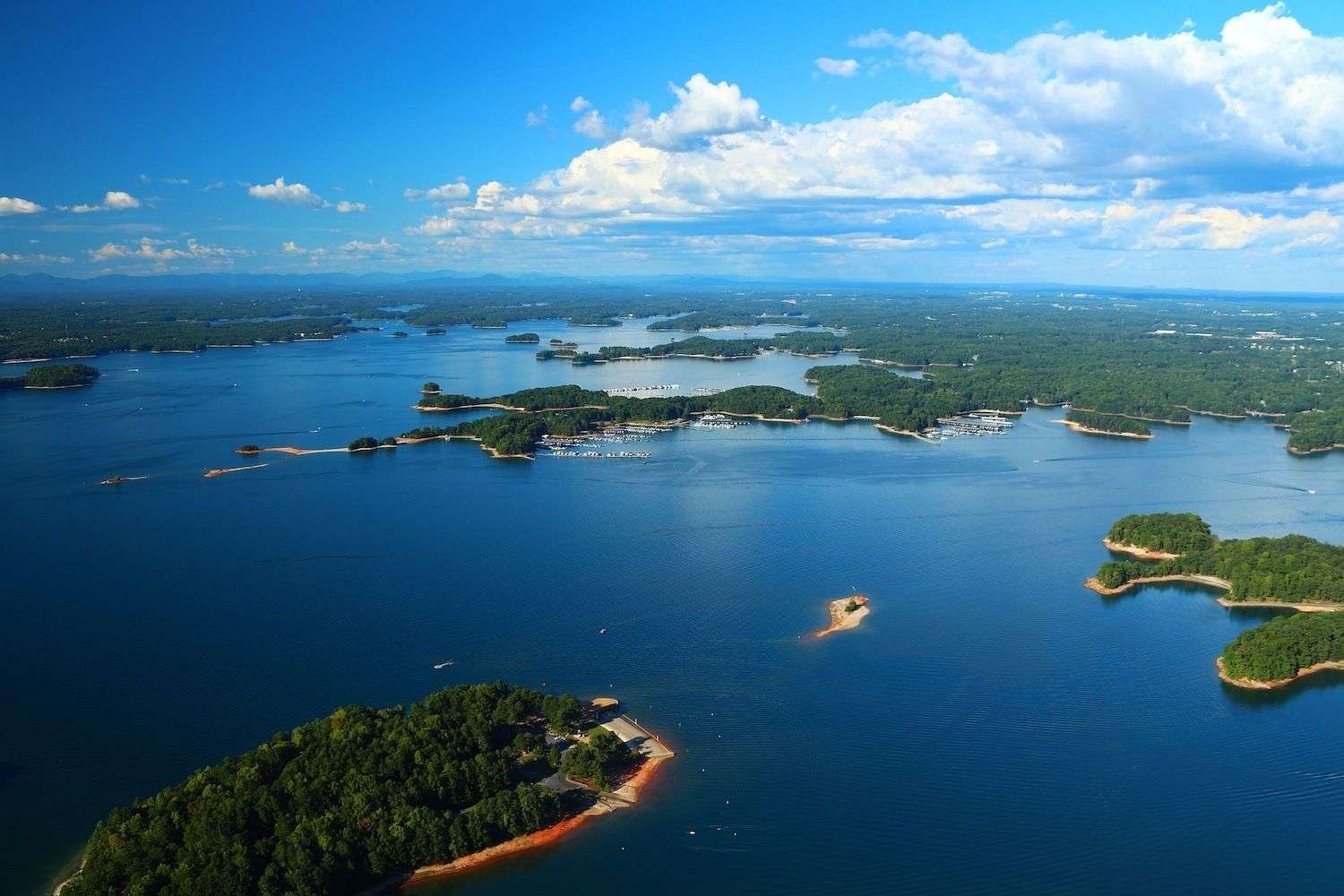
Lake Lanier and the Florida second-home market are the two routes most Atlanta-based buyers consider when they want a recurring-use vacation property, and the right answer usually comes down to travel time, insurance exposure, and how often the home actually gets used. Lake Lanier is a 38,000-acre U.S. Army Corps of Engineers reservoir on the Chattahoochee River north of Atlanta, managed by the USACE Mobile District at Buford Dam across Hall, Forsyth, Dawson, Gwinnett, and Lumpkin counties (USACE Mobile District, current as of May 2026). Florida second homes typically sit in coastal markets such as 30A in Walton County, Destin in Okaloosa County, Naples in Collier County, Sarasota in Sarasota County, or Marco Island, and they carry a different insurance, travel, and rental-rule profile that materially changes the carrying cost.
Quick Answer: Lake Lanier or a Florida Second Home?
The fastest way to decide between Lake Lanier and a Florida second home is to weigh weekend usability against beach lifestyle, then layer in insurance cost, travel time, and how the home will fit into the calendar. Lake Lanier sits within an hour of most northern Atlanta suburbs and supports weekly use, while Florida coastal markets deliver beach, warm-water boating, and a destination feel that pulls the home into a longer-visit cadence.
Choose Lake Lanier for Atlanta access, freshwater boating, and no-flight weekend use
Lake Lanier sits roughly 35 to 60 miles north of downtown Atlanta along Interstate 985 and Georgia 400, depending on whether a buyer is looking at the Buford and Flowery Branch side in Hall and Gwinnett counties or the Cumming and Dawsonville side in Forsyth and Dawson counties. The lake is reachable from Hartsfield-Jackson Atlanta International Airport in roughly 90 minutes outside peak traffic, and from Buckhead, Sandy Springs, or Alpharetta in 45 to 75 minutes, which makes Friday-night arrivals and Sunday-night returns realistic without a flight or an overnight road trip. The dock-and-cove product is the defining inventory across the market, with full-service marinas including Aqualand Marina, Holiday Marina, Sunrise Cove Marina, and Habersham Marina supporting wakeboarding, pontoons, ski boats, and large cruisers. Current market conditions require a dated MLS comparison that identifies the area, property type, reporting period, and sample before a buyer relies on it. For Atlanta-based buyers, Lake Lanier tends to win on weekly usability. A second home in Cumming, Buford, Gainesville, Flowery Branch, or Dawsonville is realistic for a same-day return drive, which usually translates into more total nights spent at the property per year than a Florida second home that requires either a long highway day or a flight.
Choose Florida for beach lifestyle, coastal amenities, and warm-weather appeal
Florida second homes deliver something Lake Lanier cannot: saltwater beach access, year-round swim-temperature water, and a coastal destination culture built around the Gulf of Mexico or the Atlantic. Markets like 30A in Walton County, Destin in Okaloosa County, Naples in Collier County, Sarasota in Sarasota County, and Marco Island carry concentrated beachfront and bay-front housing, walkable resort-town cores, and a tourism economy that runs year-round in the southern half of the state. Florida home prices vary widely by market segment. The driving distance from Atlanta to most Florida coastal markets is meaningful: Destin sits roughly 340 miles from downtown Atlanta along Interstate 85 south and U.S. 331, Naples sits roughly 615 miles via Interstate 75, and 30A sits roughly 330 miles, which usually translates into a 5-to-10-hour drive or a 1-to-2-hour flight plus airport time on each leg (Georgia Department of Transportation and Florida Department of Transportation distance references, as of May 2026). Current market conditions require a dated MLS comparison that identifies the area, property type, reporting period, and sample before a buyer relies on it. For buyers whose calendar already includes long holiday weeks, school breaks, or remote-work stretches, Florida supports the destination model well. The home becomes a quarterly or seasonal anchor rather than a weekly weekend property, and the beach product itself is what draws most second-home buyers to the Florida coast in the first place.
How insurance, travel time, maintenance, and family use affect the decision
Insurance is the first cost lever that separates the two markets. Florida property insurance has tightened materially since 2022 due to hurricane losses, with the average annual homeowners premium in Florida reported at $4,419 in 2024, the highest in the United States (Insurance Information Institute, 2024 Homeowners Premium Report, as of May 2026). Coastal Florida homes often require separate windstorm coverage through Citizens Property Insurance Corporation or a private carrier and a separate National Flood Insurance Program policy when the parcel sits in a FEMA Special Flood Hazard Area, and the hurricane deductible is typically a percentage of insured value rather than a flat dollar amount. Lake Lanier homes typically carry Georgia homeowners insurance without windstorm or hurricane riders, with a flood policy required only when the parcel sits in a FEMA Special Flood Hazard Area, which is uncommon for most Lake Lanier lakefront parcels above the 1,071-foot full pool elevation managed by the USACE Mobile District. Travel time is the second lever. Lake Lanier's 35-to-60-mile drive from Atlanta supports weekly weekend rotations; Florida's 330-to-615-mile drive supports long-weekend, seasonal, or school-break visits but rarely a same-day return. Higher travel friction tends to reduce annual usage, which in turn raises the effective cost per night spent at the home. Maintenance and family-use patterns are the third lever. Lake Lanier carrying costs cluster around dock maintenance, shoreline upkeep, property tax across Hall, Forsyth, Dawson, Gwinnett, or Lumpkin County, and seasonal boat costs. Florida carrying costs cluster around salt-air corrosion on HVAC and exterior finishes, hurricane-grade roof and impact-window maintenance, pool service, and coastal-specific landscaping. Family-use buyers with school-age children often align with whichever market matches their actual visit calendar.
Ownership Cost and Lifestyle Comparison
Day-to-day ownership of a Lake Lanier home and a Florida second home differs in concrete, checkable ways across insurance, maintenance, rental rules, and how the home fits into the buyer's calendar. Buyers comparing the two should treat them as different product categories first and price points second, because the product type drives almost every downstream carrying cost.
Lakefront maintenance vs. coastal maintenance
Lake Lanier waterfront maintenance is organized around the dock, the shoreline, and the Corps Line. Owners are responsible for the permitted dock structure, the Exhibit C electrical inspection, vegetation buffer compliance, riprap or shoreline stabilization, and any tram or pathway permitted under the USACE Lake Sidney Lanier Shoreline Management Plan administered by the U.S. Army Corps of Engineers. Annual dock upkeep on Lake Lanier varies with dock type and size, and party docks, double-slip docks, and single-slip docks carry different maintenance profiles. Freshwater exposure is gentler on hardware and finishes than saltwater, so corrosion and salt-air degradation are not part of the routine maintenance cycle. Florida coastal maintenance is organized around salt air, storm risk, and pool service. Salt-air corrosion shortens the service life of HVAC condenser coils, outdoor light fixtures, garage door hardware, and exterior metal finishes; rinse cycles and stainless or marine-grade hardware are part of normal upkeep. Hurricane-rated roofs, impact-rated windows, and reinforced garage doors are common requirements for newer construction and are often required for windstorm insurance discounts in Florida coastal markets. Pool service, landscaping for sandy soils, and seawall or bulkhead maintenance on bay-front or canal-front parcels add line items that are not standard on Lake Lanier. Utility and storm-prep costs also differ. Florida coastal owners often carry storm-prep budgets for shutter deployment, generator service, and post-storm cleanup, while Lake Lanier owners more commonly budget for spring dock prep, fall winterization on hardware, and ice-storm or wind-event tree work. Total cost of ownership reflects the product type and climate exposure more than it reflects the headline purchase price.
Insurance, storms, management, and seasonal use
Florida homeowners insurance carries the highest average premium in the United States at $4,419 in 2024 (Insurance Information Institute, 2024 Homeowners Premium Report, as of May 2026), with coastal counties typically running higher than the statewide average. Windstorm coverage is often handled separately, either through Citizens Property Insurance Corporation as a residual market or through a private carrier with a separate hurricane deductible, and flood coverage through the National Flood Insurance Program or a private equivalent is required on parcels in FEMA Special Flood Hazard Areas. Hurricane risk drives the structure: the Atlantic hurricane season runs June 1 through November 30 according to the National Hurricane Center, and storm-related disruption can affect rental income, owner use, and post-storm repair timelines. Lake Lanier homeowners insurance typically runs much closer to Georgia's statewide average. The average annual homeowners premium in Georgia was approximately $1,830 in 2024 (Insurance Information Institute, 2024 Homeowners Premium Report, as of May 2026), without the windstorm or hurricane rider structure typical of Florida coastal policies. Flood coverage on Lake Lanier is required only when the parcel sits inside a FEMA Special Flood Hazard Area, which is uncommon for most lakefront parcels above full pool elevation around 1,071 feet managed by the USACE. Property management and seasonal use patterns also diverge. Florida second homes in markets like 30A, Destin, Naples, and Marco Island often use third-party management companies for vendor coordination, storm prep, and rental turnover. Lake Lanier second homes more commonly run on owner-managed schedules because the same-day drive from Atlanta makes routine check-ins realistic without hiring a manager. Seasonal use on Lake Lanier centers on May through October boating season, while warm-weather Florida markets run a year-round cycle with a peak holiday and spring-break season.
Rental rules, HOA restrictions, and investment assumptions
Short-term rental rules are markedly different between the two markets and materially affect any income assumption. Florida is a relatively rental-friendly state at the statute level: state law preempts most municipal short-term rental bans for properties licensed as transient public lodging through the Florida Department of Business and Professional Regulation (DBPR), and operators must register and collect state sales tax and the local county tourist development tax in addition to any city or county lodging-specific rules (Florida DBPR Division of Hotels and Restaurants, as of May 2026). Specific cities and counties can regulate inspection, registration, and occupancy, and HOA covenants often impose tighter restrictions than the underlying jurisdiction. Lake Lanier short-term rental rules vary by county and by HOA across Hall, Forsyth, Dawson, Gwinnett, and Lumpkin counties, and several Lake Lanier-area jurisdictions have tightened residential STR rules over the past three years. Hall County, Forsyth County, and various municipal jurisdictions including Buford, Cumming, and Gainesville have adopted permit, occupancy, or zoning rules that buyers should verify on the county and city level before underwriting rental income. HOA covenants on Lake Lanier vary widely, with some waterfront neighborhoods prohibiting short-term rentals outright and others allowing them with minimum stay requirements. Investment assumptions should be conservative on both sides. Florida coastal rental income is sensitive to hurricane season, insurance availability, and management overhead, while Lake Lanier rental income is sensitive to local rule changes and the May-through-October boating season. Buyers planning rental use should underwrite the property based on documented occupancy patterns and current rule status rather than peak-season projections, and Ashley Smith, real estate agent with The Dream Smith Team at Compass, recommends running a side-by-side carrying-cost worksheet that includes insurance, management, taxes, and realistic occupancy before writing an offer in either market.
Which Second Home Fits Your Family?
The right second home is usually the one the family actually uses, and the use pattern depends on travel time, school calendars, work flexibility, and what the home is for. Atlanta-based weekend buyers, retirees comparing climates, and lifestyle-first buyers weighing beach versus lake each approach the decision through a different lens.
Atlanta-based buyers wanting frequent weekend use
Atlanta-based buyers who want a property that gets used most weekends almost always land on Lake Lanier. The 35-to-60-mile drive from intown Atlanta neighborhoods like Buckhead, Midtown, Brookhaven, Sandy Springs, and Alpharetta supports a Friday-night arrival and Sunday-night return without burning a vacation day, and the lake's proximity to Georgia 400 and Interstate 985 means most buyers can be on the water within an hour of leaving the office. The weekly-use math favors the closer market. A second home that gets 40 to 70 use nights per year carries a lower effective cost per night than a Florida second home at 15 to 25 use nights, even when the Florida property has a lower carrying cost on paper. Buyers who plan to rotate the home as a Friday-to-Sunday property usually find that Lake Lanier supports the cadence more cleanly than Destin, 30A, Naples, or Marco Island, where the travel day eats into the visit. Weekend buyers should still verify the dock permit, shoreline classification under the Lake Sidney Lanier Shoreline Management Plan administered by the U.S. Army Corps of Engineers, and any HOA short-term rental rules during due diligence, particularly if the second home will rotate between owner use and friend or family use that approaches rental in the eyes of the county or HOA.
Retirees comparing Florida and North Georgia
Retirees comparing Florida and North Georgia usually weigh climate, healthcare access, tax structure, and proximity to family. Florida offers no state income tax and warm-weather winters, which matters for retirees on fixed income or those wintering away from northern climates. Georgia taxes retirement income but excludes a meaningful portion: residents 65 and older may exclude up to $65,000 per person of retirement income from Georgia income tax under the state's retirement income exclusion (Georgia Department of Revenue, as of May 2026), which narrows the tax gap for many retirees. Healthcare access matters in both markets. Lake Lanier sits within reach of Northeast Georgia Medical Center in Gainesville and the broader Atlanta hospital network, including Emory Healthcare and Piedmont Healthcare systems. Florida coastal retirees draw on regional systems like Sarasota Memorial Hospital, NCH Healthcare System in Naples, and Sacred Heart Hospital on the Emerald Coast in Pensacola and Destin. Proximity to specialty care, Medicare-accepting providers, and adult children's homes often drives the decision more than headline climate. Climate preference and storm exposure round out the comparison. Lake Lanier carries cooler winters with occasional freeze events and a humid summer climate band, while Florida coastal markets carry warm winters and an Atlantic hurricane season that runs June 1 through November 30 (National Hurricane Center, as of May 2026). Retirees who prioritize being near Atlanta-based adult children or grandchildren often lean toward Lake Lanier, while retirees who prioritize warm-weather winters and beach access often lean toward Florida.
Lifestyle-first buyers weighing beach vs. lake
Lifestyle-first buyers usually start with a question about what the home is for: beach mornings or boat afternoons. Florida coastal markets deliver white-sand beaches along 30A and the Emerald Coast, Gulf-front swimming through most of the year along the southwest coast in Naples and Marco Island, and bay or canal access for shallow-draft boating and paddle sports. The product is the coastline and the resort-town infrastructure built around it. Lake Lanier delivers freshwater boating, water sports, fishing, and a dock-and-cove culture that runs through the May-through-October boating season. The lake supports wakeboarding, water skiing, pontoon cruising, bass and striper fishing, and shoreline events at venues such as Margaritaville at Lanier Islands, Lake Lanier Olympic Park in Gainesville, Don Carter State Park, and Lanier Islands resort. Waterfront dining options including Pelican Pete's, Twisted Oar, and Fish Tales Lakeside Grille structure the social calendar around the water rather than around a downtown core. The lifestyle answer is usually personal. Buyers whose ideal weekend is beach-towel-and-umbrella tend to lean Florida; buyers whose ideal weekend is boat-out-of-the-slip tend to lean Lake Lanier. Both markets reward buyers who match the home to the calendar they already keep, and Ashley Smith, real estate agent with The Dream Smith Team at Compass, regularly walks Atlanta-based buyers through both options before they commit to one or the other.
Frequently Asked Questions
- Is a Lake Lanier home cheaper to insure than a Florida second home?
- Yes, in most cases. The average annual homeowners premium in Georgia was approximately $1,830 in 2024, while the Florida average was $4,419 the same year (Insurance Information Institute, 2024 Homeowners Premium Report, as of May 2026). Florida coastal homes also typically carry separate windstorm coverage through Citizens Property Insurance Corporation or a private carrier and a National Flood Insurance Program policy when the parcel sits in a FEMA Special Flood Hazard Area, which Lake Lanier homes generally do not require. Specific premiums vary by carrier, parcel location, and construction type, so a written quote is the only reliable number.
- How much closer is Lake Lanier to Atlanta than Florida coastal markets?
- Significantly closer. Lake Lanier sits roughly 35 to 60 miles north of downtown Atlanta along Interstate 985 and Georgia 400, with typical drive times of 45 minutes to 90 minutes depending on traffic. Destin is roughly 340 miles from Atlanta, 30A is roughly 330 miles, and Naples is roughly 615 miles via Interstate 75 (Georgia DOT and Florida DOT distance references, as of May 2026). For weekly weekend use, Lake Lanier supports same-day return drives, while Florida coastal trips usually require a 5-to-10-hour drive or a flight plus airport time on each leg.
- Which market is more rental-friendly for short-term rental income?
- Florida is generally more rental-friendly at the state level, but specific cities, counties, and HOAs can tighten rules. Florida state law preempts most municipal short-term rental bans for properties licensed as transient public lodging through the Florida Department of Business and Professional Regulation, with state sales tax and local tourist development tax collection required (Florida DBPR Division of Hotels and Restaurants, as of May 2026). Lake Lanier short-term rental rules vary across Hall, Forsyth, Dawson, Gwinnett, and Lumpkin counties, and several jurisdictions have tightened rules over the past three years. Buyers should verify the specific jurisdiction and HOA covenants before underwriting rental income in either market.
- What does it cost to maintain a Lake Lanier dock versus a Florida coastal home?
- The categories differ. Lake Lanier dock maintenance centers on the permitted structure, the Exhibit C electrical inspection, vegetation buffer compliance, and any riprap or shoreline stabilization required by the USACE Lake Sidney Lanier Shoreline Management Plan administered by the U.S. Army Corps of Engineers. Florida coastal maintenance centers on salt-air corrosion on HVAC and exterior finishes, hurricane-grade roof and impact-window upkeep, pool service, and seawall or bulkhead maintenance on bay-front or canal-front parcels. Lake Lanier homes generally avoid salt-air corrosion and hurricane prep, while Florida homes generally avoid Corps Line and shoreline-permit considerations.
- Which market is the better fit for retirement?
- Both work, but the profiles differ. Florida offers no state income tax and warm-weather winters, while Georgia excludes up to $65,000 per person of retirement income from state income tax for residents 65 and older (Georgia Department of Revenue, as of May 2026), narrowing the tax gap. Lake Lanier suits retirees who want freshwater living, boating, and proximity to Atlanta-based family with access to Northeast Georgia Medical Center in Gainesville. Florida coastal markets suit retirees who want warm-weather winters and beach access, with regional healthcare anchors like Sarasota Memorial Hospital, NCH Healthcare System in Naples, and Sacred Heart Hospital on the Emerald Coast.
- What is the most common reason Atlanta buyers choose Lake Lanier over Florida?
- Usage frequency. Atlanta-based buyers who plan to use the home most weekends usually pick Lake Lanier because the 35-to-60-mile drive supports Friday-night arrivals and Sunday-night returns without burning a vacation day. Florida second homes carry a 330-to-615-mile drive depending on the market, which usually translates into long-weekend or seasonal visit cadence rather than weekly weekend use. A second home that gets 40 to 70 use nights per year carries a lower effective cost per night than one that gets 15 to 25 nights, even when the headline carrying cost is lower.
Related
- Lake Lanier Community GuideFull neighborhood, market, school, and shoreline overview for Lake Lanier.
- Lake Lanier Real EstateActive waterfront, dock, and lake-access listings across the Lake Lanier market.
- Lake Lanier Waterfront HomesPermitted-dock and shoreline-frontage homes across Hall, Forsyth, Dawson, Gwinnett, and Lumpkin counties.
- Lake Lanier Second HomesWeekend and second-home logistics for Atlanta-based and out-of-state buyers.
- Lake Lanier Commute to AtlantaDrive times, corridors, and second-home logistics for Atlanta-based buyers.
- Lake Lanier Cost of OwnershipCarrying-cost breakdown including taxes, insurance, dock upkeep, and utilities.
- Lake Lanier Retirement HomesLock-and-leave, single-level, and low-maintenance waterfront options for retirement buyers.