
Compare
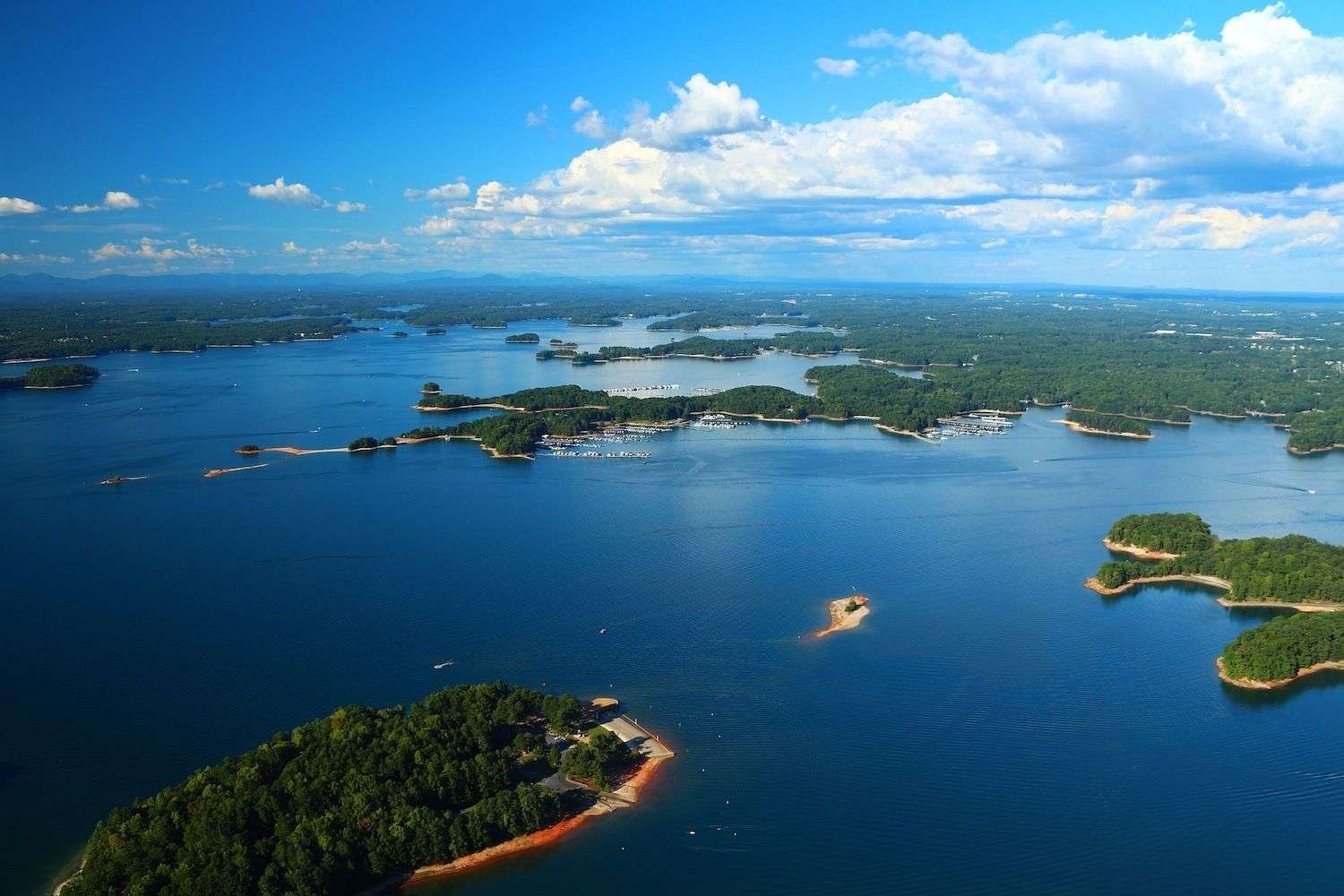
Lake Lanier and Asheville are two of the Southeast's most-compared lifestyle markets, but they serve different buyers and different daily routines. Lake Lanier is a 38,000-acre U.S. Army Corps of Engineers reservoir on the Chattahoochee River north of Atlanta, managed by the USACE Mobile District at Buford Dam, with roughly more than 600 miles of shoreline across Hall, Forsyth, Dawson, Gwinnett, and Lumpkin counties (USACE Mobile District, current as of May 2026). Asheville is a Blue Ridge mountain city in Buncombe County, North Carolina, anchored by historic neighborhoods like Montford, Biltmore Forest, and Grove Park, with a downtown arts and dining economy that runs year-round. The right choice usually comes down to whether the buyer wants waterfront and Atlanta access or a mountain-city culture roughly 200 miles away.
Quick Answer: Lake Lanier or Asheville?
The fastest way to decide between Lake Lanier and Asheville is to weigh waterfront access against mountain-city culture, then layer in travel time and home type. Lake Lanier delivers private docks, boating, and short drives to metro Atlanta, while Asheville delivers a walkable historic downtown, mountain views, and a longer drive that pulls the home into a different rhythm of use.
Choose Lake Lanier for boating, Atlanta access, and waterfront living
Lake Lanier sits roughly 35 to 60 miles north of downtown Atlanta along Interstate 985 and Georgia 400, depending on whether a buyer is looking at the Buford and Flowery Branch side in Hall and Gwinnett counties or the Cumming and Dawsonville side in Forsyth and Dawson counties. The lake is reachable from Hartsfield-Jackson Atlanta International Airport in roughly 90 minutes outside peak traffic, which makes weekend use realistic for buyers based in Buckhead, Midtown, Sandy Springs, or Alpharetta. The dock-and-cove lifestyle is the defining product on Lake Lanier, with full-service marinas including Aqualand Marina, Holiday Marina, Sunrise Cove Marina, and Habersham Marina supporting wakeboarding, pontoons, and large cruisers. Current market conditions require a dated MLS comparison that identifies the area, property type, reporting period, and sample before a buyer relies on it. For buyers whose calculus starts with how often they will actually use the home, Lake Lanier tends to win on the math. A second home in Cumming, Buford, Gainesville, Flowery Branch, or Dawsonville is realistic for a Friday-night arrival and Sunday-night return without burning a vacation day, and the waterfront product itself is what draws most buyers to the market in the first place.
Choose Asheville for mountain-city culture, arts, dining, and regional lifestyle
Asheville sits roughly 200 to 220 miles northeast of downtown Atlanta along Interstate 85 north through Greenville and Spartanburg, South Carolina, then Interstate 26 west into Buncombe County, North Carolina, with typical drive times of 3.5 to 4 hours outside peak traffic (Atlanta.com travel guide, as of May 2026). That trip changes the shape of ownership: a home in Asheville functions less as a weekly weekend property and more as a regional retreat, second home, or relocation primary residence. The Asheville value proposition is the city itself rather than a single body of water. Downtown Asheville carries a walkable historic core, a concentration of independent restaurants and breweries, the River Arts District along the French Broad River, and historic neighborhoods including Montford, Grove Park, Kimberly, Chestnut Hill, and Biltmore Forest. The Biltmore Estate, the Blue Ridge Parkway, and Pisgah National Forest are within the metro footprint, and the cultural calendar runs year-round rather than being structured around boating season. Current market conditions require a dated MLS comparison that identifies the area, property type, reporting period, and sample before a buyer relies on it.
How lifestyle, travel time, and home type drive the choice
Travel time is usually the first filter. Lake Lanier sits within an hour of most northern Atlanta suburbs, which supports weekly use and easy family rotation, while Asheville's 3.5-to-4-hour drive from Atlanta pulls the home into a different visit cadence — typically long weekends, holiday weeks, and extended stays rather than Friday-night runs. Buyers who want the home to feel like a second living room usually lean Lake Lanier; buyers who want a destination retreat lean Asheville. Home type is the second filter. Lake Lanier's defining inventory is permitted-dock waterfront, deep-water coves, lake-access homes, and Corps Line frontage governed by the USACE Lake Sidney Lanier Shoreline Management Plan administered by the U.S. Army Corps of Engineers. Asheville's defining inventory is historic homes in Montford, view lots in Reynolds Mountain and Town Mountain, golf-corridor and estate parcels in Biltmore Forest, and Arts and Crafts bungalows in Grove Park and Kimberly. The two product categories rarely substitute for each other. Lifestyle pattern is the third filter. Lake Lanier ownership is organized around water — boat schedules, dock maintenance, swim seasons, and seasonal water levels around 1,071 feet full pool. Asheville ownership is organized around the city and the surrounding national forest — restaurant calendars, music venues, hiking access from the Blue Ridge Parkway, and four-season weather that includes occasional winter snow on elevated stretches of Interstate 26 and U.S. 70.
Real Estate and Lifestyle Comparison
Day-to-day ownership on Lake Lanier and in Asheville differs in concrete, checkable ways: what the home actually is, what amenities sit at the front door, and how the property fits into the buyer's calendar. Buyers comparing the two should treat them as different product categories first and price points second, because the product category drives almost every downstream cost and use decision.
Lake homes, private docks, and waterfront communities
Lake Lanier waterfront homes are governed by the USACE Mobile District through the Lake Lanier Project Management Office in Buford, with shoreline use, dock footprint, and electrical service controlled under the Lake Sidney Lanier Shoreline Management Plan administered by the U.S. Army Corps of Engineers, Title 36 of the Code of Federal Regulations, and Engineer Pamphlet EP 1130-2-406. A buyer evaluating a Lake Lanier home with an existing dock should verify the USACE permit number, the shoreline zone classification, the Exhibit C electrical inspection status, and the as-built diagram during due diligence rather than at closing. Waterfront inventory on Lake Lanier clusters in deep-water coves around Flowery Branch, Buford, Gainesville, and Cumming, with cove geography, gentle-slope walkability, and dock type often mattering more than square footage to repeat lake buyers. Single-slip docks, double-slip docks, and party docks each carry different permit categories, and the difference between a grass-to-water lot and a riprap-stabilized shoreline shows up in both price and maintenance. Waterfront communities and HOAs on Lake Lanier vary widely. Some neighborhoods include shared dock corridors and community amenities, while many waterfront homes sit on independent parcels with private docks and no HOA overlay. That structure leaves buyers more control of the parcel than they find in a typical resort community, but also more individual responsibility for dock upkeep, shoreline vegetation buffers, and corps-line compliance.
Mountain homes, city neighborhoods, and cultural amenities
Asheville's housing stock is organized around city neighborhoods and the surrounding mountain corridors rather than around a single waterfront. Montford carries 600-plus historic buildings from roughly 1890 to 1920, most of them Queen Anne Victorians, Arts and Crafts bungalows, and Colonial Revival homes inside the Montford Area Historic District listed on the National Register of Historic Places (City of Asheville Historic Resources, as of May 2026). Grove Park, Kimberly, and Chestnut Hill carry early-20th-century architecture along Charlotte Street and the Merrimon Avenue corridor, with proximity to the Grove Park Inn and the Asheville Country Club. Biltmore Forest is a separately incorporated town of roughly three square miles south of Asheville, originally platted in 1920 on land sold from the Biltmore Estate, with two-acre minimum lots, hardwood canopy, and large estate homes (Biltmore Forest historical records, as of May 2026). North Asheville neighborhoods including Lakeview Park, Beaver Lake, and Reynolds Mountain offer view lots and newer construction at different price tiers, while West Asheville along Haywood Road and South Slope offer in-town bungalows and craftsman housing closer to downtown. Cultural amenities are part of the product. The Biltmore Estate, the Blue Ridge Parkway, Pisgah National Forest, the Asheville Art Museum, the River Arts District, and a concentration of independent restaurants and breweries are within the metro footprint. The cultural calendar is what many Asheville buyers are actually buying, and it runs year-round rather than collapsing in winter the way a boating market does.
Primary residence, retirement, second-home, and remote-work use cases
Primary-residence buyers comparing the two markets usually decide based on where their work, family, or healthcare network anchors them. Lake Lanier supports primary residence for buyers tied to metro Atlanta employment, with access to Hartsfield-Jackson Atlanta International Airport, Northeast Georgia Medical Center in Gainesville, and the broader Atlanta hospital network. Asheville supports primary residence for buyers tied to the Asheville metro economy, Mission Hospital, and remote roles that do not require regular Atlanta commuting. Retirement buyers split based on lifestyle preference. Lake Lanier suits retirees who want waterfront access, boating, and a short drive to adult children or grandchildren in Atlanta. Asheville suits retirees who want walkable downtown access, mountain weather, and a cultural calendar without the heat-and-humidity profile of the metro Atlanta corridor; the metro carries higher elevation and milder summers than Lake Lanier's climate band. Second-home and remote-work buyers face a sharper trade-off. Lake Lanier's 35-to-60-mile drive from Atlanta makes weekly second-home use realistic, while Asheville's 3.5-to-4-hour drive pulls the home into long-weekend and quarterly-visit cadence. Remote-work buyers who want a primary base in either market should also check short-term rental rules: Asheville prohibits whole-home STRs in residential districts and permits owner-occupied homestays only with a city permit, owner full-time residence, and a $200 permit fee (City of Asheville Development Services, as of May 2026); Lake Lanier short-term rental rules vary by county and by HOA, and buyers planning rental income should verify the rules in Hall, Forsyth, Dawson, Gwinnett, or Lumpkin County before closing.
Buyer Due Diligence Differences
Due diligence on a Lake Lanier home and an Asheville home runs on different checklists because the risk profiles are different. Water, dock, shoreline, and septic dominate the Lake Lanier review; access, slope, weather, and rental status dominate the Asheville review. Buyers should match the inspection scope to the market rather than reusing a generic suburban checklist.
Lake-specific dock, shoreline, water-level, and septic issues
Lake Lanier due diligence begins with the dock and shoreline file rather than the house. Buyers should request the USACE permit number, verify the shoreline zone classification under the Lake Sidney Lanier Shoreline Management Plan administered by the U.S. Army Corps of Engineers, confirm the Exhibit C electrical inspection is current, review the as-built dock diagram on file with the Lake Lanier Project Management Office in Buford, and confirm that the dock footprint matches what was actually permitted. An unpermitted dock, a missing Exhibit C, or a dock that has been modified beyond its permit can become the buyer's problem after closing rather than the seller's, and the cost of bringing a non-compliant dock into Corps Line compliance often runs higher than buyers expect. Lake Lanier waterfront homes also carry vegetation buffer rules, tram permit considerations on steep lots, and shoreline modification records that should appear in the file before closing rather than after move-in. Shoreline condition matters next. The vegetation buffer rules, the corps-line location relative to the parcel boundary, and the slope from house to water all affect what the owner can use, modify, or store along the water. Riprap erosion repair, tram permit status for steeper lots, and any history of shoreline modification should appear in the file. Lake Lanier's water level operates around a 1,071-foot full pool managed by the USACE for hydroelectric, flood control, water supply, and navigation purposes, and buyers should review historical drought drawdown patterns when evaluating a lot whose dock or view depends on full pool. Septic and well systems are common on Lake Lanier waterfront parcels, and the rules around septic placement, soil percolation tests, and proximity to the shoreline are governed by Georgia Department of Public Health and county environmental health offices. Buyers should commission a current septic inspection, locate the drain field, and verify the perc test history rather than relying on seller disclosure alone.
Mountain property access, slope, weather, and rental considerations
Asheville due diligence begins with access. Mountain and view lots often sit on shared private drives, easements, or single-lane gravel roads that affect emergency response, deliveries, and winter use. Buyers should review the recorded easement, the maintenance agreement, and the road surface condition in person rather than from listing photos. Slope, retaining-wall condition, and driveway grade also matter on Town Mountain, Reynolds Mountain, and similar elevations. Weather is part of the diligence. Buncombe County sits at higher elevation than the metro Atlanta corridor and carries occasional winter snow and ice on Interstate 26, U.S. 70, and the Blue Ridge Parkway. Buyers should review the history of weather-related closures, generator status, and any storm damage on the parcel; Hurricane Helene in fall 2024 caused significant flooding and infrastructure damage across the Asheville region, and storm-related repair history may still be relevant on some parcels. Rental considerations are essential for buyers planning income. Inside Asheville city limits, whole-home short-term rentals are prohibited in residential districts; the city permits owner-occupied homestays only when the owner resides at the property full-time, with proof of residency, a fire safety inspection, a floor plan, and a $200 permit fee (City of Asheville Compliance Division, as of May 2026). Buncombe County's unincorporated areas allow short-term rentals of up to two single-family residences with no permit currently required, though county rules have been under review (Buncombe County planning records, as of May 2026). Buyers should verify the property's jurisdiction, current permit status, and any HOA overlay before underwriting rental income.
Which market fits your long-term lifestyle plan?
The long-term fit question usually comes down to whether the buyer wants the water or the city. Lake Lanier owners organize their year around boating season, dock maintenance, summer holidays, and weekend rotations from Atlanta; the home is a waterfront platform first and a building second. Asheville owners organize their year around the cultural calendar, mountain hiking, four-season weather, and longer regional visits; the home is a base inside a destination city. Financial structure is the second piece of the fit question. Lake Lanier carrying costs include property tax across Hall, Forsyth, Dawson, Gwinnett, or Lumpkin County in Georgia, dock maintenance, shoreline upkeep, lake-specific insurance, and seasonal boat costs. Asheville carrying costs include North Carolina property tax in Buncombe County, mountain-grade maintenance on roof, drainage, and retaining walls, and any homestay or short-term-rental compliance costs if the buyer plans income use. The total cost of ownership reflects the product type more than it reflects the headline price. Family and social geography is the third piece. Buyers with Atlanta-based family, work, and social networks usually lean Lake Lanier so the lake home feels like an extension of normal life rather than a separate trip. Buyers whose family or work network is already regional or remote often lean Asheville so the home anchors a different rhythm. Ashley Smith, real estate agent with The Dream Smith Team at Compass, recommends that buyers comparing Lake Lanier and Asheville draft a calendar of expected visits before touring either market, because the right answer usually shows up in the schedule before it shows up in the listings.
Frequently Asked Questions
- Is Lake Lanier or Asheville closer to Atlanta?
- Lake Lanier is significantly closer. The drive from downtown Atlanta to a home around Cumming, Buford, Gainesville, Flowery Branch, or Dawsonville typically runs 45 minutes to 90 minutes depending on traffic and which side of the lake the home sits on. Asheville is roughly 200 to 220 miles from Atlanta along Interstate 85 north through Greenville and Spartanburg, South Carolina, then Interstate 26 west into Buncombe County, with typical drive times of 3.5 to 4 hours outside peak traffic (Atlanta.com travel guide, as of May 2026).
- How does the median home price compare between Lake Lanier and Asheville?
- The product categories are different, which drives the spread. The Lake Lanier number reflects a waterfront product with a private dock, while the Buncombe County number reflects the broader Asheville-area housing market, including non-waterfront homes at a wide range of price tiers. Current market conditions require a dated MLS comparison that identifies the area, property type, reporting period, and sample before a buyer relies on it.
- Which market fits a buyer who wants boating and lake life year-round?
- Lake Lanier fits that buyer better. The lake spans roughly 38,000 acres with about more than 600 miles of shoreline across Hall, Forsyth, Dawson, Gwinnett, and Lumpkin counties, managed by the USACE Mobile District at Buford Dam (USACE Mobile District, as of May 2026). Full-service marinas including Aqualand Marina, Holiday Marina, Sunrise Cove Marina, and Habersham Marina support wakeboarding, ski boats, pontoons, and cruisers, and the dock-and-cove lifestyle is the defining product across the market. Asheville offers river access on the French Broad and lake recreation at Lake Lure and Lake Julian, but it is not a primary boating market the way Lake Lanier is.
- Which market fits a buyer who wants a walkable downtown, arts, and dining?
- Asheville fits that buyer better. Downtown Asheville carries a walkable historic core, the River Arts District along the French Broad River, a concentration of independent restaurants and breweries, and historic neighborhoods including Montford, Grove Park, and Biltmore Forest. The Biltmore Estate, the Blue Ridge Parkway, and Pisgah National Forest are within the metro footprint, and the cultural calendar runs year-round. Lake Lanier offers waterfront dining at venues such as Margaritaville at Lanier Islands, Pelican Pete's, Twisted Oar, and Fish Tales Lakeside Grille, but the experience is structured around the lake rather than a downtown core.
- How do short-term rental rules differ between Lake Lanier and Asheville?
- The rules are markedly different. Inside Asheville city limits, whole-home short-term rentals are prohibited in residential districts; the city permits owner-occupied homestays only when the owner resides at the property full-time, with proof of residency, a fire safety inspection, a floor plan, and a $200 permit fee (City of Asheville Compliance Division, as of May 2026). Buncombe County's unincorporated areas allow short-term rentals of up to two single-family residences with no permit currently required (Buncombe County planning records, as of May 2026). Lake Lanier short-term rental rules vary by county and by HOA across Hall, Forsyth, Dawson, Gwinnett, and Lumpkin counties, so buyers planning rental income should verify the specific jurisdiction before closing.
- Which market is the better fit for retirement?
- Both work, but the lifestyle profiles differ. Lake Lanier fits retirees who want waterfront living, boating, and short drives to adult children or grandchildren in metro Atlanta, with access to Northeast Georgia Medical Center in Gainesville and the broader Atlanta hospital network. Asheville fits retirees who want walkable downtown access, milder summer climate at higher elevation, mountain hiking access from the Blue Ridge Parkway, and a year-round cultural calendar, with Mission Hospital as the regional anchor. Healthcare network, climate preference, and proximity to family usually decide the question before price does.
Related
- Lake Lanier Community GuideFull neighborhood, market, school, and shoreline overview for Lake Lanier.
- Lake Lanier Real EstateActive waterfront, dock, and lake-access listings across the Lake Lanier market.
- Lake Lanier Waterfront HomesPermitted-dock and shoreline-frontage homes across Hall, Forsyth, Dawson, Gwinnett, and Lumpkin counties.
- Lake Lanier Commute to AtlantaDrive times, corridors, and second-home logistics for Atlanta-based buyers.
- Lake Lanier Retirement HomesLock-and-leave, single-level, and low-maintenance waterfront options for retirement buyers.
- Lake Lanier Second HomesWeekend and second-home logistics for Atlanta-based and out-of-state buyers.