
Journal
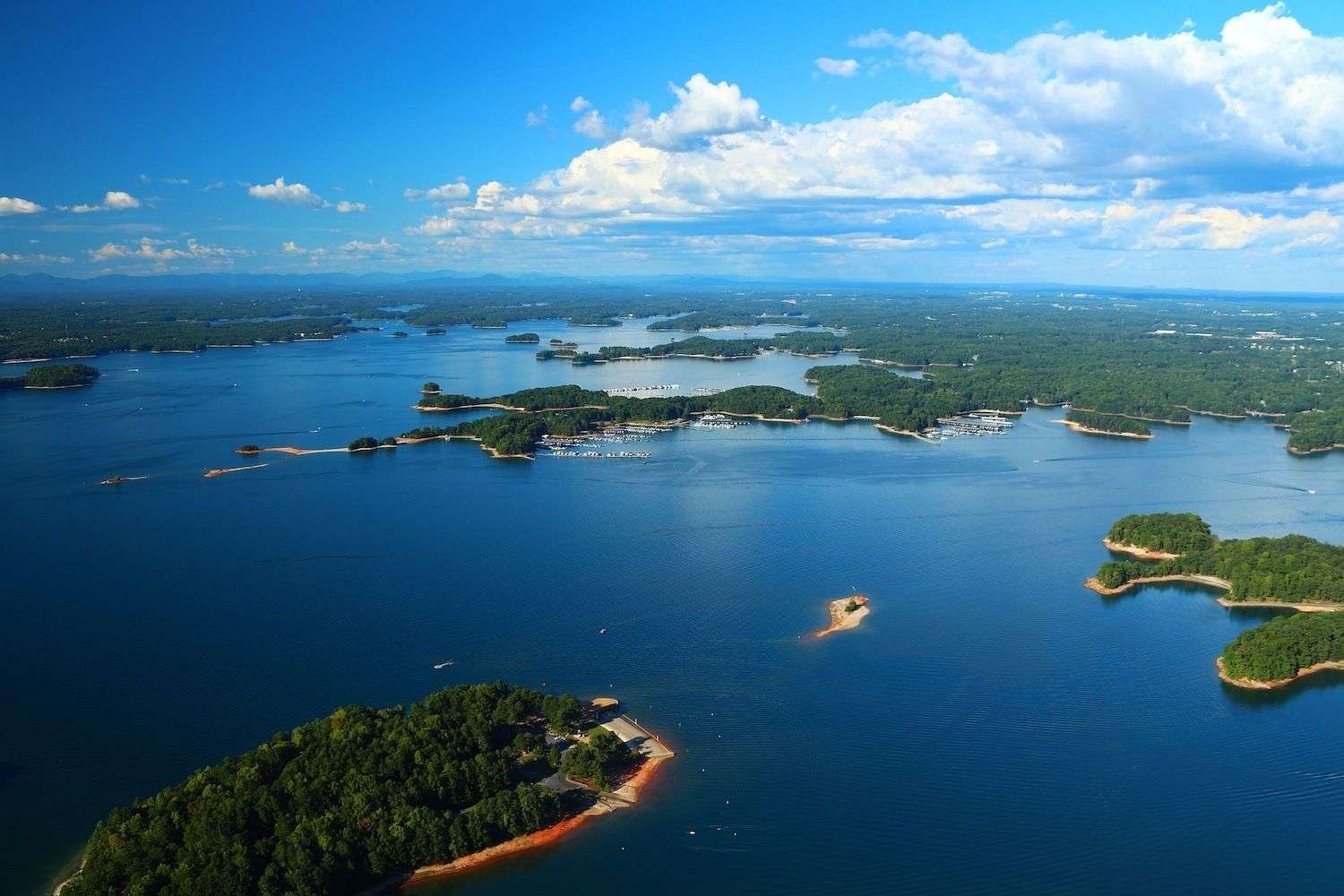
Lake Lanier real estate questions cluster around the same federal, county, and market realities that shape every transaction on this U.S. Army Corps of Engineers reservoir. The lake covers roughly 38,000 acres at the 1,071-foot full-pool elevation set by the USACE Mobile District, its 600-plus-mile shoreline crosses Forsyth County, Hall County, Dawson County, Gwinnett County, and Lumpkin County, and every dock structure on it is governed by the Lake Sidney Lanier Shoreline Management Plan administered by the U.S. Army Corps of Engineers rather than by the county a parcel sits in. Buyers, sellers, and investors who walk into a Lake Lanier deal with the right questions in the right order tend to close on the right product.
Lake Lanier Buying FAQs
USACE permits and licenses are nontransferable. A new owner of an existing facility may apply through the Lake Lanier Operations Management Office, and approval is not automatic. Confirm the property-specific record and current requirements before closing.
What is the difference between lakefront, waterfront, lake view, and lake access?
Lakefront and waterfront on Lake Lanier mean the parcel's property line touches the federal shoreline boundary administered by the U.S. Army Corps of Engineers, Mobile District. Most listings use the two terms interchangeably, but neither term, on its own, confirms that the parcel has a permitted private dock. A waterfront parcel can be permitted with a Class I single-slip or Class II double-slip dock, permitted with a community dock through an HOA, or non-dockable because it sits in a Protected Shoreline or Prohibited Access zone under the Lake Sidney Lanier Shoreline Management Plan administered by the U.S. Army Corps of Engineers. Lake view describes a parcel that does not touch the federal shoreline but has a line-of-sight view of the water from the home or lot. A lake view parcel cannot have a private dock on Lake Lanier because the parcel does not abut USACE-managed shoreline, and the view itself is subject to vegetation growth, neighboring construction, and seasonal foliage. Lake view homes around Cumming, Buford, Gainesville, Flowery Branch, and Dawsonville typically price well below true waterfront homes in the same ZIP code. Lake access is the most loosely used term in MLS listing copy. It can mean a deeded HOA easement to a community dock with assigned slips, a deeded easement to a community shoreline area without dock rights, or simply a location within a few miles of a marina or USACE day-use park. Buyers should treat the term as a question, not an answer, and request the deed, the HOA covenants, and the community dock permit (if any) before assuming the parcel offers usable lake access.
Does a dock permit transfer when I buy a Lake Lanier home?
A USACE Mobile District residential dock permit does not transfer automatically at closing. The permit is issued to a named permittee, and the new owner must file a change-of-owner request with the Lake Lanier Project Management Office in Buford to bring the permit into the buyer's name. The Mobile District uses the change-of-owner filing as the trigger to verify the structure against current shoreline rules, the current as-built diagram on file, and any open enforcement notices on the parcel. The filing matters because the permit can be flagged at change-of-owner. If the structure has drifted out of compliance since the most recent shoreline inspection, the Mobile District can condition the transfer on modifications to footprint, gangway length, slip count, electrical, or vegetation. A permit that has lapsed on a prior sale, a structure that has been expanded without a USACE modification approval, or a dock that has shifted into a Protected Shoreline zone after a reclassification are each treated as transfer-blocking issues rather than post-closing cleanup items. Buyers should align the change-of-owner timeline with the closing calendar. Standard practice is to request the existing permit number, the permit class, the as-built diagram on file, and the most recent USACE shoreline inspection notice from the listing agent during the due-diligence period, then confirm with the Lake Lanier Project Management Office in Buford that no open enforcement notice would block the transfer. The transfer itself is a documentary process, but the underlying eligibility is what determines whether the buyer ends up with a permitted dock at closing.
How do I verify water depth, shoreline access, and dock compliance?
Water depth on Lake Lanier varies by cove, by full-pool elevation, and by USACE water-management operations. Full pool is 1,071 feet mean sea level (USACE Mobile District, 2026), and the operating range typically runs from full pool down to approximately 1,070 feet at winter pool; the lake has historically dropped into the 1,060–1,065 range during drought conditions per the USACE water-management record. A dock that floats comfortably at 1,071 may sit on bottom or pull away from its gangway at 1,063, and the relevant question is the year-round usable depth at the slip, not the depth on the listing photo's date. A licensed Georgia marine contractor with sonar can sound the slip and report a usable-depth number against current USACE elevation data. Shoreline access depends on the slope between the home and the dock and on the shoreline zone classification. A gentle-slope parcel with a short walk to the water lives differently than a steep parcel with a long path or a tram, and the slope is fixed by the topography rather than by any improvement. The shoreline zone classification, available from the Mobile District, determines what vegetation work, riprap, and path improvements are allowed on the parcel between the home and the federal shoreline contour. Dock compliance is a USACE-file question. The Lake Lanier Project Management Office in Buford holds the permit, the permit class, the as-built diagram, the inspection history, and any open enforcement correspondence for every permitted residential dock on the lake. A licensed Georgia marine contractor and a licensed Georgia electrician verify the physical structure against the USACE file and current code. The combination of USACE record, marine contractor report, and electrician report is the underwriting standard a careful buyer uses before waiving the inspection contingency.
Lake Lanier Selling FAQs
Seller questions on Lake Lanier track the same documentary realities from the opposite side of the closing table. Pricing, repair sequencing, and pre-listing preparation are all downstream of how the parcel reads in the USACE Mobile District file and how it comps in the Georgia MLS record for the same ZIP code and dock class.
How much does a dock add to value?
USACE permits and licenses are nontransferable. A new owner of an existing facility may apply through the Lake Lanier Operations Management Office, and approval is not automatic. Confirm the property-specific record and current requirements before closing. Dock class matters within the permitted set. A Class I single-slip dock, a Class II double-slip dock, and a legacy oversized party-style structure each carry different appeal in the buyer pool, and the relative spread depends on cove characteristics, water depth at the slip, and the structural condition of the dock itself. Big-water and deep-water parcels with a Class II dock and year-round usable depth tend to sit at the top of the comp set; cove parcels with a Class I dock and shallow seasonal depth typically sit lower. The practical seller takeaway is that the dock has to be paired with a clean USACE file to capture the permitted-dock comp. A physically present but unpermitted dock, a permit with lapsed inspection history, or an open enforcement notice on the parcel undermines the seller's ability to price against the permitted-dock comp set. Pre-listing confirmation of permit status through the Lake Lanier Project Management Office in Buford is the cleanest way to preserve the comp premium.
Should I fix shoreline, dock, or septic issues before listing?
Shoreline, dock, and septic issues are valued in the buyer's contingency math, not in the listing description. A buyer's marine contractor, electrician, septic inspector, and lender's appraiser each report against an independent standard, and items they flag come back as repair requests, price concessions, or termination notices during the due-diligence period. Sellers who address the largest items pre-listing typically face fewer renegotiations than sellers who carry known issues into the contract. Shoreline work on Lake Lanier requires USACE Mobile District authorization for anything that touches the federal shoreline contour, including riprap, vegetation buffer modification, path improvements, and tram installation. Riprap erosion repair, vegetation buffer restoration, and any path or tram permit work should be sequenced with the Lake Lanier Project Management Office in Buford before listing, because a buyer's inspection will flag any visible shoreline issue regardless of whether it requires immediate repair. Dock repairs covering float buoyancy, gangway, electrical, and roof should be completed by a licensed Georgia marine contractor and electrician on the same schedule. Septic systems on Lake Lanier are governed by the county health department, not by the USACE Mobile District, and Hall County, Forsyth County, Dawson County, Gwinnett County, and Lumpkin County each enforce their own septic rules and inspection requirements. A pre-listing septic inspection, with any required pumping or component repair completed before the listing goes live, removes one of the most common buyer-side renegotiation triggers and lets the seller respond to the buyer's septic question with a current inspection report rather than a documentation gap.
How should I price a luxury or waterfront Lake Lanier home?
Luxury and waterfront pricing on Lake Lanier starts with the dock permit class, the cove, the water depth at the slip, and the buildable area on the lot above the federal shoreline contour. Cove parcels with shallow seasonal depth, lots with steep slope, and parcels in Protected Shoreline zones each price differently than big-water gentle-slope parcels with a Class II dock and year-round usable depth. The Georgia MLS comp set is the starting point, but the comparable home needs to share dock class, cove characteristics, and shoreline zone classification to read as a true comp. Days on market behavior on Lake Lanier varies by ZIP and by season. Median days on market across the south lake ZIP codes 30518, 30519, and 30040 ran in the mid-50s as of April 2026, with the north lake ZIP codes including 30534 typically running longer (Georgia MLS, April 2026). Listings that go live ahead of the spring boating season tend to draw the broadest buyer pool, and listings priced against last year's comp set in a softening or strengthening market tend to sit until the price is adjusted. Luxury homes above the mid-seven-figure mark trade on a smaller buyer pool, and the marketing strategy reflects that. Off-market and quietly marketed Lake Lanier transactions are a meaningful share of the luxury segment, particularly for waterfront estates with high-end docks and large buildable areas. Sellers in that segment should align pricing, marketing exposure, and the USACE documentary record before the listing goes live, because the buyer in that price band is underwriting the federal compliance picture as carefully as the buyer in the entry waterfront segment.
Lake Lanier Investment, Relocation, and Lifestyle FAQs
Investment, relocation, and lifestyle questions on Lake Lanier all sit on top of the same federal-county-market stack. The right answer to an Airbnb question, a county-selection question, or a primary-versus-second-home question depends on which county a parcel is in, what the HOA covenants say, and what the USACE Mobile District record looks like for that specific shoreline.
Can I operate an Airbnb on Lake Lanier?
Short-term rental rules on Lake Lanier are set by the county and, in incorporated areas, by the city, not by the U.S. Army Corps of Engineers. Forsyth County, Hall County, Dawson County, Gwinnett County, and Lumpkin County each set their own short-term rental ordinances, registration requirements, occupancy tax obligations, and zoning constraints, and the rules change. Cities including Cumming, Buford, Gainesville, Flowery Branch, and Dawsonville add their own ordinances inside city limits. A buyer underwriting a Lake Lanier purchase on rental income should confirm the current short-term rental rules with the applicable county planning and zoning office and, where relevant, the city clerk before contract. HOA covenants frequently restrict short-term rentals independent of county rules. Many Lake Lanier waterfront subdivisions prohibit rentals shorter than 30 days, cap the number of rental nights per year, or require owner-occupancy for a portion of the year. The covenants control even where county rules would otherwise allow short-term rental, and the recorded covenant is the source of truth rather than the listing agent's description. A title search and a covenant review during due diligence is the cleanest way to confirm rental eligibility. The USACE Mobile District does not directly regulate short-term rental of the home, but it does regulate use of the dock. Commercial use of a permitted residential dock can be flagged as a violation of the permit's residential-use terms, and structured rental-of-the-dock arrangements separate from the home rental have generated enforcement issues in the past. Investors building a Lake Lanier short-term rental thesis should align the county rule, the city rule, the HOA covenant, and the USACE permit terms before underwriting a projected rental yield.
Which Lake Lanier city or county should I consider?
County selection on Lake Lanier is a decision across five jurisdictions with different school systems, property tax structures, commute patterns, and shoreline character. Forsyth County covers the southwest shoreline with Cumming as its anchor and feeds into Forsyth County Schools and GA-400 commute access toward Sandy Springs and Buckhead. Hall County covers the largest share of the Lake Lanier shoreline including Gainesville, Flowery Branch, and Oakwood, with Hall County Schools and I-985 commute access toward I-85 and Atlanta. Dawson County covers the north shoreline with Dawsonville as its anchor, the smallest of the lake-area school systems by enrollment, and GA-400 commute access farther from Atlanta employment centers. Gwinnett County covers the southern tip near Buford and Buford Dam with Gwinnett County Public Schools and direct I-85 access. Lumpkin County holds only a corner of the north shoreline and serves a narrow segment of the lake's waterfront inventory. Property tax structure varies by county and by city. Forsyth County, Hall County, Dawson County, Gwinnett County, and Lumpkin County each set their own millage rates and homestead exemptions, and cities including Buford, Gainesville, Cumming, Flowery Branch, and Dawsonville add their own municipal millage inside city limits. Buford City Schools and Gainesville City Schools operate as independent city school districts with their own millage. A buyer comparing two waterfront homes across a county line should run the actual annual tax estimate against the current millage rate rather than assuming parity, because the spread can be material. City selection inside a county matters where the parcel sits inside corporate limits. A parcel inside Buford's city limits feeds into Buford City Schools rather than Gwinnett County Public Schools, a parcel inside Gainesville's city limits feeds into Gainesville City Schools rather than Hall County Schools, and the municipal millage applies on top of the county millage. The address determines the school assignment, the millage, and the city ordinance set, and the current-year boundary lookup from the applicable district is the only authoritative source.
Is Lake Lanier better for a primary home, second home, retirement, or investment?
The right Lake Lanier product depends on the buyer's use pattern, not on a universal answer. Primary-home buyers on Lake Lanier typically prioritize commute access to Atlanta employment centers, year-round livability of the lot and home, school assignment, and proximity to full-service healthcare. South lake ZIP codes in Forsyth County and Gwinnett County tend to sit closer to those priorities; north lake ZIP codes in Dawson County and northern Hall County tend to sit farther from them. Second-home and vacation-home buyers weigh the dock, the cove characteristics, the water depth at the slip, and the seasonal-use pattern more heavily than the commute. A second-home buyer using the lake primarily on summer weekends and during the boating season can tolerate a longer drive from a primary residence in Atlanta or Athens in exchange for big-water views, deep water, or a quieter cove. Retirement buyers often prioritize single-level living, a gentle slope to the water, proximity to the Northeast Georgia Health System hospitals in Gainesville and Braselton or Northside Hospital Forsyth in Cumming, and lock-and-leave maintenance. Investment buyers underwriting a Lake Lanier purchase for rental yield, appreciation, or both face the additional layer of county short-term rental rules, HOA covenants, and USACE Mobile District permit terms discussed above. Underwriting should be built bottom-up from confirmed rental eligibility, realistic seasonal occupancy assumptions, and a clear-eyed view of the dock permit, the shoreline zone classification, and the structural condition of the dock and home. A Lake Lanier investment thesis that depends on assumptions the documentary record does not support is the most common reason investor deals fall apart in due diligence.
Frequently Asked Questions
- What is the most important question to ask before buying a Lake Lanier home?
- The most important question is the USACE Mobile District dock permit status for the parcel. Lake Lanier is a federal reservoir, and every residential dock is governed by a permit on file at the Lake Lanier Project Management Office in Buford under the Lake Sidney Lanier Shoreline Management Plan administered by the U.S. Army Corps of Engineers. The permit class, the as-built diagram, the most recent shoreline inspection notice, and any open enforcement correspondence are the documentary record that controls value, financing, and insurance regardless of how the structure looks from the deck.
- Does Lake Lanier have an HOA, and do covenants matter on waterfront homes?
- Lake Lanier itself is not an HOA; the lake is a U.S. Army Corps of Engineers reservoir. Many shoreline subdivisions in Forsyth County, Hall County, Dawson County, Gwinnett County, and Lumpkin County do have HOAs, and the covenants can restrict short-term rentals, regulate community dock use, set architectural review standards, and assign or limit slip access. Buyers should review the recorded covenants, the HOA budget, and any community dock permit during the due-diligence period, because the covenants control alongside the USACE permit.
- What is Lake Lanier's full-pool elevation and why does it matter?
- Full pool on Lake Lanier is 1,071 feet mean sea level (USACE Mobile District, 2026). The operating range typically runs from full pool down to approximately 1,070 feet at winter pool; the lake has historically dropped into the 1,060–1,065 range during drought conditions per the USACE water-management record. The elevation matters because dock floats, gangways, slip depth, and shoreline access all change with the elevation, and a parcel that reads as deep-water at full pool can sit shallow during a drawdown. The year-round usable depth at the slip is the relevant underwriting number.
- Can I run a short-term rental on a Lake Lanier waterfront home?
- Short-term rental rules on Lake Lanier are set by the county and, in incorporated areas, by the city, and they are also commonly restricted by HOA covenants. Forsyth County, Hall County, Dawson County, Gwinnett County, and Lumpkin County each set their own ordinances, and many waterfront subdivisions prohibit rentals shorter than 30 days through recorded covenants. The USACE Mobile District does not regulate the home rental directly but does regulate commercial use of the permitted residential dock. Buyers underwriting a rental thesis should confirm the county rule, the city rule, the HOA covenant, and the USACE permit terms before contract.
- How long do Lake Lanier homes typically stay on the market?
- Median days on market across the south lake Lake Lanier ZIP codes 30518, 30519, and 30040 ran in the mid-50s as of April 2026, with the north lake ZIP codes including 30534 typically running longer (Georgia MLS, April 2026). Days on market vary by season, by dock permit class, by cove characteristics, and by price band, and luxury homes above the mid-seven-figure mark generally trade on a longer marketing timeline than entry-waterfront homes in the same ZIP. Sellers should compare against same-ZIP, same-dock-class comparables rather than against the lake-wide median.
- What counties surround Lake Lanier and which schools serve waterfront homes?
- Lake Lanier's 600-plus-mile shoreline crosses Forsyth County, Hall County, Dawson County, Gwinnett County, and a corner of Lumpkin County, and each county operates its own independent school system. Forsyth County Schools, Hall County Schools, Gwinnett County Public Schools, and Dawson County Schools each set their own attendance zones and millage rates, with Buford City Schools and Gainesville City Schools operating separately for parcels inside those city limits. The current-year attendance zone lookup from the applicable district is the only authoritative source for a specific parcel's assignment.
Related
- Lake Lanier Real Estate OverviewFull overview of waterfront, lake-access, and lake-view inventory across the Lake Lanier shoreline.
- Lake Lanier Dock Permits GuideHow USACE Mobile District residential dock permits work and what must be re-issued by USACE to the new owner.
- Lake Lanier School Districts GuideForsyth, Hall, Dawson, Gwinnett, and city school district resources by parcel address.
- Lake Lanier Property Taxes by CountyMillage rates, homestead exemptions, and city additions across the five lake counties.
- Lake Lanier Water Levels and Full Pool 1,071USACE Mobile District water-management cycles and what they mean for slip depth.
- Lake Lanier Commute to AtlantaGA-400, I-985, and I-85 access patterns by ZIP and by cove.