
Compare
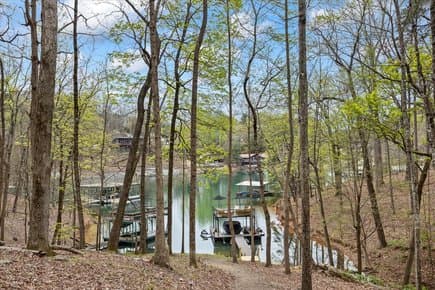
Deep-water and shallow-cove homes on Lake Lanier represent two distinct waterfront experiences within the same federally managed reservoir. Deep-water homes — typically on the main channel, river arms, and outer-peninsula coves — hold 8 feet or more at full pool elevation 1,071 and stay boatable through winter drawdown. Shallow-cove homes sit in protected pocket coves and feeder-creek upper reaches where depth tapers fast; they often trade lower price and quieter water for seasonal dock-usability risk. For buyers in Hall County, Forsyth County, Gwinnett County, Dawson County, and Lumpkin County, the choice between the two affects boat size, dock cost, privacy, and resale liquidity in measurable ways.
Quick Answer: Deep Water or Shallow Cove?
The right answer depends on how the buyer plans to use the dock across the full annual elevation cycle managed by the U.S. Army Corps of Engineers, Mobile District at Buford Dam. Deep-water homes solve year-round boating; shallow-cove homes solve privacy, swim-zone calm, and entry-level pricing. Verification — not the listing photo — is the only reliable basis for either choice.
Deep-water homes usually offer stronger boating usability during lower water levels
A deep-water dock on Lake Lanier holds usable depth — generally 6 feet or more at the outermost slip — through the USACE water-management operations that pulls pool elevation below full pool of 1,071 feet most years. USACE Mobile District daily readings showed swings of three to seven feet below full pool during late summer and fall in recent cycles (USACE, as of April 2026). For owners running cruisers, larger tritoons, or wakeboats with deeper drafts, that buffer is what keeps the boat at the home dock instead of moving to commercial storage at Aqualand Marina, Holiday Marina, or Bald Ridge Marina from October through February. Deep-water shoreline concentrates along the original Chattahoochee River and Chestatee River channels that were impounded behind Buford Dam in 1956 and along the outer faces of peninsulas off Browns Bridge Road, near Lake Lanier Islands, and along select stretches of Riverside Drive in Gainesville. These segments produce the lake's strongest year-round boating profile and carry the steadiest resale demand from primary-residence buyers commuting toward the Atlanta metro via GA-400 and I-985.
Shallow-cove homes may offer privacy but can create dock usability risk
Shallow coves on Lake Lanier — common in back-of-cove residential streets across Hall County and Forsyth County and in feeder-creek upper reaches in Dawson County — sit in calmer water with less wake exposure, lower main-channel boat traffic, and a more sheltered swim zone. The same bathymetry that produces calm also produces shallow lakebed: pocket coves often taper from 5 or 6 feet at full pool down to 1 or 2 feet at winter drawdown, which is below the safe operating depth for most lake boats. For buyers with small runabouts, pontoons under 22 feet, kayaks, paddleboards, and swim-platform priorities, a shallow cove can be the right fit and often costs less per shoreline foot than a comparable deep-water parcel. The risk is mismatch: a buyer who tours in May at full pool, intends to keep a 24-foot tritoon at the dock, and never returns before contract may discover at first winter ownership that the slip is unusable and the boat must move to a marina. That cost — typically several thousand dollars per season at Lake Lanier commercial slips — is the practical penalty of an unverified shallow cove. The diligence step that prevents the mismatch is a measured depth reading at the outermost slip taken during a drawdown month between October and February, compared against U.S. Army Corps of Engineers Mobile District pool elevation for that same date.
Buyers should verify depth, not rely on listing photos
Lake Lanier listing photos overwhelmingly capture the lake at or near full pool, which is the most flattering elevation for both deep-water and shallow-cove parcels. The same dock photographed in May at 1,071 may sit on exposed lakebed in November at 1,065. Georgia MLS dock-data fields do not generally publish measured depth at the outermost slip, so depth verification is the buyer's diligence work. The working method is a measured reading at the outermost slip taken on a known date, then back-calculated against USACE Mobile District pool elevation for the same date. A slip showing 9 feet at a 1,069 reading models to roughly 7 feet at 1,067 and roughly 5 feet at 1,065. Pairing that reading with a drawdown-month walk-through (October through February) and a review of the USACE Lake Lanier Shoreline Management Plan classification for the parcel produces a falsifiable depth picture before contingencies are removed.
How Water Depth Affects Value
Depth shows up in three measurable pricing factors on Lake Lanier: dock usability month-by-month, scarcity of qualifying shoreline, and the resale liquidity that follows both. The premium between deep-water and shallow-cove inventory widens during drought-cycle years and narrows during multi-year wet cycles, but it persists across the full elevation cycle because the underlying bathymetry does not change.
Dock usability, USACE water-management operations, and buyer confidence
The single largest functional driver of price separation is whether the slip remains usable through the typical late-summer and fall drawdown cycle managed at Buford Dam to meet downstream water-supply, hydropower, and endangered-species obligations on the Chattahoochee River. Deep-water dock homes hold the boat through that cycle; shallow-cove docks often do not. For primary-residence buyers using the lake twelve months per year, that gap is the difference between owning waterfront and owning seasonal waterfront. As the share of Lake Lanier residents using the lake as a primary residence has grown — driven in part by remote-work patterns and the GA-400 corridor commute from Cumming, Buford, and Flowery Branch toward the Atlanta metro — buyer confidence in deep-water inventory has tracked steadily upward. Sellers in shallow-cove parcels often see longer days-on-market and more inspection-period renegotiation tied specifically to dock-depth disclosures.
Main-channel access vs. protected cove privacy
Main-channel and outer-peninsula deep-water homes trade away some privacy in exchange for big-water views, faster open-water access, and stronger year-round dock function. Wake exposure is higher, boat traffic is heavier on summer weekends, and the swim zone behind the dock is more open than in a protected cove. For buyers who run larger boats and prioritize the boating program itself, that tradeoff favors the main channel. Protected coves invert the calculation. Pocket coves and back-of-cove residential streets across Hall County and Forsyth County offer calmer water, sheltered swim zones, kayaking and paddleboarding conditions through summer, and lower visual exposure to passing traffic. The privacy is real and durable; the dock-usability tradeoff is also real and durable. Buyers comparing two parcels at similar list prices — one main-channel deep-water, one protected shallow cove — are not comparing the same product, and the choice usually comes down to which lake program the buyer is actually building.
Resale, inspection, and negotiation considerations
Current market conditions require a dated MLS comparison that identifies the area, property type, reporting period, and sample before a buyer relies on it. Resale strategy diverges sharply between the two. Deep-water sellers benefit from documenting depth before listing: a measured reading at known pool elevation, a clean USACE shoreline-use permit file, and bathymetric or shoreline-allocation confirmation move faster in contract. Shallow-cove sellers face a tougher inspection and disclosure profile, and buyers' agents routinely negotiate post-inspection on documented seasonal usability constraints. For buyers planning to resell within five to ten years, the deep-water subset historically holds price strength better during soft markets because the buyer pool above the $1.5M Lake Lanier band overwhelmingly insists on year-round dock usability.
Buyer Due Diligence Steps
Verifying which side of the deep-water versus shallow-cove line a parcel sits on is a defined sequence of pre-contract steps. The work is not optional and cannot be reconstructed after closing. Buyers who skip the sequence routinely discover the gap at first winter ownership.
Measure water depth relative to current lake level and full pool
The first step is a measured depth reading at the outermost slip on a known date, paired with the USACE Mobile District pool elevation reading published for that same date. A weighted line, a marine depth finder, or a contractor measurement all produce a usable reading; the date-stamped pool elevation is what makes it modelable across the rest of the annual cycle. The back-calculation is straightforward. If the slip reads 9 feet on a day USACE published 1,069, the slip sits at roughly 7 feet at 1,067 and roughly 5 feet at 1,065. Comparing the modeled drawdown depth against the draft of the boat the buyer intends to keep at the dock — typically 18 to 36 inches for runabouts and pontoons, deeper for cruisers and wakeboats — turns the question into a yes-or-no answer rather than a marketing impression.
Review cove history, shoreline, and dock access
The USACE Lake Lanier Shoreline Management Plan classifies every residential parcel into a shoreline allocation category that affects what can be built, maintained, and transferred. Parcels classified as Limited Development Area with deep-water shoreline allocation behave differently from those classified Protected Shoreline or with shallow-water allocation. Pulling the parcel's classification before contract is a quick step that often reveals whether deep-water dock entitlement is realistically achievable on the lot. A second step is reviewing the dock permit itself. The shoreline-use permit on file with USACE lists slip count, dock footprint, and gangway length on record. A permit with a long gangway entitlement on file is generally a signal that the underlying cove requires that gangway to reach usable depth — useful disclosure when a listing photo suggests otherwise. Reviewing recent cove history — drawdown photos, neighboring docks at low pool, and any prior compliance issues with the Corps — fills in the picture the listing presentation will not.
Consult appropriate professionals before removing contingencies
Depth verification, permit review, and shoreline-allocation interpretation sit outside the scope of a standard home inspection. The appropriate professionals to engage during the inspection period include a dock contractor familiar with Lake Lanier permitting, a marine surveyor or licensed marine professional for boat-fit confirmation, and a real estate attorney or licensed Georgia agent for permit-transfer mechanics at closing. The inspection period is the right window to walk the dock during a drawdown month if the contract timing allows, request the most recent USACE permit file, and confirm in writing that the seller's depth representations match the measured reading. Buyers should also confirm school zoning at the parcel level — Hall County Schools, Forsyth County Schools, Gwinnett County Public Schools, Dawson County Schools, Buford City Schools, and Gainesville City Schools all touch Lake Lanier shoreline depending on the cove — because school boundaries follow the lot, not the cove. Working with Ashley Smith and Dreamsmith Realty Group through these steps keeps the diligence sequence intact before contingencies are removed.
Frequently Asked Questions
- Are deep-water homes always more expensive than shallow-cove homes on Lake Lanier?
- Current market conditions require a dated MLS comparison that identifies the area, property type, reporting period, and sample before a buyer relies on it.
- Can a shallow-cove home ever be the better choice on Lake Lanier?
- Yes, for buyers whose boating program matches the cove. Small runabouts, pontoons under 22 feet, kayaks, and paddleboards operate comfortably from shallow-cove docks through most of the year, and the protected water and lower wake exposure can be a real lifestyle advantage. The decision turns on matching the boat and the use pattern to the cove's verified depth across the full elevation cycle, not on choosing categorically between the two.
- How do I tell whether a Lake Lanier cove is deep water or shallow without buying the home?
- Measure depth at the outermost dock slip on a known date and back-calculate against the U.S. Army Corps of Engineers, Mobile District pool elevation reading for that same date. Pull the parcel's USACE Lake Lanier Shoreline Management Plan classification, review the shoreline-use permit on file, and walk the dock during a drawdown month if scheduling allows. Together these steps produce a falsifiable depth picture that listing photos cannot.
- Do shallow-cove docks need different permits than deep-water docks on Lake Lanier?
- All private docks on Lake Lanier operate under USACE Mobile District shoreline-use permits governed by the Lake Lanier Shoreline Management Plan, regardless of cove depth. Shallow-cove parcels often carry longer gangway entitlements on file because the dock must extend farther to reach usable water, and the Corps caps overall gangway length and dock footprint. Reviewing the existing permit file before contract is the most reliable way to see what is actually entitled.
- How much does winter drawdown affect shallow-cove docks compared with deep-water docks?
- Lake Lanier's pool elevation has swung three to seven feet below full pool of 1,071 during late summer and fall in recent cycles, according to USACE Mobile District daily readings as of April 2026. A deep-water dock holding 9 to 12 feet at full pool generally stays boatable through that drawdown. A shallow-cove dock with 4 to 5 feet at full pool may sit at 1 to 2 feet at the seasonal low — below the safe operating depth for most lake boats — and require pulling the boat to a marina for several months.
- Which counties around Lake Lanier have more deep-water inventory?
- Deep-water shoreline concentrates along the lake's original Chattahoochee River and Chestatee River channels and along outer-peninsula coves, which crosses Hall County, Forsyth County, Gwinnett County, and parts of Dawson County. Hall County controls more residential shoreline than any other county on the lake and holds substantial deep-water inventory along the Gainesville stretch and the Cresswind area. Forsyth County concentrates west-side deep-water inventory along Browns Bridge Road and Keith Bridge Road, while Gwinnett County and Buford anchor the south-end shoreline near Buford Dam.
Related
- Deep-Water Dock Homes on Lake LanierBuyer guide to the deep-water subset of Lake Lanier waterfront inventory, including how depth is verified and why it commands a premium.
- Lake Lanier Water Levels & Full Pool 1,071How USACE Mobile District manages pool elevation and what USACE water-management operations means for dock usability.
- Lake Lanier Dock Permits GuideCheck USACE permit requirements and the application process for a new owner.
- Main Channel vs. Quiet Cove on Lake LanierCompanion comparison covering views, traffic, privacy, and lifestyle fit across the two main waterfront profiles.
- Lake Lanier Community GuideFull neighborhood guide covering history, market tiers, schools, architecture, and adjacent communities.
- Active Lake Lanier ListingsCurrent waterfront, lake-access, and off-water inventory across Hall, Forsyth, Gwinnett, Dawson, and Lumpkin counties.