
Relocation Guide
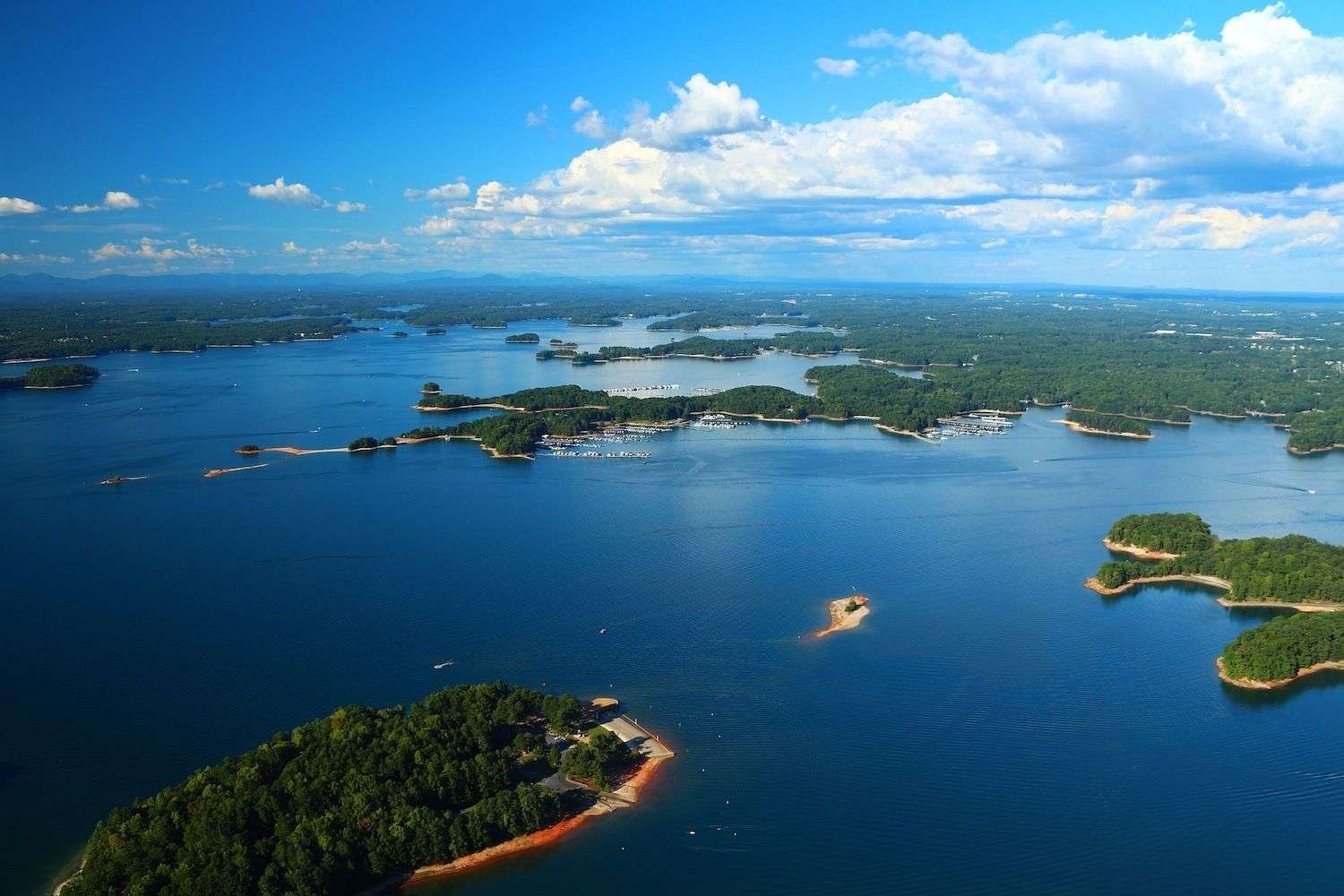
Moving from Roswell to Lake Lanier is one of the most natural relocation paths in metro Atlanta, because Roswell buyers already understand North Fulton commute patterns and historic-suburb living and are typically trading them for waterfront life on a 38,000-acre U.S. Army Corps of Engineers reservoir 25 to 60 minutes north (USACE Mobile District, current as of May 2026). The decision usually resolves on four variables: drive time from Roswell back to work, whether the home is a primary residence or a weekend second home, dock access under USACE permit rules, and the price-per-square-foot delta between Roswell and the Lanier shoreline in Forsyth, Hall, Dawson, and Gwinnett counties.
Why Roswell Buyers Consider Lake Lanier
Roswell buyers consider Lake Lanier because the lake delivers a waterfront lifestyle that Roswell's Chattahoochee River corridor cannot, at a drive distance that still supports the buyer's existing North Fulton work and family pattern. The most common motivations are boating access, a permitted private dock, second-home flexibility, and a longer-term shift from a historic suburb identity to a lake-community identity.
Outdoor lifestyle, boating, waterfront living, and second-home access
Lake Lanier offers a daily outdoor-water lifestyle that Roswell, even with the Chattahoochee River corridor and the Chattahoochee River National Recreation Area, structurally cannot match. The lake covers 38,000 acres with more than 600 miles of shoreline at full pool elevation of 1,071 feet above mean sea level, managed by the U.S. Army Corps of Engineers Mobile District at Buford Dam on the Chattahoochee River (USACE Mobile District, current as of May 2026). Roswell buyers who already spend weekend hours on Bull Sluice Lake, Riverside Park, or the Vickery Creek trails are typically trading a river-park lifestyle for an open-water boating, water-sports, and dock lifestyle. Boating capacity is the single largest delta. Lake Lanier supports inboard ski boats, wakesurf boats, pontoons, cruisers, and sailboats out of marinas including Aqualand Marina, Sunrise Cove Marina, Lake Lanier Islands, Holiday Marina, and Habersham Marina, with deep navigable water at full pool across the southern basin. Roswell's river-corridor recreation supports kayaks, paddleboards, and small craft on Bull Sluice Lake and the Chattahoochee but does not support the powered-boat infrastructure a permitted Lake Lanier dock delivers. Buyers planning to spend 25 or more weekends a year on a powered boat typically find the Lake Lanier infrastructure better matched to the use. Second-home access is the third motivation. A Lake Lanier waterfront home 25 to 60 minutes from a Roswell primary residence sits inside an easy Friday-afternoon, Sunday-evening cadence, which makes a weekend second home practical without selling the Roswell house. Buyers who want to keep the Roswell home for school district, professional, or family reasons but want lake access on weekends frequently use this two-home structure rather than a single relocation.
Comparing historic suburb character with lake community living
Roswell's character is built around its 1830s mill-town history, the Roswell Historic District, Bulloch Hall, Barrington Hall, Smith Plantation, the Canton Street commercial corridor, and the Chattahoochee River corridor that runs along the city's southern edge. The architectural inventory mixes restored historic homes, 1980s and 1990s North Fulton subdivisions, and a more recent infill of new-build transitional and modern farmhouse homes in established neighborhoods. The walkable Canton Street and Historic Roswell core gives the suburb a distinct town-square identity inside metro Atlanta. Lake Lanier community character is fundamentally different. The shoreline in Forsyth County, Hall County, Dawson County, and Gwinnett County is organized around coves, marinas, and lake-access subdivisions rather than around a single historic core. Lake-community life is defined by the dock, the cove orientation, the marina membership, and the lake calendar (regattas, fireworks, Lake Lanier Islands resort use) rather than by a walkable downtown. Roswell buyers should expect a lower-density, more dispersed, more car-dependent daily pattern on the lake than the Canton Street walkable lifestyle they may be leaving. The identity shift is the most under-discussed part of the move. Buyers who love Roswell's walkable historic core and Canton Street dining will typically need to travel into Cumming, Gainesville, Buford, or back into Roswell for that experience after the move. Buyers whose lifestyle already centers on backyard, boat, deck, and dock are usually upgrading. The honest question is which version of weekend time the buyer actually lives, not which one sounds appealing on paper.
Primary residence, weekend home, or long-term lifestyle move
Roswell-to-Lake-Lanier moves resolve into three structural patterns: full primary-residence relocation, a weekend or seasonal second home held alongside the Roswell house, and a phased lifestyle move where buyers purchase the lake home and use it heavily for 12 to 36 months before deciding whether to sell the Roswell property. The right pattern depends on work cadence, school assignment, and how often the family realistically uses the lake. Primary-residence relocation fits buyers whose work is hybrid or remote, whose children are out of Roswell's Fulton County Schools or about to start kindergarten in a Lake Lanier district, and who want the lake as a five-to-seven-day-a-week home. The trade is a 25-to-60-minute add on any Roswell-direction commute via GA-400 or surface routes through Alpharetta, and a school district change to Forsyth County Schools, Hall County Schools, Gwinnett County Public Schools, or Dawson County Schools depending on the parcel (Georgia Department of Education, current as of May 2026). Weekend or seasonal second-home use fits buyers who want to keep the Roswell home for Fulton County Schools, professional reasons, or extended-family proximity, and who realistically use the lake on weekends and during summers. This pattern preserves the Roswell base and adds a Lanier dock, but it doubles property tax, insurance, dock maintenance, and operating cost. Buyers should run a two-home carrying-cost model before committing. Phased moves split the difference: buyers purchase the lake home, live in it heavily, and decide on the Roswell sale after one or two seasons of real usage.
Lake Lanier Areas to Compare from Roswell
From Roswell, the practical Lake Lanier sub-markets fall into three rings that differ on drive time, dock model, price band, and lake feel. The right ring depends on whether the buyer prioritizes commute, deep-water dock, or a quieter retreat setting away from the southern-basin traffic.
Cumming and South/West Lake convenience
Cumming and the South and West Lake shoreline in Forsyth County is the closest Lake Lanier sub-market to Roswell and the most common first stop on a Roswell-to-Lanier shortlist. From the Roswell Historic District, GA-400 north reaches Forsyth County exits 13 (Bethelview Road), 14 (GA-20 / Cumming), 15 (GA-20 / Buford Highway), 16 (Pilgrim Mill Road), and 17 (Keith Bridge Road) in approximately 25 to 45 minutes outside of rush hour (Georgia Department of Transportation, current as of January 2026). Buyers commuting back to North Fulton offices in Alpharetta, Avalon, or Halcyon find this band of the lake the most workable for a daily or hybrid cadence. Current market conditions require a dated MLS comparison that identifies the area, property type, reporting period, and sample before a buyer relies on it. Daily-life logistics in this band are anchored by The Collection at Forsyth, Vickery Village, Halcyon, Northside Hospital Forsyth, and the GA-400 corridor retail. Buyers shifting from Roswell's Canton Street and downtown amenity base typically find Halcyon, Vickery Village, and The Collection close enough to substitute for the Roswell daily-errand pattern, while the GA-400 corridor preserves the North Fulton drive that Roswell buyers already know.
Gainesville and Flowery Branch lakefront options
Gainesville and Flowery Branch on the eastern Hall County shoreline open a different Lake Lanier ring for Roswell buyers willing to drive farther for a different cove profile, a different price band, and a more lake-town daily life. From Roswell, the typical route runs GA-400 to GA-141 to I-985 north, or GA-400 north into Forsyth County and east on GA-369 to the Hall County shoreline, with drive times of approximately 45 to 75 minutes depending on corridor and time of day (Georgia Department of Transportation, current as of January 2026). The longer commute trades for deeper southern-shore coves, larger marinas including Aqualand Marina and Habersham Marina, and a town center in Gainesville built around the lake rather than around a historic mill core. The Hall County shoreline also opens a wider band of upper-arm cove inventory, where parcels frequently carry deep navigable water at full pool and a different waterfront character than the southern-basin Forsyth County coves typically deliver. Flowery Branch concentrates lake-access and waterfront inventory along the southern Hall County shoreline in ZIP codes 30542 and 30519, with strong access to I-985 south for any commute back toward Atlanta, Buford, or Lawrenceville. Gainesville waterfront extends from the Cresswind area in the south to the Chestatee, Lanier Islands North, and upper-arm coves in the north, with named subdivisions including Cresswind at Lake Lanier, Chestatee, and Marina Bay. Northeast Georgia Medical Center in Gainesville anchors local healthcare and is a meaningful factor for retirement and second-home buyers who do not want to drive back to Roswell for tertiary care. Flowery Branch and Gainesville also open the lake-town daily-life pattern. The Old Town Gainesville square, the Atlanta Botanical Garden Gainesville location, and Don Carter State Park on the upper lake give the eastern shoreline a town-and-park infrastructure that Roswell buyers shifting away from Canton Street can recognize. The trade is the longer Atlanta commute; the gain is a denser lake-town infrastructure that Forsyth County's more dispersed shoreline does not deliver.
Dawsonville and North Lake retreat settings
Dawsonville and the North Lake retreat ring in Dawson County, including the upper arms of the Chestatee River and Six Mile Creek, fit Roswell buyers who prioritize quiet, distance from the southern-basin weekend traffic, and a true retreat-property feel over commute convenience. From the Roswell Historic District, GA-400 north reaches Dawson County exits 24 and 26 in approximately 50 to 80 minutes outside of rush hour, with the actual lakefront another 10 to 20 minutes off the highway depending on the cove (Georgia Department of Transportation, current as of January 2026). This is the longest drive of the three rings but also the most lifestyle-distinct. North Lake inventory in Dawson County trades at a structurally lower median than the southern Forsyth and Hall shoreline because the coves are shallower in some arms, the boat-traffic density is lower, and the commute is longer. Permitted-dock waterfront, lake-access homes, and cabin-style retreats sit in named areas including Six Mile Creek, Thompson Creek, the upper Chestatee, and the Burnt Mountain area. Buyers should pull the specific cove's water-depth profile at full pool and at conservation pool before assuming year-round dockable water, because some upper-arm coves draw down meaningfully in late-summer conservation-pool years (USACE Mobile District, current as of May 2026). Daily-life logistics in Dawsonville are anchored by North Georgia Premium Outlets, Amicalola Falls State Park, the GA-400 retail corridor, and access into the North Georgia Mountains for hiking, vineyards, and fall-color drives. Buyers shifting from Roswell's walkable historic core will find Dawsonville's daily pattern materially more rural and car-dependent, which is the feature rather than the bug for buyers seeking a retreat. Healthcare access typically routes back south to Northside Hospital Forsyth or Northeast Georgia Medical Center for anything beyond primary care.
What to Know Before Buying
Before a Roswell buyer writes an offer on a Lake Lanier waterfront or lake-access home, four due-diligence threads usually determine whether the parcel is the right buy: dock permit status and water depth under USACE rules, slope and septic feasibility on the specific lot, insurance and maintenance cost relative to the Roswell baseline, and how the transaction is structured to fit the buyer's schedule.
Dock access, water depth, and USACE rules
USACE permits and licenses are nontransferable. A new owner of an existing facility may apply through the Lake Lanier Operations Management Office, and approval is not automatic. Confirm the property-specific record and current requirements before closing. Water depth at the dock site is the second variable and is independent of the dock permit itself. A parcel may carry an assignable permit on shoreline that becomes shallow and non-dockable during winter conservation-pool drawdowns, when the lake can sit several feet below the full-pool elevation of 1,071 feet. Buyers should request a bathymetric reading or walk the dock at the lowest USACE water-management operations before relying on the dock for year-round use, particularly in upper-arm coves in Hall County and Dawson County (USACE Mobile District, current as of May 2026). Shoreline buffer rules, vegetation requirements, and any shoreline improvements such as walkways, stairs, and erosion controls also sit under USACE's shoreline management plan. The Corps limits buffer-zone modification and requires approval for many shoreline improvements that buyers casually picture when touring a parcel from the lake-side. Buyers should treat shoreline modification as a regulated variable rather than a discretionary one and confirm any planned shoreline work directly with the USACE Mobile District before assuming it can be built.
Slope, septic, insurance, maintenance, and ownership costs
Slope and septic are the second pair of due-diligence variables and tend to be larger surprises for Roswell buyers shifting from a Fulton County municipal-sewer system to a Lake Lanier cove-side septic system. Most Lake Lanier shoreline parcels in Forsyth County, Hall County, Dawson County, and Gwinnett County are not on municipal sewer, and the engineered septic design, drain-field placement, and slope requirements vary parcel by parcel (Forsyth County Environmental Health, Hall County Environmental Health, Dawson County Environmental Health, and Gwinnett County Environmental Health, current as of May 2026). Steep cove-side lots can require pump-up systems and engineered retaining walls that materially change the carrying-cost model. Insurance is the third cost. Lake Lanier waterfront homes typically carry higher insurance than comparable Roswell homes due to the waterfront exposure, dock structure, watercraft on the property, and, in some coves, wind and storm exposure. Buyers should pull written insurance quotes on the specific parcel before relying on a North Fulton baseline, because the rate band can shift the annual ownership cost by a meaningful margin. Boat insurance, dock insurance, and umbrella coverage often layer on top of the homeowner policy. Maintenance and operating cost is the fourth thread. Dock structures require periodic decking, electrical, and hardware maintenance, with floating-dock systems carrying different long-run costs than fixed pile-driven docks. Shoreline erosion control, retaining walls, lake-side stormwater management, septic pumping cycles, and lake-house operating costs (HVAC for higher-volume open-plan rooms, dehumidification, lake-water pumps, irrigation systems) all add to a number that Roswell buyers typically underestimate. A reasonable Roswell-baseline model adds 20 to 40 percent to total annual ownership cost on a comparable Lanier home, though the actual number is highly parcel-specific. Buyers should request a written operating-cost ledger from the seller before relying on Roswell-baseline assumptions.
Schedule a Roswell-to-Lake-Lanier consultation
A Roswell-to-Lake-Lanier consultation is most useful before the buyer has fallen in love with a specific parcel, because the structural variables, drive time from Roswell, school district, dock permit class, septic feasibility, and the primary-versus-second-home decision, drive the shortlist more than any single home's photography does. The right consultation produces a short list of three to seven candidate parcels that match the buyer's cadence, commute, and budget rather than a single emotional pick. The second value of a consultation before the offer stage is the build-versus-buy comparison. Buyers who already love a particular lot or a particular subdivision often benefit from running the resale shortlist against a parallel custom-build or teardown-rebuild path on a comparable parcel, because the build path opens different parcels and exposes different timeline and dock-permit risk. The consultation can produce a side-by-side worksheet of resale, teardown-rebuild, and custom-build paths against the buyer's timeline and budget. Ashley Smith, real estate agent with The Dream Smith Team at Compass, runs Roswell-to-Lake-Lanier consultations that price drive time, dock permit status, slope and septic risk, school assignment, and carrying-cost band against the buyer's actual work and family schedule rather than against a generalized Lanier market average. The consultation is anchored in documented USACE Mobile District, Georgia MLS, Georgia Department of Transportation, county environmental health, and Georgia Department of Education data, not in category averages or aspirational photography.
Frequently Asked Questions
- How far is Lake Lanier from Roswell?
- From the Roswell Historic District, the closest Lake Lanier shoreline addresses in southern Forsyth County sit approximately 25 to 45 minutes north via GA-400 outside of rush hour (Georgia Department of Transportation, current as of January 2026). Eastern Hall County shoreline addresses near Flowery Branch and Gainesville run 45 to 75 minutes, and northern Dawson County retreat parcels run 50 to 80 minutes. Buyers planning a daily Roswell-to-lake or lake-to-Roswell commute should drive the specific route during the actual planned commute window before relying on map estimates.
- Can Roswell buyers commute to Atlanta from Lake Lanier?
- Yes, particularly from the southern Forsyth and southern Hall County shoreline. A typical Lake Lanier address sits 45 to 90 minutes from the Perimeter (I-285) via GA-400 or I-985 depending on the shoreline location, the corridor, and the day (Georgia Department of Transportation, current as of January 2026). Roswell buyers who already drive GA-400 north for North Fulton work will find the additional 15 to 30 minutes to the lake manageable for a hybrid two-to-three-day in-office cadence, though a full five-day downtown commute is meaningfully harder than the Roswell baseline.
- Do Roswell buyers typically use Lake Lanier as a primary home or a second home?
- Both patterns are common, and the right structure depends on work cadence, school assignment, and how many weekends the family realistically uses the lake. Hybrid or remote workers, families with children entering Forsyth, Hall, Dawson, or Gwinnett County school districts, and retiring or near-retirement buyers more often use a Lake Lanier home as a primary residence. Roswell buyers who want to preserve Fulton County Schools assignment, an existing Roswell professional base, or extended-family proximity more often use the lake home as a weekend second home held alongside the Roswell house.
- How much more expensive is a Lake Lanier waterfront home than a comparable Roswell home?
- Current market conditions require a dated MLS comparison that identifies the area, property type, reporting period, and sample before a buyer relies on it.
- What is the biggest mistake Roswell buyers make when moving to Lake Lanier?
- The most common mistake is buying a parcel before confirming the dock permit class, the cove water depth at conservation pool, and the slope and septic profile. A Roswell buyer accustomed to Fulton County municipal sewer, level North Fulton lots, and a non-regulated dock environment often assumes a waterfront parcel works as marketed and discovers the constraints after closing. The dock permit, water depth, slope, and septic should all be confirmed in writing with the USACE Mobile District and the relevant county environmental health department before the offer.
- Which Lake Lanier sub-market is closest to Roswell?
- South Lake and West Lake inventory in Forsyth County, accessible from GA-400 exits 13 through 17, is the closest Lake Lanier sub-market to Roswell, typically 25 to 45 minutes from the Roswell Historic District outside of rush hour (Georgia Department of Transportation, current as of January 2026). This band includes the southern coves of Forsyth County in ZIP codes 30040 and 30041, with permitted-dock waterfront, lake-access subdivisions, and lake-view inventory in a structurally lower drive-time band than the Hall County or Dawson County shoreline.
Related
- Lake Lanier Commute to AtlantaDrive-time profiles via GA-400 and I-985 from each Lake Lanier sub-area to the Perimeter and downtown.
- Cumming, GA Homes for SaleForsyth County market on the western Lake Lanier shoreline, the closest sub-market to Roswell.
- South Lake Lanier HomesSouthern shoreline inventory closest to Buford Dam, GA-400, and the Roswell commute.
- Lake Lanier Waterfront HomesPermitted-dock and lake-access waterfront listings across the Lanier shoreline.
- Lake Lanier Cost of OwnershipAnnual carrying-cost model including property tax, dock, insurance, and lake-house operating cost.
- Lake Lanier Dock Sizes and TypesUSACE permit classes, single-slip and double-slip docks, and shoreline buffer rules.