
Relocation Guide
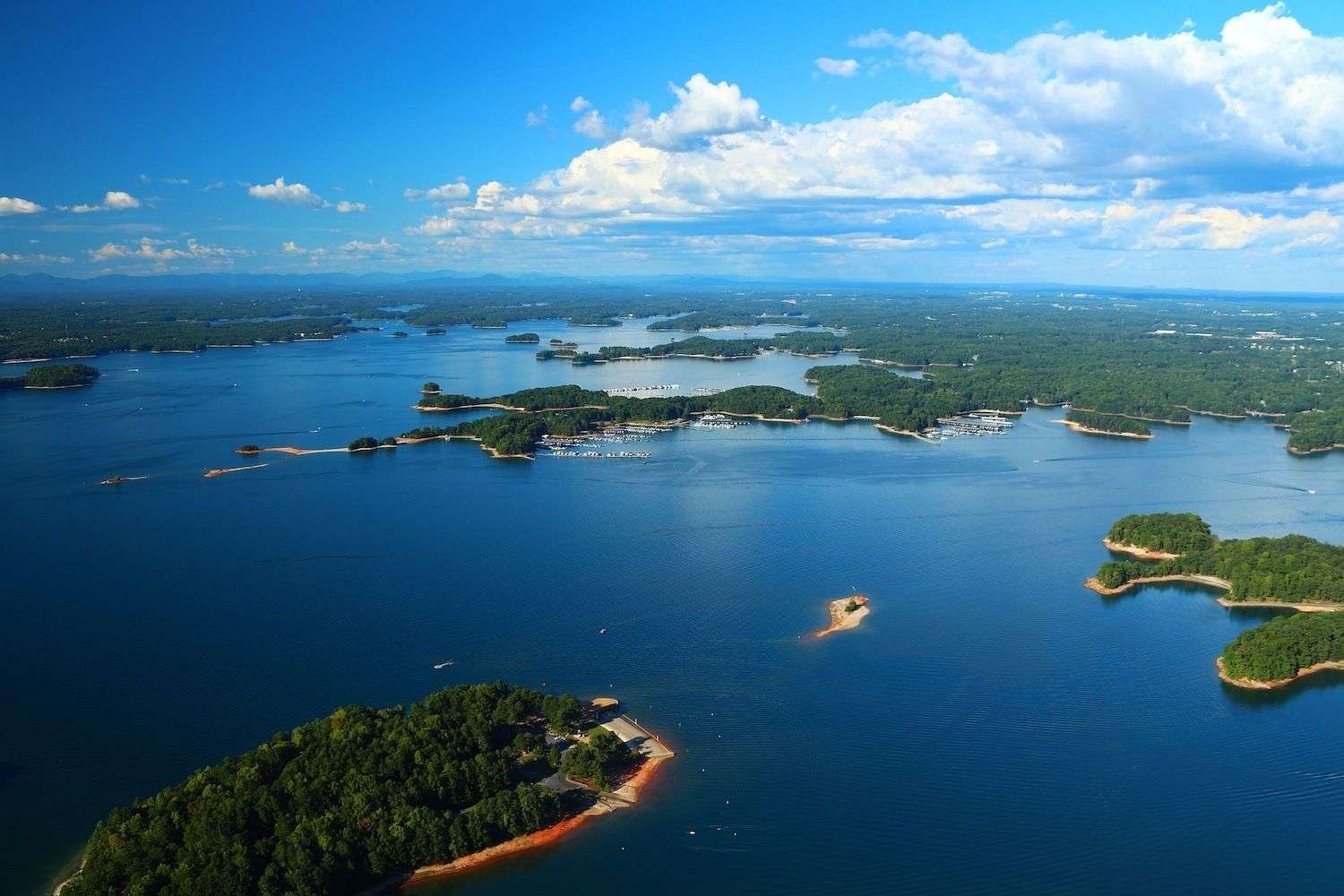
Moving to Lake Lanier Georgia typically means trading metro Atlanta density for a 38,000-acre U.S. Army Corps of Engineers reservoir 45 to 90 minutes north of the city, with shoreline split across Forsyth, Hall, Gwinnett, and Dawson counties (USACE Mobile District, current as of May 2026). Relocating buyers anchor on five variables: which lake-area city fits the household, whether the home should be waterfront, lake-access, or interior, how the USACE dock-permit regime governs private slips, what the commute to Atlanta actually looks like from that shoreline, and how Georgia property tax, insurance, and ownership costs stack against the origin market. The right Lake Lanier address depends on cadence, dock model, and budget.
Why People Move to Lake Lanier
People move to Lake Lanier for three durable reasons: Atlanta access without Atlanta density, a year-round outdoor lifestyle anchored on a navigable USACE reservoir, and a lake-home cost profile that compares favorably to other Southeast and mountain second-home markets. The relocation thesis usually resolves once a household maps its actual cadence (primary residence, hybrid work, weekend retreat, retirement) against Lake Lanier's geography and the four-county shoreline.
Atlanta access, boating, outdoor living, and lake lifestyle
Atlanta access is the first reason most relocating buyers shortlist Lake Lanier rather than a more remote Southeast lake. Drive time from a typical Lake Lanier shoreline address to the Perimeter (I-285) runs roughly 45 to 90 minutes depending on the shoreline location, the corridor, and the day, with GA-400 serving the western Forsyth County shoreline and I-985 serving the eastern Hall County and Gwinnett County shoreline (Georgia Department of Transportation, current as of January 2026). That envelope supports a hybrid two-to-three-day in-office cadence and, for households on the southern basin in Buford, Cumming, Flowery Branch, and Sugar Hill, a full five-day commute when the corridor cooperates. Boating and outdoor living are the second reason. Lake Lanier covers 38,000 acres with more than 600 miles of shoreline at full pool elevation 1,071 feet above mean sea level, with deep navigable water across the southern basin and progressively narrower coves along the upper Chattahoochee and Chestatee arms (USACE Mobile District, current as of May 2026). Marina capacity at Aqualand Marina, Sunrise Cove Marina, Lake Lanier Islands, Holiday Marina, and Habersham Marina concentrates fueling, dry-storage, and service infrastructure in the southern basin, which shapes how often households actually use the boat across the season. Lake lifestyle as a daily-life pattern is the third reason. The Lake Lanier shoreline supports a routine of morning coffee on the dock, a midday paddleboard, an evening pontoon to dinner at one of the marina-area waterfront restaurants, and a weekend cycle on the water that is structurally hard to replicate in a metro Atlanta neighborhood. Buyers relocating from urban or suburban origins typically underwrite the lifestyle delta as a quality-of-life upgrade rather than only a real estate transaction.
Primary residence, second home, retirement, and relocation motivations
Primary-residence motivations drive a meaningful share of Lake Lanier relocations because the lake sits inside the Atlanta metropolitan commute envelope. Households moving from intown Atlanta neighborhoods such as Buckhead, Brookhaven, and Dunwoody, or from north-metro suburbs such as Alpharetta, Milton, Johns Creek, and Roswell, often shift to Lake Lanier when a remote or hybrid work pattern stabilizes and the household wants the daily-use water access without giving up Atlanta-direction connectivity. The primary-residence buyer typically anchors on Forsyth County or southern Hall County to keep the commute window inside 60 minutes. Second-home motivations drive a different segment. Buyers based in Atlanta who want a weekend cadence on the water often anchor on the upper-arm Hall County and Dawson County shoreline, where the price-per-foot of shoreline is lower than the southern basin and the weekend pull from Atlanta is still under 90 minutes. The carrying-cost model for a 200-night-per-year second home runs differently than for a 360-night-per-year primary residence, and buyers should price USACE dock-permit maintenance, dock insurance, property tax across the relevant county, and HOA where applicable before committing. Retirement and remote-work relocation motivations are the third pattern. Retirees moving from out-of-state markets such as Florida, the Northeast, the Midwest, and the West Coast frequently land at Lake Lanier when the household wants water access, mild four-season climate, lower state income and property taxes than the origin market, and access to Northeast Georgia Medical Center in Gainesville plus the Atlanta tertiary-care system. Remote-work buyers anchor on the same variables with broadband availability and a designated home-office program added to the home requirements.
How Lake Lanier compares with other Georgia and Southeast lake markets
Lake Lanier compares with Lake Oconee, Lake Hartwell, Lake Burton, Lake Rabun, and the Smith Mountain Lake / Tellico Lake markets across the Southeast on three axes: regulatory framework, commute envelope, and waterfront cost band. Lake Lanier sits under a federal USACE permit system that assigns each shoreline parcel a single-slip, double-slip, or community-dock permit class under the Lake Sidney Lanier Shoreline Management Plan administered by the U.S. Army Corps of Engineers (USACE Mobile District, current as of May 2026). Lake Oconee sits under Georgia Power's private-utility shoreline licensing program (Georgia Power Company, current as of May 2026). Lake Hartwell sits under the U.S. Army Corps of Engineers Savannah District. The dock-permit conversation differs materially across the three. Commute envelope is the second axis. Lake Lanier sits closest to Atlanta of the major Georgia reservoirs, with a 45-to-90-minute drive to the Perimeter that supports a hybrid commute (Georgia Department of Transportation, current as of January 2026). Lake Oconee sits roughly 75 miles east of Atlanta via I-20, a 90-minute-plus drive that fits weekend rather than weekday cadence. Lake Burton and Lake Rabun in the Georgia mountains sit two-plus hours from Atlanta and serve a primarily second-home market. Buyers who need a hybrid or full-time Atlanta cadence typically narrow to Lake Lanier on the commute filter alone. Waterfront cost band is the third axis. Buyers should compare the specific dock model, water depth, and commute together rather than the listing price in isolation. Current market conditions require a dated MLS comparison that identifies the area, property type, reporting period, and sample before a buyer relies on it.
Where to Live Around Lake Lanier
Where to live around Lake Lanier depends on commute direction, school priority, dock-permit goal, and price band, not on a single ranked list. The shoreline splits across five primary lake-area cities and four counties, each with a different daily-life profile, tax structure, and shoreline character that materially affects the relocation decision.
Cumming, Gainesville, Buford, Flowery Branch, and Dawsonville
Cumming, in Forsyth County, serves the western and southwestern Lake Lanier shoreline and anchors the GA-400 commute corridor to Atlanta. The city supports the highest-volume permitted-dock waterfront inventory on the lake, Northside Hospital Forsyth, the Cumming City Center mixed-use district, and the Forsyth County Schools assignment-by-address footprint. Relocating buyers who prioritize a GA-400 commute and the Forsyth County Schools system typically anchor on Cumming first. Gainesville, in Hall County, sits on the lake's northern basin and serves the I-985 commute corridor. The city anchors Northeast Georgia Medical Center, Brenau University, and a dense daily-life infrastructure that operates independently of the Atlanta metro. Buford and Flowery Branch, both in Hall County with sections in Gwinnett County, sit on the southern and southeastern shoreline along I-985 and offer a different daily-life profile that blends Atlanta-suburb commercial density with lake access. Buford specifically anchors the Mall of Georgia commercial center, the Bogan Park area, and the Buford City Schools and Gwinnett County Public Schools assignment footprints (relevant district websites, current as of May 2026). Dawsonville, in Dawson County, sits on the lake's far northwestern shoreline and serves a different buyer profile centered on the GA-400 corridor north of Cumming, North Georgia Premium Outlets, and easy access to the North Georgia mountains. Dawson County's shoreline is generally narrower-cove than the southern basin, with a lower price band per shoreline foot and a longer drive to Atlanta. Buyers should match the city to the actual commute and use pattern rather than choosing the city by name alone.
Hall, Forsyth, Gwinnett, and Dawson County differences
Hall, Forsyth, Gwinnett, and Dawson counties each govern a section of the Lake Lanier shoreline under separate tax, school, building, and environmental health authorities. Forsyth County and southern Hall County share the lion's share of the southern basin and the permitted-dock luxury band, while Gwinnett County governs a narrower southeastern slice of shoreline near Buford, Sugar Hill, and Lake Lanier Islands. Dawson County governs the upper Chestatee arm. Property tax millage rates, homestead exemption rules, and county-level cost-of-government differ across the four jurisdictions, and buyers should pull the current rate from the relevant county tax commissioner's office before assuming an annual carrying cost (county tax commissioner offices, current as of May 2026). School district differences also drive the where-to-live conversation. Forsyth County Schools, Hall County Schools, Gainesville City Schools, Gwinnett County Public Schools, Buford City Schools, and Dawson County Schools each run separate assignment-by-address footprints with separate boundary lines, separate attendance overlays, and separate enrollment policies (district websites and GreatSchools ratings, current as of May 2026). Buyers with school-age children should treat the assignment lookup as a hard input, not a soft preference, because the boundary line can fall in the middle of a subdivision. Building, environmental health, and shoreline-coordination rules round out the county differences. Forsyth, Hall, Dawson, and Gwinnett counties each run separate building departments and environmental health departments that govern residential building permits, land-disturbance permits, and septic approvals on shoreline parcels (county building departments and environmental health departments, current as of May 2026). The USACE Mobile District coordinates with each county on shoreline matters but does not override county jurisdiction. Buyers relocating from a single-jurisdiction origin market should price the county-level variability into their due-diligence plan.
South Lake, North Lake, quiet coves, and marina communities
South Lake, North Lake, quiet coves, and marina communities each describe a different shoreline product within Lake Lanier and serve a different relocating-buyer profile. South Lake refers to the deep, wide southern basin near Buford Dam, where the lake reaches its maximum width and depth, the permitted-dock inventory concentrates, and the marina infrastructure at Aqualand Marina, Sunrise Cove Marina, Lake Lanier Islands, and Holiday Marina supports a heavy daily-use boating pattern. South Lake addresses typically carry the shortest drive to Atlanta and the highest waterfront price band on the lake. North Lake refers to the upper Chattahoochee and Chestatee arms in Hall and Dawson counties, where the lake narrows into ridge-and-cove geography, the dock-permit inventory shifts toward single-slip and community-dock classes, and the price-per-foot of shoreline is lower than the southern basin. North Lake addresses generally support a weekend-cadence second-home pattern more comfortably than a daily Atlanta commute, and the boating water is calmer because long-fetch wind effects are less pronounced in narrower coves. Quiet coves and marina communities are not geographic regions but product types. Quiet-cove parcels sit off the main lake channel, typically on a side-cove with limited fetch and a slower boating pattern, and appeal to buyers who prioritize swimming, paddleboarding, and shoreline use over big-water boating. Marina communities such as Habersham Marina, Aqualand Marina, and Lake Lanier Islands offer slip leases and dry-stack storage in lieu of a private dock, which serves buyers who want lake access without the underwriting load of a permitted-dock waterfront home. Buyers should match the product type to actual use, not aspirational use.
Relocation Buyer Due Diligence
Relocation buyer due diligence on Lake Lanier centers on regulatory diligence (USACE shoreline rules, dock permits, septic, insurance), practical diligence (commute, healthcare, amenities, taxes, ownership costs), and the relocation workflow itself when the buyer cannot easily walk the home before contract. The work is unusually shoreline-specific compared with a standard suburban relocation.
Dock permits, water levels, shoreline rules, septic, and insurance
USACE permits and licenses are nontransferable. A new owner of an existing facility may apply through the Lake Lanier Operations Management Office, and approval is not automatic. Confirm the property-specific record and current requirements before closing. Water levels and shoreline rules sit immediately behind the dock question. Lake Lanier operates at a full pool elevation of 1,071 feet above mean sea level, with USACE water-management operations and drought-driven variation managed by the USACE Mobile District. Shoreline vegetation, mowing, walkways, and stairs are regulated under the shoreline management plan, and buyers should treat shoreline modification as a permitted activity rather than a discretionary one. Septic is the next input: most shoreline parcels in Forsyth, Hall, Dawson, and Gwinnett counties are not on municipal sewer, and the septic system class (gravity, pump-up, advanced-treatment) is determined by the soil percolation result and the county environmental health department's review (Forsyth, Hall, Dawson, and Gwinnett County environmental health departments, current as of May 2026). Insurance closes the regulatory layer. Lakefront homes typically carry standard homeowners insurance with a separate dock-and-pier endorsement or a separate inland-marine policy on the dock structure, plus a watercraft policy on the boat. Flood insurance is not generally required on Lake Lanier shoreline parcels because the USACE controls the lake level rather than a natural floodplain regime, but buyers should confirm flood-zone status on the specific parcel through the carrier and pull a current quote on the dock endorsement before assuming the premium. Relocation buyers from coastal markets, particularly Florida, often find Lake Lanier insurance materially cheaper than the origin market.
Commute, healthcare, amenities, taxes, and ownership costs
Commute is the practical-diligence input most often miscalculated by relocating buyers. Lake Lanier's 45-to-90-minute drive envelope to the I-285 Perimeter is correct as a range but masks meaningful corridor-specific reality on GA-400 and I-985 (Georgia Department of Transportation, current as of January 2026). Buyers planning a hybrid in-office cadence should drive the actual corridor at the actual commute window before relying on map-estimate drive times. Households relocating from origin markets without a comparable hub-and-spoke commute pattern often underestimate the corridor-specific peak. Healthcare, amenities, and taxes form the next practical-diligence block. Healthcare access centers on Northeast Georgia Medical Center in Gainesville, Northside Hospital Forsyth in Cumming, the Emory Healthcare and Piedmont Healthcare systems in Atlanta, and a network of regional outpatient and specialty centers across the four lake counties (hospital systems' websites, current as of May 2026). Daily amenities concentrate in the Cumming City Center, Buford and the Mall of Georgia corridor, Gainesville's downtown and medical district, and Dawsonville's North Georgia Premium Outlets footprint. Property tax structure differs by county and city; relocating buyers should request the current millage rate, homestead exemption rule, and assessment ratio from the county tax commissioner before underwriting an annual carrying cost. Ownership cost stack typically includes county property tax across one of the four lake counties, USACE dock-permit maintenance, dock insurance, boat operating cost, HOA where applicable inside lake-access subdivisions, lawn and landscape maintenance, and routine shoreline and dock inspection. Households relocating from high-tax origin markets such as California, New York, New Jersey, Massachusetts, and Illinois typically find the Georgia property and state-income-tax stack materially lower than the origin. Households relocating from low-tax origin markets such as Florida, Texas, Tennessee, and Nevada should compare on a like-for-like basis because Georgia carries a state income tax that those origins do not.
Schedule a virtual relocation consultation with Ashley Smith
Virtual relocation consultations are the standard starting point for out-of-state and cross-metro buyers who cannot easily walk Lake Lanier inventory in person before narrowing the shortlist. The consultation typically maps the household's cadence (primary residence vs. weekend cadence vs. retirement), the commute requirement, the dock model (permitted private dock vs. lake-access vs. marina slip), the school assignment if children are in the picture, and the realistic price band against the current market on the southern basin and the upper arms. The consultation output is usually a curated shortlist of three to five Lake Lanier sub-areas (south Forsyth County, southern Hall County, the Buford-Sugar Hill-Flowery Branch corridor, the Gainesville and northern Hall shoreline, or the Dawsonville and upper-arm shoreline) and a corresponding shortlist of candidate communities or lake-access subdivisions. The consultation also surfaces the regulatory, septic, insurance, and tax variables that need to be resolved before contract, so the buyer's first in-person tour is structured rather than exploratory. Ashley Smith, real estate agent with The Dream Smith Team at Compass, runs virtual relocation consultations on Lake Lanier that anchor in documented USACE, Georgia MLS, GreatSchools, county tax commissioner, and county environmental health data rather than category averages. Households relocating from Atlanta intown neighborhoods, out-of-state origins, or remote-work transitions can use the consultation to compress the shortlist and avoid the most common Lake Lanier underwriting mistakes (assuming a dock will transfer when it will not, assuming a lot is buildable when it is not, or assuming a commute window when the corridor reality is different).
Frequently Asked Questions
- How far is Lake Lanier from Atlanta?
- A typical Lake Lanier shoreline address sits 45 to 90 minutes north of Atlanta via GA-400 or I-985 depending on the shoreline location, the corridor, and the day (Georgia Department of Transportation, current as of January 2026). The southern basin in Forsyth County and southern Hall County carries the shortest drive envelope, while the upper Chattahoochee and Chestatee arms in Hall and Dawson counties run toward the longer end of the range. Buyers planning a regular Atlanta-direction commute should drive the actual corridor at the actual commute window before relying on map-estimate drive times.
- What counties make up Lake Lanier?
- Lake Lanier's shoreline splits across four counties: Forsyth County (western and southwestern shoreline), Hall County (northern and eastern shoreline including Gainesville), Gwinnett County (a southeastern slice near Buford, Sugar Hill, and Lake Lanier Islands), and Dawson County (the upper Chestatee arm). Each county runs separate property tax, school district, building department, and environmental health authority, so the relocation decision often resolves on county-level differences rather than the lake itself. The USACE Mobile District manages the shoreline and dock-permit regime across all four (USACE Mobile District, current as of May 2026).
- Do I need a dock permit to use a private dock on Lake Lanier?
- USACE permits and licenses are nontransferable. A new owner of an existing facility may apply through the Lake Lanier Operations Management Office, and approval is not automatic. Confirm the property-specific record and current requirements before closing.
- What is the cost of waterfront homes on Lake Lanier?
- Buyers should compare the dock class, water depth, and commute envelope together rather than the listing price in isolation. Current market conditions require a dated MLS comparison that identifies the area, property type, reporting period, and sample before a buyer relies on it.
- Is Lake Lanier a good place to retire?
- Lake Lanier supports a common Southeast retirement pattern: water access, mild four-season climate, access to Northeast Georgia Medical Center in Gainesville and Northside Hospital Forsyth plus the Atlanta tertiary-care system, and a Georgia state-tax structure that retirees often find favorable relative to high-tax origin markets. The retirement underwriting typically anchors on healthcare proximity, single-level or accessible home layout, dock and shoreline accessibility, and the household's planned visit pattern from adult children and grandchildren. Buyers should pull the current Georgia retirement income exclusion and homestead exemption rules from the Georgia Department of Revenue and the county tax commissioner before underwriting an annual carrying cost (Georgia Department of Revenue and relevant county tax commissioners, current as of May 2026).
- How do property taxes work on Lake Lanier?
- Property taxes on Lake Lanier are governed by the county the parcel sits in (Forsyth, Hall, Gwinnett, or Dawson), the city or unincorporated status, and any applicable school-district millage. Each county sets its own millage rate, homestead exemption rules, and assessment ratio, so the same listing price can produce a different annual property tax bill depending on the shoreline address (county tax commissioner offices, current as of May 2026). Relocating buyers should request the current annual tax bill on a specific candidate property and compare across the four counties before assuming a single tax band for the lake.
Related
- Lake Lanier Real Estate OverviewFull Lake Lanier shoreline market, USACE dock permit, and lifestyle guide.
- Lake Lanier Waterfront HomesPermitted-dock and lake-access waterfront listings across the Lanier shoreline.
- Lake Lanier Commute to AtlantaDrive-time profiles via GA-400 and I-985 from each Lake Lanier sub-area to the Atlanta Perimeter.
- Cumming, Georgia Community GuideForsyth County's GA-400 corridor city: schools, neighborhoods, and Lake Lanier access.
- Buford, Georgia Community GuideHall and Gwinnett County lake-area city: Mall of Georgia corridor, Buford City Schools, and shoreline access.
- Lake Lanier Cost of OwnershipAnnual carrying-cost model including property tax, USACE dock, insurance, and operating cost across the four lake counties.