
Relocation Guide
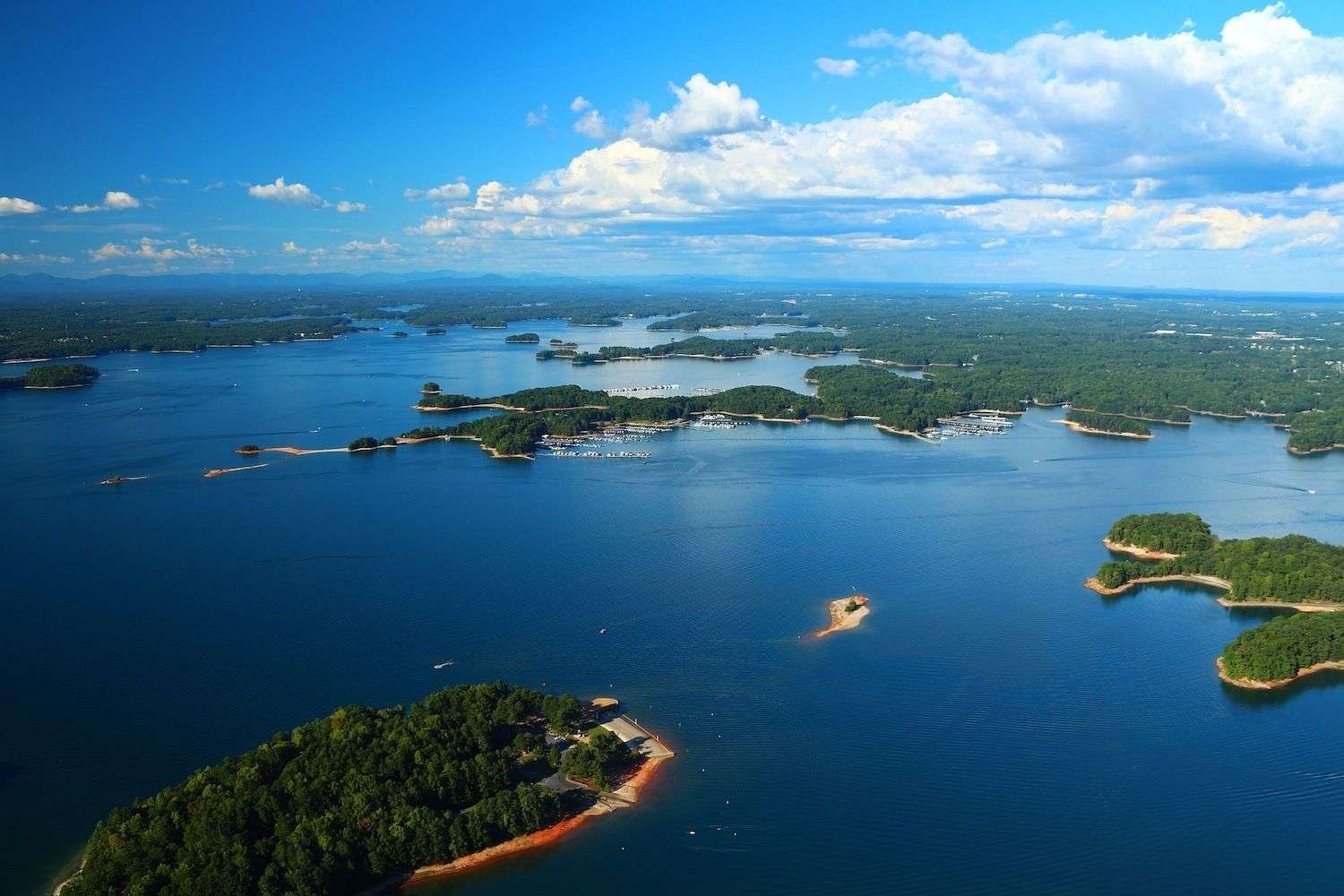
Moving to Lake Lanier from the Midwest typically replaces a four-to-five-month boating season on smaller inland lakes with a roughly seven-to-eight-month boating season on a 38,000-acre U.S. Army Corps of Engineers reservoir located 45 to 90 minutes north of Atlanta in Forsyth, Hall, Gwinnett, and Dawson counties (USACE Mobile District, current as of May 2026). Midwest buyers relocating from Chicago, Detroit, Minneapolis, Cleveland, Indianapolis, Milwaukee, St. Louis, or Cincinnati most often shortlist Lake Lanier for the longer outdoor season, the Atlanta-direction labor market, the lower Georgia state income tax band, and a deep-water USACE-permitted private dock model that does not exist on most Midwest lake markets.
Why Midwest Buyers Consider Lake Lanier
Midwest buyers consider Lake Lanier because the lake delivers a structurally longer outdoor season, a federally regulated deep-water shoreline at scale, and access to the Atlanta metropolitan labor market that most Midwest lake markets cannot match. The relocation conversation typically resolves on three honest questions: how many more months on the water, what work cadence the buyer plans to run from the lake, and how the Georgia tax and cost-of-living math compares to Illinois, Michigan, Minnesota, Ohio, Indiana, Wisconsin, Missouri, or Kentucky.
Longer outdoor season, boating lifestyle, and North Georgia climate
The North Georgia climate at Lake Lanier supports a meaningfully longer outdoor and on-water season than most Midwest lake markets. Buford, Cumming, Gainesville, and Flowery Branch sit in USDA Plant Hardiness Zone 8a, with typical winter daytime highs in the mid-50s Fahrenheit and a frost-free window that frequently runs from late March through early November (USDA Plant Hardiness Zone Map, as of 2023 release). Midwest lake markets in the Chicago, Minneapolis, and Detroit hardiness bands typically run Zone 4 to Zone 6, with ice-out windows that compress the practical boating season into the May-through-September band. Buyers relocating from Lake Geneva, Lake Minnetonka, Torch Lake, or the Indiana lake region typically gain two to three additional months of dock and water use at Lanier. The lifestyle delta is most visible in the shoulder seasons. Lake Lanier marinas including Aqualand Marina, Sunrise Cove Marina, Lake Lanier Islands, Holiday Marina, and Habersham Marina typically keep slips in the water year-round, and dock owners commonly use private slips on warm February and December weekends that would be frozen over on a typical Wisconsin or Minnesota lake. Wake-sport, fishing, and pontoon-cruise use windows expand correspondingly. Midwest buyers underwriting a primary or hybrid-residence lake home should price the additional usable months into the lifestyle math rather than treating the climate gain as a soft factor. Climate also reshapes the maintenance calendar. There is no winterization-and-shrink-wrap cycle at Lanier on the Midwest model; docks are not pulled, boats are not stored on land for six months, and lake homes are not winterized in the same sense as a Northern Michigan cabin. The trade is that summer heat and humidity in July and August run hotter than a typical Midwest lake summer, and tropical-remnant rainfall events can be heavier than buyers expect. Buyers relocating from the upper Midwest should plan for a different shoulder-season rhythm rather than the same rhythm at a different latitude.
Remote work, retirement, second homes, and family legacy properties
Remote work has changed the Midwest-to-Lake-Lanier buyer mix materially. Buyers running fully remote roles based in Chicago, Minneapolis, Detroit, Indianapolis, Cleveland, Milwaukee, or St. Louis can convert a Midwest primary residence into a Lake Lanier primary residence without changing employers, and the 45-to-90-minute drive envelope from a typical Lanier shoreline address to the Atlanta Perimeter (I-285) supports an occasional in-office visit via Hartsfield-Jackson Atlanta International Airport when the role requires it (Georgia Department of Transportation, current as of January 2026). Hybrid buyers who plan two-day-a-month travel cadences typically anchor on the southern shoreline in Forsyth and southern Hall counties for the corridor access. Retirement buyers form a second meaningful segment. Georgia's retirement income tax treatment, including the retirement income exclusion for taxpayers age 62 and older up to a documented cap, materially changes the after-tax math compared to Illinois, Minnesota, or Wisconsin (Georgia Department of Revenue, current as of January 2026). Buyers relocating from Chicago suburbs, the Twin Cities metro, or southeastern Wisconsin typically shortlist Lanier alongside the Carolina coast and the Florida lakes, and the trip-home accessibility of Atlanta-Hartsfield often tips the decision toward Lanier for buyers with adult children in the Midwest. Second-home and family legacy buyers anchor on Lanier for different reasons. A Midwest household running a Lake Geneva or Northern Michigan summer cottage may add a Lake Lanier shoulder-season home rather than replace the Midwest property, gaining March, April, October, and November usable weekends without giving up July on the home lake. Family legacy buyers planning to hold a Lanier home across multiple generations typically anchor on permitted-dock parcels on the southern basin because the assignable USACE permit travels with the property and supports long-hold value.
Comparing Georgia lake life with Midwest lake markets
The most useful Midwest-to-Lake-Lanier comparison runs across four axes: season length, regulatory framework, market scale, and metro access. Season length favors Lanier on roughly a two-to-three-month gain, as covered above. Regulatory framework is structurally different because Lake Lanier sits under a federal U.S. Army Corps of Engineers shoreline permit system rather than a state-by-state riparian or littoral rights framework. Midwest buyers familiar with Wisconsin Department of Natural Resources, Michigan EGLE, or Minnesota DNR shoreline rules should expect a different rulebook governed by the USACE Mobile District's Lake Sidney Lanier Shoreline Management Plan administered by the U.S. Army Corps of Engineers rather than a state agency (USACE Mobile District, current as of May 2026). Market scale also differs. Lake Lanier covers 38,000 acres with more than 600 miles of shoreline at full pool elevation 1,071 feet above mean sea level (USACE Mobile District, current as of May 2026), which sits in the same broad scale band as Lake of the Ozarks in Missouri (54,000 acres) and well above Lake Geneva (5,400 acres), Torch Lake (18,770 acres), or most Indiana lake-region waters. Buyers from compact Midwest lake markets typically need to recalibrate expectations on cove size, cross-lake travel time, and dock-to-marina distance, and buyers from the Ozarks typically find Lanier's USACE permit framework more restrictive than Missouri Ameren's licensing model. Metro access closes the comparison. Lake Lanier sits 45 to 90 minutes north of Atlanta via GA-400 or I-985 with year-round access to Hartsfield-Jackson Atlanta International Airport, the world's busiest airport by passenger volume, on roughly a 60-to-90-minute drive from most shoreline addresses (Georgia Department of Transportation / Hartsfield-Jackson, current as of January 2026). Midwest lake markets generally do not pair a lake of this scale with a hub airport at this distance, which makes the trip-home math to Chicago, Minneapolis, Detroit, Indianapolis, Cleveland, Milwaukee, or St. Louis materially easier than a comparable trip from a typical Midwest lake address.
What Midwest Buyers Should Know
Midwest buyers relocating to Lake Lanier should underwrite four items the relocation brochures often skip: which county and city to live in given the work and lifestyle cadence, how Georgia property tax and homestead exemptions actually run versus Illinois, Michigan, or Wisconsin, the structural difference between a USACE-permitted private dock and a Midwest riparian dock, and how septic systems, water levels, and shoreline rules differ from a typical Midwest lake home.
Lake Lanier cities, counties, tax considerations, and services
Lake Lanier sits across four Georgia counties, each with its own tax base, services, and shoreline character. Forsyth County, on the western and southwestern shoreline, anchors the Cumming market and runs a property tax millage rate and homestead exemption structure documented by the Forsyth County Tax Commissioner. Hall County, on the eastern and northeastern shoreline, anchors the Gainesville and Flowery Branch markets and runs its own millage and exemption structure documented by the Hall County Tax Commissioner. Gwinnett County on the southern shoreline anchors Sugar Hill and Buford, and Dawson County on the upper western arm anchors the smaller Dawsonville-area shoreline (Forsyth, Hall, Gwinnett, and Dawson County Tax Commissioner offices, current as of January 2026). Georgia's state income tax sits at a flat 5.39 percent for the 2026 tax year, with retirement income exclusions for taxpayers age 62 and older (Georgia Department of Revenue, current as of January 2026). Midwest buyers should compare this against Illinois at a flat 4.95 percent, Michigan at a flat 4.25 percent, Indiana at a flat 3.05 percent, Wisconsin's graduated brackets up to 7.65 percent, and Minnesota's graduated brackets up to 9.85 percent (state revenue departments, as of January 2026 tax year). The after-tax math for retirement-age buyers relocating from Minnesota or Wisconsin typically improves materially; the after-tax math for working-age buyers relocating from Indiana or Michigan can run roughly comparable or slightly higher in Georgia. Municipal services vary by city and county. Cumming, Buford, Flowery Branch, Gainesville, and Sugar Hill each run their own water and sewer service footprint, fire and police service, and school assignment. Forsyth County Schools, Hall County Schools, Gwinnett County Public Schools, and Dawson County Schools each manage their own assignment-by-address boundaries with school ratings published through GreatSchools and the Governor's Office of Student Achievement (GreatSchools and Georgia GOSA, current as of the 2025-2026 school year). Buyers with school-age children should pull the assignment for a specific address rather than relying on city-name approximations.
Waterfront, lake-access, and low-maintenance community options
Lake Lanier inventory resolves into three structural categories that Midwest buyers should understand before shortlisting. Permitted-dock waterfront homes carry an assignable USACE single-slip or double-slip dock permit that travels with the parcel at closing, giving the owner private water access from the home. Lake-access homes sit in a community with a deeded or membership-based community dock or boat ramp, with no private slip at the home. Off-water homes inside a Lake Lanier ZIP code carry no lake access at all and trade at a fundamentally different price band (USACE Mobile District, current as of May 2026). Buyers from compact Midwest lake markets where every shoreline home carries a private dock should expect a wider spread between the three categories than the Midwest pattern suggests. Current market conditions require a dated MLS comparison that identifies the area, property type, reporting period, and sample before a buyer relies on it. Low-maintenance community inventory has expanded across the Lanier shoreline footprint. Newer townhome and ranch-style developments in Cumming, Buford, and Flowery Branch offer reduced exterior maintenance, HOA-managed grounds, and proximity to lake-access amenities for buyers who do not want full single-family-home upkeep. Retirement-age relocators from the Midwest commonly anchor on this format because it pairs lake adjacency with a maintenance profile closer to a Sun Belt active-adult model than a traditional Midwest lake-cottage model. Buyers should review HOA covenants, lake-access rights, and dock-assignment rules in writing before contracting.
Dock permits, shoreline rules, water levels, and septic differences
USACE permits and licenses are nontransferable. A new owner of an existing facility may apply through the Lake Lanier Operations Management Office, and approval is not automatic. Confirm the property-specific record and current requirements before closing. A community slip, HOA access right, or marina lease is a separate arrangement; verify its ownership, assignment rules, fees, and availability in the applicable documents. Shoreline rules also extend beyond the dock itself. The Corps shoreline management plan governs shoreline vegetation, mowing, buffer-zone modification, walkways, paths, and stairs down to the water, and many shoreline improvements that a Midwest buyer might treat as discretionary require Corps approval at Lanier. Water levels are managed by the USACE for the federal multi-purpose authorization including flood control, water supply, hydropower, and recreation, with full pool at elevation 1,071 feet above mean sea level and drought drawdowns that have historically exceeded ten feet below full pool in extended dry cycles (USACE Mobile District, current as of May 2026). Buyers should pull the current and historical lake-level chart before underwriting a dock depth. Septic and water service round out the picture. Most Lake Lanier shoreline parcels are not on municipal sewer and run on county-approved septic systems, with system class determined by soil percolation testing through the Forsyth County Environmental Health, Hall County Environmental Health, Dawson County Environmental Health, or Gwinnett County Environmental Health departments (county environmental health offices, current as of May 2026). Midwest buyers relocating from a city-sewer suburban property to a shoreline lot should plan for septic inspection at purchase and a typical three-to-five-year pumping cadence. Drinking water at the home may run on a county water service line or a private well depending on the specific parcel, and well water should carry an inspection at purchase.
Virtual Buying Strategy for Relocation Clients
Midwest buyers relocating to Lake Lanier rarely have the schedule to fly down for multiple in-person tours, so the buying process is built around a virtual-first shortlist, a documented due-diligence checklist, and a single well-structured in-person trip rather than open-ended weekend tours. The Dream Smith Team at Compass runs the relocation workflow with that constraint in mind.
Remote tours and property shortlists
The relocation workflow begins with a remote consultation that captures the buyer's work cadence, school requirements, dock and water-access requirements, budget band, and desired closing window. From there, a written shortlist is built against the active Lake Lanier inventory in Forsyth, Hall, Gwinnett, and Dawson counties via Georgia MLS, filtered on permitted-dock status, water depth, cove orientation, school assignment, and HOA structure. The shortlist is reviewed with the buyer on a screen-share before any property is toured in person. Properties that survive the written-shortlist screen are walked on video by Ashley Smith, real estate agent with The Dream Smith Team at Compass, with the buyer on a live call. The video walk-through covers the lake-side approach, the dock, the cove, the home's interior on a room-by-room basis, the parcel's slope and shoreline buffer, and the surrounding neighborhood. Recordings are saved so the buyer can re-review homes on the shortlist before making a trip down from Chicago, Minneapolis, Detroit, Indianapolis, Cleveland, Milwaukee, or St. Louis. The in-person trip is structured around the two or three homes that survive the video pass. A typical Midwest relocation buyer arrives at Hartsfield-Jackson Atlanta International Airport on a Friday afternoon, tours the shortlist Saturday morning, walks a finalist a second time Saturday afternoon, and writes an offer Sunday before flying out. The remote-first workflow compresses the trip and reduces the number of low-information property visits that consume a buyer's PTO without producing a decision.
Due diligence checklists and local service referrals
Due diligence on a Lake Lanier purchase follows a documented checklist that addresses the items most likely to surprise an out-of-state Midwest buyer. The checklist includes the USACE dock permit status and transferability confirmation, the county septic system inspection and record search, the parcel's water depth at the dock at full pool and at typical drawdown, the shoreline buffer and Corps Line position, the county property tax and homestead exemption status, and the school assignment for any school-age children. Each item is closed before the inspection period expires. Local service referrals are part of the workflow. A Midwest buyer relocating to Lake Lanier typically needs introductions to a Georgia mortgage lender familiar with USACE shoreline parcels and lot-to-permanent construction loans, a Georgia real estate attorney (Georgia is an attorney-closing state, unlike most Midwest title-company states), a home inspector who handles shoreline parcels, a septic-system inspector, a dock inspector or dock builder, and a Georgia-licensed insurance agent familiar with lake-property and umbrella coverage. The Dream Smith Team maintains a documented vendor list for each county and provides referrals on request. Moving logistics close the loop. Midwest-to-Georgia interstate moves typically run through long-haul carriers with specific cadence windows in the late spring and early fall, and buyers should book carriers six to eight weeks ahead of the desired move-in date when targeting a March-through-June closing. Georgia driver's license, vehicle registration, voter registration, and homestead exemption application all run on county-by-county timelines that should be calendared into the post-closing window.
Schedule a Midwest-to-Lake-Lanier consultation
Midwest buyers planning a 2026 or 2027 Lake Lanier purchase should schedule a relocation consultation well ahead of the desired closing window so the written shortlist, virtual tour pipeline, and in-person trip can be sequenced without compressing the due-diligence period. The consultation captures the buyer's cadence, budget, dock and school requirements, and target closing window, and produces a written relocation plan with milestones for shortlist review, video walks, in-person trip dates, offer window, inspection period, and target closing. The consultation is run by Ashley Smith, real estate agent with The Dream Smith Team at Compass, with a documented working knowledge of the four-county shoreline footprint, the USACE permit framework, the Forsyth, Hall, Gwinnett, and Dawson county school assignments, and the Atlanta-corridor commute patterns via GA-400, I-985, and I-85. The team has supported Midwest-to-Atlanta and Midwest-to-Lake-Lanier relocations from the Chicago, Minneapolis, Detroit, Indianapolis, Cleveland, Milwaukee, and St. Louis metros and runs a workflow built around the remote-first reality. Buyers can request the relocation consultation, the current Lake Lanier shoreline market snapshot, and the written due-diligence checklist via the contact page. The output is anchored in documented USACE, Georgia MLS, GreatSchools, Georgia Department of Revenue, and county-level data rather than category averages, and the goal of the consultation is a clear-eyed assessment of whether Lake Lanier is the right relocation target before the buyer commits travel, PTO, and inspection dollars to the search.
Frequently Asked Questions
- How much longer is the boating season at Lake Lanier compared to a Midwest lake?
- Lake Lanier typically delivers a roughly seven-to-eight-month practical boating season versus a four-to-five-month season on most Midwest lakes. The lake sits in USDA Plant Hardiness Zone 8a with a frost-free window from late March through early November (USDA Plant Hardiness Zone Map, as of 2023 release), and marinas including Aqualand Marina, Sunrise Cove Marina, and Holiday Marina keep slips in the water year-round. Buyers relocating from Lake Geneva, Lake Minnetonka, Torch Lake, or the Indiana lake region typically gain two to three additional usable months on the water.
- How do Georgia taxes compare to Illinois, Michigan, Wisconsin, or Minnesota for relocating buyers?
- Georgia's state income tax sits at a flat 5.39 percent for the 2026 tax year, with retirement income exclusions for taxpayers age 62 and older (Georgia Department of Revenue, current as of January 2026). That compares to Illinois at 4.95 percent flat, Michigan at 4.25 percent flat, Indiana at 3.05 percent flat, Wisconsin's graduated brackets up to 7.65 percent, and Minnesota's graduated brackets up to 9.85 percent (state revenue departments, as of January 2026 tax year). Retirement-age buyers from Minnesota or Wisconsin typically improve their after-tax position materially; working-age buyers from Indiana or Michigan should run a side-by-side projection before assuming a tax win.
- Can I work remotely from Lake Lanier and still get to Atlanta for occasional in-office meetings?
- Yes. A typical Lake Lanier shoreline address sits 45 to 90 minutes north of the Atlanta Perimeter via GA-400 or I-985, and Hartsfield-Jackson Atlanta International Airport is roughly a 60-to-90-minute drive from most lake addresses (Georgia Department of Transportation, current as of January 2026). The shoreline supports fully remote roles, hybrid two-to-three-day in-office cadences from the southern basin in Forsyth and southern Hall counties, and occasional trips back to Midwest home offices via Hartsfield. Buyers should test-drive the actual planned commute window before committing.
- How is a Lake Lanier dock different from a Midwest lake dock?
- USACE permits and licenses are nontransferable. A new owner of an existing facility may apply through the Lake Lanier Operations Management Office, and approval is not automatic. Confirm the property-specific record and current requirements before closing. A community slip, HOA access right, or marina lease is a separate arrangement; verify its ownership, assignment rules, fees, and availability in the applicable documents.
- What does a typical Lake Lanier waterfront home cost compared to a Midwest lake home?
- Buyers from compact, high-priced Midwest lake markets such as Lake Geneva or northern Michigan often find Lanier comparable or favorable on dock-included pricing; buyers from lower-priced Midwest lake markets should plan for a higher entry band for permitted-dock waterfront. Current market conditions require a dated MLS comparison that identifies the area, property type, reporting period, and sample before a buyer relies on it.
- How does the buying process work for an out-of-state Midwest buyer who can't fly down repeatedly?
- The relocation workflow is built around a virtual-first written shortlist, recorded video walk-throughs of every property that clears the shortlist, and a single structured in-person trip rather than open-ended weekend tours. A typical Midwest relocation buyer arrives at Hartsfield-Jackson on a Friday, tours two or three shortlisted homes Saturday, walks the finalist a second time, and writes an offer Sunday. Due diligence on USACE dock permit, septic, water depth, school assignment, and county tax status runs through a documented checklist managed by the agent with Georgia-licensed referral partners.
Related
- Lake Lanier Commute to AtlantaDrive-time profiles via GA-400 and I-985 from each Lake Lanier sub-area to the Atlanta Perimeter.
- Lake Lanier Real Estate OverviewFull Lake Lanier shoreline market, USACE dock permit framework, and lifestyle guide for relocating buyers.
- Lake Lanier Waterfront HomesPermitted-dock and lake-access waterfront listings across the Lanier shoreline.
- Lake Lanier Cost of OwnershipAnnual carrying-cost model including property tax, dock, insurance, and septic for relocation underwriting.
- Cumming, GA Homes for SaleForsyth County market on the western Lake Lanier shoreline with GA-400 access to Atlanta.
- Buford, GA Homes for SaleGwinnett and Hall County market on the southern Lake Lanier shoreline near Buford Dam.