
Relocation Guide
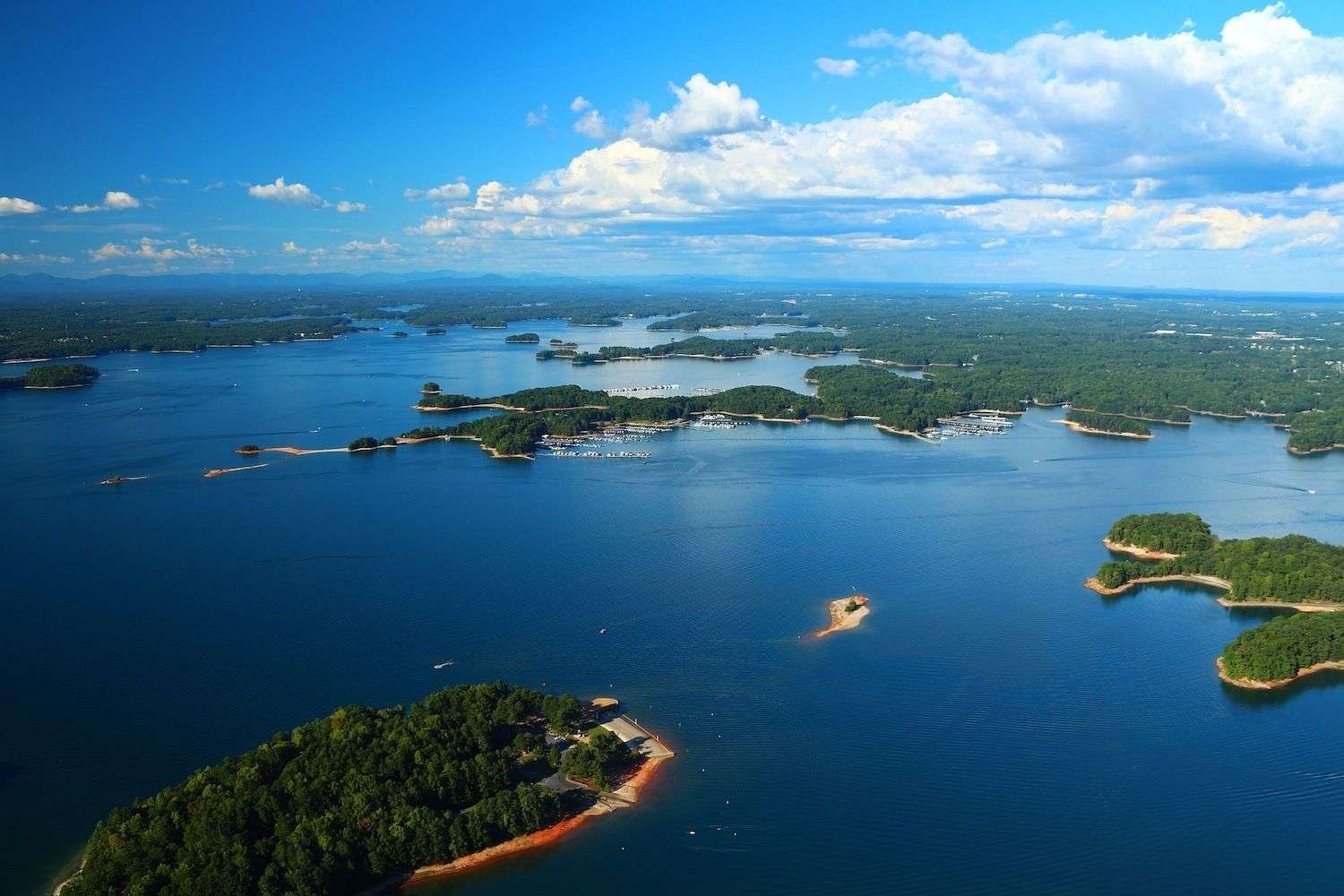
Florida buyers moving to Lake Lanier typically resolve the decision on five variables: hurricane-and-insurance exposure, climate cadence, state-tax math, healthcare access, and the dock-permit model on a freshwater U.S. Army Corps of Engineers reservoir. Lake Lanier is a 38,000-acre USACE reservoir on the Chattahoochee River in Forsyth, Hall, Gwinnett, and Dawson counties, sitting 45 to 90 minutes north of Atlanta (USACE Mobile District, current as of May 2026). For buyers relocating from Tampa, Orlando, Jacksonville, Naples, Miami, or The Villages, the move trades coastal hurricane risk and rising property-insurance premiums for a four-season inland-lake lifestyle with a regulated private-dock regime, Georgia state income tax, and tertiary healthcare inside the Atlanta metro.
Why Florida Buyers Consider Lake Lanier
Florida buyers most often shortlist Lake Lanier when the priority is a freshwater lake lifestyle, lower hurricane and insurance exposure, and a four-season climate with proximity to a major Sunbelt metro. The reasoning typically resolves into three buckets: lifestyle and recreation, risk and cost-of-ownership delta, and the buyer's life stage at the time of relocation.
Lake lifestyle, boating, outdoor living, and North Georgia access
Lake Lanier's appeal to Florida relocating buyers starts with the water itself. The reservoir covers 38,000 acres with more than 600 miles of shoreline at full pool elevation of 1,071 feet above mean sea level, managed by the U.S. Army Corps of Engineers Mobile District at Buford Dam on the Chattahoochee River (USACE Mobile District, current as of May 2026). For Florida buyers used to saltwater coastal living, the freshwater regime removes saltwater corrosion on boats, docks, and engines, and the inland-reservoir setting removes the storm-surge and erosion-rate exposure that define coastal Florida ownership. Boating on Lanier is anchored by named marinas including Aqualand Marina, Sunrise Cove Marina, Holiday Marina, Habersham Marina, and the Lake Lanier Islands resort marina. Buyers can launch from any of these marinas or from a private permitted dock if the parcel carries one. The lake supports wakeboarding, water skiing, pontoon cruising, and fishing for striped bass, spotted bass, and crappie, and the shoreline supports kayaking and paddleboarding in protected coves. The use cadence differs from Florida coastal boating because the lake is wind-protected on most days and does not require the offshore weather check that Gulf Coast and Atlantic Coast Florida owners run. Outdoor living above the shoreline also expands the calendar. The North Georgia mountains begin within a 30-to-60-minute drive of the northern shoreline in Dawson and Hall counties, opening access to the Chattahoochee National Forest, Amicalola Falls State Park, Tallulah Gorge State Park, and the southern terminus of the Appalachian Trail at Springer Mountain. Florida buyers coming from flat coastal geography typically value the elevation change, the hardwood forest, and the genuine fall color season that the North Georgia foothills produce between mid-October and mid-November.
Comparing hurricane exposure, insurance concerns, and seasonal lifestyle
Hurricane exposure is the single most-cited reason Florida buyers shortlist Lake Lanier. Lake Lanier sits roughly 250 to 300 miles inland from the nearest Atlantic and Gulf coastlines, and the reservoir's elevation and inland geography sharply reduce the storm-surge, wind-field, and flood exposure that drives the Florida coastal hurricane-loss profile. Tropical systems do reach North Georgia as weakened rain events, but the catastrophic wind-and-surge scenarios that define Florida coastal underwriting are structurally absent on an inland Corps reservoir. Insurance concerns follow directly. Florida's homeowner-insurance market has tightened sharply over the past several years, with multiple national carriers reducing capacity or non-renewing coastal policies and Citizens Property Insurance Corporation absorbing a growing share of the residual market (Florida Office of Insurance Regulation public reporting, as of 2026). Georgia homeowners on Lake Lanier face a substantially different underwriting environment, with broader carrier availability and lower wind-and-surge loading on inland properties. Buyers should request specific quotes on shortlisted Lanier homes rather than relying on category averages, because dock coverage, flood-zone status, and replacement-cost assumptions vary parcel by parcel. Seasonal lifestyle is the third factor. Lake Lanier sits in USDA Hardiness Zone 7b to 8a with four distinct seasons: humid summers in the upper-80s-to-low-90s, mild springs and falls, and winters that include occasional freeze events and rare snow (National Weather Service climate normals, current as of 2026). Florida buyers gain a genuine fall and winter season, a hardwood-deciduous landscape, and a summer that is meaningfully shorter and less humid than the Florida Gulf or peninsula climate. The trade-off is a winter that requires HVAC heat, pipe-freeze precautions, and dock winterization that coastal Florida ownership does not.
Primary residence, retirement, and second-home motivations
Primary-residence relocators from Florida typically move for a combination of climate change-of-pace, proximity to adult children or grandchildren in the Atlanta metro, Georgia's tertiary healthcare footprint, and the inland-lake risk profile. Buyers in this category usually anchor on the southern shoreline ZIP codes 30518, 30519, 30506, 30542, and 30040 across Buford, Cumming, Flowery Branch, Gainesville, and Sugar Hill, where year-round daily-life logistics, school options, and Atlanta-direction connectivity match a primary-residence rhythm. Retirement buyers from The Villages, Naples, Sarasota, and Vero Beach often shortlist Lanier for the four-season climate, the freshwater dock lifestyle, and the proximity to Northeast Georgia Medical Center in Gainesville and Northside Hospital Forsyth in Cumming. Georgia offers a Retirement Income Exclusion of up to $65,000 per taxpayer age 65 and older against most retirement income, which materially changes the after-tax math for retirees comparing Georgia residency to Florida residency (Georgia Department of Revenue, current as of 2026). Florida has no state income tax, so the comparison is not lopsided; buyers should run the actual after-tax calculation on their specific income mix. Second-home buyers from South Florida and the Florida panhandle use Lanier as a summer-and-shoulder-season retreat that pairs with a Florida winter home. The cadence works because the Atlanta-area air-service footprint at Hartsfield-Jackson Atlanta International Airport supports direct flights to most major Florida markets, and the drive from a typical Lake Lanier address to Hartsfield-Jackson runs roughly 60 to 90 minutes depending on the shoreline and the day (Georgia Department of Transportation, current as of January 2026). Buyers should evaluate the second-home tax, insurance, and HOA layer specific to the shortlisted parcel before assuming a category average.
What Florida Buyers Should Compare
The most useful comparison framework for Florida buyers running a Lake Lanier shortlist is to evaluate geography, parcel structure, and ownership economics side by side rather than category by category. The decision typically resolves once the buyer's preferred shoreline, preferred dock model, and preferred service-and-healthcare footprint are mapped against the live inventory.
Lake Lanier cities, counties, and commute patterns
Lake Lanier's shoreline crosses four counties, each with different daily-life logistics and different connections to the Atlanta metro. Forsyth County, anchored by Cumming on the western shoreline, runs along GA-400 with a typical 45-to-75-minute drive to the Perimeter at I-285 depending on the day, the corridor, and the season (Georgia Department of Transportation, current as of January 2026). Hall County, anchored by Gainesville and Flowery Branch on the eastern and southern shoreline, runs along I-985 with a typical 60-to-90-minute drive to the Perimeter. Gwinnett County, anchored by Buford and Sugar Hill on the southern shoreline near Buford Dam, runs along I-985 and GA-20 with a typical 45-to-75-minute drive to the Perimeter. Dawson County, on the northwestern upper-arm shoreline, runs along GA-400 and GA-53 with a typical 75-to-100-minute drive to the Perimeter, and accesses the North Georgia mountains within a 20-to-30-minute drive of most shoreline addresses. Commute structure matters even for Florida buyers who do not plan to commute, because the same corridor logic drives airport access, healthcare access, and adult-child-visit cadence. Buyers planning frequent flights at Hartsfield-Jackson Atlanta International Airport typically prefer the southern shoreline in Forsyth and Gwinnett counties for the shorter airport pull, while buyers planning frequent trips into the North Georgia mountains may prefer the upper-arm Dawson and northern Hall county shoreline for the closer mountain access. Cities along the shoreline offer different service footprints. Cumming and Buford concentrate retail and dining at the Mall of Georgia, North Georgia Premium Outlets, the Cumming City Center, and the Buford GA-20 corridor. Gainesville concentrates regional services around Northeast Georgia Medical Center and the historic downtown square. Flowery Branch and Sugar Hill offer smaller-scale walkable downtowns with growing dining footprints. Florida buyers should drive each candidate sub-area on a weekday and a weekend before narrowing to a target shoreline, because the lake's geography produces meaningfully different daily-life experiences across the four counties.
Waterfront homes, dock access, and gentle-slope properties
Waterfront home inventory on Lake Lanier resolves into three structural categories: permitted-dock waterfront, lake-access (no private dock), and buildable lots. Current market conditions require a dated MLS comparison that identifies the area, property type, reporting period, and sample before a buyer relies on it. USACE permits and licenses are nontransferable. A new owner of an existing facility may apply through the Lake Lanier Operations Management Office, and approval is not automatic. Confirm the property-specific record and current requirements before closing. Gentle-slope properties matter because Lake Lanier's shoreline includes meaningful elevation change. Many shoreline lots run from a road-level home position down a slope to the shoreline, with retaining walls, terraced paths, or stairs connecting the home to the dock. Florida buyers coming from flat coastal geography frequently underestimate the daily-use impact of slope, especially for older buyers, buyers with mobility considerations, or buyers carrying boat gear, coolers, and kayaks down to the dock. Gentle-slope or near-level-walk-to-water parcels carry a usage premium and should be evaluated in person rather than from photography.
Healthcare, taxes, climate, services, and ownership costs
Healthcare access on Lake Lanier is anchored by Northeast Georgia Medical Center in Gainesville (a tertiary regional medical center with cardiology, oncology, and trauma services) and Northside Hospital Forsyth in Cumming, with the Emory Healthcare and Piedmont Healthcare tertiary systems inside the Atlanta metro within a typical 45-to-90-minute drive (Georgia Department of Public Health, current as of 2026). Florida buyers relocating from Mayo Clinic Jacksonville, AdventHealth Orlando, or Cleveland Clinic Weston should request specific specialty-care confirmations on any in-progress treatment before relocating, because subspecialty depth varies between systems. Tax math is one of the most consequential variables in the Florida-to-Georgia comparison. Florida has no state income tax. Georgia imposes a state income tax under a graduated structure that, as of 2026, sits at a flat 5.39 percent rate with planned step-downs toward 4.99 percent under current state legislation (Georgia Department of Revenue, current as of 2026). Georgia also offers a Retirement Income Exclusion of up to $65,000 per taxpayer age 65 and older, which can materially neutralize the income-tax delta for retirees. Property tax rates vary by county and millage, and homestead exemptions apply for primary-residence buyers; Florida's homestead structure and Save Our Homes cap differ from Georgia's, and buyers should run the specific parcel comparison rather than relying on category averages. Climate, services, and ownership costs round out the comparison. Lake Lanier sits in USDA Hardiness Zone 7b to 8a with four distinct seasons (National Weather Service climate normals, current as of 2026), versus Florida's tropical-to-subtropical Zone 9 to 11 climate. Service infrastructure includes municipal water in most incorporated areas and well water on many shoreline parcels, with most lake-side homes on engineered septic rather than municipal sewer; Florida buyers used to municipal sewer should verify the septic class on any shortlisted home. Ownership costs include property tax across four counties, USACE dock-permit maintenance, dock insurance, HVAC heating cost (which Florida buyers may not have priced before), and boat operating cost on freshwater.
Florida-to-Lake-Lanier Buyer Due Diligence
Florida buyers should run a Lake Lanier-specific due-diligence checklist before writing an offer, because the regulatory framework, the parcel features, and the seasonal cadence all differ from coastal Florida ownership. The most consequential items cluster around the dock permit, the parcel's site characteristics, and the insurance and winter-condition profile.
Dock permits and USACE shoreline rules
The single most important due-diligence step on a Lake Lanier waterfront purchase is confirming the parcel's dock-permit status with the U.S. Army Corps of Engineers Mobile District. Each shoreline parcel sits in a permit class under the Lake Sidney Lanier Shoreline Management Plan administered by the U.S. Army Corps of Engineers, and the permit class determines whether the parcel currently holds a permitted private single-slip, double-slip, or community dock, or whether the parcel is eligible to apply for a new permit (USACE Mobile District, current as of May 2026). Florida buyers coming from a state riparian-rights framework should not assume that waterfront ownership confers an automatic dock right; on a Corps reservoir, the dock right is permit-based. USACE permits and licenses are nontransferable. A new owner of an existing facility may apply through the Lake Lanier Operations Management Office, and approval is not automatic. Confirm the property-specific record and current requirements before closing. Buyers shortlisting a raw lot or a lake-access lot without an existing dock should confirm the parcel's permit eligibility with the Corps before closing rather than after. Lots without an assignable permit and without a clear path to a new permit are, for buyers who specifically want a private slip, not actually waterfront-build candidates regardless of the listing's framing. The dock question precedes every other due-diligence question on a waterfront purchase.
Septic, wells, water levels, insurance, and winter conditions
Septic and well status are the second-most-consequential due-diligence items on a Lanier shoreline home. Most Lake Lanier shoreline parcels are not on municipal sewer; instead, the home uses an engineered septic system designed for the parcel's soil and slope. The system class is determined by the soil percolation test result and the relevant county environmental health department's review (Forsyth County Environmental Health, Hall County Environmental Health, Dawson County Environmental Health, and Gwinnett County Environmental Health, current as of May 2026). Florida buyers used to municipal sewer should request the septic inspection, the last pump-out date, and the design class before closing. Some homes also use a private well rather than municipal water; well-yield and water-quality testing should be part of the inspection. Water levels on Lake Lanier fluctuate around the 1,071-foot full-pool elevation under USACE management. The Corps draws the lake down during prolonged regional drought events to support downstream flow on the Chattahoochee River, and historic drought lows have meaningfully exposed shoreline and shortened dock-water depth in past cycles (USACE Mobile District drought history, current as of May 2026). Buyers should evaluate the dock's water depth at typical winter pool and at historic drought pool before assuming the dock remains in usable water year-round, because shallow-cove docks can become high-and-dry during severe drawdown. Insurance and winter conditions complete the basic due-diligence list. Homeowner insurance is broadly available and structurally cheaper than coastal Florida coverage, but dock insurance, boat insurance, and flood-zone status should each be quoted on the specific parcel. Winter conditions include occasional freeze events, rare snow, and a meaningful HVAC heating season that Florida buyers may not have priced; pipe-freeze precautions, dock winterization, and HVAC maintenance enter the carrying-cost model. Florida buyers should also verify that the home's HVAC system is sized for genuine winter heating, because many older Lanier homes were built with milder winter expectations than current weather data supports.
Schedule a virtual relocation consultation
Florida buyers running a Lanier shortlist should consider a structured virtual relocation consultation before scheduling a property-tour trip. A virtual consultation typically covers the buyer's cadence (primary residence, retirement, or second-home), the preferred shoreline sub-area across Forsyth, Hall, Gwinnett, and Dawson counties, the dock model (private permitted dock, lake-access community dock, or no dock), the carrying-cost band, and the healthcare and air-service footprint. Buyers leaving a Florida home should also evaluate the home-sale-and-purchase sequencing, the moving logistics across roughly 500 to 700 miles, and the homestead-and-residency timeline against the Georgia and Florida rules. Document-pull steps before the trip include requesting current USACE dock-permit status on shortlisted parcels, requesting Georgia Department of Revenue residency and homestead documentation timelines, and confirming the buyer's primary-care and specialty-care portability with the receiving Georgia healthcare system. Buyers carrying ongoing medical treatment should not delay this step, because specialty-care intake windows vary across the Atlanta tertiary systems. Ashley Smith, real estate agent with The Dream Smith Team at Compass, can run a Florida-to-Lake-Lanier virtual consultation that filters live Lanier inventory against the buyer's cadence, shoreline preference, dock model, and carrying-cost band, anchored in documented USACE Mobile District, Georgia Department of Revenue, Georgia MLS, and county-level data rather than category averages. The consultation typically produces a shortlist that the buyer can validate during a single multi-day Georgia trip rather than across multiple speculative visits.
Frequently Asked Questions
- Why are Florida buyers moving to Lake Lanier?
- Florida buyers most often cite hurricane and storm-surge exposure, rising homeowner-insurance costs in coastal Florida, the desire for a four-season climate, and proximity to family in the Atlanta metro. Lake Lanier sits roughly 250 to 300 miles inland from the nearest Atlantic and Gulf coastlines, on a U.S. Army Corps of Engineers freshwater reservoir, which structurally reduces the wind-surge and saltwater-corrosion exposure of coastal Florida ownership (USACE Mobile District, current as of May 2026). Buyers also cite Northeast Georgia Medical Center and Northside Hospital Forsyth as accessible tertiary healthcare anchors.
- Is Lake Lanier safer from hurricanes than the Florida coast?
- Lake Lanier's inland location and elevation structurally reduce hurricane exposure compared with Florida coastal markets. The reservoir sits in Forsyth, Hall, Gwinnett, and Dawson counties roughly 250 to 300 miles inland from the nearest coastline, and tropical systems that reach North Georgia generally arrive as weakened rain events rather than catastrophic wind-and-surge events. Buyers should still confirm flood-zone status on the specific parcel and verify homeowner and dock insurance coverage with their carrier, because individual-parcel exposure varies.
- How does Georgia state income tax compare to Florida for retirees?
- Florida has no state income tax. Georgia imposes a flat 5.39 percent state income tax rate as of 2026, with planned step-downs toward 4.99 percent under current state legislation, and offers a Retirement Income Exclusion of up to $65,000 per taxpayer age 65 and older against most retirement income (Georgia Department of Revenue, current as of 2026). For many retirees, the exclusion materially neutralizes the income-tax delta, but the comparison depends on the specific income mix; buyers should run their own after-tax calculation before relocating.
- What is the climate like on Lake Lanier compared to Florida?
- Lake Lanier sits in USDA Hardiness Zone 7b to 8a with four distinct seasons: humid summers in the upper-80s-to-low-90s, mild springs and falls, and winters with occasional freeze events and rare snow (National Weather Service climate normals, current as of 2026). Florida sits in Zone 9 to 11 with a tropical-to-subtropical climate and minimal winter. Florida buyers gain a genuine fall color season, a shorter and less humid summer, and a true winter that requires HVAC heating, pipe-freeze precautions, and dock winterization.
- Do I need a dock permit to put a boat on Lake Lanier?
- USACE permits and licenses are nontransferable. A new owner of an existing facility may apply through the Lake Lanier Operations Management Office, and approval is not automatic. Confirm the property-specific record and current requirements before closing. A community slip, HOA access right, or marina lease is a separate arrangement; verify its ownership, assignment rules, fees, and availability in the applicable documents.
- How long is the drive from Lake Lanier to Hartsfield-Jackson Atlanta International Airport?
- A typical Lake Lanier shoreline address sits roughly 60 to 90 minutes from Hartsfield-Jackson Atlanta International Airport depending on the shoreline location, the corridor, and the day (Georgia Department of Transportation, current as of January 2026). Southern shoreline addresses in Forsyth and Gwinnett counties along GA-400 and I-985 typically reach Hartsfield-Jackson at the shorter end of that range; upper-arm Hall and Dawson county addresses sit at the longer end. Hartsfield-Jackson supports direct flights to most major Florida markets, which makes Florida-to-Georgia second-home cadences workable.
Related
- Lake Lanier Real Estate OverviewFull Lake Lanier shoreline market, USACE dock permit, and lifestyle guide.
- Lake Lanier Waterfront HomesPermitted-dock and lake-access waterfront listings across the Lanier shoreline.
- Cumming, GA Homes for SaleForsyth County market on the western Lake Lanier shoreline with GA-400 access.
- Gainesville, GA Homes for SaleHall County market on the eastern Lake Lanier shoreline with Northeast Georgia Medical Center.
- Lake Lanier Cost of OwnershipAnnual carrying-cost model including property tax, dock, insurance, and HVAC heating.
- Lake Lanier Commute to AtlantaDrive-time profiles via GA-400 and I-985 from each Lake Lanier sub-area.