
Compare
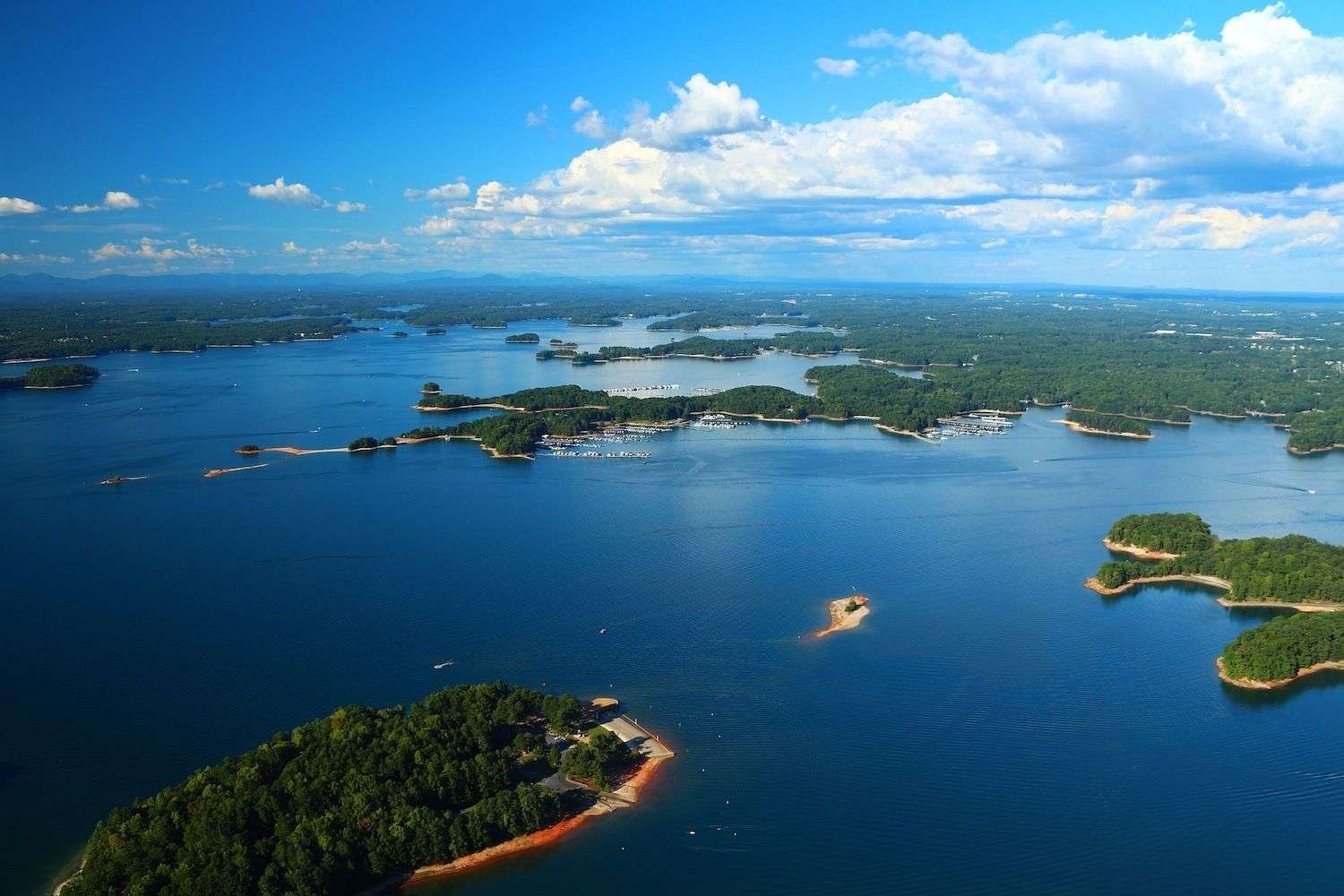
Lake Lanier and Lake Oconee are the two most-compared Georgia reservoirs for waterfront buyers, but they serve different lifestyles. Lake Lanier is a 38,000-acre U.S. Army Corps of Engineers reservoir on the Chattahoochee River, formed by Buford Dam in 1956, sitting 45 to 90 minutes north of Atlanta in Forsyth, Hall, Gwinnett, and Dawson counties (USACE Mobile District, current as of May 2026). Lake Oconee is a 19,971-acre Georgia Power reservoir on the Oconee River, formed by Wallace Dam in 1979, sitting roughly 75 miles east of Atlanta in Greene, Putnam, and Morgan counties (Georgia Power Company, current as of May 2026). Lanier is the closer, larger, USACE-permit-driven lake; Oconee is the private-club, golf-resort lake.
Quick Answer: Lake Lanier or Lake Oconee?
The quick answer depends on commute cadence, club preference, and how the buyer plans to use the home. Lake Lanier favors buyers who want frequent Atlanta access, deep navigable water at full pool, and a USACE-permitted private dock; Lake Oconee favors buyers who want resort-style golf, planned private-club amenities, and a weekend-or-retirement second-home cadence. The decision is rarely close once travel time, dock model, and club budget are honestly underwritten.
Choose Lake Lanier for Atlanta access, scale, boating, and year-round convenience
Lake Lanier is the closer and larger Georgia reservoir, which makes it the default choice for buyers who plan frequent Atlanta-direction commuting, frequent in-person work in the Atlanta metro, or year-round primary-residence use on the water. The lake covers 38,000 acres with more than 600 miles of shoreline at full pool elevation of 1,071 feet above mean sea level, managed by the U.S. Army Corps of Engineers Mobile District at Buford Dam on the Chattahoochee River (USACE Mobile District, current as of May 2026). Drive time from a typical Lake Lanier address to the Perimeter (I-285) runs roughly 45 to 90 minutes depending on the shoreline location, the corridor, and the day, with GA-400 serving the western Forsyth County shoreline and I-985 serving the eastern Hall County and Gwinnett County shoreline (Georgia Department of Transportation, current as of January 2026). Lake Lanier's USACE-managed shoreline regime concentrates value in parcels that hold a permitted single-slip or double-slip private dock, deep navigable water at full pool, and a buildable lot above the Corps Line. Marina capacity at Aqualand Marina, Sunrise Cove Marina, Lake Lanier Islands, and Holiday Marina anchors the southern basin, and lake-access subdivisions across Buford, Cumming, Flowery Branch, Gainesville, and Sugar Hill expand inventory below the permitted-dock price band. Buyers underwriting frequent Atlanta access typically anchor on Lake Lanier before evaluating Lake Oconee. Year-round convenience also shifts the decision toward Lanier. Northside Hospital Forsyth, Northeast Georgia Medical Center in Gainesville, Mall of Georgia, North Georgia Premium Outlets, and the Cumming and Buford commercial centers sit within a typical errand-radius drive from most Lake Lanier addresses, and the lake's daily-use infrastructure runs at a different scale than Oconee's. Buyers planning to live on the water five to seven days a week, not only on weekends, find the year-round logistics more workable on Lanier.
Choose Lake Oconee for resort-style golf, private club culture, and planned amenities
Lake Oconee is the choice for buyers whose lifestyle centers on private-club golf, planned-community amenities, and a resort-cadence weekend or seasonal home. The lake covers 19,971 acres with 374 miles of shoreline across Greene, Putnam, and Morgan counties on the Oconee River, formed by Georgia Power's Wallace Dam in 1979 and managed by Georgia Power Company as a hydroelectric reservoir (Georgia Power Company, current as of May 2026). The shoreline regime is fundamentally different from Lanier because the dock and shoreline rules sit under a private utility's licensing framework rather than a federal Corps of Engineers permit system, which changes the dock-permit conversation that buyers run at Lanier. The Lake Oconee market is anchored by named private-club communities, including Reynolds Lake Oconee (a Daniel Corporation development with multiple championship golf courses and a Ritz-Carlton resort partnership), Cuscowilla on Lake Oconee, and Harbor Club. Buyers shortlisting Oconee typically lead with club preference, initiation fee, and golf membership category before they evaluate the parcel, because the community membership often drives a larger share of the buyer's annual lake spend than the home itself. The planned-community design across Reynolds, Cuscowilla, and Harbor Club concentrates dining, fitness, marina, and golf amenities inside the gates. Resort-style use also fits the travel pattern. Lake Oconee sits roughly 75 miles east of Atlanta via I-20, with a typical 15-minute connector drive from Exit 130 (GA-44) into the Greensboro and Eatonton lake areas (Visit Lake Oconee / GDOT, current as of May 2026). The drive is longer than the Lake Lanier drive from a typical Atlanta address but is structured as a single-corridor highway pull rather than a daily commute, which fits weekend and seasonal cadence better than a five-day in-office cadence.
How lifestyle, budget, and travel time shape the decision
Lifestyle is the first filter because the two lakes optimize for different rhythms. Lake Lanier optimizes for boating, water sports, lake-direct daily use, and Atlanta proximity. Lake Oconee optimizes for golf, club dining, planned-community walking, and a resort-style weekend pull. Buyers who plan to keep a boat in the water seven months a year, who plan to commute to an Atlanta office two or more days a week, or who want a primary-residence lake home typically land on Lanier. Buyers who plan to play 30-plus rounds of golf a year, who plan to use the home as a weekend or seasonal retreat, or who want a Ritz-Carlton-adjacent club identity typically land on Oconee. Buyers should layer club initiation, HOA, and dock-permit carrying costs on top of the home price. Current market conditions require a dated MLS comparison that identifies the area, property type, reporting period, and sample before a buyer relies on it. Travel time is the third filter. Lake Lanier's 45-to-90-minute drive from Atlanta supports a hybrid or full-time work cadence; Lake Oconee's roughly 75-mile / 90-minute-plus drive from Atlanta typically does not. Buyers who plan to commute regularly should drive both routes during the actual planned commute window before committing to either lake, because city-to-city map estimates do not capture the corridor-specific reality of GA-400, I-985, or I-20.
Real Estate and Lifestyle Comparison
The real estate and lifestyle comparison between Lake Lanier and Lake Oconee resolves into four practical categories: waterfront inventory and dock model, commute and second-home use, club and recreation infrastructure, and healthcare and daily-life logistics. Each category produces a different short list, and the two markets rarely tie.
Waterfront inventory, private docks, and luxury estates
Lake Lanier's waterfront inventory is governed by the U.S. Army Corps of Engineers Mobile District's Lake Sidney Lanier Shoreline Management Plan administered by the U.S. Army Corps of Engineers, which assigns each shoreline parcel a permit class and determines whether the parcel can hold a private single-slip or double-slip dock. Current market conditions require a dated MLS comparison that identifies the area, property type, reporting period, and sample before a buyer relies on it. Lake Oconee's waterfront inventory sits under Georgia Power's shoreline licensing program rather than a USACE permit, which means the dock-permit conversation is structurally different. Dock approval, shoreline modification rules, and vegetation buffers follow Georgia Power's lake-level shoreline management plan, and buyers running due diligence on an Oconee parcel should pull the current shoreline license status from Georgia Power before writing the offer. Waterfront inventory across Greene, Putnam, and Morgan counties carried a median active listing price of approximately $677,000 in early 2026 (Redfin, current as of February 2026), with planned-community estates inside Reynolds Lake Oconee, Cuscowilla, and Harbor Club running into the multi-million-dollar band. Luxury estate inventory exists on both lakes but in different formats. Lanier luxury concentrates in large-lot, deep-water, double-slip-dock parcels on the southern basin in Forsyth, Hall, and Gwinnett counties, often outside a master-planned community. Oconee luxury concentrates inside the gated, club-membership communities of Reynolds Lake Oconee, Cuscowilla, and Harbor Club, where the home, the club, and the amenity calendar are bundled. Buyers should evaluate the format that fits their life, not only the dollar figure on the listing.
Commute, second-home use, and weekend accessibility
Commute structure is the single largest practical difference between the two lakes. Lake Lanier sits inside the Atlanta metropolitan commute envelope; Lake Oconee does not. Lake Lanier addresses typically reach the Perimeter (I-285) in 45 to 90 minutes via GA-400 or I-985 depending on the shoreline and the day (Georgia Department of Transportation, current as of January 2026), which supports a hybrid two-to-three-day in-office cadence and, for buyers based on the southern shoreline, a full five-day cadence. Lake Oconee sits roughly 75 miles east of Atlanta via I-20 with a typical 15-minute GA-44 connector, producing a 90-minute-plus drive that fits a weekend or seasonal cadence rather than a daily commute (Visit Lake Oconee / GDOT, current as of May 2026). Second-home use patterns differ as a result. Lake Oconee's buyer mix is weighted toward second-home and retirement use, with weekend pulls from Atlanta, Augusta, Athens, and the Southeast feeder markets. Lake Lanier's buyer mix is weighted toward primary residence and hybrid-work primary residence, with a meaningful second-home and vacation-home segment concentrated on the upper arms in Hall and Dawson counties. Carrying-cost models for the two lakes should reflect the different occupancy profile, because property tax, insurance, dock maintenance, and lake-house operating costs scale differently for a 200-night-per-year second home than for a 360-night-per-year primary residence. Weekend accessibility also runs in opposite directions on the two lakes. Lake Lanier's weekend traffic on GA-400 and I-985 peaks with outbound Atlanta-to-lake flow on Friday afternoon and inbound lake-to-Atlanta flow on Sunday evening during the Memorial Day through Labor Day window. Lake Oconee's weekend traffic on I-20 peaks similarly but on a longer corridor, and arrival fatigue is a real factor for buyers planning to make the drive 30 or more weekends a year. Buyers should test-drive both routes during the actual planned travel window before deciding.
Golf, boating, dining, healthcare, and community structure
Golf is the category where Lake Oconee carries the clear structural advantage. Reynolds Lake Oconee offers six championship golf courses across the property, including the Great Waters course by Jack Nicklaus and the Oconee course by Rees Jones, alongside the Ritz-Carlton Reynolds, Lake Oconee resort (Reynolds Lake Oconee, current as of May 2026). Cuscowilla on Lake Oconee features a Coore and Crenshaw course, and Harbor Club features a Weiskopf-Morrish layout. Lake Lanier's golf inventory is built around community and public courses such as Chateau Elan Golf Club, Royal Lakes Golf and Country Club, Cherokee Run Golf Club, and the Country Club of the South nearby, none of which carry the resort-club density of the Reynolds footprint. Boating is the category where Lake Lanier carries the clear structural advantage. The lake's 38,000-acre surface area, more than 600 miles of shoreline, deep navigable water at full pool 1,071, and concentration of marinas including Aqualand Marina, Sunrise Cove Marina, Lake Lanier Islands, Holiday Marina, and Habersham Marina support a meaningfully larger and more active boating community than Oconee's 19,971-acre surface (USACE Mobile District / Georgia Power Company, current as of May 2026). Buyers whose primary lake use is boating, water sports, or wakeboarding typically find Lanier's water and infrastructure better matched to the use. Healthcare, dining, and community structure round out the comparison. Lake Lanier addresses access Northside Hospital Forsyth, Northeast Georgia Medical Center in Gainesville, and the Emory and Piedmont systems within the Atlanta metro. Lake Oconee addresses access the Piedmont Lake Oconee Hospital, Augusta-area systems via I-20 east, and the Atlanta systems via I-20 west, with longer drive times to the Atlanta tertiary centers. Dining on Lanier is dispersed across Cumming, Buford, Gainesville, and the lake's waterfront restaurants; dining on Oconee concentrates inside the Reynolds and Harbor Club gates and the Greensboro and Eatonton commercial centers. Community structure on Lanier is open-shoreline-dominant; community structure on Oconee is gated-club-dominant.
Which Lake Is Better for Your Goals?
The right lake depends on the buyer's goals, not on a category-by-category scorecard. Primary-residence buyers, luxury second-home buyers, and retirement or legacy buyers each run a different shortlist, and the two lakes rarely tie inside any one category.
Primary residence buyers
Primary-residence buyers who plan to live on the lake five to seven days a week, who commute to an Atlanta office, or who run children through Georgia public or private schools in the metro typically anchor on Lake Lanier. The 45-to-90-minute drive envelope to the Perimeter via GA-400 or I-985 fits a daily or hybrid cadence, and the daily-life logistics of Cumming, Buford, Flowery Branch, Gainesville, and Sugar Hill match a primary-residence rhythm (Georgia Department of Transportation, current as of January 2026). School district options across Forsyth County Schools, Hall County Schools, Gwinnett County Public Schools, and Dawson County Schools give primary-residence buyers a wide assignment-by-address shortlist. Lake Oconee can support primary-residence use, but the buyer profile is narrower. Buyers based in the Greene, Putnam, or Morgan county labor markets, or buyers who run a fully remote role with no in-office cadence, can make Oconee work as a primary residence. The roughly 75-mile drive to Atlanta on I-20 and the limited tertiary-healthcare footprint compared to the Atlanta metro mean that an Oconee primary-residence decision typically requires a structurally different work and life pattern than a Lanier primary-residence decision. Buyers in this category should run the actual weekly schedule, the actual commute window, and the actual school assignment against both lakes before deciding. The shortlist that survives the schedule test rarely includes both lakes, because the daily-life math diverges sharply once the cadence is real rather than aspirational.
Luxury second-home buyers
Luxury second-home buyers split between the two lakes along a club-versus-boat axis. Buyers whose second-home identity centers on private golf, club dining, and planned-community amenity calendars typically land on Lake Oconee inside Reynolds Lake Oconee, Cuscowilla, or Harbor Club, where the home, the club, and the resort partnership with the Ritz-Carlton Reynolds, Lake Oconee form a single product. Buyers whose second-home identity centers on deep water, big-water views, multi-slip permitted docks, and access from Atlanta within an hour or so typically land on Lake Lanier on the southern basin in Forsyth, Hall, or Gwinnett counties. The carrying-cost math is also different. Reynolds Lake Oconee's club initiation fee, annual dues, and HOA structure can run into a meaningful five- or six-figure annual band on top of the home, and buyers shortlisting Reynolds or Cuscowilla should pull the current initiation and dues schedule directly from the club rather than relying on outdated public references. Lake Lanier's carrying cost concentrates in property tax across four counties, USACE dock-permit transfer and maintenance, dock insurance, and boat operating cost, with no equivalent club-initiation layer unless the buyer joins a separate country club. Buyers in this category should evaluate the home, the club or dock, and the operating calendar together. The luxury second-home decision typically resolves once the buyer is honest about how many nights, how many rounds, and how many boating hours per year the home will see.
Retirement, investment, and family legacy buyers
Retirement buyers split along the same axis as luxury second-home buyers but with longer holding periods and a heavier weight on healthcare access. Lake Oconee's planned-community structure inside Reynolds Lake Oconee and Harbor Club fits buyers who want a single-decision retirement package with golf, dining, fitness, and social calendar inside the gates, and who accept the longer drive to Atlanta's tertiary medical centers in exchange for the Piedmont Lake Oconee Hospital footprint locally. Lake Lanier fits retirement buyers who want proximity to Northeast Georgia Medical Center in Gainesville, Northside Hospital Forsyth, and the Atlanta tertiary systems, and who want adult children and grandchildren in the Atlanta metro within a 45-to-90-minute drive. Investment buyers should evaluate each lake against the specific investment thesis. Short-term rental rules differ by county on both lakes, with Forsyth, Hall, Dawson, and Gwinnett counties each running a different STR posture on Lanier, and Greene and Putnam counties running their own posture on Oconee. Long-term-hold appreciation patterns also differ, with Lanier appreciation typically tracking Atlanta metro housing dynamics and Oconee appreciation typically tracking the Reynolds and resort-community dynamics. Buyers should run the underwriting against the specific county and community before generalizing. Family legacy buyers planning to hold the home across multiple generations should evaluate both lakes through the lens of who will use the home, how often, and from where. A legacy home on Lanier is structurally accessible to a wider share of Atlanta-based extended family on a routine weekend cadence; a legacy home in Reynolds Lake Oconee is structurally accessible as a planned-destination property with a club identity. Both work; they work differently. Ashley Smith, real estate agent with The Dream Smith Team at Compass, can build a goal-aware comparison shortlist that filters both lake markets against the buyer's actual cadence, club preference, commute reality, and carrying-cost band, anchored in documented USACE, Georgia Power, Georgia MLS, and county-level data rather than category averages.
Frequently Asked Questions
- Is Lake Lanier or Lake Oconee closer to Atlanta?
- Lake Lanier is closer. A typical Lake Lanier shoreline address sits 45 to 90 minutes north of Atlanta via GA-400 or I-985 depending on the corridor, the shoreline, and the day (Georgia Department of Transportation, current as of January 2026). Lake Oconee sits roughly 75 miles east of Atlanta via I-20 with a typical 90-minute-plus drive. Lake Lanier supports a hybrid Atlanta commute; Lake Oconee typically does not.
- Which lake is bigger, Lake Lanier or Lake Oconee?
- Lake Lanier is meaningfully larger. Lake Lanier covers 38,000 acres with more than 600 miles of shoreline at full pool elevation of 1,071 feet, managed by the U.S. Army Corps of Engineers at Buford Dam on the Chattahoochee River (USACE Mobile District, current as of May 2026). Lake Oconee covers 19,971 acres with 374 miles of shoreline, managed by Georgia Power Company at Wallace Dam on the Oconee River (Georgia Power Company, current as of May 2026). Lake Lanier's larger surface area and deeper navigable water support a substantially larger boating community.
- How do dock rules differ between Lake Lanier and Lake Oconee?
- Dock rules are structurally different because the two lakes sit under different regulatory frameworks. Lake Lanier docks are permitted by the U.S. Army Corps of Engineers Mobile District under the Lake Sidney Lanier Shoreline Management Plan administered by the U.S. Army Corps of Engineers, with single-slip, double-slip, and community dock permit classes assigned to specific shoreline parcels. Lake Oconee docks are licensed by Georgia Power Company under its shoreline management plan as a private-utility hydroelectric reservoir. Buyers should pull the current permit or license status directly from the regulating authority on any specific parcel before writing an offer.
- Is Lake Oconee more expensive than Lake Lanier?
- Lake Oconee's planned-community estates inside Reynolds Lake Oconee, Cuscowilla, and Harbor Club run into the multi-million-dollar band and often exceed Lanier comps, so the comparison depends on the specific home, club membership, and dock model. Current market conditions require a dated MLS comparison that identifies the area, property type, reporting period, and sample before a buyer relies on it.
- Which lake is better for golf?
- Lake Oconee carries the structural golf advantage. Reynolds Lake Oconee offers six championship courses across the property and partners with the Ritz-Carlton Reynolds, Lake Oconee resort, Cuscowilla offers a Coore and Crenshaw course, and Harbor Club offers a Weiskopf-Morrish layout (Reynolds Lake Oconee, current as of May 2026). Lake Lanier's golf inventory is built around community and public courses such as Chateau Elan Golf Club and Royal Lakes Golf and Country Club, which do not match the resort-club density of the Reynolds footprint.
- Which lake is better for boating?
- Lake Lanier carries the structural boating advantage. The lake's 38,000-acre surface area, more than 600 miles of shoreline, deep navigable water at full pool, and concentration of marinas including Aqualand Marina, Sunrise Cove Marina, Lake Lanier Islands, Holiday Marina, and Habersham Marina support a larger and more active boating community than Lake Oconee's 19,971-acre surface (USACE Mobile District, current as of May 2026). Buyers whose primary lake use is boating, water sports, or wakeboarding typically find Lanier's water and infrastructure better matched to the use.
Related
- Lake Lanier Real Estate OverviewFull Lake Lanier shoreline market, USACE dock permit, and lifestyle guide.
- Lake Lanier Waterfront HomesPermitted-dock and lake-access waterfront listings across the Lanier shoreline.
- Lake Lanier Commute to AtlantaDrive-time profiles via GA-400 and I-985 from each Lake Lanier sub-area.
- Lake Lanier Cost of OwnershipAnnual carrying-cost model including property tax, dock, and insurance.
- South Lake Lanier HomesSouthern shoreline inventory closest to Buford Dam and the Atlanta commute.
- Cumming, GA Homes for SaleForsyth County market on the western Lake Lanier shoreline with GA-400 access.