
Journal
A Lake Lanier inspector resource guide has to do something a standard residential checklist never asks of a buyer or seller: assemble a roster of licensed specialists who each cover a single regulated layer of the same waterfront parcel. Around Cumming, Buford, Gainesville, Flowery Branch, and Dawsonville, due diligence on a lakefront home routinely runs across the U.S. Army Corps of Engineers (USACE) Mobile District, the Lake Lanier Project Management Office, and the environmental health and building departments of Hall County, Forsyth County, Dawson County, Gwinnett County, and Lumpkin County. This guide names the inspectors and professionals waterfront buyers and sellers typically need, what each one checks, and where their work sits in the timeline.
Why Lake Lanier Buyers Need Specialized Inspections
Buyers on Lake Lanier need specialized inspections because the property they are buying spans three regulatory layers that a standard residential report does not touch: the federally permitted dock, the federal shoreline between the home and the contour at full pool 1,071 feet, and the on-site septic and drainage system that almost every waterfront parcel still depends on (USACE Mobile District Shoreline Management Plan, current as of May 2026). Each layer has its own licensed inspector, its own document trail, and its own enforcement authority. A buyer who orders only an ASHI or InterNACHI general inspection is leaving the regulated portion of the lot unreviewed.
Home, dock, septic, electrical, mold, shoreline, and drainage issues
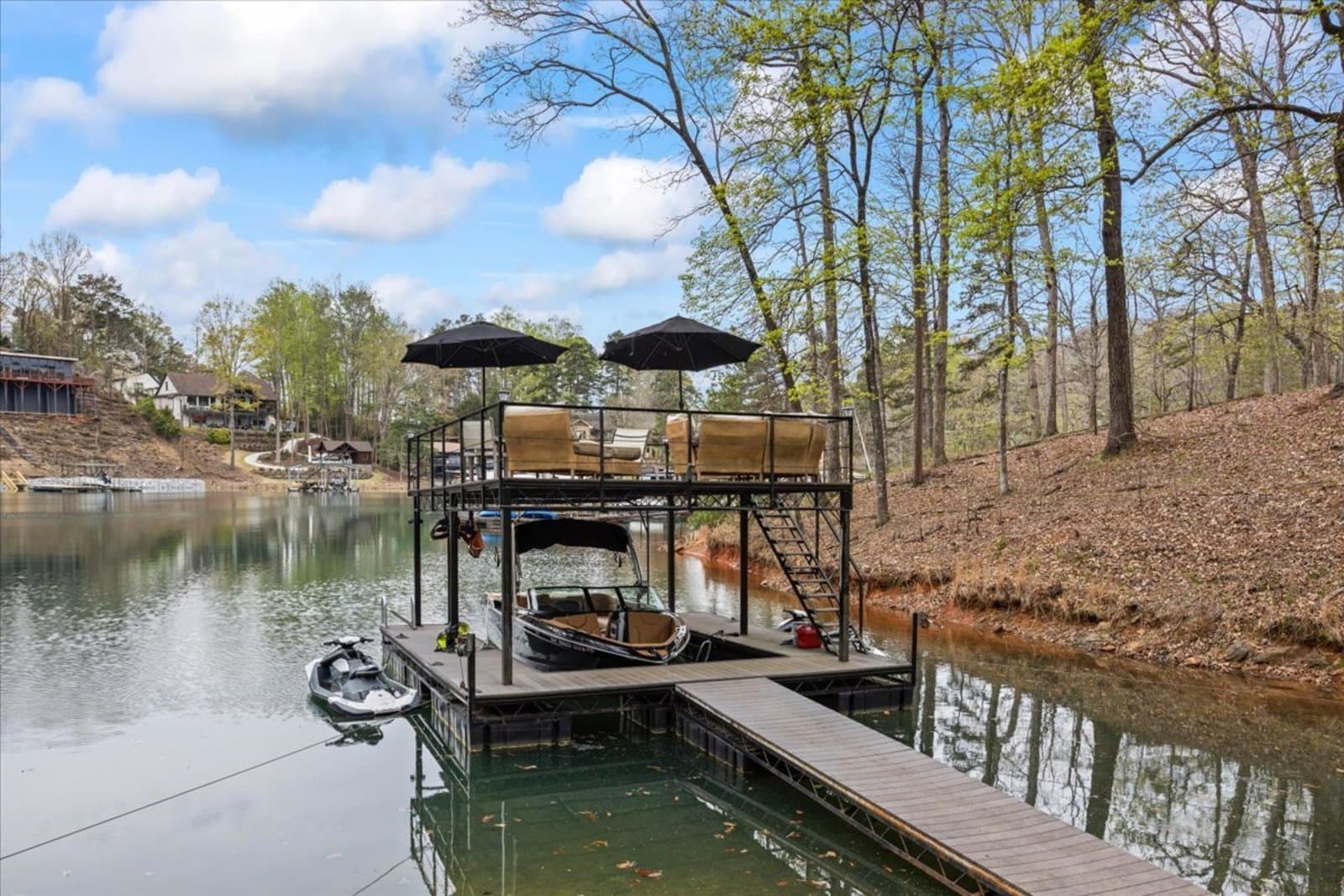
A Lake Lanier waterfront due-diligence package typically touches seven distinct inspection areas, each of which sits with a different professional. The home itself is reviewed by a licensed Georgia residential home inspector. The dock structure is reviewed against the USACE Mobile District permit on file and the as-built diagram from the Lake Lanier Project Management Office in Buford, often with a licensed Georgia marine contractor walking the floats, gangway, and roof. The on-site septic system is reviewed by a Georgia-licensed septic contractor under the county environmental health record. The dock electrical service is reviewed by a licensed Georgia electrician familiar with the USACE Exhibit C marine electrical standard. Mold and crawlspace moisture are reviewed by an indoor air-quality inspector or remediation contractor; the residential home inspector flags the visible condition but does not certify air quality. Shoreline condition, riprap, and slope are reviewed against the USACE Shoreline Management Plan, sometimes by a licensed Georgia engineer when retaining walls or grading questions arise. Drainage from the home and driveway across the slope to the lake is reviewed by the residential inspector and confirmed against county stormwater rules in Hall County, Forsyth County, Dawson County, Gwinnett County, or Lumpkin County depending on which jurisdiction the parcel sits in. Each of these areas can surface a finding that the others would miss. A clean general report does not mean a clean septic, a clean dock electrical, or a compliant shoreline. The resource list a buyer assembles at contract should reflect that reality.
Why waterfront due diligence is broader than a standard home inspection
A standard ASHI or InterNACHI home inspection on a Georgia residential property ends at the exterior walls of the home and covers structure, roof, electrical, plumbing, HVAC, and built-in appliances under a defined Standards of Practice. Nothing in that scope includes the dock, the dock's electrical service, the shoreline between the home and the federal contour, the on-site septic system, or the USACE permit file. Each of those is a separate due-diligence track with a separate licensed professional. Lake Lanier sits inside the USACE Mobile District as a federal reservoir, which means the strip between the deeded property line and the contour at full pool 1,071 feet is federal land managed under the Shoreline Management Plan, not part of the deed (USACE Mobile District, current as of May 2026). The dock occupies that federal land under a USACE permit, and the buyer at closing inherits the permit conditions, the as-built diagram on file, and any open compliance correspondence. A residential home inspector is not credentialed to evaluate that document set. The practical effect on a buyer's checklist is that the inspection roster has to include the residential inspector plus four or five specialty professionals, and the inspection calendar has to sequence them in parallel rather than as a single sweep at the end of the due-diligence period.
How inspection findings affect negotiation and risk
Inspection findings on a Lake Lanier waterfront home affect the negotiation in three distinct ways: they reveal corrective work that becomes the next owner's obligation, they reveal compliance issues with the USACE Mobile District or county environmental health that have to be resolved before the file is clean, and they reveal physical conditions, such as sounded slip depth at the current pool elevation, that affect whether the buyer's actual use case is supported by the property. A dock electrical finding flagged under the USACE Exhibit C standard typically requires a licensed Georgia electrician's correction and a re-inspection before the Mobile District clears the file at change-of-owner. A septic finding with the county environmental health office can require pumping, drain-field repair, or replacement, depending on the load test and the original installation record. A shoreline finding involving unpermitted riprap or an after-the-fact retaining wall inside the path corridor can require a separate USACE conversation about whether the structure is eligible for after-the-fact permitting or has to be removed. Each of these findings has a dollar figure, a calendar impact, and a regulatory consequence. The buyer's offer price, repair-request strategy, or termination decision is informed by those figures, not by the general impression of the home.
Types of Professionals to Consider
The roster of professionals a Lake Lanier waterfront buyer or seller typically engages spans residential, marine, civil, and regulatory specialties, and the resource list pulls from licensed Georgia practitioners alongside Hall County, Forsyth County, Dawson County, Gwinnett County, and Lumpkin County offices and the USACE Mobile District Lake Lanier Project Management Office in Buford. The list below names the categories most often involved in a waterfront due-diligence file rather than specific firms, because the appropriate selection depends on the parcel's county, the dock permit class, the on-site septic configuration, and the seller's existing document set.
Home inspectors, septic professionals, dock electrical inspectors, and surveyors
A licensed Georgia residential home inspector, credentialed through ASHI, InterNACHI, or a comparable body and operating under the Georgia Standards of Practice, is the baseline professional on every waterfront file. The inspector covers structure, roof, residential electrical, plumbing, HVAC, and built-in appliances. On a waterfront parcel, the inspector also notes visible conditions outside the home, such as grade, drainage path, exterior moisture, and crawlspace condition, even though those notes are not certifications of compliance with any federal or county code. A Georgia-licensed septic contractor is the right professional for the on-site septic system. The inspection typically includes a tank pump-and-scope, a drain-field load test, a confirmed setback from the federal shoreline contour, and a county environmental health record check for the original installation and any subsequent repairs. Hall County Environmental Health, Forsyth County Environmental Health, Dawson County Environmental Health, Gwinnett County Environmental Health, and Lumpkin County Environmental Health each maintain their own septic permit records and inspection histories. A licensed Georgia electrician familiar with the USACE Exhibit C marine electrical standard is the right professional for the dock circuit. The work includes confirming ground-fault protection, marine-rated wiring, a properly grounded sub-panel, and a clearly labeled disconnect at the residence end of the run. A licensed Georgia surveyor confirms the deeded property line against the federal shoreline contour, the dock footprint against the USACE as-built diagram, and any retaining walls, steps, or hardscape inside the permitted path corridor. The surveyor's plat is what a USACE compliance question is checked against.
Engineers, insurance agents, contractors, and shoreline professionals
A licensed Georgia professional engineer is brought in when a retaining wall, a slope-stabilization question, a drainage redirection, or a foundation concern moves beyond what the residential inspector and the surveyor can document. On Lake Lanier, the engineer often coordinates with the USACE Mobile District when the question involves an after-the-fact permit for an existing shoreline structure or a proposed path corridor modification. An insurance agent licensed in Georgia and familiar with waterfront coverage reviews the policy structure: replacement-cost coverage on the dwelling, separate dock and other-structures coverage, flood coverage under the National Flood Insurance Program when the parcel touches a mapped flood zone, wind coverage, and any waterfront-specific exclusions. The insurance review belongs in the first week of due diligence because a coverage gap or a policy denial can shift the offer math before earnest money is at risk. A Georgia-licensed general contractor, marine contractor, or roofing contractor is the right professional for repair-cost estimates when an inspection surfaces a corrective item. A shoreline professional, typically a licensed marine contractor with USACE Mobile District experience, is the right professional for riprap, gangway, and dock-modification questions. The estimates from these professionals become the basis of the buyer's repair request or price adjustment during due diligence.
County, USACE, legal, tax, and lending resources where appropriate
The county building department in Hall County, Forsyth County, Dawson County, Gwinnett County, or Lumpkin County maintains permit records for any addition, deck, accessory structure, or major repair on the home. The county environmental health office holds the septic permit and inspection record. The county tax assessor records the parcel boundaries, the homestead status, and the assessed value used for property tax. Each of these offices answers a question the inspection report alone cannot answer. The USACE Mobile District's Lake Lanier Project Management Office in Buford holds the dock permit file, the as-built diagram, the shoreline-use allocation zone classification under the Shoreline Management Plan, and any open compliance correspondence on the parcel. A direct call to the Buford office during due diligence is how a buyer confirms what the seller represents about the dock against what the federal file shows. A Georgia real estate attorney handles title review, the USACE permit transfer at change-of-owner, easement and access questions, and any boundary or HOA covenant matter that surfaces from the survey. A tax professional reviews the property tax bill and county homestead implications. A lender's underwriting team confirms whether the loan product accommodates a waterfront parcel with a USACE-permitted dock and an on-site septic system. Bringing each of these resources into the due-diligence calendar at the right point is how a clean file closes on time.
Buyer and Seller Inspection Strategy
A working inspection strategy on Lake Lanier is sequenced against the contract calendar, not run as a single end-of-period sweep, and it differs depending on whether the strategy belongs to the buyer or the seller. For the buyer, the strategy is about preserving negotiating room while authority confirmations come back. For the seller, the strategy is about controlling the document set before listing so that the file presented to a buyer at contract is already clean. Ashley Smith coordinates both sides of that calendar for clients buying and selling waterfront homes on Lake Lanier.
Buyers: schedule early and track deadlines
A Lake Lanier waterfront buyer's inspection calendar should be set in the first week of the due-diligence period, not the last, because the regulated layers run on different timelines than the private inspection layer. The residential home inspection, the septic inspection by a Georgia-licensed septic contractor, the dock electrical inspection under the USACE Exhibit C standard, and the surveyor's plat can all be ordered in parallel as soon as the contract is binding, and each report typically returns within the first ten days. A USACE Mobile District permit compliance check with the Lake Lanier Project Management Office in Buford and a Hall County, Forsyth County, Dawson County, Gwinnett County, or Lumpkin County environmental health record pull take longer than a same-week return from a private inspector, and they have to be initiated early so any open question has time to be confirmed before the option period closes. The buyer's checklist should track each inspection report's expected return date, each authority confirmation's expected return date, and the firm contractual deadlines for inspection objections, repair requests, and termination rights under the Georgia residential purchase contract. If a USACE compliance question is still open when the due-diligence period is about to expire, the buyer's options narrow to a written extension agreed with the seller or a termination decision. The earlier the calendar surfaces a question, the more room there is to negotiate a resolution rather than a refund. A clean file at the end of due diligence is the product of a calendar that was set on day one.
Sellers: pre-listing inspections and documentation
A Lake Lanier waterfront seller's strategy is to assemble the regulated-layer document set before the home goes on the market, so that the file presented to a buyer at contract is already complete. The seller's package typically includes the USACE Mobile District dock permit on file, the as-built diagram from the Lake Lanier Project Management Office in Buford, any recent shoreline inspection correspondence, the county environmental health septic permit and most recent pump-and-scope record, a current survey if one exists, and a list of any work done to the home, dock, or shoreline since the seller took ownership. A pre-listing residential home inspection, a pre-listing septic inspection, and a pre-listing dock electrical inspection under the USACE Exhibit C standard surface corrective items before a buyer's inspector finds them. The seller can complete the corrections, document them, and present a clean inspection package alongside the listing rather than negotiating repairs under deadline pressure during due diligence. The practical effect on the listing is that a documented, compliant file shortens the buyer's due-diligence period and reduces the chance of a price renegotiation halfway through the contract. On Lake Lanier, where the regulated layers are unfamiliar to buyers coming from inland markets, a complete seller's package is one of the strongest moves a listing can make.
Ask Ashley Smith for real estate coordination and next steps
A Lake Lanier waterfront transaction is not a standard residential transaction, and the inspection strategy is most useful when it is coordinated by an agent familiar with the USACE Mobile District process, the Shoreline Management Plan, county-level rules in Hall County, Forsyth County, Dawson County, Gwinnett County, and Lumpkin County, and the practical sequence of inspections between contract and closing on a waterfront parcel. Ashley Smith handles that coordination as part of buyer representation and listing representation on Lake Lanier waterfront homes. Buyers shortlisting waterfront homes around Cumming, Buford, Gainesville, Flowery Branch, or Dawsonville can request a Lake Lanier-specific buyer consultation that focuses on the federal and county layers affecting the contract calendar, the document set a buyer should request at contract, and the inspections that need to be initiated in the first week of due diligence rather than the last. Sellers preparing a Lake Lanier waterfront listing can request a pre-listing consultation that focuses on the USACE permit file, the county environmental health record, the inspection items most often surfaced by buyer's inspectors on Lake Lanier, and the documentation package that travels with the listing. Both consultations are aimed at the same outcome: a clean, sequenced inspection calendar that closes on time.
Frequently Asked Questions
- What inspectors does a Lake Lanier waterfront buyer typically need?
- A Lake Lanier waterfront buyer typically needs a licensed Georgia residential home inspector, a Georgia-licensed septic contractor, a licensed Georgia electrician familiar with the USACE Exhibit C marine electrical standard, and a licensed Georgia surveyor at minimum. Depending on the parcel, the roster can also include a licensed marine contractor for the dock structure, a professional engineer for retaining walls or slope questions, and an indoor air-quality inspector for crawlspace moisture or mold. Each specialist covers a regulated layer that the general home inspection does not.
- Who inspects the dock and the dock electrical on Lake Lanier?
- The dock structure is reviewed against the USACE Mobile District permit on file and the as-built diagram from the Lake Lanier Project Management Office in Buford, often with a licensed Georgia marine contractor walking the floats, gangway, decking, and roof. The dock electrical circuit is reviewed by a licensed Georgia electrician familiar with the USACE Exhibit C marine electrical standard, separately from the general home inspector. Most ASHI or InterNACHI residential inspectors do not certify marine electrical work and do not evaluate dock structures against the federal permit.
- Do Lake Lanier sellers need a pre-listing inspection?
- Pre-listing inspections are not required, but on Lake Lanier they often shorten the buyer's due-diligence period and reduce the chance of a price renegotiation. A pre-listing residential inspection, a septic pump-and-scope, and a dock electrical check under the USACE Exhibit C standard surface corrective items before a buyer's inspector finds them, so the seller can complete the corrections and present a clean inspection package alongside the listing. Many Lake Lanier waterfront listings benefit from the documented file more than they benefit from any single staging change.
- How do I confirm a Lake Lanier dock permit with USACE?
- A buyer or seller confirms a dock permit by contacting the USACE Mobile District's Lake Lanier Project Management Office in Buford and requesting the permit number, the as-built diagram, the most recent shoreline inspection notice, and any open compliance correspondence on the parcel. The office maintains the federal record for every permitted dock under the Shoreline Management Plan (USACE Mobile District, current as of May 2026). A direct confirmation with the Buford office during due diligence is how a buyer checks what the seller represents about the dock against what the federal file actually shows.
- What county offices are involved in Lake Lanier waterfront inspections?
- Hall County, Forsyth County, Dawson County, Gwinnett County, and Lumpkin County each maintain environmental health offices that hold septic permit records and building departments that hold residential permit records. The county tax assessor records the parcel boundaries and the homestead status. The specific offices involved depend on which county the parcel sits in. Most Lake Lanier waterfront parcels touch one of these five counties, and the county-level record is checked alongside the USACE Mobile District permit file during due diligence.
- When should Lake Lanier waterfront inspections be scheduled?
- Waterfront inspections that depend on third-party authority confirmations should be initiated in the first week of the due-diligence period, not the last. A USACE permit compliance check with the Lake Lanier Project Management Office in Buford and a county environmental health record pull both take longer than a same-week return from a private inspector. A sequenced calendar from day one preserves negotiating room that a late sweep gives up, and it leaves time to confirm any open question with the issuing authority before the option period closes.
Related
- Lake Lanier Home Inspection ChecklistWhat to inspect beyond the house on a Lake Lanier waterfront parcel, sequenced against the contract calendar.
- Lake Lanier Exhibit C Dock Electrical InspectionUSACE marine electrical compliance and the change-of-owner electrical certification on Lake Lanier docks.
- Lake Lanier Dock Permits GuideHow USACE Mobile District dock permits work, why they are capped, and what must be re-issued by USACE to the new owner.
- Lake Lanier Septic System RulesCounty and federal setback rules for on-site septic systems on Lake Lanier waterfront parcels.
- Lake Lanier Survey and Title GuideHow the deeded property line, the federal contour, and the dock footprint align on a Lake Lanier survey.
- Lake Lanier Community GuideFull neighborhood, market, school, and shoreline overview for Lake Lanier.