
Community Guide
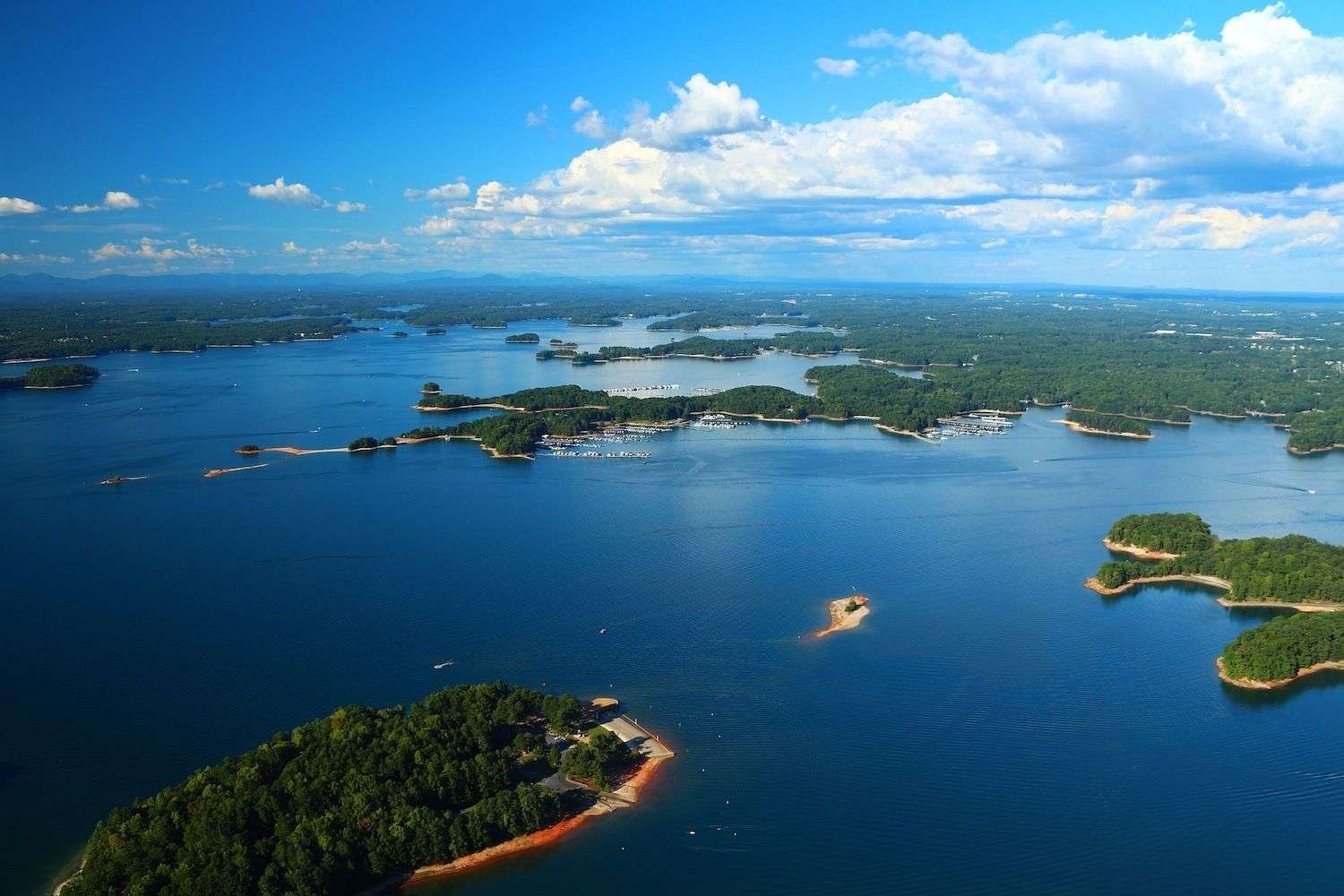
Lake Lanier gated communities are master-planned residential subdivisions on or near the Lake Lanier shoreline that combine controlled access, shared amenities, architectural review, and either private docks, deeded community dock slips, or marina access governed by the U.S. Army Corps of Engineers Mobile District's Lake Sidney Lanier Shoreline Management Plan administered by the U.S. Army Corps of Engineers (USACE Mobile District, current as of May 2026). They sit in Forsyth, Hall, Dawson, and Gwinnett counties around named submarkets including South Lake, Marina Bay, Harbour Point, and Cresswind at Lake Lanier. Buyers consider these communities for predictable HOA-governed maintenance, defined amenity packages, and a lake lifestyle without the full burden of private waterfront ownership.
Gated Community Living Near Lake Lanier
Gated community living near Lake Lanier centers on three trade-offs: controlled access and HOA-governed standards in exchange for monthly fees, shared amenity packages in exchange for less individual lot autonomy, and structured dock or marina arrangements in exchange for the predictability that private USACE-permit ownership cannot always guarantee. The shortlist of gated communities clusters around the southern basin in Forsyth County, the northern shoreline in Hall County and Dawson County, and the Gwinnett County edge.
Privacy, controlled access, amenities, and lake lifestyle
Privacy and controlled access are the defining infrastructure of a Lake Lanier gated community. A staffed or card-controlled entry gate, perimeter signage, and an HOA-governed access policy together produce a different daily-traffic profile than an open-shoreline subdivision. Buyers who place a meaningful weight on visitor screening, package security, and through-traffic suppression typically anchor their shortlist on gated communities before evaluating non-gated lake-access neighborhoods. The gate's staffing model, hours, and visitor-pass workflow vary by community and should be confirmed at the property tour rather than assumed from the marketing description. Amenity packages inside Lake Lanier gated communities typically bundle a clubhouse, fitness facility, pool, tennis or pickleball courts, walking trails, and either a community dock, deeded slip program, or marina access. Larger master-planned communities such as Marina Bay, Harbour Point, and Cresswind at Lake Lanier carry more amenity depth, including event programming, fitness classes, and resident-only social calendars. Smaller gated subdivisions typically carry a leaner package weighted toward the dock or marina amenity. Buyers should compare the amenity calendar against actual planned usage rather than against the brochure footprint. Lake lifestyle inside a gated community is a structured version of the open-shoreline Lanier lifestyle. Boating, paddleboarding, fishing, and lake events still anchor the rhythm, but the dock-launch and slip-assignment workflow runs through the HOA or marina operator rather than through individual USACE permit holders. Residents typically access the water through a deeded community-dock slip, a marina rental, or a community boat-ramp policy. The structure simplifies the dock conversation for buyers who do not want to underwrite a private USACE permit but reduces the autonomy of dock placement, modification, and seasonal use that private permit holders retain.
Waterfront, lake-access, marina, golf, and active-adult options
Waterfront gated communities on Lake Lanier hold parcels with direct shoreline frontage, where individual homes either carry a private USACE-permitted dock or share a community-dock structure. The waterfront gated inventory concentrates on the southern basin in Forsyth County around Cumming and on the eastern Hall County and Gwinnett County shoreline around Buford, Flowery Branch, and Sugar Hill, where deep navigable water at full pool elevation 1,071 feet above mean sea level supports year-round boating (USACE Mobile District, current as of May 2026). Waterfront gated parcels typically trade at a higher price band than interior parcels inside the same community. Lake-access gated communities sit a short drive or walk from the shoreline without holding direct waterfront frontage on every lot. Buyers in these communities typically access the lake through a deeded community dock, a community boat ramp, or a marina membership. The lake-access format expands the inventory available below the permitted-dock price band and is the format that most buyers seeking a Lanier lifestyle without a private waterfront budget will encounter. Communities such as Cresswind at Lake Lanier in Gainesville run a lake-access model with a community dock and lifestyle amenities rather than per-home private docks. Marina-anchored gated communities tie residential ownership to a specific marina operator or marina-adjacent amenity package on Lake Lanier. Marina Bay in Hall County, Harbour Point in Cumming, and similar communities bundle the home with structured marina access, slip rental, or boat-club membership rather than relying on individual private USACE-permitted docks. Golf-anchored gated communities along Lake Lanier add a private or semi-private golf membership to the package; the lake itself is typically a lifestyle adjacency rather than the central amenity in golf-anchored communities. Active-adult gated communities, including Cresswind at Lake Lanier in Gainesville, structure the amenity package, event calendar, and architectural program around residents aged 55 and over under the federal Housing for Older Persons Act framework rather than around general-market households (HUD HOPA framework, current as of May 2026). Buyers should match the community format to the way the home will actually be used across the year rather than the way the brochure presents the amenity calendar.
How gated communities differ from private lakefront ownership
Gated communities and private lakefront ownership solve different problems on Lake Lanier. Private lakefront ownership delivers maximum control over the dock, the shoreline buffer, the lot improvements, and the visitor flow, but it concentrates the full carrying cost of the USACE permit, dock maintenance, shoreline mowing rules, and any future shoreline management plan changes onto the individual owner. The autonomy is real, but so is the per-owner burden of USACE compliance and the variability of permit-class outcomes parcel by parcel. Gated communities pool the shoreline and amenity risk across the HOA membership. Community docks, marina arrangements, and deeded slip programs spread the permit, maintenance, and insurance lines across the membership rather than concentrating them on one owner. The HOA typically holds the master dock agreement, coordinates with the USACE Mobile District on any shoreline modifications, and assesses dock and amenity costs through monthly or annual dues. Buyers who do not want to be their own dock manager typically find the gated-community structure simpler to operate, even when the headline price is comparable to a private-waterfront alternative. The trade-off shows up in lifestyle control. Private lakefront owners can typically tailor the dock, the lakeside landscaping (within USACE buffer rules), and the home's use pattern without external review. Gated-community residents accept architectural guidelines, dock-use rules, slip-assignment policies, and amenity calendars that the HOA sets. Neither format is universally better; the right format depends on whether the buyer values autonomy or structure more, and on how much of the operating burden the buyer wants to carry directly.
What Buyers Should Verify
Buyers shortlisting Lake Lanier gated communities should verify HOA financial health, dock and slip arrangements, amenity-access rules, security policies, and resale considerations before writing an offer. Each variable can materially change the carrying cost and lifestyle profile, and the marketing brochure rarely captures the operating reality.
HOA fees, restrictions, architectural guidelines, and reserves
HOA fees on Lake Lanier gated communities typically run from roughly $100 per month at the leaner end to $500 or more per month at the amenity-rich active-adult or marina-anchored end, depending on the amenity package, dock structure, and reserve funding policy (community HOA documents, current as of May 2026). Buyers should request the most recent fee schedule, the prior twelve months of HOA meeting minutes, the operating budget, the reserve study, and any pending special assessment notices before closing. Fee comparison across communities is only honest once the amenity inclusions, dock or slip rights, and reserve funding posture are normalized. Covenants, conditions, and restrictions inside a Lake Lanier gated community typically govern exterior paint, roofing material, landscaping, fence styles, accessory structures, short-term rental usage, recreational vehicle and boat storage, and architectural modifications. Buyers planning to renovate, add a structure, or run any short-term rental income should pull the full CC&Rs and architectural review committee guidelines and confirm that the planned use is allowed. Several Lake Lanier gated communities restrict or prohibit short-term rentals under HOA policy, and county short-term rental rules in Forsyth, Hall, Dawson, and Gwinnett counties layer on top. Reserve funding is the line that most under-prepared buyers miss. A community with attractive monthly dues and an underfunded reserve is structurally one special-assessment cycle away from a meaningful cost surprise on dock replacement, road resurfacing, clubhouse renovation, or pool replastering. Buyers should read the reserve study summary, understand the percent-funded ratio, and ask the HOA management company about any planned capital projects in the next three to five years before assuming the current fee is the steady-state cost.
Dock, slip, marina, and lake-access arrangements
Dock and slip arrangements inside Lake Lanier gated communities take several distinct forms, and buyers should confirm exactly which one applies to the specific home and the specific community before assuming lake access. The four common formats are individual private USACE-permitted docks tied to individual lots, deeded community-dock slips assigned to specific homes, community-dock slips assigned by HOA policy or wait list, and marina-rental arrangements through a connected or third-party marina (USACE Mobile District / community HOA documents, current as of May 2026). Each format produces a different lake-access guarantee and a different transfer pattern at resale. The USACE Mobile District's Lake Sidney Lanier Shoreline Management Plan administered by the U.S. Army Corps of Engineers governs the underlying shoreline regime regardless of the community's internal structure. Buyers in waterfront gated communities with individual private docks should confirm that the dock permit is assignable at closing under standard USACE transfer procedures. Buyers in deeded-slip communities should request the deeded-slip assignment language, confirm that the slip conveys with the home, and verify whether the slip can be sold, leased, or only used by the homeowner. Buyers in wait-list slip communities should ask the HOA about the current wait-list length and any policy on slip rotation. Marina-access arrangements add a third party to the lake-access equation. Communities such as Marina Bay and Harbour Point structure marina access through the connected marina operator, and the cost, slip availability, and seasonal rules sit under the marina's contract rather than the HOA. Buyers should pull both the HOA documents and the marina's slip-rental and member-services agreement before assuming the marketing description of marina access guarantees a slip in the buyer's first season.
Amenity access, security policies, and resale considerations
Amenity access policies determine the practical value of the brochure amenity list. Buyers should ask whether the clubhouse, pool, fitness center, courts, and trails are open to all owners, whether guest access requires advance registration, whether residents pay a per-use fee for boat ramps or marina services, and whether any amenities are seasonal. A community with a long amenity list and a tightly restricted access calendar may deliver a different practical experience than a community with a shorter list and open daily access. Security policies vary widely across Lake Lanier gated communities. Some communities staff the gate 24 hours a day, some staff during business hours only, some use a contracted security service for after-hours patrol, and some run on card or code access with periodic patrol. Buyers should confirm the staffing model, the visitor-pass workflow, the package and delivery handling, and the after-hours emergency-response protocol. The gate is only as effective as the staffing schedule and the policy enforcement supporting it. Resale considerations close the underwriting loop. Buyers should ask the HOA management company about average days on market for recent sales inside the community, the most recent sale-price band by home type, and any known capital projects that may affect future buyer perception. Lake Lanier gated communities with strong reserve funding, predictable dues history, clear dock-rights documentation, and amenity packages that match the regional buyer demand pool typically resell more predictably than communities with deferred-maintenance reserve studies or contested HOA governance. Buyers should evaluate resale signals at purchase, not at sale.
Featured Lake Lanier Gated Communities
The featured gated communities below illustrate the range of Lake Lanier formats: marina-anchored, golf-and-lake, master-planned waterfront, and active-adult. Each carries a different price band, amenity calendar, and dock or slip structure, and the right fit depends on the buyer's cadence, budget, and lifestyle preferences.
Marina Bay, Harbour Point, Cresswind, and other community options
Marina Bay sits along the eastern Hall County shoreline near Flowery Branch and bundles residential ownership with marina access, a clubhouse, pool, and amenity calendar. The community is a mid-to-larger master-planned format with both waterfront and interior parcels, and the marina-anchored format suits buyers who want structured slip access without underwriting an individual USACE dock permit. Buyers should confirm the current marina slip-rental policy, the wait-list status for residents, and the cost band directly with the marina operator before relying on the marketing description. Harbour Point is a gated waterfront community in Hall County on Lake Lanier that combines deep-water shoreline access, a private community dock structure, and a clubhouse-and-amenity package. The community is among the better-known luxury-tier gated communities on the southern basin and typically trades at a higher price band than interior Forsyth County subdivisions, reflecting the deep-water dock structure, the gated infrastructure, and the proximity to Cumming retail and healthcare. Buyers should pull the current HOA documents, the dock-slip assignment language, and the architectural review guidelines before writing an offer. Cresswind at Lake Lanier is an active-adult gated community in Gainesville designed for residents aged 55 and over under the federal Housing for Older Persons Act framework, with a community dock, clubhouse, fitness facility, pool, and a structured event calendar (Cresswind at Lake Lanier / HUD HOPA framework, current as of May 2026). The community runs a lake-access rather than private-waterfront model on most parcels, and the amenity package is weighted toward the active-adult lifestyle. Other gated subdivisions across Forsyth County, Hall County, and Dawson County add to the shortlist depending on the buyer's price band and lake-access requirement; the community names above are illustrative rather than exhaustive.
Gainesville, Cumming, Dawsonville, and South Lake areas
Gainesville in Hall County concentrates several gated communities along the northern and northeastern Lanier shoreline, with access to Northeast Georgia Medical Center, the University of North Georgia, and the Gainesville commercial center. Inventory in Gainesville gated communities typically runs at a more accessible price band than southern-basin equivalents, reflecting the longer commute to the Atlanta Perimeter via I-985 and the upper-arm cove characteristics where water depth at full pool can be shallower than southern-basin coves (USACE Mobile District, current as of May 2026). Buyers prioritizing healthcare access and northern-lake quiet often anchor on Gainesville. Cumming in Forsyth County anchors the southern basin and carries the densest concentration of luxury-tier gated communities, including Harbour Point and other master-planned subdivisions along the deep-water southern shoreline. Current market conditions require a dated MLS comparison that identifies the area, property type, reporting period, and sample before a buyer relies on it. Dawsonville in Dawson County and the broader South Lake submarket cover the western and southwestern shoreline, including the Lake Lanier Islands resort area and the Dawson County upper arms. Gated communities in Dawsonville and the South Lake area typically combine a slightly longer drive to the Atlanta Perimeter via GA-400 with a quieter cove profile, North Georgia Premium Outlets adjacency, and access to the Amicalola Falls and North Georgia mountains corridor. The South Lake submarket label is used loosely to refer to the southern basin including parts of Forsyth and Hall counties, and buyers should confirm which specific shoreline a community sits on rather than relying on a marketing-region label.
Work with Ashley Smith to compare community fit
Choosing among Lake Lanier gated communities is fundamentally a fit question rather than a ranking question. A marina-anchored community in Hall County, a deep-water luxury community in Cumming, and an active-adult community in Gainesville solve different problems for different buyers, and a single ranked list typically misrepresents the trade-off. The honest comparison runs the buyer's cadence, budget, dock-access preference, and amenity priorities against the specific community's HOA documents, dock or slip structure, and resale pattern. The practical workflow begins with the buyer's non-negotiables: gated infrastructure, dock-access format (private, deeded slip, wait-list, marina), amenity calendar, school assignment if applicable, and price band. The shortlist that survives the non-negotiable filter then runs against the HOA financial review, the reserve study, the CC&Rs, the dock-permit or slip-deed documentation, and the recent resale pattern. Communities that fail the operating-document review typically come off the shortlist quickly, even when the brochure looks compelling. Ashley Smith, real estate agent with The Dream Smith Team at Compass, builds a side-by-side community-fit worksheet that normalizes HOA dues, dock or slip structure, amenity inclusions, school assignment, and recent resale band across the Lake Lanier gated-community shortlist. The worksheet anchors in documented USACE Mobile District shoreline regulations, the relevant community HOA documents, Forsyth County, Hall County, Dawson County, and Gwinnett County school and tax data, and Georgia MLS recent-sale data rather than category averages. Buyers can reach Ashley Smith with The Dream Smith Team at Compass to schedule a community comparison conversation before scheduling tours.
Frequently Asked Questions
- What are the main gated communities on Lake Lanier?
- The Lake Lanier gated-community shortlist typically includes Marina Bay in Hall County, Harbour Point in Hall County, and Cresswind at Lake Lanier in Gainesville, alongside additional gated subdivisions across Cumming, Buford, Flowery Branch, Gainesville, and Dawsonville. Each community runs a different format, including marina-anchored, deep-water private-dock, and active-adult lake-access. Buyers should confirm the current community list with the listing agent or a Lake Lanier real estate professional rather than relying on a static directory.
- Do Lake Lanier gated communities allow private docks?
- Some do and some do not. Waterfront gated communities can carry individual U.S. Army Corps of Engineers Mobile District-permitted private docks on individual lots, while other communities run deeded-slip community-dock structures, wait-list slip programs, or marina arrangements (USACE Mobile District, current as of May 2026). Buyers should confirm the specific dock or slip structure tied to the specific home before assuming any lake-access guarantee.
- How much do HOA fees cost in Lake Lanier gated communities?
- HOA fees in Lake Lanier gated communities typically run from approximately $100 per month at the leaner end to $500 or more per month at the amenity-rich active-adult or marina-anchored end, depending on the amenity package, dock structure, and reserve funding policy (community HOA documents, current as of May 2026). Buyers should request the current fee schedule, operating budget, reserve study, and any pending special-assessment notices to compare communities on a normalized basis.
- Are Lake Lanier gated communities good for active-adult buyers?
- Yes, with the right community fit. Cresswind at Lake Lanier in Gainesville is a federal Housing for Older Persons Act community designed for residents aged 55 and over, with a community dock, clubhouse, fitness facility, pool, and structured event calendar (HUD HOPA framework, current as of May 2026). Active-adult buyers should confirm the community's age-qualified status, the amenity calendar's match to planned usage, and the lake-access structure before committing.
- What should I check before buying in a Lake Lanier gated community?
- Buyers should review the HOA financial statements, reserve study, CC&Rs, architectural review guidelines, dock or slip documentation, USACE permit assignment language where applicable, short-term rental policy, and recent sale history inside the community. Each document can materially change the carrying cost or lifestyle profile, and the brochure description rarely captures the operating reality. A side-by-side comparison across the buyer's shortlist normalizes the trade-offs.
- Are gated communities cheaper than private waterfront on Lake Lanier?
- Sometimes, but not always. The honest comparison runs the specific community against specific private-waterfront alternatives. Current market conditions require a dated MLS comparison that identifies the area, property type, reporting period, and sample before a buyer relies on it.
Related
- Cumming Communities GuideGated and lake-access communities in Forsyth County along the southern Lake Lanier basin.
- Gainesville Communities GuideGated and active-adult communities in Hall County along the northern Lake Lanier shoreline.
- Lake Lanier Luxury HomesLuxury-tier waterfront and gated-community homes across the Lake Lanier shoreline.
- Lake Lanier Waterfront HomesPermitted-dock and lake-access waterfront homes for sale on Lake Lanier.
- Lake Lanier Active-Adult CommunitiesAge-qualified Housing for Older Persons Act communities on or near the Lake Lanier shoreline.
- Lake Lanier FAQCommon buyer and seller questions about Lake Lanier real estate, docks, HOAs, and shoreline rules.