
Buyer Guide
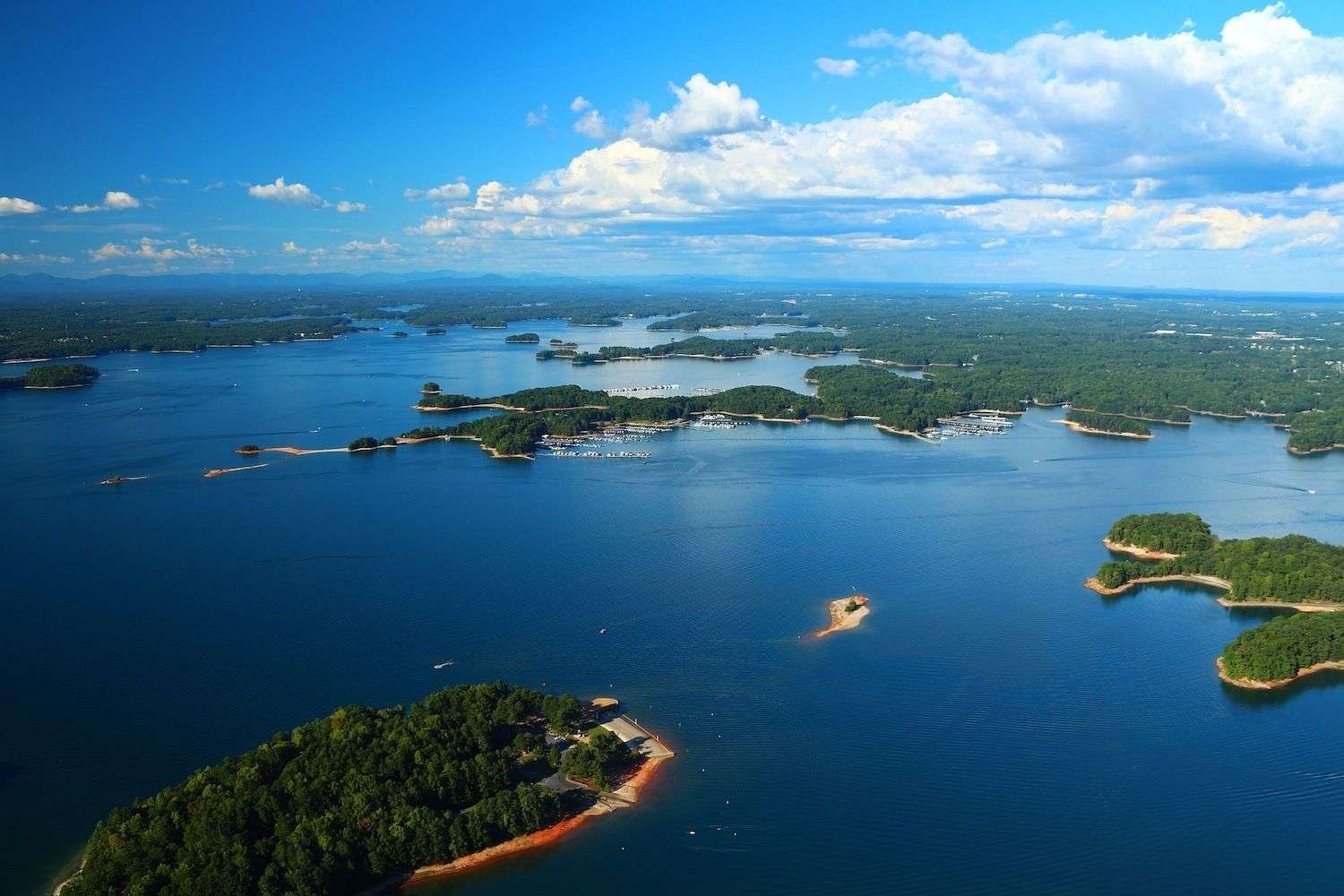
A Lake Lanier big-water view home is a residence whose primary line of sight crosses the open main body of Lake Sidney Lanier rather than the closed walls of a narrow cove. The defining geometry is a panoramic sightline reaching across three or more miles of open water, typically from a peninsular point, ridge headland, or main-channel-facing parcel above the U.S. Army Corps of Engineers (USACE) Mobile District shoreline buffer. Big-water view inventory concentrates on peninsulas and points jutting into Lake Lanier from Cumming, Buford, Flowery Branch, and Gainesville. The premium attaches to the open-water vista, not the cove intimacy other view tiers deliver.
What Is a Big-Water View on Lake Lanier?
A big-water view on Lake Lanier is an open-channel sightline across the wide main body of the reservoir, distinct from a cove view that terminates at the far shoreline of a narrow inlet within a quarter mile. The category is defined by line-of-sight geometry: the eye reaches across the unobstructed main channel toward distant tree lines on the opposing shore, typically more than three miles away. Big-water view parcels sit on peninsulas, ridge headlands, and main-channel-facing slopes in Forsyth County, Hall County, and Gwinnett County rather than tucked inside the dendritic cove network that fingers off the principal channels.
Open-water views vs. narrow cove views
An open-water view on Lake Lanier crosses the main channels of the reservoir — Chattahoochee River channel, Chestatee River channel, Flat Creek channel, Six Mile Creek channel, and Flowery Branch Creek channel where they widen into open basins — and resolves on a distant opposing shoreline three or more miles out. A narrow cove view stops at the cove wall, usually within 800 to 1,500 feet, and the visible water surface is a slot rather than a panorama. Both categories qualify as water views in the MLS for Forsyth County, Hall County, Gwinnett County, and Dawson County, but the visual experience is different in scale and the resale curves track separately. Buyers searching big-water inventory in Cumming, Buford, Flowery Branch, and south Gainesville are pricing the open horizon line and the sailboat activity that fills it, not the cove intimacy that drives quiet-cove demand on Flat Creek and the Chestatee tributaries.
Why orientation, elevation, and shoreline position matter
The three variables that determine whether a Lake Lanier parcel commands a true big-water view are shoreline position, elevation above the 1,071-foot full-pool contour, and compass orientation of the primary living level. Peninsular lots and ridge points that project into the main channel see open water on two or three sides; recessed cove lots see one slot of water at most. Elevation above the USACE shoreline buffer clears the hardwood canopy that would otherwise compress a low-elevation sightline. Southwest and west exposure puts sunset, the principal main-body sailboat traffic, and the July fireworks-on-the-water programming at Lanier Islands Resort and Lake Lanier Olympic Park inside the view frame.
Difference between view premium and dock premium
USACE permits and licenses are nontransferable. A new owner of an existing facility may apply through the Lake Lanier Operations Management Office, and approval is not automatic. Confirm the property-specific record and current requirements before closing.
Buyer Considerations for Big-Water Views
Buying a Lake Lanier big-water view home routes through trade-offs that cove-view buyers do not face: wave action, prevailing wind, boat-traffic exposure, slope, and the maintenance load that attaches to a point lot facing the open channel. The same geometry that delivers the panoramic vista also exposes the parcel to the conditions of the main body of Lake Lanier, which behaves differently from a tucked cove. Each consideration is checkable on the USACE Mobile District shoreline-use map, the county GIS portal, and a peak-season site visit.
Wind, boat traffic, privacy, and dock exposure
Peninsular and main-channel-facing parcels on Lake Lanier sit in the prevailing southwest wind line and the main boat-traffic corridor. The same open horizon that delivers the panoramic view also delivers wake action from cruisers, pontoons, and ski boats running the Chattahoochee channel between Lanier Islands Resort and Buford Dam. Docks on open-water exposures take more weather than docks in protected coves, with a corresponding maintenance load on floats, anchor cables, and gangways. Privacy on a point lot is structural — the parcel sees and is seen by every boat in the channel — and the trade-off against the cove tier is visibility for view.
Sunset orientation, outdoor living, and photography appeal
West and southwest exposure across the main body of Lake Lanier puts sunset, the open-water sailing fleet, and the seasonal events programming inside the line of sight from the home. The annual Independence Day fireworks-on-the-water at Lanier Islands Resort and the regatta calendar out of the Lake Lanier Sailing Club at Aqualand Marina are visible from elevated big-water parcels facing the main channel. Outdoor living spaces on the lake-facing side of a big-water view home — covered decks, screened porches, terrace pools, infinity-edge water features framed against the open horizon — drive a substantial share of the view premium and price separately from interior finishes.
Slope, access, and long-term maintenance
Peninsular and ridge-point lots on Lake Lanier are typically steep, because the geometry that delivers the open-water vista is elevation projecting into the channel. Steep slopes carry higher long-term costs in driveway grading, retaining walls, stairs to the shoreline, dock gangway length, and stormwater management. Access for service trucks, deliveries, and emergency vehicles is narrower on point lots than on level interior subdivisions in Cumming or Flowery Branch. Buyers should budget the slope maintenance line as part of the carrying cost, separate from the dock and view premiums, and confirm the driveway grade meets Forsyth County or Hall County code before assuming year-round vehicle access.
Selling a Big-Water View Home
Selling a Lake Lanier big-water view home turns on three positioning questions: how the view is documented for marketing, how the view premium is priced separately from the dock premium, and how the seller arrives at a defensible asking price inside a thin comparable set. Big-water view parcels are scarce relative to cove-view and interior inventory, so traditional comp adjustment is harder and the marketing of the view asset itself does more of the price work.
Marketing views, lifestyle, and outdoor spaces
Marketing a big-water view at Lake Lanier requires documenting the open-channel sightline directly, not relying on the MLS lake-view label. Aerial drone capture from the lake-facing side, golden-hour photography aligned with the southwest sunset axis, and short-form video of the open-water boat traffic and seasonal events programming visible from the home all carry weight in the buyer's underwriting. Outdoor living spaces — the covered decks, screened porches, infinity pools, and terraces oriented to the panoramic axis — are the architectural expression of the view premium and warrant their own marketing frames separate from interior photography.
Pricing view quality alongside dock and location
Pricing a Lake Lanier big-water view home means assigning value to three distinct assets on the same parcel: the home itself, the dock entitlement, and the view corridor. Sellers should pull comparables filtered by peninsular siting and channel exposure rather than by lake-view label alone, and price the view as its own asset line. Current market conditions require a dated MLS comparison that identifies the area, property type, reporting period, and sample before a buyer relies on it.
Request a Lake Lanier view-property valuation
Sellers of Lake Lanier big-water view homes who want a defensible price strategy can request a view-property valuation that prices the view corridor, the dock entitlement, and the home as three separable assets. The valuation pulls comparable peninsular and ridge-point parcels with documented open-channel exposure, isolates the view premium against cove-view comparables in the same school zone, and produces an asking-price range that reflects both the scarcity of big-water inventory and the marketing approach the parcel supports. The walkthrough covers shoreline position, dock-permit status, sunset axis, and outdoor-living orientation before the price recommendation.
Frequently Asked Questions
- What makes a Lake Lanier home a big-water view rather than a regular water view?
- A big-water view on Lake Lanier is defined by line-of-sight geometry, not by the presence of any visible water. The sightline must cross the open main body of the reservoir — typically more than three miles of open channel — and resolve on a distant opposing shoreline rather than terminating at a cove wall 800 to 1,500 feet away. Big-water inventory concentrates on peninsular points, ridge headlands, and main-channel-facing parcels above the USACE shoreline buffer in Cumming, Buford, Flowery Branch, and Gainesville, while regular water views include narrow cove sightlines, partial glimpses, and seasonal openings through canopy.
- Which areas of Lake Lanier have the most big-water view homes?
- Big-water view inventory concentrates on the peninsulas and ridge points that project into the main channels of Lake Lanier. The principal pockets sit on the Forsyth County side near Cumming where ridge points stand above the Chattahoochee and Chestatee channels, on the Hall County peninsulas south of Gainesville facing the open basin, on the Flowery Branch headlands above Flat Creek channel, and on the Gwinnett County shoulder near Buford facing the main channel toward Lanier Islands Resort. Recessed cove neighborhoods and interior subdivisions rarely carry true big-water inventory regardless of elevation.
- How does sunset orientation affect a Lake Lanier big-water view?
- Southwest and west exposure across the open main body of Lake Lanier puts the sunset axis directly inside the line of sight from the home's primary living spaces. The same orientation aligns with the principal open-water sailing traffic out of the Lake Lanier Sailing Club at Aqualand Marina, the seasonal regatta calendar, and the annual Independence Day fireworks-on-the-water programming at Lanier Islands Resort, all of which become visible amenities from the home rather than destinations the owner has to drive to.
- Are big-water view homes on Lake Lanier exposed to more wind and boat traffic than cove homes?
- Yes. Peninsular and main-channel-facing parcels sit in the prevailing southwest wind line of Lake Lanier and inside the principal boat-traffic corridor between Buford Dam and Lanier Islands Resort. The same open geometry that delivers the panoramic view also delivers wake from cruisers, pontoons, and ski boats running the Chattahoochee channel, and prevailing-wind action on the dock. Docks on big-water exposures carry a higher maintenance load on floats, anchor cables, and gangways than docks in protected coves on Flat Creek, Six Mile Creek, or the Chestatee tributaries.
- Do Lake Lanier big-water view homes cost more than cove-view homes?
- Generally yes. The premium reflects scarcity: peninsular and ridge-point lots with the required line-of-sight geometry are a small fraction of Lake Lanier waterfront inventory and the geometry cannot be replicated by improvements. Current market conditions require a dated MLS comparison that identifies the area, property type, reporting period, and sample before a buyer relies on it.
- What should I verify before buying a Lake Lanier big-water view home?
- Verify the line-of-sight geometry on the USACE Mobile District shoreline-use map and a peak-season site visit, the dock-permit status separately from the view asset, the slope and driveway grade against Forsyth County or Hall County code, the prevailing southwest wind exposure on the dock, and the boat-traffic profile during summer weekends. Buyers should also confirm whether the across-channel uphill terrain is already built out, which removes future-construction risk to the view corridor, and walk the property in both summer foliage and winter bare-tree conditions before underwriting a year-round panorama.
Related
- Lake Lanier Water View HomesBroader water-view tier covering any sustained sightline on the lake, including cove and main-channel exposures.
- Lake Lanier Waterfront HomesTrue lakefront inventory where the parcel meets the federal shoreline boundary at the 1,071-foot full-pool contour.
- Lake Lanier Quiet Cove HomesProtected cove inventory for buyers who prioritize calm-water mooring and intimate sightlines over panoramic main-channel views.
- Lake Lanier Community GuideFull neighborhood, market, school, and shoreline overview for Lake Sidney Lanier.
- Lake Lanier Active ListingsLive MLS inventory across the Lake Lanier shoreline submarkets.