
Community Guide
St. Michaels Bay is a Lake Lanier waterfront community on the southern shoreline of the lake, where buyers typically arrive looking for a permitted-dock home with deep-water access, a defined HOA structure, and a measured commute back to GA-400 or I-985 (Georgia Department of Transportation, current as of January 2026). The community sits within the southern basin band where most of Lake Lanier's deepest navigable water concentrates at full pool elevation 1,071 feet above mean sea level, managed by the U.S. Army Corps of Engineers (USACE Mobile District, current as of May 2026). Buyers shopping St. Michaels Bay are usually weighing it against other named southern-shoreline communities on dock permit class, HOA structure, lot size, and proximity to the Buford, Cumming, and Flowery Branch commercial corridors before committing.
What Defines the St. Michaels Bay Community
St. Michaels Bay reads as a southern-shoreline Lake Lanier community where the program centers on the water itself: permitted private docks, lake-facing lots, and a quiet boating-first cadence. Buyers comparing it to interior Forsyth County or Hall County subdivisions tend to discover that the value math turns on lake access, dock class, and shoreline orientation more than on the typical North Georgia subdivision amenity stack.
Location, shoreline orientation, and lake access on the southern basin
St. Michaels Bay sits on the southern basin of Lake Lanier, the band of shoreline that holds navigable boating depth throughout normal seasonal fluctuations and concentrates much of the lake's permitted private dock inventory (USACE Mobile District, current as of May 2026). For a buyer touring the community for the first time, the southern-basin orientation matters in two practical ways: the cove depth tends to support typical wakeboard, pontoon, and cruising boat drafts across winter pool near 1,070 feet, and the drive to the major southern marinas including Aqualand Marina on the Hall County side and Holiday Marina in the Buford corridor stays inside a measured envelope. Shoreline orientation inside the community varies by lot, and the practical difference between a south-facing, west-facing, and cove-tucked parcel shows up in late-afternoon sun, wind exposure, and dock usability on a typical summer Saturday. Buyers walking the community should pay attention to which lots open onto main-channel water and which sit deeper into a protected cove, because the two profiles support different lake-day patterns. A main-channel parcel typically delivers longer sight lines and more wind, while a cove parcel typically delivers calmer water for paddleboarding and swimming. Lake access within St. Michaels Bay runs through the parcel-level USACE permit class and the home's permitted dock. The U.S. Army Corps of Engineers Lake Sidney Lanier Shoreline Management Plan administered by the U.S. Army Corps of Engineers classifies each shoreline segment under categories including Limited Development, Protected Shoreline, Public Recreation, and Operations, and the parcel's classification governs what kind of dock or shoreline use is permitted (USACE Mobile District, current as of May 2026). Buyers should pull the parcel-level classification before assuming any lake-use scenario.
Home styles, lot sizes, and typical price band
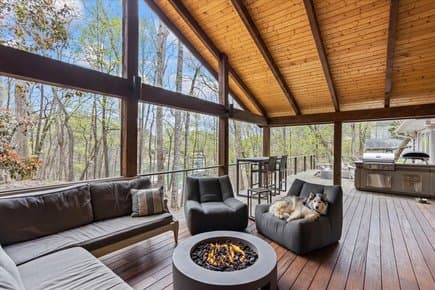
Homes inside St. Michaels Bay typically run in the southern Lake Lanier waterfront band: four-to-six bedroom plans, 3,500 to 7,500 finished square feet, three-car garages, and terrace-level finished space oriented to the lake side of the lot. Lot sizes typically run from about a half-acre to over an acre, with the larger lots reflecting either longer shoreline frontage or deeper backyard envelopes between the home and the shoreline buffer. Buyers coming from interior Forsyth or North Fulton subdivisions usually find the lot footprint larger and the lake-facing program more dominant than they expect. Michaels Bay homes typically tracking the upper part of that range when the lot delivers deep-water dock placement and a usable lake-facing program. Current market conditions require a dated MLS comparison that identifies the area, property type, reporting period, and sample before a buyer relies on it. The home program inside the community typically reads more like a southern-shoreline lake home than a North Atlanta subdivision home: open kitchens scaled for gathering, screened lake-side porches, terrace levels finished for guests, and outdoor living oriented toward the dock path rather than the street. Buyers planning a weekend or hybrid cadence should weight the lake-side program more heavily than the street-side curb appeal, because the lake-side program is the one the household actually uses on a Saturday in July.
HOA structure, amenities, and what dues typically cover
St. Michaels Bay operates under an HOA structure that typically governs architectural standards, common area maintenance, and any community-managed shoreline or boating elements where present. Buyers should request the current HOA covenants, the current dues structure, the reserves study, and the past three years of board meeting minutes before signing a contract, because the HOA documents disclose the practical day-to-day rules that govern dock use, shoreline modification within the community's bounds, vehicle and trailer storage, short-term rental policy, and exterior color or landscape changes. The HOA budget also discloses what reserves the community holds against future infrastructure, which is the variable that most often surprises new owners three to five years post-closing. Community amenities in southern-shoreline Lake Lanier neighborhoods typically include some combination of a community dock or boat slip program, a pavilion or gathering area, common shoreline access, and gated entry where present. Buyers comparing St. Michaels Bay to other southern-shoreline communities should specifically verify current HOA documentation on any community-dock or community-slip program, because slip availability, assignment rules, and waiting lists vary by community and change over time. Marketing language that suggests an assigned or guaranteed community slip should be verified against the current HOA bylaws and the current waiting list before closing. Dues in lake-access HOA communities on Lake Lanier typically cover common area maintenance, gate operations where applicable, and shared shoreline or amenity upkeep. They typically do not cover the homeowner's private USACE dock permit fees, dock maintenance, dock insurance, or boat-related operating costs, all of which stay with the homeowner regardless of HOA structure. Buyers should ask explicitly which costs the HOA does and does not cover, and should build an independent line for USACE-related dock costs in their 12-month carrying-cost model.
Lifestyle, Lake Access, and Daily Logistics
The day-to-day inside St. Michaels Bay is shaped less by community amenity programming and more by the home's own lake-side program, the household's boating cadence, and the surrounding southern-shoreline corridor. Buyers picturing daily life should think in terms of how often the boat actually launches, where weekly errands run, and how the home holds up through both peak summer use and winter quiet months.
Boating, dock use, and shoreline lifestyle
Dock use should be verified for the specific property. USACE permits and licenses are nontransferable. A new owner of an existing facility may apply through the Lake Lanier Operations Management Office, and approval is not automatic. Community dock programs remain subject to their own governing documents.
Commute corridors, marinas, and southern-shoreline errands
A St. Michaels Bay address sits within the southern-basin commute envelope, with practical access to GA-400 on the Forsyth County side and I-985 on the Hall and Gwinnett county side. Commute time to the Perimeter (I-285) from a southern Lake Lanier address typically runs 45 to 75 minutes depending on the corridor, the time of day, and the specific address (Georgia Department of Transportation, current as of January 2026). Buyers planning a five-day Atlanta office cadence should test-drive the actual planned weekday morning window before committing, because the GA-400 and I-985 corridors behave very differently at 7:15 a.m. on a Tuesday than at 11:00 a.m. on a Sunday. The surrounding marina footprint is part of the lifestyle case for the southern basin. Aqualand Marina on the Hall County shore (Flowery Branch), Holiday Marina in the Buford corridor, Lanier Islands near Buford (Buford mailing address, Hall County jurisdiction), Sunrise Cove Marina, and Habersham Marina anchor the southern boating community and support dockside dining, fuel access, and service work that does not exist on the upper-arm shoreline. Buyers who anticipate frequent boat service, fuel runs, or marina events tend to weight the southern basin more heavily than the upper-arm shoreline for that reason. Daily errands from a St. Michaels Bay address typically run to a combination of Buford, Cumming, and Flowery Branch retail and grocery nodes, with the Mall of Georgia along I-985 in Buford and the GA-400 retail corridor through Cumming serving as the two anchor commercial concentrations. Healthcare access concentrates around the Northeast Georgia Medical Center system in Gainesville and Braselton, and most non-emergency daily-life logistics typically resolve within a 10-to-25-minute weekday drive from the community, depending on the specific destination and the day.
Schools, healthcare, and four-season usability
School assignment for a St. Michaels Bay home depends on the parcel's location relative to county lines, with the southern Lake Lanier shoreline divided across Forsyth County Schools, Hall County Schools, and Gwinnett County Public Schools. Buyers should verify the specific elementary, middle, and high school assignment at the candidate parcel directly with the relevant county school district before assuming a category-level reputation maps to the home. School assignment maps shift over time as enrollment patterns change, and the assignment at a candidate parcel today may differ from the assignment three years ago. Healthcare access centers on the Northeast Georgia Medical Center system, with the main Gainesville campus and the Braselton campus serving as the primary acute-care anchors for the southern Lake Lanier shoreline. Northside Hospital Forsyth in Cumming serves the Forsyth County side of the shoreline. For day-to-day primary care, urgent care, and specialty services, the southern-basin shoreline is well-served by a distributed network of providers across Buford, Cumming, Flowery Branch, and Gainesville, and most non-emergency routine care resolves within a 15-to-25-minute weekday drive from the community. Four-season usability is one of the under-discussed strengths of a southern-basin Lake Lanier home. The lake holds navigable boating depth through normal seasonal fluctuations, summer pool sits at 1,071 feet and winter pool draws to approximately 1,070 feet under typical conditions (USACE Mobile District, current as of May 2026), and during drought conditions or in dry years elevations can run lower than the standard band. Winter use inside the community typically shifts toward shoreline walks, fireside use of the home's terrace-level program, and off-water activities, with the dock and boat operating cycle resuming in earnest from April through October.
Buyer Due Diligence Before Closing in St. Michaels Bay
Buyers writing an offer in St. Michaels Bay should run four discrete due-diligence streams before closing: HOA document review, USACE dock permit verification, cost-of-ownership math, and a realistic walk of the actual parcel during both summer-pool and winter-pool conditions. Skipping any of the four is the most common path to a post-closing surprise, and resolving them upfront typically shortens the search rather than lengthening it.
HOA documents, covenants, and community rules to verify
HOA document review is the first due-diligence stream and the one most often handled superficially. Buyers should request, read, and discuss with their attorney the full current declaration of covenants, the bylaws, the architectural review guidelines, the current year's budget, the reserves study, and the past three years of board meeting minutes. The covenants disclose the rules on dock use within the community, any community-dock or community-slip program, short-term rental policy, vehicle and trailer storage, exterior color and landscape modification, and any restrictions on detached structures or accessory uses. Buyers should specifically verify any community-managed slip program against current HOA documentation rather than relying on listing-marketing language. The reserves study and the past three years of board meeting minutes typically disclose the practical health of the community and the trajectory of dues over the next five years. A community with thin reserves, deferred maintenance on common-area infrastructure, or active special-assessment discussions on the board signals a near-term dues increase that buyers should price into their carrying-cost model. A community with strong reserves, current maintenance, and quiet board minutes typically signals a stable dues trajectory. Short-term rental policy is the rule that most often surprises buyers planning to use the home as a weekend retreat and rent it during peak summer weekends to offset carrying cost. Some HOAs in Lake Lanier shoreline communities restrict or prohibit short-term rentals outright, others require minimum stay periods, and some require board-level approval. Buyers planning any rental use case should verify the current policy in the covenants and ask whether any pending amendments are under board discussion, because rules change.
USACE dock permits, water depth, and shoreline compliance
USACE permits and licenses are nontransferable. A new owner of an existing facility may apply through the Lake Lanier Operations Management Office, and approval is not automatic. Confirm the property-specific record and current requirements before closing. Water depth at the dock at full pool 1,071 feet and at winter pool near 1,070 feet under normal conditions determines whether the dock is usable across the seasonal cycle. Buyers should ideally walk the dock during a winter pool month rather than relying on summer marketing photography, because a dock that floats comfortably at summer pool may sit on mud during winter conditions in shallower coves. The Lake Sidney Lanier Project Management Office is the local USACE field office on the lake near Buford Dam (Lake Sidney Lanier Project Management Office, current as of May 2026), and parcel-level questions about depth, classification, and shoreline rules typically route through the field office rather than the Mobile District headquarters. Shoreline compliance covers the buffer zone, walking paths, stairs, vegetation, and any shoreline modification the buyer is contemplating. The USACE shoreline management plan limits buffer modification, requires Corps approval for many shoreline improvements, and treats unauthorized modifications as compliance issues that can attach to the property and the homeowner. Buyers planning a renovation, custom-build, or shoreline-enhancement program should confirm any planned work directly with USACE before closing rather than after, because retroactive approval is meaningfully harder than upfront approval.
Ask Ashley Smith for a St. Michaels Bay due-diligence walkthrough
Cost-of-ownership math is the third due-diligence stream and the line that buyers from interior Forsyth or North Fulton subdivisions typically underestimate the most. Property tax varies by county across Forsyth County, Hall County, and Gwinnett County, with each county tax commissioner's office running separate millage rates, homestead exemption rules, and assessment cycles (county tax commissioner offices, current as of May 2026). Buyers should pull the actual prior-year tax bill on the candidate parcel rather than estimating from a category average. Insurance on a lake home reflects the dock, the shoreline exposure, and carrier-specific underwriting of waterfront structures; dock insurance is often a separate rider or policy from the homeowner's structure policy, and carriers vary on whether floating versus fixed docks are covered on the same terms. Septic and well, where applicable, are the under-discussed cost line on a Lake Lanier shoreline home. Most shoreline parcels are not on municipal sewer, the engineered septic system class is determined by the soil percolation test, and the county environmental health department's review (Forsyth County Environmental Health, Hall County Environmental Health, and Gwinnett County Environmental Health, current as of May 2026) governs the standard. Buyers should review the septic system age, the last pump-out date, the as-built drawings where available, and the projected replacement cost in the 5-to-10-year window. Maintenance on the dock, the boat lift, the shoreline erosion control, and seasonal winterization all cost real money that an interior subdivision budget does not contain. The fourth due-diligence stream is the realistic parcel walk during both summer-pool and winter-pool conditions, paired with a realistic commute test during the household's actual planned weekday window. The two together produce a much more honest picture than a single Saturday morning tour during peak listing season. Ashley Smith, real estate agent with DreamSmith Realty, can build a St. Michaels Bay shortlist that pairs HOA document review, USACE permit verification, county-level tax and septic review, and a realistic commute test against the buyer's actual cadence and dock requirement, anchored in documented USACE, Georgia MLS, Georgia Department of Transportation, and county-level data rather than category averages.
Frequently Asked Questions
- Where is St. Michaels Bay located on Lake Lanier?
- St. Michaels Bay sits on the southern basin of Lake Lanier, within the band of shoreline that holds navigable boating depth through normal seasonal fluctuations and concentrates much of the lake's permitted private dock inventory (USACE Mobile District, current as of May 2026). The southern basin orientation places the community within practical access of the Buford, Cumming, and Flowery Branch commercial corridors, with GA-400 serving the Forsyth County side and I-985 serving the Hall and Gwinnett County side (Georgia Department of Transportation, current as of January 2026). Buyers should verify the specific parcel's county jurisdiction before assuming tax, school, and permit cycles.
- What is the typical price range for St. Michaels Bay homes?
- Michaels Bay homes typically tracking the upper part of that range when the lot delivers deep-water dock placement and a usable lake-facing program. Current market conditions require a dated MLS comparison that identifies the area, property type, reporting period, and sample before a buyer relies on it.
- Does St. Michaels Bay have private dock rights?
- USACE permits and licenses are nontransferable. A new owner of an existing facility may apply through the Lake Lanier Operations Management Office, and approval is not automatic. Confirm the property-specific record and current requirements before closing.
- What does the St. Michaels Bay HOA typically cover?
- HOA dues in lake-access communities on Lake Lanier typically cover common area maintenance, gate operations where applicable, and shared shoreline or amenity upkeep. They typically do not cover the homeowner's private USACE dock permit fees, dock maintenance, dock insurance, or boat operating costs, all of which stay with the homeowner regardless of HOA structure. Buyers should request the current covenants, the current dues schedule, the reserves study, and the past three years of board meeting minutes, and should verify any community-dock or community-slip program against current HOA documentation rather than relying on listing-marketing language.
- What is the commute from St. Michaels Bay to Atlanta?
- Commute time to the Perimeter (I-285) from a southern Lake Lanier address typically runs 45 to 75 minutes depending on the corridor, the time of day, and the specific address (Georgia Department of Transportation, current as of January 2026). The Forsyth County side runs via GA-400, and the Hall and Gwinnett County side runs via I-985. Buyers planning a five-day Atlanta office cadence should test-drive the actual planned weekday morning window before committing, because the corridors behave very differently at 7:15 a.m. on a Tuesday than at midday on a weekend.
- Are St. Michaels Bay homes good for full-time living or weekend use?
- Both, depending on the household's actual cadence and dock requirement. Full-time residents typically prioritize school assignment at the parcel level, the daily commute corridor, and a home program scaled for daily living. Weekend buyers typically prioritize the lake-side program, the dock class, and the home's capacity for guests on a Saturday in July. The community supports either use case, but buyers should be honest about their actual cadence before writing an offer, because the program that works for a five-day office cadence is structurally different from the program that works for a weekend retreat with frequent guests.
Related
- Lake Lanier Waterfront HomesPermitted-dock and lake-access waterfront listings across the Lake Lanier shoreline.
- South Lake Lanier HomesSouthern shoreline inventory in Forsyth, Hall, and Gwinnett counties closest to Buford Dam and the Atlanta commute.
- Lake Lanier Dock PermitsUSACE shoreline management plan, permit classifications, and the dock-transfer process buyers should verify before closing.
- Lake Lanier Cost of OwnershipAnnual carrying-cost model including property tax, dock, septic, and insurance for Lake Lanier shoreline homes.
- Lake Lanier Commute to AtlantaDrive-time profiles via GA-400 and I-985 from each Lake Lanier sub-area, including the southern basin.
- Lake Lanier CommunitiesFull guide to named Lake Lanier shoreline communities, HOAs, and dock-access patterns.