
Seller Guide
Selling a Lake Lanier second home from a primary residence in Atlanta, Florida, the Carolinas, or further afield introduces a different operating problem than selling a primary residence: the seller is rarely on-site for showings, vendor coordination, dock inspections, or buyer questions, and the property still has to present at full pool 1,071 feet above mean sea level standards through the active March-through-October listing window (USACE Mobile District, current as of May 2026). The remote-seller strategy resolves around four pillars: a documented dock and shoreline permit file, a vetted local vendor bench for ongoing maintenance, a presentation program that holds up between owner visits, and a marketing plan aimed at the qualified second-home buyer pool relocating from Atlanta, Alpharetta, North Fulton, and out-of-state metros into Forsyth, Hall, Dawson, and Gwinnett counties (Georgia MLS, March 2026).
Preparing a Lake Lanier Second Home for a Remote Sale
Remote sellers should rebuild the property file before the first listing photograph. The Lake Lanier second-home market rewards documentation more than almost any other Atlanta-metro segment, because buyers are underwriting a USACE-regulated shoreline, a permitted dock, an often-private septic system, and an unfamiliar county jurisdiction in parallel with the home itself.
Documenting dock permits, shoreline records, and capital improvements
The single most important pre-listing workstream is the dock and shoreline permit file. The Lake Sidney Lanier Shoreline Management Plan administered by the U.S. Army Corps of Engineers assigns each shoreline parcel a permit classification (Limited Development, Protected Shoreline, Public Recreation, or Operations) and governs whether the parcel can hold a private single-slip, double-slip, or community dock (USACE Mobile District, current as of May 2026). Remote sellers should pull the current permit on file with the Lake Sidney Lanier Project Management Office near Buford Dam, the permit class for the parcel, the most recent inspection record, and any prior shoreline-modification approvals before drafting the listing (Lake Sidney Lanier Project Management Office, current as of May 2026). New private dock permits on Lake Lanier are extremely limited, which means an existing permitted dock is one of the most valuable line items on a second-home listing. The permit does not automatically convey with the deed. The dock permit is issued by USACE, and re-issuance or transfer to a new owner requires a USACE process the buyer's agent will ask about during due diligence. Sellers should confirm the current permit-of-record name, the inspection status, and the transfer process in writing with the Lake Sidney Lanier Project Management Office before going live, because a buyer who finds an unresolved permit question at the inspection stage typically renegotiates or terminates. Capital-improvement documentation matters more for a remote seller than for an on-site seller because the seller is not present to answer buyer questions during showings. Sellers should compile dated invoices for the roof, HVAC, water heater, well or septic service, dock decking and lift maintenance, and any shoreline retaining-wall or stair work, and store the file with the listing agent so it is available to buyer's agents within minutes of a request. A clean documented file frequently shortens days-on-market and reduces the renegotiation risk at the inspection contingency.
Staging and presentation for a vacation-home buyer pool
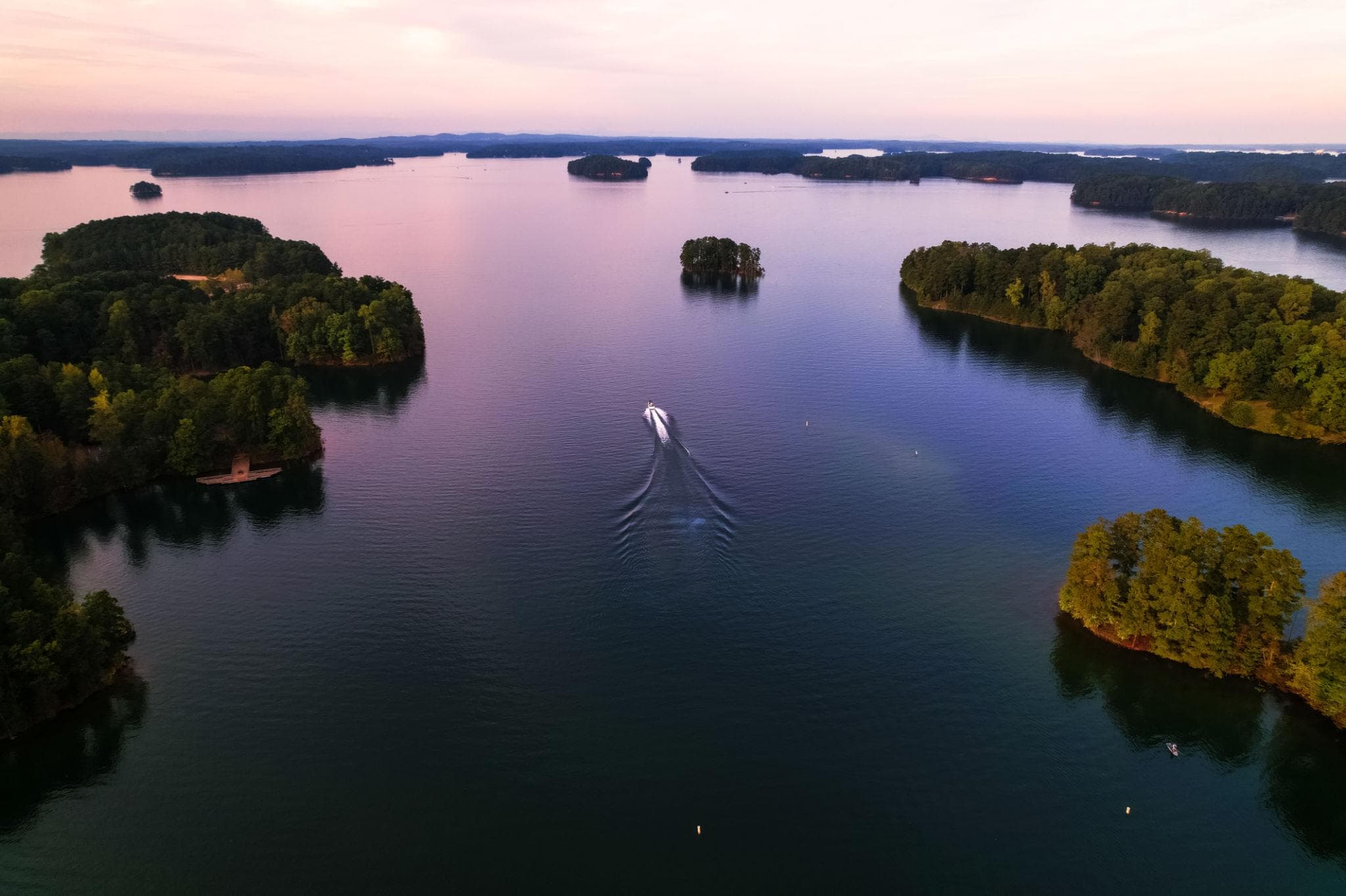
Lake Lanier second-home buyers underwrite two things at the same time: the home as a usable weekend retreat and the home as a future appreciating asset. The presentation program should speak to both audiences. The interior should be staged for a vacation-home program rather than a primary-residence program, which usually means a larger gathering kitchen and open dining footprint, guest-friendly bedroom configurations, and a lake-side outdoor program that reads as the actual reason for the purchase rather than as an afterthought. Professional photography on a Lake Lanier listing should include drone aerials of the dock, shoreline, and cove at full pool elevation 1,071 feet (USACE Mobile District, current as of May 2026), interior twilight photography of the lake-side rooms, and dock-level photography showing the navigable boating depth at the slip during normal seasonal fluctuations. Marketing photography taken during drought conditions or during atypical low-water windows reads poorly to qualified buyers and frequently lengthens days-on-market. Remote sellers should confirm with the listing agent that the photography plan targets a normal-water shoot window between April and September. Presentation between showings is the second remote-seller problem. A vacant or seldom-occupied home accumulates dust, condensation, spider webs, and lake-side debris quickly, especially during pollen season in March, April, and May. Sellers should arrange a recurring cleaning and refresh visit on a 7-to-10-day cadence during the active listing window, with a vendor authorized to refresh linens, run HVAC cycles, sweep the dock, and document the condition with date-stamped photographs to the listing agent. Buyers who walk into a sparkling home and a freshly swept dock convert at a measurably higher rate than buyers who walk into a stale home with a leaf-covered dock.
Setting the price band against the southern shoreline comp set
Pricing a Lake Lanier second home requires a comp set built parcel-by-parcel against the USACE permit class, the cove depth at full pool, and the county jurisdiction, not a category-level shoreline average. Current market conditions require a dated MLS comparison that identifies the area, property type, reporting period, and sample before a buyer relies on it. The second-home price band sits above the lake-access band and below the new-construction luxury band. Lake-access homes without a permitted private dock trade at a structurally lower median in the same ZIP codes and pair with marina-based boat storage at Aqualand Marina (Hall County, Flowery Branch shore), Sunrise Cove Marina, Holiday Marina, or Habersham Marina rather than at-home docking. Sellers with a permitted single-slip or double-slip dock should make sure the comp set the listing agent presents pulls only against other permitted-dock parcels with comparable USACE classifications and cove depth, because mixing in lake-access comps distorts the band downward. The seasonal cadence of the market also matters. Lake Lanier second-home inventory moves most actively between mid-March and late September, with the strongest buyer-pool concentration in May, June, and early July when prospective buyers test-drive the lake during high-use weekends. Remote sellers planning a January or February listing should expect a longer days-on-market window and lower showing volume than a March-or-later listing. Current market conditions require a dated MLS comparison that identifies the area, property type, reporting period, and sample before a buyer relies on it.
Running a Remote Listing While You Live Elsewhere
Once the home is documented, staged, photographed, and priced, the remote-seller problem shifts to ongoing operations: vendor coordination, showing access, security, lawn and dock maintenance, and the cadence of communication with the listing agent. The active listing window typically runs 30 to 120 days on a properly priced Lake Lanier second home, and the seller's operating discipline during that window has an outsized effect on the final sale outcome.
Building a local vendor bench for maintenance and turnover
The remote seller's vendor bench should include, at minimum, a recurring housecleaning vendor, a recurring lawn and landscaping vendor, a dock and shoreline maintenance vendor, an HVAC service vendor, a pest-control vendor, and a handyman with a key on file. Each vendor should be authorized in writing to enter the property on a documented schedule, to send date-stamped condition reports to the listing agent, and to escalate any unusual condition (water intrusion, HVAC failure, dock damage after a storm) directly to the seller and the listing agent on the same day. Dock and shoreline maintenance is the lake-specific line item that out-of-state sellers most often miss. A Lake Lanier dock requires seasonal cleaning, lift inspection, electrical bonding inspection, and storm-event response, particularly during the active Atlantic hurricane season window between June and November when remnant storm systems track through North Georgia and produce elevated lake levels and floating debris. A dock vendor on call with documented response times within 24 to 48 hours protects the asset between owner visits. The vendor bench should also include a property-management or concierge contact who can stage the home between showings: replace burned-out bulbs, restock paper goods that are part of the staging, refresh linens after a long-vacancy stretch, and handle the small-but-visible items that reduce a home's showing-readiness. Sellers who outsource the operating problem to a documented bench typically run a smoother listing window than sellers who attempt to coordinate four or five vendors directly from a primary residence in Atlanta, Florida, or the Carolinas.
Showing access, security, and seasonal protection
Showing access on a remote-seller listing is best managed through a Supra electronic lockbox tied to the listing agent's account and a documented showing-instruction sheet that includes alarm-code handling, pet handling if applicable, dock-key access, and any seasonal HVAC settings that need to remain unchanged. Sellers should plan for showings on a 24-to-48-hour notice window during the active listing season and should not require longer notice except for genuinely occupied weekends, because a tight showing calendar typically lengthens days-on-market in the second-home segment. Security during a long vacancy is the second variable. Lake Lanier second homes that sit empty for weeks at a time benefit from a monitored alarm system, exterior cameras at the driveway and dock approach, motion-activated lighting on the lake-side elevation, and a documented police-and-fire dispatch contact through the relevant county sheriff's office in Forsyth, Hall, Dawson, or Gwinnett. A working alarm system also reduces homeowner's-insurance carrier scrutiny on the vacancy exposure, which can otherwise produce a coverage gap or premium surcharge during the listing window. Seasonal protection is the third lake-specific variable. Sellers should arrange for HVAC cycling at a maintained temperature year-round to prevent humidity damage and mold during the warm and humid North Georgia summer months, for pipe freeze protection during the December-through-February cold snaps that occasionally drop below 20 degrees in the Lake Lanier basin, and for storm-readiness on the dock and shoreline during the active May-through-October severe-weather window. A documented seasonal-protection schedule tied to the vendor bench reduces the chance of a discovery during a showing or inspection that derails a contract.
Communication cadence between seller, agent, and vendors
The remote seller's communication cadence with the listing agent should be predictable and structured rather than reactive. A weekly status report covering showing count, feedback themes, market activity on directly comparable parcels, vendor visit log, and any condition changes at the property gives the seller a clear running view of the listing without forcing daily back-and-forth. Most active listings benefit from a 15-to-30-minute scheduled weekly call between seller and agent for the duration of the active listing window. Feedback aggregation matters more on a remote listing than on a primary-residence listing. Buyer's-agent feedback themes that surface across multiple showings (a dated kitchen finish, a noisy lake-side neighbor, a perceived dock-condition concern, a price objection) usually identify the smallest set of changes that would shift the listing into contract. Remote sellers should ask the listing agent to summarize three to five feedback themes per week rather than forwarding raw text from every individual showing, because the pattern is more actionable than the individual data point. Vendor coordination is the third communication stream. Sellers should require date-stamped condition reports from each vendor visit, with photographs of the dock, shoreline, interior staging, lawn, and any maintenance work performed. A shared cloud folder accessible to the seller, the listing agent, and the property-management contact, organized by date and vendor, keeps the operating record clean and dramatically reduces the disputed-condition risk if a buyer's inspection identifies a maintenance question late in the contingency window. Ashley Smith, real estate agent with DreamSmith Realty, can help out-of-area sellers structure the vendor bench, the showing-access protocol, and the weekly communication cadence so the listing window runs predictably from a distance.
Marketing the Home to the Right Lake Lanier Buyer
Marketing a Lake Lanier second home requires a buyer-pool definition that goes well beyond the local MLS. The qualified second-home buyer for a Lake Lanier permitted-dock parcel typically lives in Atlanta, Alpharetta, North Fulton, Cobb, or out-of-state metros, and the marketing program should reach those buyers through targeted digital channels, syndicated MLS distribution, and a structured outreach to lake-active relocation segments.
Identifying the qualified second-home buyer pool
The qualified Lake Lanier second-home buyer pool concentrates in five segments: Atlanta-metro households moving up from an Alpharetta, Roswell, Milton, Sandy Springs, or Buckhead primary residence; out-of-state households relocating from Florida, the Carolinas, or the Northeast with an interest in a North Georgia lake home; pre-retirees and recent retirees consolidating from a primary residence in a higher-cost metro into a Lake Lanier primary or near-primary residence; lake-active boating households trading up from a Lake Allatoona or smaller-lake second home; and corporate relocations into the I-985 and GA-400 employer footprint who decide on a lake-adjacent home rather than an interior subdivision. Each segment responds to different messaging. Atlanta-metro move-up buyers respond to GA-400 and I-985 commute envelopes, to dock and shoreline lifestyle messaging, and to school-district information at the parcel level. Out-of-state buyers respond to overall lake context, USACE management framework, and the lake's positioning relative to the Atlanta metro and Hartsfield-Jackson International Airport. Boating households respond to dock-permit specifics, cove depth at full pool 1,071, and navigability through normal seasonal fluctuations (USACE Mobile District, current as of May 2026). The marketing program should match the listing's actual buyer-pool target rather than running a generic campaign. A South Lake permitted-double-slip parcel near Buford Dam targets a different buyer pool than an upper-arm Gainesville lake-access home, and a Cresswind at Lake Lanier 55-plus community lake-access home (northwest of Gainesville off Dawsonville Highway in Hall County) targets yet another pool. The listing agent should articulate the target buyer-pool segment in writing before the campaign goes live so the channel mix and creative match the actual qualified buyer.
Digital marketing, syndication, and qualified-buyer outreach
MLS syndication through Georgia MLS and First Multiple Listing Service feeds the home to all major consumer portals including Zillow, Realtor.com, Redfin, Homes.com, and the Compass and DreamSmith Realty national networks. Syndication alone is necessary but not sufficient; the buyers who close most second-home transactions typically engage with the listing through a targeted social or paid channel before the portal visit, especially for out-of-state and lifestyle buyers. Paid digital reach on a Lake Lanier second-home listing typically performs best through geo-targeted campaigns to Atlanta-metro ZIP codes with documented lake-active behavior, ZIP codes inside the North Fulton, East Cobb, and Buckhead second-home buyer pools, and out-of-state retiree-relocation ZIP codes in Florida, the Carolinas, and the Northeast. Single-property landing pages, video walkthroughs of the home and dock, and drone footage of the cove and shoreline at normal water levels typically outperform static photo campaigns by a meaningful margin in this segment. Qualified-buyer outreach goes one step further. Local cooperating-broker outreach to the Lake Lanier broker community, targeted outreach to corporate relocation departments at major Atlanta employers, and direct outreach to known lake-active buyer's-agent rosters surface buyers who never see the public portal at all. A listing agent who treats the marketing program as a multi-channel campaign rather than a single MLS upload typically delivers a meaningfully shorter days-on-market and a tighter final-to-list price ratio in the second-home segment.
Working with Ashley Smith for a remote-seller listing strategy
A remote-seller listing on Lake Lanier benefits from a listing agent who handles the operating problem end-to-end rather than handing the seller a checklist and waiting for results. The full-service program should include the pre-listing documentation review (dock permit file, capital-improvement records, septic and well service history, county tax bill, HOA documentation if applicable), the vendor-bench setup and authorization, the photography and staging program, the comp-set construction and pricing recommendation, the syndicated and paid marketing campaign, the showing-access and security protocol, the weekly communication cadence, and the contract-to-close coordination through inspection, appraisal, and the USACE dock-permit transfer process. The second-home segment is unforgiving of half-measures. A Lake Lanier permitted-dock listing with a sparse marketing program, an outdated dock photograph, and a comp set drawn from mixed lake-access and permitted-dock parcels typically sits on the market significantly longer than a comparable listing run as a documented multi-channel campaign. Remote sellers who are not physically present to compensate for a thin program absorb more of the days-on-market and final-price cost than sellers who can step in directly. Ashley Smith, real estate agent with DreamSmith Realty, can build a remote-seller listing strategy for a Lake Lanier second home that anchors on the documented USACE dock and shoreline permit file, the seasonal market cadence in Forsyth, Hall, Dawson, and Gwinnett counties, the vendor bench required to hold the property to showing standards through the active listing window, and the targeted buyer-pool outreach to Atlanta-metro and out-of-state second-home segments, with a structured weekly communication cadence so the seller never wonders what is happening on the listing.
Frequently Asked Questions
- Can I sell my Lake Lanier second home if I live out of state?
- Yes, and remote sellers represent a meaningful share of Lake Lanier second-home transactions every year. The operating model relies on a documented dock and shoreline permit file with the Lake Sidney Lanier Project Management Office near Buford Dam (USACE Mobile District, current as of May 2026), a vetted local vendor bench for cleaning, lawn, dock, HVAC, and pest control, an electronic lockbox showing-access protocol, and a structured weekly communication cadence with the listing agent. Sellers who set up the operating program before listing typically run a smoother active listing window than sellers who try to coordinate vendors reactively from out of state.
- Does my Lake Lanier dock permit transfer to the new buyer automatically?
- USACE permits and licenses are nontransferable. A new owner of an existing facility may apply through the Lake Lanier Operations Management Office, and approval is not automatic. Confirm the property-specific record and current requirements before closing.
- What's the best time of year to list a Lake Lanier second home?
- Mid-March through late September captures the active second-home buyer-pool window, with peak showing activity in May, June, and early July when prospective buyers test-drive the lake during high-use weekends (Georgia MLS, March 2026). January and February listings typically sit on the market longer and draw smaller showing volume. Sellers with timing flexibility should aim for a March-through-May launch, when MLS activity is rising, photography reflects full-foliage and normal-water conditions at the 1,071-foot full pool elevation, and buyer urgency is highest ahead of summer use (USACE Mobile District, current as of May 2026).
- How much does it cost to maintain a Lake Lanier second home while it's listed?
- Ongoing maintenance during an active listing window typically includes recurring housecleaning, lawn and landscaping, dock and shoreline care, HVAC service, pest control, and pre-showing refresh visits. Each line item carries county-specific vendor pricing in Forsyth, Hall, Dawson, or Gwinnett that varies by parcel size, shoreline frontage, and dock complexity. Sellers should price a 90-to-120-day operating budget against the local vendor bench before listing rather than estimating from a category average, and should include winter HVAC cycling, pipe freeze protection during December-through-February cold snaps, and storm-readiness on the dock during the active May-through-October severe-weather window.
- How do I price a Lake Lanier second home accurately from out of state?
- The pricing comp set should be built parcel-by-parcel against the USACE permit class, cove depth at full pool 1,071, and county jurisdiction, not a category-level shoreline average (USACE Mobile District, current as of May 2026). Sellers should confirm the comp set pulls only against directly comparable permitted-dock or lake-access parcels, because mixing the two distorts the band. Current market conditions require a dated MLS comparison that identifies the area, property type, reporting period, and sample before a buyer relies on it.
- What's the biggest mistake remote sellers make on a Lake Lanier second home?
- Treating documentation as optional. The Lake Lanier second-home buyer underwrites a USACE-regulated shoreline, a permitted dock, an often-private septic system, and an unfamiliar county jurisdiction in parallel with the home, and a missing or incomplete dock-permit file frequently produces a renegotiation or termination at the inspection contingency. Remote sellers should compile the dock-permit record, shoreline-modification approvals, capital-improvement invoices, septic and well service history, and county tax bill before the first listing photograph rather than scrambling for paperwork during a buyer's due-diligence period.
Related
- Sell Your Lake Lanier HomeFull DreamSmith Realty seller program including remote-seller listing strategy for out-of-area owners.
- Lake Lanier Dock PermitsUSACE Lake Sidney Lanier Shoreline Management Plan framework, permit classifications, and transfer process for buyers and sellers.
- Lake Lanier Waterfront HomesPermitted-dock and lake-access waterfront inventory across the Lake Lanier shoreline.
- Lake Lanier Cost of OwnershipAnnual carrying-cost model including property tax, dock, septic, insurance, and seasonal maintenance for second-home owners.
- South Lake Lanier HomesSouthern shoreline market in Forsyth, Hall, and Gwinnett counties, where most permitted-dock second homes concentrate.
- Lake Lanier Market ReportsQuarterly market data for Lake Lanier shoreline ZIP codes anchored in Georgia MLS and county-level records.