
Seller Guide
What a Lake Lanier home is worth almost never matches what a standard automated valuation model returns, because the variables that actually drive Lake Lanier waterfront pricing are not in the typical AVM dataset. Dock permit class, water depth at the dock site, cove geometry, shoreline frontage, shoreline classification under the Lake Sidney Lanier Shoreline Management Plan administered by the U.S. Army Corps of Engineers, and the GA-400 versus I-985 corridor on which the parcel sits all shift value in ways that the public valuation tools cannot see (USACE Mobile District, current as of May 2026). Current market conditions require a dated MLS comparison that identifies the area, property type, reporting period, and sample before a buyer relies on it.
What Actually Drives a Lake Lanier Home's Value
Lake Lanier waterfront value is driven by a stack of lake-specific variables that an interior subdivision comparable simply does not produce. Dock permit class and assignability, water depth at the dock site at full pool 1,071 and during dry-year drawdowns, cove geometry and exposure, shoreline frontage, shoreline classification, view orientation, and corridor access all matter more than headline square footage in most segments. A buyer who anchors on price per square foot alone is reading the wrong scoreboard.
Dock permit class, water depth, and shoreline frontage
The single largest swing variable on a Lake Lanier waterfront valuation is the dock. The U.S. Army Corps of Engineers Mobile District's Lake Sidney Lanier Shoreline Management Plan administered by the U.S. Army Corps of Engineers assigns each shoreline parcel a shoreline classification of Limited Development, Protected Shoreline, Public Recreation, or Operations, and only Limited Development shoreline supports private docks (USACE Mobile District, current as of May 2026). A parcel with an existing permitted single-slip dock, an existing permitted double-slip dock, or community-dock access carries a structurally higher value than an otherwise comparable lake-access parcel without permitted dockage, often by several hundred thousand dollars on a typical southern-shoreline comparable. New private dock permits on Lake Lanier are extremely limited, which compounds the value of an existing permitted dock that transfers cleanly at closing. Water depth at the dock site is the second-largest swing variable. A dock that holds navigable boating depth throughout normal seasonal fluctuations supports day-to-day use of a typical wakeboard, pontoon, or cruiser hull, while a dock that sits shallow during dry-year drawdowns may strand a boat in a low-elevation year (Lake Sidney Lanier Project Management Office, current as of May 2026). Southern-basin coves in Forsyth and southern Hall counties typically hold deeper water at the dock site than upper-arm coves on the western and northeastern shoreline, and that depth differential shows up cleanly in the comparable set. Shoreline frontage is the third variable in the dock stack. A parcel with 100 or more feet of usable shoreline frontage on a Limited Development classification typically prices above a parcel with 60 to 80 feet of frontage in the same cove, and a parcel with a wide point or cove-mouth orientation usually prices above an interior-cove parcel with the same frontage count. Buyers should pair the parcel-level USACE permit class, the cove depth, and the linear shoreline measurement before anchoring on any specific number.
Cove location, view, and exposure
Cove geometry sets the second tier of valuation drivers on a Lake Lanier home. A long-view main-channel exposure with open water in two directions typically prices above a short-view interior-cove parcel of the same square footage and dock class, often by 10 to 25 percent on a typical southern-shoreline comparable. The main-channel view trades less protection from wake and weather for a structurally different daily experience that the photography on the listing does not fully capture; buyers should walk the parcel at sunset on a summer Saturday to see what the view actually is, not what the drone footage suggests. Cove exposure to wind and sun also moves the number. A west-facing or southwest-facing dock and outdoor program captures the full afternoon and sunset sun, which most buyers prefer for entertaining; an east-facing dock captures morning light but loses the late-day exposure that anchors most lake-side dinner programs. North-facing coves stay cooler in summer but tend to feel darker in winter. The wind exposure matters for dock stability and boat handling: open main-channel docks in the southern basin take more wake and chop than tucked-cove docks on the upper arms, and dock framing, lift placement, and bumper systems should reflect the exposure. Neighboring use also shifts value. A parcel adjacent to a USACE-managed day-use park, a public boat ramp, or a Lake Lanier Islands operations zone runs higher boat traffic and weekend density than a parcel in a quieter mid-cove neighborhood, and the value impact runs both ways depending on buyer profile. Buyers who want activity and visibility often pay a premium for proximity to Lake Lanier Islands near Buford (Buford mailing address; Hall County jurisdiction) or the Aqualand Marina area on the Flowery Branch shore in Hall County, while buyers who want quiet typically pay a premium for a mid-cove parcel in the Forsyth County southern shoreline or the upper Hall County arm.
Square footage, build quality, and luxury feature load
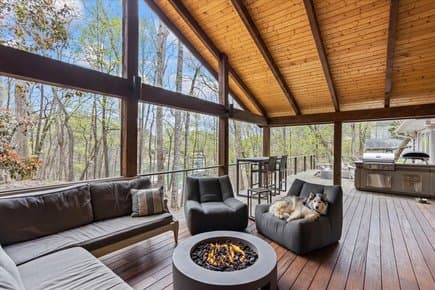
After the lake stack is set, the home itself comes back in. Square footage matters, but build quality, finish level, and luxury feature load matter more on a Lake Lanier comparable than they do on an interior subdivision comparable, because the buyer pool on the lake skews more discretionary and more equity-rich than the interior market. A well-built 4,000-square-foot custom on a permitted-dock parcel with main-level primary, three-car garage, full finished terrace level, and a lake-side outdoor program typically prices above a builder-grade 5,500-square-foot home on the same parcel, and the spread is real. Feature load that consistently moves the number on Lake Lanier includes a lake-side gathering kitchen and bar, a covered outdoor living room with fireplace, a screened porch with retractable screens, a primary suite with lake view, a guest suite or in-law program on the main, a dedicated home office with door, a generator on the main panel, EV charging in the garage, and a dock with a covered party deck above the slip. None of these are unique to Lake Lanier, but the buyer pool weights them more heavily than the typical Alpharetta or Cumming interior buyer does. Deferred maintenance also reads differently on the lake. A weathered cedar exterior, an aging roof, an older HVAC stack, or a tired terrace level all read as expected wear on a lake home of a certain vintage, but a deferred dock, a tired boat lift, a failing seawall, or a shoreline erosion problem reads as direct risk against the use case the buyer is paying for. Sellers who invest in the lake-facing program before listing typically recover the investment, while sellers who defer the lake-facing program typically negotiate it back at the table.
How a Lake Lanier Valuation Differs From a Standard CMA
A standard comparative market analysis built from interior-subdivision comparables routinely misprices a Lake Lanier home in both directions. The lake variables sit outside the public records and outside the typical AVM dataset, and the comparable pool on a permitted-dock waterfront home is structurally thinner than the comparable pool on a tract-built interior home. The valuation has to be built from the lake variables down, not from the headline square footage up.
Why automated valuations (Zillow, Redfin) miss the mark on the lake
Automated valuation models built on public records and tax data do reasonably well on tract-built interior subdivisions where the comparable set is dense and the variables are largely captured in the data. On a Lake Lanier waterfront home, the AVM is structurally blind to the variables that matter most. Dock permit class and assignability are not in the tax record. Water depth at the dock site is not in the tax record. Cove geometry, view orientation, and shoreline frontage are not reliably in the tax record. Shoreline classification under the Lake Sidney Lanier Shoreline Management Plan administered by the U.S. Army Corps of Engineers is not in the tax record (USACE Mobile District, current as of May 2026). The AVM is reading a flat dataset for a home whose value lives in a three-dimensional one. The miss runs both ways. AVMs frequently overprice a tired interior-cove home with shallow water and a marginal dock, because the AVM sees the square footage and the waterfront label without seeing the use-case impairment. AVMs frequently underprice a smaller home on a wide-point parcel with a permitted double-slip dock, deep water at the dock site, and 150 feet of usable shoreline frontage, because the AVM cannot see the variables driving the premium. Sellers reading an AVM number on either side of the band usually arrive at a listing strategy that the market quickly corrects. A disciplined Lake Lanier valuation starts from a hand-selected comparable set of recently sold permitted-dock waterfront homes inside the same shoreline area, the same approximate cove geometry, and the same dock class, then adjusts for water depth, frontage, view orientation, and home program against each comparable. The resulting band is usually narrower than the AVM band and meaningfully different from the AVM midpoint.
The role of recent comparable sales (Georgia MLS, 2025-2026)
Recent comparable sales remain the single most useful input on a Lake Lanier valuation, but the comparable set has to be filtered tightly. The relevant comparable for a permitted-dock waterfront home is another permitted-dock waterfront home, in the same shoreline area, that closed in the last six to twelve months at a similar dock class and water-depth profile. Current market conditions require a dated MLS comparison that identifies the area, property type, reporting period, and sample before a buyer relies on it. Lake-access homes without a permitted private dock are a separate comparable set and should not be mixed into a permitted-dock valuation. The price band for lake-access homes in the same shoreline ZIP codes runs structurally lower, frequently 25 to 40 percent below comparable permitted-dock waterfront on a same-footprint basis. The valuation discipline is to compare permitted-dock to permitted-dock, lake-access to lake-access, and community-dock to community-dock; cross-mixing the categories produces a number that the market will not honor at the closing table. Days on market and list-to-sale ratio on the comparable set also matter. Current market conditions require a dated MLS comparison that identifies the area, property type, reporting period, and sample before a buyer relies on it.
Adjusting for dock class, lot size, and lake-side features
A clean Lake Lanier valuation makes explicit adjustments against each comparable rather than collapsing the comparables into an unadjusted average. The dock-class adjustment is usually the largest line: a permitted double-slip dock typically commands a meaningful premium over a permitted single-slip in the same cove, and a no-dock lake-access parcel typically discounts by several hundred thousand dollars against a permitted-dock comparable in the same cove. The dock-class line should be priced from recent paired sales rather than from a category rule of thumb. Lot size and shoreline frontage drive the second-largest line. A parcel with two or more acres on the lake reads differently than a parcel on a half-acre, even when the dock class and home program are similar, because the upper-band buyer pool typically values privacy, mature canopy, and a walkable shoreline approach. Shoreline frontage of 150 or more linear feet typically supports a premium against a comparable 60-to-80-foot frontage parcel in the same cove. Buyers should read the linear shoreline measurement from the parcel survey rather than from the listing's headline number. Lake-side features are the third adjustment line. A covered party deck above the slip, a swim platform, a permitted boathouse cover, a permitted shoreline path with USACE approval, a maintained seawall, and a well-graded shoreline approach all carry value that the comparable should adjust for. A short list of buyers also weights guest accommodations heavily, because lake homes typically host larger groups than interior homes; a finished terrace level with a second kitchen, multiple guest suites, and a lake-facing bar program typically supports a premium against an unfinished or partially finished terrace level at the same overall square footage.
What Sellers Can Do to Maximize Their Lake Lanier Home's Value
Sellers on Lake Lanier maximize value by investing in the lake-facing program before listing, by getting the documentation right at the dock, and by pricing against a hand-built comparable set rather than the AVM band. The seller who lists clean on the lake side, clean on the USACE side, and clean on the comparable side typically clears in less time and closer to list price than the seller who relies on the headline waterfront label to do the work.
Pre-listing prep that pays off for waterfront homes
The highest-return pre-listing investments on a Lake Lanier home almost always sit on the water side, not the street side. A refreshed dock with new decking boards, repainted railing, a serviced boat lift, and clean bumper system reads to buyers as a use-ready waterfront, while a tired dock reads as deferred work the buyer will negotiate against. The same logic applies to the shoreline path, the steps down from the deck, the boat-side outdoor lighting, and the lake-facing landscaping. A clean lake-side approach typically returns more than the same dollar spent on an interior cosmetic refresh. Home-side prep should focus on the lake-facing rooms first. The great room, the gathering kitchen, the primary suite if it has the lake view, the lake-side deck or screened porch, and the terrace level all carry disproportionate weight in the buyer's decision because those are the rooms the buyer is paying for. Sellers should photograph the lake-facing rooms on a clear afternoon with the lake exposure at its best, and should stage the lake-side outdoor program for a hosted-summer-evening use case rather than a generic interior staging template. Mechanical and structural items that matter most on a Lake Lanier sale include a serviced HVAC stack, a clean roof, a documented septic pump and inspection, a tested generator if the home has one, and any seawall, dock, or shoreline work cleanly documented with the relevant USACE Mobile District authorizations. Sellers who walk into listing day with the dock and shoreline documentation in hand typically negotiate from strength when the buyer's inspector and the buyer's due-diligence questions arrive.
Timing the market (spring/summer peak boating season)
Lake Lanier's listing calendar is meaningfully seasonal in a way that interior subdivisions are not. The strongest buyer flow typically runs from mid-March through mid-July, coinciding with the spring buying window and the run-up to the summer boating season, with a secondary window in late August through October. Current market conditions require a dated MLS comparison that identifies the area, property type, reporting period, and sample before a buyer relies on it. Listings that come to market in late June or July work for a different buyer profile: the buyer who is shopping the lake in active use and who is on the water that weekend. Photography is easier to capture cleanly in summer, but the buyer pool tightens through August as schools return. Listings that come to market in November through January typically face a thinner buyer pool, more weather-dependent showings, and a harder photography window because of the dry-year drawdown elevations and the bare-canopy shoreline. The cost of the photography is modest against the carrying cost of a stale listing through the off-season. Current market conditions require a dated MLS comparison that identifies the area, property type, reporting period, and sample before a buyer relies on it.
Pricing strategy: list price vs. asking price vs. negotiation room
Pricing a Lake Lanier home cleanly starts from a hand-built comparable set, not from the AVM midpoint and not from the prior list price of a similar home that may or may not have actually cleared. The disciplined approach is to identify three to six recently closed permitted-dock waterfront comparables inside the same shoreline area and the same dock class, adjust each against the subject for dock class, water depth, frontage, view, lot size, square footage, finish level, and feature load, and arrive at a defended valuation band before setting the list price. The list-price decision then turns on the seller's timeline and the inventory state of the comparable shelf. In a thin-comparable market, listing inside the defended band typically clears closer to list and on a tighter calendar; listing above the defended band typically extends time on market and ends up negotiating from a softer position. In a thicker-comparable market, a list-price strategy that anchors at the comparable median plus a defended-feature premium typically performs better than a strategy that opens above the band and chases price reductions. Negotiation room on the lake also runs differently than on an interior home. Buyers typically anchor harder on the dock, the seawall, the septic, and the shoreline, and softer on cosmetic interior items. Sellers who concede on cosmetics and hold on the lake-side fundamentals usually arrive at a cleaner net at closing than sellers who do the reverse. Ashley Smith, real estate agent with DreamSmith Realty, can build a hand-comparable Lake Lanier valuation against the parcel's specific dock class, water-depth profile, cove geometry, and feature load, anchored in documented USACE, Georgia MLS, and county-level data rather than a category-level AVM read.
Frequently Asked Questions
- How do I find out what my Lake Lanier home is really worth?
- Start with a hand-built comparable set rather than an automated valuation. The relevant comparables are recently closed permitted-dock waterfront homes inside the same shoreline area, with similar dock class, water depth at the dock site, cove geometry, shoreline frontage, and home program. An on-site walk of the dock, shoreline, and home, paired with the parcel's USACE permit documentation, typically produces a defended valuation band. Current market conditions require a dated MLS comparison that identifies the area, property type, reporting period, and sample before a buyer relies on it.
- Why is the Zillow Zestimate or Redfin estimate different from a real CMA?
- Automated valuation models do not capture the variables that drive Lake Lanier waterfront value. Dock permit class, water depth at the dock site, cove geometry, view orientation, shoreline frontage, and shoreline classification under the Lake Sidney Lanier Shoreline Management Plan administered by the U.S. Army Corps of Engineers all sit outside the public dataset (USACE Mobile District, current as of May 2026). The AVM reads the home as a square-footage and tax-record product; a real comparative market analysis reads it as a lake-use product. The two numbers can differ meaningfully in either direction.
- Does a permitted dock add value to my Lake Lanier home?
- USACE permits and licenses are nontransferable. A new owner of an existing facility may apply through the Lake Lanier Operations Management Office, and approval is not automatic. Confirm the property-specific record and current requirements before closing.
- How does water depth and dock location affect home value?
- Water depth at the dock site is one of the largest swing variables on a Lake Lanier valuation. Docks that hold navigable boating depth throughout normal seasonal fluctuations support day-to-day use of typical wakeboard, pontoon, or cruiser hulls and price accordingly, while docks that sit shallow during dry-year drawdowns can strand a boat in a low-elevation year (Lake Sidney Lanier Project Management Office, current as of May 2026). Southern-basin coves in Forsyth and southern Hall counties typically hold deeper water at the dock site than upper-arm coves on the western and northeastern shoreline, and that differential shows up cleanly in the comparable set.
- What renovations or upgrades give the best return on a lake home?
- The highest-return investments on a Lake Lanier home sit on the lake side first. A refreshed dock with new decking, a serviced boat lift, clean railings, a well-graded shoreline approach, and a covered lake-side outdoor living program typically return more than the same dollar spent on an interior cosmetic refresh. Inside the home, the lake-facing great room, gathering kitchen, primary suite if lake-view, screened porch, and finished terrace level with a second kitchen carry disproportionate weight in the buyer's decision. Mechanicals matter too: serviced HVAC, a clean roof, a tested generator, and documented septic typically de-risk the inspection negotiation.
- Should I get a professional appraisal or a market analysis from a Lake Lanier specialist?
- Both serve different purposes. A licensed appraisal is required for most financed transactions and provides a defensible value for lender purposes. A specialist comparative market analysis from an agent who works the Lake Lanier shoreline is typically more useful for pricing the listing, because it builds from hand-selected permitted-dock comparables and adjusts for dock class, water depth, cove geometry, shoreline frontage, and feature load rather than from a general comparable set. Most sellers benefit from a specialist CMA at the listing stage and an appraisal at the buyer's lender stage.
Related
- Sell Your Lake Lanier HomeListing process, marketing program, and seller representation for Lake Lanier waterfront and lake-access homes.
- Lake Lanier Waterfront HomesPermitted-dock and lake-access waterfront listings across the Lanier shoreline.
- Lake Lanier Dock PermitsCheck USACE permit requirements and the application process for a new owner.
- Lake Lanier Cost of OwnershipAnnual carrying-cost model including property tax, dock, septic, and insurance for Lake Lanier shoreline homes.
- Lake Lanier Luxury HomesUpper-band Lake Lanier waterfront inventory, custom-build comparables, and luxury feature load.
- Lake Lanier Market ReportsMonthly Georgia MLS data, median price trends, and absorption pace on the Lake Lanier shoreline.