
Relocation Guide
Buckhead buyers looking at Lake Lanier second homes typically optimize for one thing the lake reliably delivers: a drive-to waterfront retreat reachable on a Friday afternoon without flying. From a typical Buckhead address near Lenox Square or Peachtree Battle, a Lake Lanier second home on the southern shoreline in Cumming, Buford, or Flowery Branch runs roughly 50 to 80 minutes via GA-400 or I-85 to I-985 depending on traffic and the specific cove (Georgia Department of Transportation, current as of January 2026). The trade is straightforward: urban density and walkability in Buckhead for deep-water cove access, a U.S. Army Corps of Engineers Mobile District permitted dock, and a weekend cadence anchored by South Lake convenience.
Why Buckhead Buyers Choose Lake Lanier
Buckhead buyers choose Lake Lanier because it is the only large freshwater lake inside the practical Atlanta weekend-drive envelope that carries deep navigable water, a federally managed dock-permit regime, and direct corridor access from the city's northside. The decision usually resolves on three factors: drive time, lifestyle delta, and the ability to use the home on the same weekend the buyer leaves Buckhead.
Weekend escape without flying
Lake Lanier sits inside the practical weekend-drive envelope from Buckhead, which is the single most important reason buyers shortlist it ahead of mountain, coastal, or out-of-state second-home options. Drive time from a typical Buckhead address to a southern-shoreline Lake Lanier home in Cumming, Buford, or Flowery Branch runs roughly 50 to 80 minutes depending on the corridor and the day, with GA-400 serving the western Forsyth County shoreline and I-85 to I-985 serving the eastern Hall County and Gwinnett County shoreline (Georgia Department of Transportation, current as of January 2026). A Friday-afternoon departure typically delivers the buyer onto the dock before sundown rather than into an airport security line. The no-fly factor matters more than buyers often acknowledge in early conversations. A second home that requires a flight, a rental car, and a connection adds a four-to-six-hour activation cost to every visit, which compresses real use into long weekends and holiday weeks only. A second home on Lake Lanier is reachable on a Wednesday-night impulse, a single overnight stay, or a Saturday lunch trip with the boat back at the dock by Sunday afternoon. The use density on a drive-to lake home is structurally higher than the use density on a fly-to home, which is why drive-to second homes typically deliver better per-night-of-use economics over a multi-year holding period. The corridor itself matters. Buyers based on the Buckhead side of I-285 generally find GA-400 the cleaner pull to the western Lanier shoreline in Cumming, with exits at 12 (Deerfield Parkway), 13 (Old Milton Parkway), 14 (McFarland Parkway), 15 (GA-20 / Cumming), and 17 (Keith Bridge Road) feeding the South Lake cove network. Buyers shortlisting the eastern Hall and Gwinnett shoreline typically pull I-85 north to I-985 with exits at 4 (Buford), 8 (Friendship Road / Flowery Branch), and 12 (GA-53 / Oakwood) into the lake's eastern arms (Georgia Department of Transportation, current as of January 2026).
Luxury waterfront living within reach of Atlanta
Current market conditions require a dated MLS comparison that identifies the area, property type, reporting period, and sample before a buyer relies on it. The luxury format on Lake Lanier is structurally different from the Buckhead luxury format. Buckhead luxury concentrates in walkable urban inventory in Tuxedo Park, Garden Hills, Peachtree Heights, Brookwood Hills, and the West Paces corridor, with mature tree canopy, historic architecture, and proximity to Lenox Square and Phipps Plaza. Lake Lanier luxury concentrates in large-lot, deep-water, double-slip-dock parcels on the southern basin in Forsyth, Hall, and Gwinnett counties, typically outside a master-planned community, with the home oriented toward the cove view rather than the street. Buyers usually want both formats for different purposes rather than choosing one over the other. The lake's deep navigable water and more than 600 miles of shoreline at full pool elevation of 1,071 feet above mean sea level, managed by the U.S. Army Corps of Engineers Mobile District at Buford Dam on the Chattahoochee River, support a luxury boating program that Buckhead's in-town address does not (USACE Mobile District, current as of May 2026). Big-water sight lines, multi-slip permitted docks, and direct boat access from the cove to the main lake are the variables that define luxury on Lanier, and they are the variables that the Buckhead address structurally cannot deliver.
Family recreation, boating, entertaining, and long-term legacy value
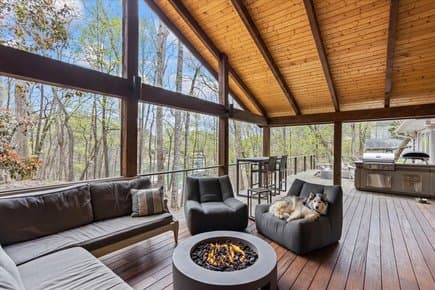
Lake Lanier's recreational footprint is built around boating, water sports, fishing, and shoreline entertaining, none of which a Buckhead primary residence delivers in the same way. The lake covers 38,000 acres with deep navigable water across the main channel, and the southern basin marinas including Aqualand Marina, Sunrise Cove Marina, Lake Lanier Islands, and Holiday Marina anchor the boating infrastructure that supports water sports, wakeboarding, and cove-to-cove cruising (USACE Mobile District, current as of May 2026). Buyers who plan to keep a boat in the water seven to nine months a year typically find the use density on Lanier supports the carrying cost in a way that an occasional rental boat at a Buckhead lifestyle would not. Entertaining on Lake Lanier sits on a different geometry than entertaining at a Buckhead home. The Lake Lanier home typically supports extended-weekend gatherings with multiple adults and children using the dock, the boat, and the shoreline simultaneously, with covered outdoor space oriented toward the water. The Buckhead home typically supports dinner-party-scale entertaining oriented toward an interior dining room and a garden. Buyers shortlisting a Lanier second home for entertaining purposes should plan the dock, the deck, and the lake-side kitchen as the primary entertaining surface rather than the interior dining room. Long-term legacy value also factors into the Buckhead-to-Lanier decision. A Lake Lanier permitted-dock waterfront home is a multi-generational asset for an Atlanta-based extended family, with grandchildren and adult children reaching the home in 45 to 90 minutes from across the metro (Georgia Department of Transportation, current as of January 2026). The home becomes a recurring gathering surface for holidays, summer weekends, and grandchildren's water-sport memories in a way that an out-of-state vacation home structurally cannot match. Buyers planning across a 20-to-30-year hold should weigh the legacy-use density alongside the price.
Best Lake Lanier Fits for Buckhead Buyers
The best Lake Lanier shortlist for a Buckhead buyer concentrates on the southern shoreline because of drive time, dock infrastructure, and resale-market depth. Within the South Lake footprint, the right fit depends on whether the buyer wants a private permitted dock, a gated community amenity package, or a lock-and-leave second-home format with marina access.
South Lake convenience in Cumming, Buford, and Flowery Branch
South Lake on Lake Lanier refers to the southern basin shoreline in Forsyth County, southern Hall County, and northern Gwinnett County, anchored by Cumming, Buford, and Flowery Branch. The South Lake footprint matters to Buckhead buyers because it carries the shortest drive times from the Buckhead corridor, the deepest navigable water at full pool 1,071, and the densest concentration of permitted-dock inventory on the lake (USACE Mobile District, current as of May 2026). A Buckhead buyer who pulls GA-400 north or I-85 to I-985 north is structurally closer to South Lake than to any other Lanier basin. Cumming sits on the western South Lake shoreline in Forsyth County, with neighborhoods such as Marina Bay, Habersham Marina, and the Mary Alice Park area concentrating permitted-dock waterfront inventory. Forsyth County Schools, Northside Hospital Forsyth, Halcyon, The Collection at Forsyth, and the Cumming City Center commercial corridor anchor daily-life logistics within a typical errand-radius drive of most South Lake addresses. Buyers shortlisting Cumming should evaluate cove orientation, water depth at the dock, and proximity to GA-400 corridor exits. Buford and Flowery Branch sit on the eastern South Lake shoreline in southern Hall County and northern Gwinnett County, with concentrations of permitted-dock inventory in the Sunrise Cove, Lanier Islands, and Aqualand Marina submarkets. The Mall of Georgia, downtown Buford, Northeast Georgia Medical Center Braselton, and the I-985 corridor at exits 4, 8, and 12 anchor the eastern South Lake daily logistics (Georgia Department of Transportation, current as of January 2026). Buyers evaluating Buford and Flowery Branch should weigh I-985 corridor commute reality, eastern-cove water depth, and proximity to Lake Lanier Islands.
Luxury private-dock homes and gated lake communities
USACE permits and licenses are nontransferable. A new owner of an existing facility may apply through the Lake Lanier Operations Management Office, and approval is not automatic. Confirm the property-specific record and current requirements before closing. Gated lake communities on Lanier deliver a different product than the open-shoreline luxury format. Communities such as Marina Bay in Hall County (Flowery Branch), the Reserve at Lake Lanier, and several gated enclaves across the southern basin bundle community marina access, gated entry, and shared shoreline amenities with the home. Buyers who want a managed-amenity package, predictable HOA fees, and gated-entry security typically anchor on the community-product format. Buyers who want maximum privacy, large-lot dimensions, and direct shoreline frontage typically anchor on the open-shoreline format. The two formats trade at different price bands and carry different carrying-cost structures. Gated communities layer HOA fees, community marina fees, and amenity assessments on top of the home's carrying cost, while open-shoreline waterfront concentrates the carrying cost in property tax, individual dock maintenance, and dock insurance. Buyers should price both formats on a total-annual-cost basis rather than a sticker-price basis before deciding, because the annual operating math diverges across formats.
Lock-and-leave homes, marina access, and second-home options
Lock-and-leave second-home formats fit Buckhead buyers who want lake use without the maintenance footprint of a full waterfront estate. These formats typically include townhome-style waterfront communities, smaller lake-access homes with community marina rights, and managed-community lake homes where landscaping, exterior maintenance, and dock upkeep run under the HOA rather than the owner. The carrying cost is higher per square foot than an open-shoreline home, but the maintenance burden on the owner is lower, which fits a second-home occupancy profile. Marina-access second homes are the third format on the Buckhead-to-Lanier shortlist. Aqualand Marina, Sunrise Cove Marina, Lake Lanier Islands, Holiday Marina, and Habersham Marina each rent and sell slips and offer storage, fuel, and service infrastructure that allows a lake home without a private dock to function as a usable boating second home (USACE Mobile District / Lake Lanier marina operators, current as of May 2026). Buyers who want lake use but do not want to underwrite an assignable USACE permit can land on a marina-access home at a structurally lower price band than the permitted-dock waterfront band. Second-home buyers should evaluate the three formats on five variables: weekly use cadence, maintenance tolerance, dock requirement, carrying cost, and resale exit. Buyers planning 30 to 60 nights of use per year typically find a lock-and-leave format or a marina-access home delivers better per-night economics than a full waterfront estate, while buyers planning 100-plus nights of use typically find the permitted-dock waterfront delivers better per-night economics and a more meaningful family-legacy asset. The cadence question should anchor the format choice before the listing search begins.
What to Know Before Buying a Second Home
Buying a second home on Lake Lanier from Buckhead involves variables a primary-residence purchase does not: seasonal occupancy, remote-management logistics, dock-permit underwriting, and insurance and ownership-cost structures specific to waterfront use. The honest underwriting addresses these variables before the offer, not after.
Security, maintenance, management, and seasonal use
Security on a second home that sits empty during the week runs on a different model than security on an occupied Buckhead primary residence. Smart locks, motion-sensor lighting, monitored alarm with cellular backup, exterior camera coverage of the driveway and dock, and water-leak shutoff sensors are the standard package for a Lake Lanier second home. Buyers should also plan a relationship with a neighbor, property manager, or caretaker who can physically respond to an alarm event or a freeze-warning notification, because a 50-to-80-minute response time from Buckhead is typically too long for an active water leak. Maintenance on a Lake Lanier waterfront second home includes the home, the lot, the shoreline, and the dock. Routine items include HVAC service, gutter cleaning, septic pumping on the county environmental health department's recommended cycle, dock inspection, lift maintenance, exterior wash, and shoreline vegetation management consistent with the U.S. Army Corps of Engineers Mobile District's shoreline buffer rules (USACE Mobile District, current as of May 2026). Buyers should either run a property-management contract that covers these items on a calendar or budget time on each visit to address them, because deferred maintenance on a waterfront home compounds faster than on an interior home. Seasonal use patterns shape the operating model. Lake Lanier's high-use season runs Memorial Day through Labor Day, with a shoulder season in May and September and a low-use winter window. Buyers planning 100-plus nights of use should treat the home as quasi-primary in May through September and plan winterization in November including dock-line review, freeze protection, and lift positioning. Buyers planning a lighter use cadence should still budget winterization annually rather than skipping years.
Dock permits, water depth, insurance, and ownership costs
USACE permits and licenses are nontransferable. A new owner of an existing facility may apply through the Lake Lanier Operations Management Office, and approval is not automatic. Confirm the property-specific record and current requirements before closing. Water depth at the dock site, cove orientation, and shoreline frontage drive the home's usability across the lake-level cycle. Lake Lanier is operated by the Corps within an authorized winter pool of 1,070 feet and a summer full pool of 1,071 feet above mean sea level, with lake levels varying across seasons and drought cycles (USACE Mobile District, current as of May 2026). Buyers should evaluate the dock's water depth at winter pool, not only at summer full pool, and should walk the cove with the agent at the actual current lake elevation rather than relying on listing photography taken at full pool. Insurance and ownership-cost structures on a Lake Lanier second home include homeowner's insurance, dock insurance (often a separate policy or rider), liability coverage for water-sport activity, boat insurance, property tax across the relevant county tax assessor's appraisal, USACE permit fees and dock-tag fees, HOA fees if the home sits in a managed community, and a maintenance reserve typically running 1 to 2 percent of the home's value annually. Buyers should build a total-annual-cost model that includes all of these lines before signing a contract, because a sticker-price comparison without the carrying-cost stack understates the true cost of the second home.
Request a curated Buckhead-to-Lake-Lanier property shortlist
A curated Buckhead-to-Lake-Lanier shortlist filters the active Lanier inventory against the buyer's specific cadence, dock requirement, format preference, budget, and corridor preference rather than producing a generic search list. The right shortlist for a buyer commuting to Buckhead on GA-400 looks structurally different from the right shortlist for a buyer commuting on I-85 to I-985, because the corridor preference reshapes which coves, ZIP codes, and submarkets fit the planned use pattern. The shortlist should also reflect honest underwriting on the three format choices outlined above: permitted-dock waterfront, gated lake community, and lock-and-leave or marina-access second home. Each format trades at a different price band, carries a different operating-cost structure, and supports a different use cadence. Buyers who shortcut the format question and search across all three formats simultaneously typically waste time on homes that do not match the planned use. Ashley Smith, real estate agent with The Dream Smith Team at Compass, can build a curated Buckhead-to-Lake-Lanier shortlist that prices each candidate home on the buyer's actual planned cadence, dock requirement, corridor preference, and carrying-cost band, anchored in documented USACE Mobile District, Georgia Department of Transportation, Georgia MLS, and county-level data rather than category averages. The shortlist is a working document rather than a one-time delivery, because Lanier inventory turns quickly during the Memorial Day through Labor Day window and the right home often appears between scheduled tour days.
Frequently Asked Questions
- How long does it take to drive from Buckhead to Lake Lanier?
- Drive time from a typical Buckhead address to a southern-shoreline Lake Lanier home runs roughly 50 to 80 minutes depending on the corridor and the day, with GA-400 serving the western Forsyth County shoreline at Cumming and I-85 to I-985 serving the eastern Hall County and Gwinnett County shoreline at Buford and Flowery Branch (Georgia Department of Transportation, current as of January 2026). Friday-afternoon and Sunday-evening windows during the Memorial Day through Labor Day season run longer than the midday average. Buyers should drive both corridors during the actual planned travel window before committing to a shoreline.
- What does a Lake Lanier second home cost compared to Buckhead?
- The right comparison is total annual carrying cost across both homes, not sticker price. Current market conditions require a dated MLS comparison that identifies the area, property type, reporting period, and sample before a buyer relies on it.
- Do I inherit the dock permit when I buy a Lake Lanier waterfront home?
- Generally yes. Existing private dock permits on Lake Lanier are assignable to the new owner at closing under the U.S. Army Corps of Engineers Mobile District's Lake Sidney Lanier Shoreline Management Plan administered by the U.S. Army Corps of Engineers, subject to standard transfer procedures and an updated permit holder of record (USACE Mobile District, current as of May 2026). Buyers should request a copy of the current permit, confirm the permit class, and confirm the transfer process with the Corps before closing. The assignable-permit advantage is one of the main reasons buyers from Buckhead anchor on resale homes rather than raw lots.
- Which Lake Lanier shoreline is closest to Buckhead?
- The southern shoreline of Lake Lanier, anchored by Cumming on the western side and Buford and Flowery Branch on the eastern side, is the closest to Buckhead. Western South Lake addresses in Forsyth County reach Buckhead via GA-400 in roughly 50 to 70 minutes depending on the day, and eastern South Lake addresses in southern Hall County and northern Gwinnett County reach Buckhead via I-985 to I-85 in roughly 60 to 80 minutes (Georgia Department of Transportation, current as of January 2026). The upper-arm shoreline in northern Hall and Dawson counties runs noticeably longer.
- Can I use a Lake Lanier second home as a short-term rental?
- Short-term rental rules differ by county on Lake Lanier, with Forsyth County, Hall County, Dawson County, and Gwinnett County each running a different posture on STR registration, permitting, and HOA restrictions (county code enforcement and zoning departments, current as of May 2026). Buyers planning to offset carrying costs with rental income should confirm the specific county's current STR ordinance, the relevant HOA's rental restrictions, and any community marina rules before underwriting rental income. STR rules also change, so buyers should not rely on prior-year guidance.
- What ongoing costs should I budget for a Lake Lanier second home?
- Total annual carrying cost on a Lake Lanier waterfront second home typically includes property tax across the relevant county tax assessor's appraisal, homeowner's insurance, dock insurance, boat insurance, HOA fees if the home sits in a managed community, U.S. Army Corps of Engineers Mobile District permit and dock-tag fees, utilities including septic pumping on the county environmental health department's recommended cycle, and a maintenance reserve generally running 1 to 2 percent of the home's value annually. Buyers should build the total-annual-cost model before signing a contract rather than after, because the carrying-cost stack materially affects the second-home decision.
Related
- Lake Lanier Luxury Waterfront HomesPermitted-dock luxury waterfront inventory on the Lanier southern shoreline.
- Lake Lanier Second Home Buyer GuideUnderwriting cadence, carrying cost, and format choice for a second-home purchase.
- Cumming Real Estate GuideForsyth County community guide covering South Lake western-shoreline neighborhoods.
- Buford Real Estate GuideSouthern Hall County community guide covering eastern South Lake neighborhoods.
- Lake Lanier Waterfront Homes for SaleCurrent waterfront listings filtered by dock class, cove, and shoreline.
- Lake Lanier Cost of OwnershipAnnual carrying-cost model including property tax, dock, insurance, and HOA.