
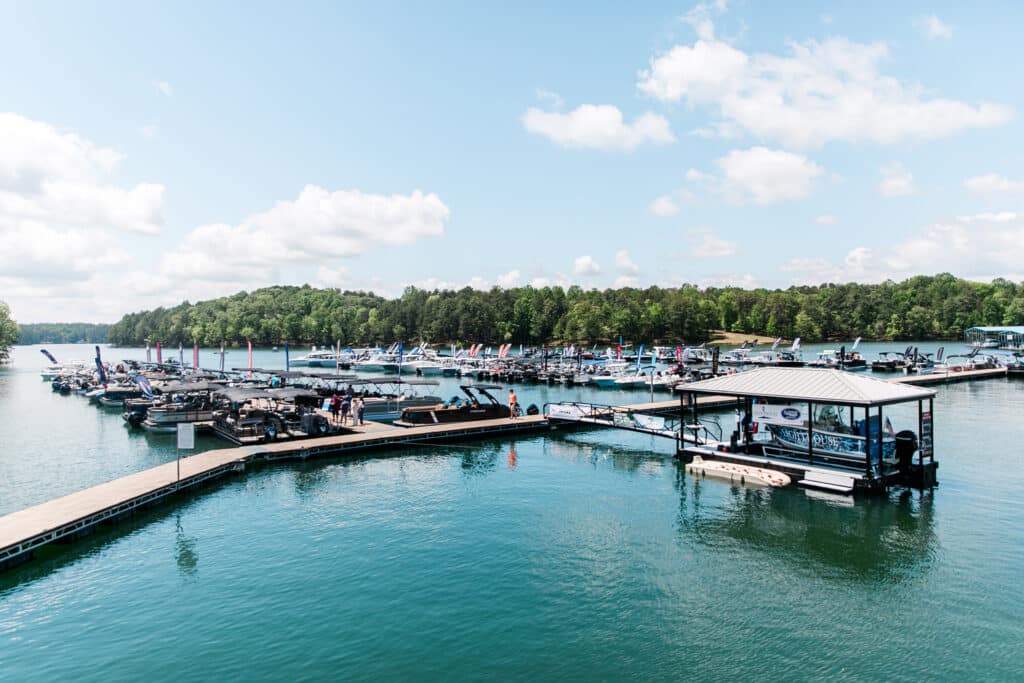
is 2026 good time to buy lake lanier
An honest look at the 2026 Lake Lanier market: waterfront prices, dock permit scarcity, mortgage rates, and how to know if now is the right time for you to buy.
By Ashley Smith, CLHMS, Luxury & Lake Lanier Real Estate Expert
I get this question almost every week, and I want to answer it honestly: there is no single right answer. "Is 2026 a good time to buy on Lake Lanier?" depends far more on your situation than on any headline you'll read about the market. What I can do is give you a clear framework — the real numbers, the rate picture, and the questions I'd ask you across the table — so you can decide for yourself instead of guessing.
Let me walk you through how I'm reading the lake right now, and where I think you fit.
What the Lake Lanier Market Actually Looks Like in 2026
First, the broad strokes. As of 2026, the wider Georgia and North Metro Atlanta market has shifted toward more balanced conditions. Inventory across the state has been climbing — active listings were up over 13% year-over-year heading into 2026, and forecasts call for inventory to rise another 5–10% through the year. Price growth has cooled to a modest pace, with most forecasts landing in the 1–4% range rather than the double-digit jumps of a few years ago. Homes are also sitting longer; statewide, median days on market drifted toward the low 50s in early 2026.
That's the broader market. Lake Lanier waterfront is a different animal, and this is the part I want you to understand before you draw any conclusions.
Waterfront on Lanier is structurally scarce. The lake is managed by the US Army Corps of Engineers, and the Corps caps the total number of dock permits — somewhere around 10,615 — with new permits exceedingly rare. That single fact shapes everything. You can build more subdivisions inland, but you cannot manufacture more dockable shoreline. So even as inland inventory loosens up, true dock homes stay tight.
The price picture, as of 2026, looks roughly like this:
Across all Lake Lanier properties, the median sits near $955,000.
Homes with a private dock average around $1,150,000.
Properties tied to a shared or community dock generally run between $550,000 and $850,000.
For context on the surrounding counties, Forsyth County's overall median listing price is around $668,000 and Hall County's is closer to $475,000 — Hall often gives you more house and a lower tax bill for the money, which matters more than buyers expect.
You can browse what's actually available right now on my Lake Lanier homes for sale page, and I keep a deeper breakdown in the Lake Lanier market report. Numbers move; that's why I'd rather pull live data for your specific price band than have you rely on a blog post — even this one.
The Rate Environment — and "Marry the House, Date the Rate"
Here's the piece everyone fixates on. As of June 2026, the 30-year fixed is averaging in the mid-6% range — Freddie Mac put it around 6.52%, with daily trackers landing between roughly 6.5% and 6.6%. A year earlier it was closer to 6.84%, so rates have eased modestly but are not "cheap" by the standards of 2020–2021. Forecasts I'm watching expect rates to hover in the low-to-mid 6s over the near term, barring a major economic surprise.
I won't pretend to predict rates — anyone who tells you they can is guessing. But I will share the logic I give my buyers: marry the house, date the rate. The house you fall in love with on Lanier is rare and not easily replaced — that scarce dock permit is the thing you're really buying. The interest rate is a number you can refinance later if rates fall. You can't refinance the house you lost because you waited.
The flip side, and I'll be honest about it: a refinance is never guaranteed. Rates may not drop on the timeline you hope. So you should be comfortable owning the home at today's payment, not at a payment you're betting on getting later. If the math only works on the assumption of a future refi, that's a yellow flag.
Scarcity Up Top, Softening Below
The most useful way I can frame 2026 is this tension: the broader market is softening while waterfront stays scarce.
What that means practically is that the experience differs wildly by where you're shopping:
If you want a true private-dock home, expect competition and limited choices. Well-priced waterfront still moves, and the best ones don't linger. This isn't a segment where you'll find a fire sale.
If you're open to a shared-dock or water-view home, or to a non-waterfront home in a lake community, you have real negotiating room in 2026 that didn't exist a couple of years ago — more inventory, longer days on market, and sellers who are increasingly willing to deal.
So "is it a buyer's market on Lanier?" Partly yes, partly no. It depends entirely on which slice you're shopping. I dig into what each tier actually costs to own — taxes, dock maintenance, insurance — on my cost of ownership page, because the sticker price is only part of the story on the water.
A note on docks specifically: dock permits, slip configurations, and what the Corps will and won't allow vary property by property, and the rules can change. I never want you assuming a dock is permitted, transferable, or expandable until we've verified it in writing for that exact address.
Seasonal Timing on the Lake
Lanier has a rhythm most year-round housing markets don't. Demand tends to swell in spring and early summer when the water looks its best and families are picturing the Fourth of July off the dock. That's when you'll see the most listings — and the most competing buyers.
Fall and winter are quieter. Inventory thins, but so does competition, and motivated sellers who didn't move during peak season are often more flexible. I've negotiated some of my best buyer outcomes in November and December. If you have the patience to shop off-season, you may trade a smaller selection for better terms. If you need a specific cove or a specific configuration, you may have to act in season and accept more competition. Neither is wrong — it's a tradeoff, and I'll help you weigh it.
Who Should Wait — and Who Should Move Now
I'd rather lose a sale than put you in the wrong decision, so here's my candid read.
You should consider waiting if:
The payment only pencils out assuming a refinance you're counting on.
Your timeline is short — under two or three years — since waterfront isn't where I'd want you to take on transaction costs for a quick flip.
Your income or job situation feels uncertain right now.
You're shopping the softer, non-waterfront tier and a few months of added inventory could genuinely improve your options.
You should consider moving now if:
You've found a true dock home that fits — scarcity means the right one may not come back, and waiting for a lower rate can cost you the property entirely.
You're planning to hold for the long term, where a modest 1–4% annual appreciation and years of lake living outweigh short-term rate noise.
You can comfortably afford today's payment without betting on the future.
You're shopping in season and willing to compete for the configuration you actually want.
The Personal-Circumstances Test
Strip away the headlines and it comes down to four honest questions I'd ask you:
Can you afford the full cost of ownership today — payment, taxes, insurance, and dock upkeep — at current rates, without a hypothetical refi?
How long will you hold it? The longer your horizon, the less any single year's market matters.
How specific are your needs? A flexible buyer can wait for value; a buyer who needs deep water in a particular cove may need to act when it appears.
What does this home do for your life? A lake home is partly a lifestyle decision, and that's allowed to count.
If your answers line up, 2026 can be a genuinely good time to buy on Lanier — particularly because the broader softening gives you leverage you can use even on the water. If they don't, there's no shame in waiting until they do.
My Credentials and How I Work
When you're making a decision this size, it helps to know who's advising you. I hold the Certified Luxury Home Marketing Specialist (CLHMS) designation with Million+ GUILD recognition, and I'm a member of REALM Global, an invitation-only network representing roughly the top 0.5% of agents worldwide. I'm part of Keller Williams Luxury International, and I carry the ABR (buyer representation), SRS (seller representation), and RENE (negotiation) designations. My clients have rated me 5.00 out of 5 across 11 ProvenExpert reviews. I work out of my office in Suwanee, GA, and you can reach me directly at (678) 485-8858 (GA license #407881).
You can read more about how I represent buyers on the water on my Lake Lanier buyer's agent page.
Working With Ashley Smith
If you want a straight, no-pressure read on whether 2026 is your year — and on the specific homes and dock situations that fit your budget and timeline — I'd genuinely like to help. I'll pull live numbers for your price range, walk the tradeoffs with you, and tell you honestly if I think you should wait. Reach me at (678) 485-8858 or through my contact page, and let's figure out what makes sense for you.
Frequently Asked Questions
Is 2026 a buyer's market on Lake Lanier?
It's mixed. The broader North Metro Atlanta market has softened — inventory is up and homes are sitting longer, which gives buyers leverage. But true private-dock waterfront on Lanier remains scarce because the US Army Corps of Engineers caps dock permits, so that segment stays competitive even as the rest of the market loosens.
What do homes on Lake Lanier cost in 2026?
As of 2026, the median across all Lake Lanier properties is near $955,000. Private-dock homes average around $1,150,000, while shared- or community-dock properties generally run $550,000–$850,000. Surrounding Forsyth County's overall median listing price is around $668,000 and Hall County's is closer to $475,000.
What are mortgage rates right now, and should I wait for them to drop?
As of June 2026, the 30-year fixed is averaging in the mid-6% range. Rather than wait, I tell buyers to "marry the house, date the rate" — buy the scarce home now if it fits your budget at today's payment, and refinance later if rates fall. Just don't count on a refinance that isn't guaranteed.
Why is waterfront inventory on Lake Lanier so limited?
The lake is managed by the US Army Corps of Engineers, which caps total dock permits at roughly 10,615, and new permits are very rare. You can't add dockable shoreline, so true waterfront supply stays tight regardless of how much inland inventory grows.
Is it better to buy on Lanier in spring or in winter?
Spring and early summer bring the most listings but also the most competing buyers. Fall and winter offer thinner inventory but less competition and often more flexible sellers. If you can shop off-season, you may trade selection for better terms.
Should I buy on Lake Lanier if I only plan to stay a few years?
Probably not. Waterfront carries meaningful transaction and ownership costs, so I generally steer short-horizon buyers away from it. A longer hold — where modest appreciation and years of lake living outweigh short-term rate noise — is a much better fit.
Are dock permits guaranteed to transfer when I buy a waterfront home?
Not automatically. Dock permits, slip configurations, and what the Corps allows vary by property and can change. I always verify a dock's permit status in writing for the exact address before you rely on it.
Live Market
Currently for Sale on Lake Lanier
Loading property search…
Talk With Ashley
Talk through your next real estate decision.
Buying, selling, or comparing your options around Lake Lanier? Share your goals and timeline with Ashley to identify the next useful step.