Forsyth County has quietly become one of the most sought-after addresses in metro Atlanta, and anyone who has driven through its rolling hills, popped into a Halcyon coffee shop, or toured a brand-new subdivision already knows why. With top-rated schools, a surging local economy, and a quality of life that balances suburban comfort with genuine small-town charm, Forsyth County Georgia real estate continues to attract families, professionals, and investors from across the Southeast.
Whether you are relocating from out of state, moving up from a starter home, or searching for your forever property, this guide breaks down what makes Forsyth County stand out — and what every buyer should know before making a move.
Why Forsyth County Is Booming
A decade ago, Forsyth County was still considered a quiet exurb north of Atlanta. Today it is one of the fastest-growing counties in the entire United States, and the numbers tell the story. The population has more than doubled since 2000, with recent Census estimates pushing past 270,000 residents. Job growth, infrastructure investment, and a wave of master-planned communities have turned what was once farmland and forest into a thriving suburban corridor.
Several forces are driving this expansion:
- Proximity to Atlanta without Atlanta traffic. GA-400 provides a direct corridor to Buckhead, Midtown, and Downtown, while many residents work locally thanks to a growing base of corporate offices and remote-friendly employers.
- Low crime rates. Forsyth County consistently ranks among the safest counties in Georgia, which is a primary draw for families with young children.
- Business-friendly climate. Major employers and medical facilities continue to expand in the area, creating local jobs and reducing commute dependence.
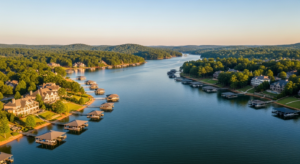
- Natural beauty. The county sits at the foothills of the North Georgia mountains, with Lake Lanier forming its northern border. Outdoor recreation is not a weekend road trip here — it is part of daily life.
The result is a county that offers big-city amenities with a distinctly small-town feel, and a real estate market that reflects sustained, healthy demand.
Top Neighborhoods and Communities
Forsyth County is home to dozens of established and emerging neighborhoods, but a handful of communities consistently top buyer wish lists. Here is a closer look at the ones generating the most interest in 2026.
Halcyon
Halcyon is the community that put Forsyth County on the national radar. This mixed-use, walkable development near the intersection of McFarland Parkway and Ronald Reagan Boulevard blends single-family homes, townhomes, retail, dining, and green space into a true live-work-play environment. The town green hosts live music, farmers markets, and seasonal events throughout the year. Home prices in Halcyon range widely depending on size and lot, but the walkability premium is real — properties here tend to hold value exceptionally well.
Polo Fields
Located off Castleberry Road, Polo Fields is one of the more established luxury communities in the county. Large homesites, mature landscaping, and a gated entrance give it a private, estate-like feel. Homes here typically range from the upper $600s to well over a million, attracting buyers who want space, privacy, and proximity to top-rated South Forsyth schools.
Manor Golf and Country Club
For buyers who want a country club lifestyle without the Buckhead price tag, Manor Golf and Country Club delivers. The community is anchored by an 18-hole championship course and offers swimming, tennis, fitness, and an active social calendar. Homes range from traditional brick estates to newer custom builds, generally falling between the mid-$500s and $1.2 million. The club atmosphere and well-maintained common areas make this a popular choice for both families and empty nesters.
Sharon Springs
Sharon Springs is a newer master-planned community that has gained traction quickly. Located near Sharon Road, it offers a mix of single-family homes and townhomes along with resort-style amenities including a pool, splash pad, fitness center, and miles of walking trails. Pricing in the mid-$400s to upper $600s makes it accessible for move-up buyers who want modern construction and strong neighborhood programming.
Windermere
Windermere, situated off Bethelview Road, is another well-regarded community that strikes a balance between established charm and ongoing growth. The neighborhood features swim and tennis amenities, large lots, and a location that feeds into highly rated schools. Resale homes in Windermere are consistently popular, and turnover is relatively low — a sign that residents tend to stay.
If you are exploring communities across the area, searching Cumming GA real estate is a good starting point, as many of these neighborhoods fall within or near the city of Cumming.
Schools That Drive Home Values
If there is a single factor that separates Forsyth County from its metro Atlanta peers, it is the school system. Forsyth County Schools regularly ranks as one of the top districts in Georgia, and that reputation is not just marketing — it is backed by graduation rates, test scores, and college placement numbers that compete with the best private schools in the state.
Three high schools, in particular, tend to drive buyer decisions:
Lambert High School
Lambert, located in Suwanee-area Forsyth County, consistently earns top marks from Niche, GreatSchools, and U.S. News. The school is known for strong STEM and AP offerings, competitive athletics, and an involved parent community. Homes zoned for Lambert carry a measurable premium, and families routinely cite the school as a primary reason for choosing their neighborhood.
South Forsyth High School
South Forsyth has long been considered the flagship of the district. Its academic programs, performing arts department, and athletic teams are all well-regarded. The school draws from several of the county’s most desirable neighborhoods, including Polo Fields and parts of Sharon Springs. Zoning for South Forsyth is a consistent selling point in listings.
Denmark High School
Denmark is the newest of the three, having opened in 2018, but it has already built a strong reputation. The school features modern facilities, a growing list of extracurricular programs, and a student body that benefits from smaller class sizes compared to older, larger schools. Denmark-zoned homes appeal to buyers who want new construction paired with a newer, less crowded school environment.
Beyond high schools, the feeder patterns of elementary and middle schools also matter. Forsyth County’s elementary schools — including Mashburn, Shiloh Point, and Whitlow — frequently appear on best-of lists, and parents pay close attention to which feeder chain a home falls into.
The bottom line: schools are not just a lifestyle consideration in Forsyth County. They are a financial one. Homes in top-rated school zones appreciate faster and sell more quickly than comparable properties in weaker districts.
Market Snapshot 2026
The Forsyth County real estate market in 2026 reflects a market that has matured but remains fundamentally healthy. After the frenzied bidding wars of 2021 and 2022, conditions have normalized into a more balanced environment where well-priced homes still move quickly, but buyers have more room to negotiate than they did a few years ago.
Key metrics to know:
- Median home price: Approximately $525,000 to $560,000 for single-family homes, depending on the data source and month. This represents steady year-over-year appreciation in the 4 to 6 percent range.
- Days on market: Well-priced homes in desirable school zones are selling in 15 to 30 days. Overpriced listings or homes needing significant updates may sit longer.
- Inventory: Still below historical norms, but improved from the extreme lows of 2021-2023. Buyers have more choices, particularly in new construction.
- Interest rate environment: Rates in the mid-to-upper 6 percent range have become the new normal. Buyers are adjusting expectations and focusing on long-term value rather than waiting for a rate drop that may not come soon.
The takeaway for buyers is straightforward: Forsyth County is not a speculative market. It is a fundamentals-driven market where population growth, school quality, and limited land supply create sustained demand. Trying to time the bottom is less important than finding the right home in the right community.
New Construction vs Resale
One of the biggest decisions buyers face in Forsyth County is whether to go new construction or resale. Both options have clear advantages, and the right choice depends on your priorities.
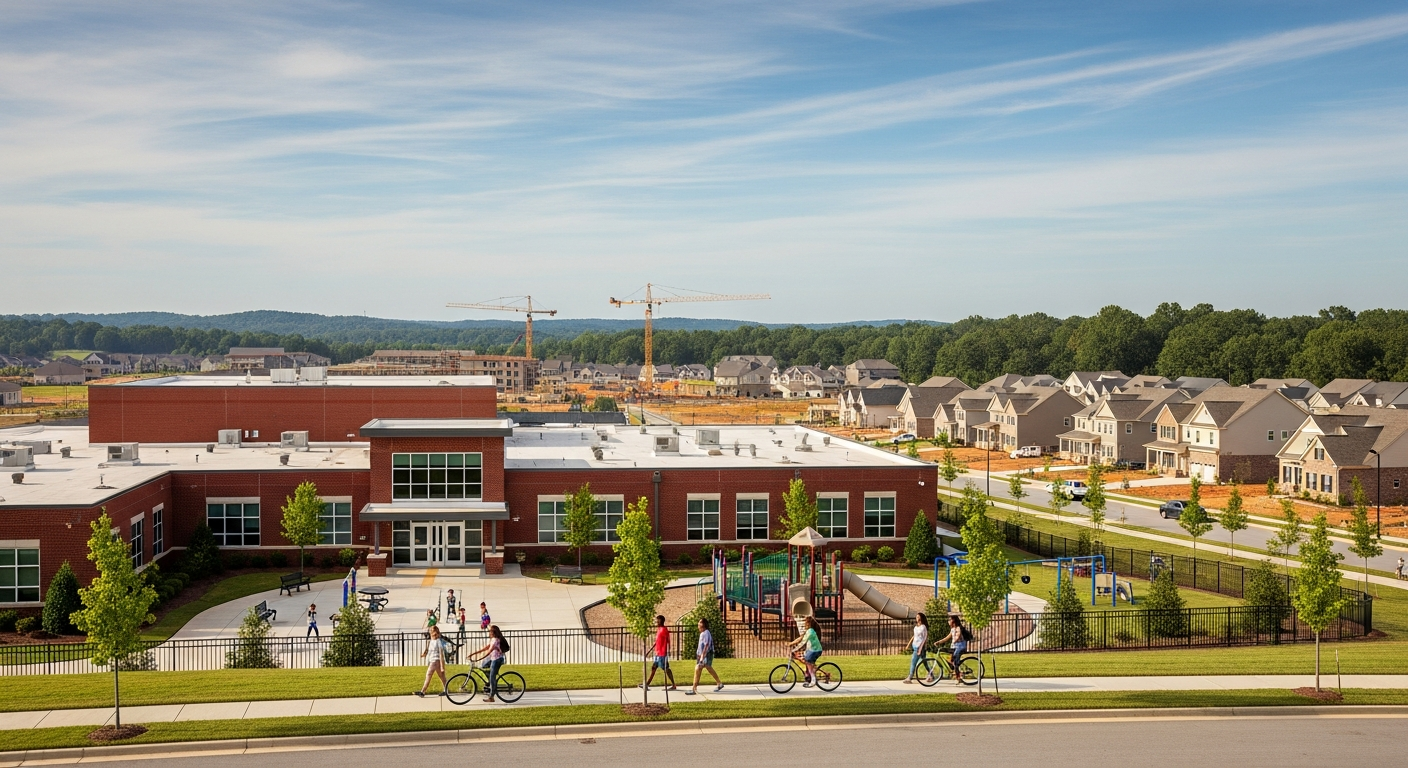
New construction is abundant in Forsyth County. Builders like Toll Brothers, Ashton Woods, David Weekley, and Pulte are all active in the area. Buying new means modern floor plans, energy-efficient systems, builder warranties, and the ability to customize finishes. Many new communities also include resort-style amenities. The trade-off is that new construction neighborhoods are often farther from the county core, lots tend to be smaller, and you may deal with construction traffic and incomplete amenities for a year or two after closing.
Resale homes offer established landscaping, larger lots in many cases, and locations closer to schools and commercial centers. In communities like Windermere, Polo Fields, and Manor Golf, resale inventory puts you in neighborhoods with mature trees, proven HOAs, and known neighbor dynamics. The trade-off is that older homes may need updates to kitchens, bathrooms, or HVAC systems, and you will not get to pick your countertops.
A good strategy is to tour both. Walk through a model home to see what builders are offering at your price point, then compare that to resale options in established communities. The right answer is rarely obvious until you have seen both sides. Start your comparison with a home search to see what is available in your target areas.
Cost of Living and Taxes
One of the most common questions from out-of-state buyers is how Forsyth County stacks up on cost of living. The short answer: it is competitive, especially compared to other top-school-district suburbs in major metros.
Property taxes in Forsyth County are moderate by national standards. The county millage rate, combined with city of Cumming taxes where applicable, generally results in effective tax rates between 0.9 and 1.1 percent of assessed value. Georgia’s homestead exemption also helps reduce the tax burden for primary residences.
No state income tax on retirement income is another draw for older buyers and retirees considering the area. Georgia excludes a significant portion of retirement income from state taxes, making it attractive for those transitioning from higher-tax states.
Day-to-day costs — groceries, dining, gas, utilities — are in line with or slightly below the national average. The presence of major retail corridors along GA-400 and at The Collection at Forsyth means you do not have to drive to Atlanta for shopping or dining.
Insurance costs are reasonable, with homeowners insurance averaging less than many coastal or flood-prone areas. Forsyth County is far enough from the coast to avoid hurricane-related premium spikes but still benefits from Georgia’s competitive insurance market.
For families relocating from the Northeast, Midwest, or West Coast, the combination of lower taxes, affordable insurance, and top-tier schools often makes the math work in Forsyth County’s favor — even if home prices have climbed in recent years.
The Growth Factor: What’s Coming
Forsyth County is not done growing, and understanding what is on the horizon helps buyers make smarter decisions about where to buy.
Infrastructure investments are a major story. The widening of key corridors, interchange improvements along GA-400, and new connector roads are all aimed at keeping pace with population growth. The county is also investing in parks, greenways, and trail systems that will enhance quality of life and property values in surrounding neighborhoods.
Commercial development continues to accelerate. The Halcyon area is expanding, new retail and dining destinations are opening along McFarland Parkway and Post Road, and medical facilities are growing to serve the larger population. More local jobs mean fewer residents commuting to Atlanta, which improves both quality of life and traffic patterns.
Mixed-use and town center projects are in various stages of planning and construction. The county has signaled its preference for walkable, community-oriented development rather than sprawling strip malls, which bodes well for long-term neighborhood character.
Population projections suggest Forsyth County could approach 350,000 to 400,000 residents within the next decade. That growth will bring both opportunities and challenges — more amenities and services, but also more traffic and higher land costs. Buying now, while inventory is available and prices have not yet reflected the full impact of planned infrastructure, may prove to be a wise long-term decision.
Is Forsyth County Right for You?
Forsyth County is not the right fit for everyone, and being honest about that helps you make a better decision. If you want a walkable urban lifestyle with public transit and nightlife, Atlanta proper or Decatur may be a better match. If you need a short commute to south-side employers, the drive from Forsyth may be a dealbreaker.
But if your priorities include:
- Outstanding public schools that rival private school quality
- Safe, family-oriented communities with strong neighborhood identities
- Access to nature, including Lake Lanier and the North Georgia mountains
- Modern homes and amenities in well-planned developments
- Long-term appreciation in a market driven by fundamentals, not speculation
- A lower cost of living compared to equivalent suburbs in other major metros
Then Forsyth County deserves a serious look.
The best way to start is to narrow down your priorities — schools, commute, budget, lifestyle — and then explore the communities that check those boxes. Whether you are drawn to the walkable energy of Halcyon, the estate-sized lots of Polo Fields, or the new-construction options popping up across the county, there is a version of Forsyth County living that fits.
Ready to explore what is available? Start with a home search or reach out to talk through your options. Forsyth County moves fast, and having a local expert in your corner makes all the difference.