title: “Lake Lanier Boat Slips — Marinas, Community Slips & What Buyers Need to Know”
slug: dreamsmith-lake-lanier-boat-slips-marinas
excerpt: “If your home doesn’t have a private dock on Lake Lanier, a slip is your next-best option. Here’s how to navigate the marina, community-slip, and waitlist landscape in 2026.”
hero_image: dreamsmith-lake-lanier-boat-slips-marinas.png
date: 2026-04-29
status: draft
By Ashley Smith, CLHMS, Luxury & Lake Lanier Real Estate Expert
Most buyers who fall in love with Lake Lanier eventually come to the same realization: the home they want doesn’t have a private dock. That’s not a deal-breaker — Lanier has one of the most developed marina infrastructures of any inland lake in the southeast — but it’s a different game with different rules, different costs, and a different buying decision than picking up a home with an Army Corps permit already attached.
A boat slip on Lanier isn’t a thing you simply “buy.” Depending on which marina or community you’re looking at, you may be leasing by the year, buying a deeded slip in a condominium-style structure, inheriting a community slip tied to your home’s HOA, or sitting on a waitlist that can run anywhere from six months to several years. The arithmetic matters too: an annual marina slip on Lanier in 2026 ranges from roughly $2,500 for a basic uncovered slip on the south end up to $10,000+ for a covered, premium-position slip with full amenities.
I’ve worked with buyers who rejected a beautiful home solely because the dock situation didn’t pencil — and others who, smartly, treated the slip as part of the property purchase decision and walked away ahead. This guide is the playbook I give every client whose dream home sits inland.
If you’re starting your Lake Lanier search, pair this with our full guide to Lake Lanier homes for sale and our deep dive on boat dock homes and the Army Corps permit process — together they give you the full picture of how the lake actually works for homeowners.
The Three Ways to Get Slip Access on Lake Lanier
Before you start touring marinas, understand which type of slip arrangement you’re looking at. Each has very different pricing, ownership characteristics, and buyer protections.
1. Marina Slip Lease (Annual)
This is the most common arrangement. You pay an annual fee — typically billed once a year, sometimes quarterly — to use a specific slip at a commercial marina. You don’t own the slip. You don’t have equity. When you stop paying, the slip goes back to the marina.
Typical 2026 cost on Lanier:
- Uncovered slip, 24–28 ft: $2,500–$4,500/year
- Covered slip, 24–28 ft: $4,200–$7,500/year
- Covered slip, 30–36 ft: $5,500–$10,000/year
- Premium covered slip, 40+ ft (large cruisers): $9,500–$15,000+/year
- Dry stack storage (boat is racked indoors, launched on demand by marina staff): $2,800–$5,500/year
Pros: No upfront capital, no maintenance, easy to walk away if you sell the boat. Most marinas include water, shore power, gate access, and pump-out at no extra charge.
Cons: No equity. Annual increases run 4–8% in normal years, more during demand spikes. Long waitlists at the most desirable marinas — especially north-end covered slips.
2. Deeded Slip (Owned)
A deeded slip is an actual real estate interest. The slip has a parcel ID, a deed, a title, and (usually) an HOA. You own it the same way you’d own a condominium unit — and like a condo, it comes with monthly or annual dues for shared expenses (dock maintenance, security, insurance, dredging, water, electric).
Deeded slips on Lanier exist primarily in two contexts:
- Boat slip condominiums — purpose-built dock structures (e.g., Aqualand’s “Pavilion” deeded slips, certain South Lanier boat slip condos) where the slip is sold as a real estate interest with HOA dues.
- Community-association slips — some lakefront subdivisions have community docks where individual slips are deeded to specific homeowners as part of the HOA structure.
Typical 2026 cost on Lanier:
- Deeded slip purchase: $35,000–$120,000+ depending on size, marina, and amenities (covered slips and premium positions trade higher)
- Annual HOA/maintenance: $1,800–$4,500/year
Pros: You build equity. Slips have appreciated meaningfully on Lanier over the past decade — well-located covered slips that traded for $40,000 in 2018 routinely list for $80,000–$100,000 today. You can sell the slip independently of any property.
Cons: Significant upfront capital. Resale is illiquid — slips don’t move as fast as houses. HOA assessments can spike if dock infrastructure needs major repair. Financing options are limited (most are cash purchases or marine loans).
3. Community/HOA-Assigned Slip
If you buy a home in a lakefront subdivision with a community dock, you may be assigned a slip — sometimes for life, sometimes by waitlist, sometimes by lottery — as a benefit of HOA membership. The slip itself is owned by the HOA; your right to use it comes with your home.
Typical 2026 cost:
- Folded into HOA dues, often $400–$2,000/year for the slip portion
- Special assessments possible when dock needs replacement (every 25–40 years for most structures)
Pros: Often the best lifetime cost. Tied to the home, so it transfers automatically at sale. No separate transaction, no separate paperwork.
Cons: You don’t own the slip — it’s an HOA benefit, which means the HOA can change rules, change assignments, or lose access if Army Corps compliance changes. Inventory is fixed and non-transferable outside the community. Some communities have multi-year waitlists even for current owners.
This is the structure I steer first-time Lanier buyers toward whenever it’s available — because the slip is essentially “free” from a transactional perspective and the lake access is built into the home you’re buying.
The Major Marinas — Where Most Buyers End Up
Lanier has more than a dozen commercial marinas. The ones below are where most homeowner-boaters end up because of slip availability, gas service, and proximity to the major residential pockets. Costs and waitlist times below are 2026 averages — call ahead to verify, especially for larger slips.
Bald Ridge Marina (Cumming, Forsyth County)
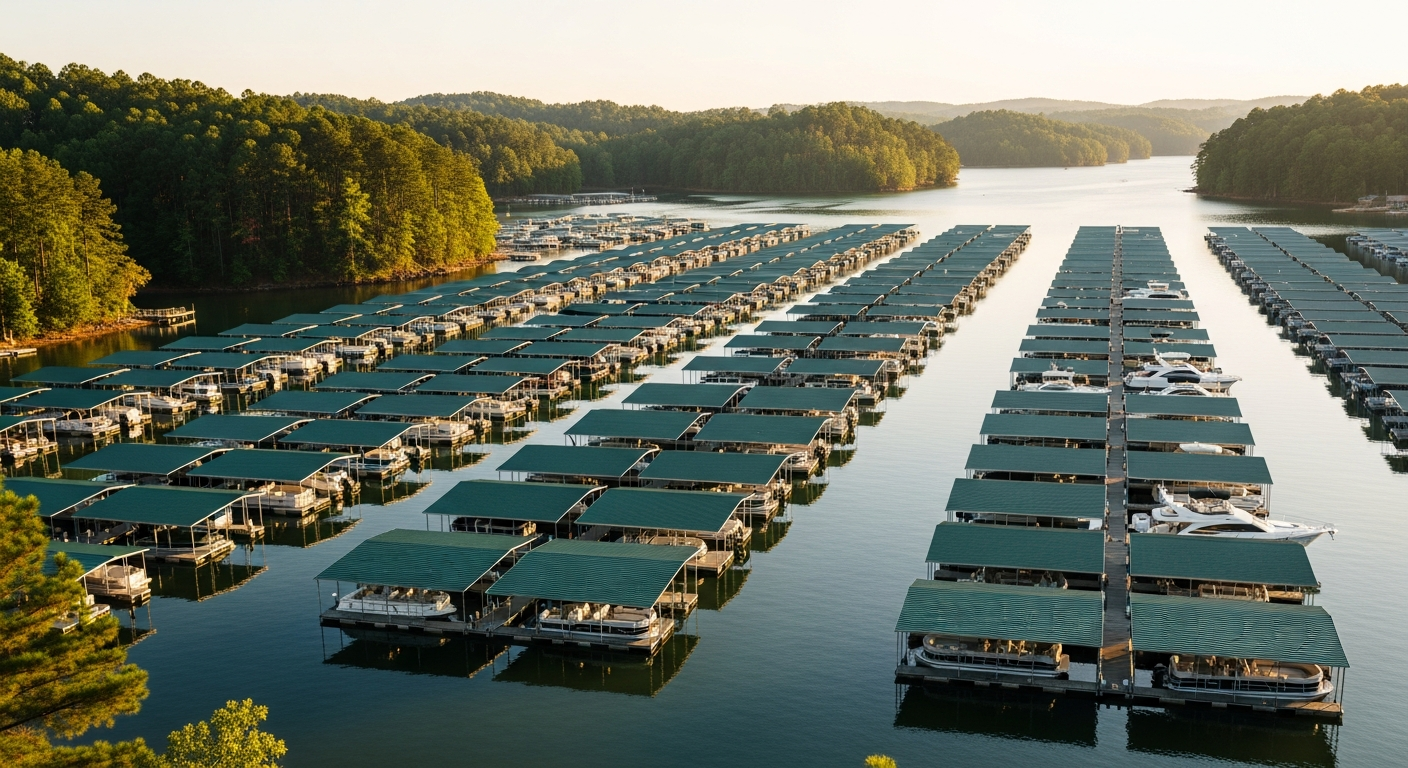
The premier north-end marina and the closest commercial slip option to most of Forsyth County’s higher-end neighborhoods. Bald Ridge sits on roughly 35 acres and offers over 600 wet slips, dry stack storage, fuel service, on-site dining, a ship store, and 24-hour security.
What it’s good for: Forsyth County buyers, larger boats (Bald Ridge has deeper water than most south-end marinas), buyers who want full-service amenities. North-end focus means easier proximity to Cumming, Buford, Gainesville, and the Six Mile Creek/Two Mile Creek residential corridor.
Typical waitlist 2026: 12–24 months for covered slips 28+ ft. Uncovered slips and dry stack typically available within 60–90 days.
Habersham Marina (Cumming, Forsyth County)
Three miles off GA-400, Habersham is one of the most accessible marinas on the lake — five minutes from the Cumming exit, easy in/easy out. Strong dry stack program (~625 dry stacks for boats up to 28 ft) plus wet slips, full fuel service, and on-site dining.
What it’s good for: South Forsyth buyers, weekend-warrior families who want quick access without long drives, dry stack users who don’t want to deal with covered slip waitlists.
Typical waitlist 2026: Dry stack typically available; covered wet slips run 6–18 months depending on size.
Sunrise Cove Marina (Gainesville, Hall County)
A Suntex-owned marina on the northeast side of the lake, Sunrise Cove offers 626 slips including open, covered, and PWC slips, a marine ship store, on-site events, and full service.
What it’s good for: Gainesville and east-side Hall County buyers, anyone valuing the Suntex network (cross-marina reciprocity benefits if you boat at multiple Suntex locations).
Typical waitlist 2026: 9–18 months for covered slips of 28+ ft.
Port Royale Marina (Gainesville, Hall County)
Among the largest marinas on the lake — over 500 wet slips plus a substantial dry stack — and a top destination for cruiser owners with its large floating gas dock, 24/7 self-service pump-out, climate-controlled bathhouse, and rental boat program. Slip sizes range from uncovered 20–80 ft to covered 24–106 ft, which is genuinely rare on Lanier.
What it’s good for: Larger boats (40+ ft cruisers, houseboats), buyers who want deep amenity stack, easy access to some of the deepest open water on the lake.
Typical waitlist 2026: Variable by slip size; larger covered slips can run 18+ months.
Aqualand Marina / Safe Harbor Aqualand (Flowery Branch)
Now operating under the Safe Harbor Marinas brand. Aqualand is one of the largest covered-slip marinas on the lake and has been a long-standing premium destination — strong amenity stack including pool, restaurant, fuel, ship store, and one of the best floating-dock infrastructure setups on Lanier.
What it’s good for: Flowery Branch and south-Hall buyers, Safe Harbor network members, owners who want the deeded-slip option (Aqualand has historically had a substantial deeded-slip inventory).
Typical waitlist 2026: 12–24 months for covered annual slips. Deeded slips for purchase trade actively — supply varies month to month.
Margaritaville at Lanier Islands / Port of Indecision Marina
Resort-adjacent slip program with full Margaritaville amenities. Pricing is published openly: dry stack $2,800–$5,040/year, covered slips $6,825–$9,450/year (2026 rates). Sits on the southeast side of the lake adjacent to Lanier Islands resort.
What it’s good for: Buyers who want resort-style amenities, occasional boaters who don’t need a full marina membership, dry stack users who want the easiest launch process on the lake.
Additional Marinas and Slip Sources
Several additional marinas round out the lake’s slip inventory. Holiday Marina, Sunrise Cove, and Lazy Days are larger Suntex-owned operations — all worth a separate look if you want a full-service marina with potentially shorter waits than Bald Ridge. There are also independent operators and dock-building specialists serving narrower segments of the lake’s slip and dock-construction market. If you’re flexible on amenities and want to skip the waitlist game entirely at the premier marinas, call the Suntex properties — they often have shorter lists.
Marina Comparison Table — 2026
| Marina | Location | Total Slips | Best For | Typical Annual Slip Cost (28 ft covered) | Approx. Waitlist |
|—|—|—|—|—|—|
| Bald Ridge | Cumming (Forsyth) | 600+ | Forsyth premium buyers, larger boats | $5,800–$8,500 | 12–24 months |
| Habersham | Cumming (Forsyth) | ~625 dry stack + wet | South Forsyth, GA-400 access | $5,200–$7,500 (wet) | 6–18 months (wet) |
| Sunrise Cove | Gainesville | 626 | East-side Hall County | $5,400–$8,000 | 9–18 months |
| Port Royale | Gainesville | 500+ wet, ~500 dry stack | Larger cruisers, full amenity | $6,000–$10,500 | Variable |
| Aqualand (Safe Harbor) | Flowery Branch | 1,700+ | South Hall, deeded slip buyers | $6,200–$9,800 | 12–24 months |
| Margaritaville/Port of Indecision | Lanier Islands | Resort-scale | Resort-style, dry stack | $6,825–$9,450 | Generally available |
| Smaller marinas (Sunset, Lazy Days, etc.) | Various | 100–300 each | Budget buyers, shorter waitlists | $3,800–$6,500 | Often available |
Costs are 2026 ranges based on direct marina inquiries; verify current rates at the time you’re shopping.
Community Dock Slips — When the Slip Comes With the Home
This is the underrated path for many Lanier buyers. Several lakefront subdivisions on the lake — particularly those built in the 1990s and early 2000s when Army Corps permitting was more permissive — have community docks with HOA-assigned slips. When the slip is part of the HOA, the slip transfers with the home automatically, and your annual cost is folded into HOA dues.
Communities I see this structure in regularly include developments around the Two Mile Creek and Six Mile Creek areas, parts of the Bald Ridge Lake area, and select developments in South Forsyth and Flowery Branch. Specific availability changes year to year — and not every “lake community” has community slips, even some you’d expect to.
What to verify before you write an offer on a home with a community slip:
1. Is the slip assigned permanently or by waitlist? Some communities give every new owner an immediate slip. Others have grown beyond their slip count and have current waitlists of 1–5 years.
2. What’s the HOA’s slip-fee structure? Some bake it into base dues; others have a separate annual slip fee on top. Difference can be $400–$1,800/year.
3. What’s the dock’s age and condition? Community docks are HOA-owned, which means assessments fall on members when major repairs come due. Get the HOA’s reserve study and capital plan before you close.
4. Is the dock in compliance with the current Army Corps Shoreline Management Plan? Older community docks built under prior rules may need modification or replacement under current regulations. Ask for the most recent Corps inspection report.
5. What size boat does the slip accommodate? Most community slips are sized for 24–28 ft boats. If you’ve got a 32 ft cruiser, the community slip may not fit.
If you’re looking at a home with a community slip and you’re not sure how to evaluate the HOA’s lake infrastructure, that’s a conversation worth having before you write — because the slip is sometimes the most valuable thing the home conveys.
What’s Actually Driving Slip Demand in 2026
Three forces have tightened slip availability across Lanier over the past three years:
1. Army Corps permit cap. The Corps reached its hard cap of 10,615 private dock permits in September 2016 and has not issued meaningful new permits since, and they’re not adding new commercial-marina capacity either. Total dock infrastructure on Lanier is essentially fixed. Every new homeowner who wants water access is fighting over the same slip pool.
2. Buyer migration. Forsyth County continues to be one of the fastest-growing counties in Georgia. New residents discover the lake, want access, and the slip waitlists lengthen. (For more context on the growth trajectory, see our guide to Forsyth County real estate.)
3. Boat ownership shifts toward larger boats. Marinas built in the 1980s and 1990s were designed predominantly for 22–26 ft runabouts. Today’s typical buyer wants a 28–32 ft pontoon or a 30+ ft cruiser, which means existing slips need to be reconfigured — and reconfiguration takes Army Corps approval, which is slow.
The practical impact: if you’re moving to Lanier in 2026 and you don’t have a slip secured before you close, plan for 3–18 months before you have reliable boat access at your preferred marina. Plan accordingly — including a backup plan for a smaller slip or dry stack while you wait.
How to Approach the Slip Decision When You’re Buying
If you’re planning a Lanier purchase and a slip matters to you, here’s the order I recommend running the decision in:
Step 1: Decide Whether the Slip Is a Constraint
Before you tour homes, decide how much the slip matters. If you’re a casual boater who plans to use it 6–10 weekends a year, a dry stack or a south-end slip may be perfectly fine — and that opens up your home search significantly. If you’re a serious boater who wants weekday access, a private dock or covered north-end slip is non-negotiable, and that should narrow your home search.
Step 2: Run the Lifetime Math, Not Just the Annual
A $7,500/year covered marina slip is $112,500 over 15 years before any rate increases. A deeded slip purchase at $80,000 with $3,000/year HOA is $125,000 over the same period — but you keep the equity and likely sell for more. A community slip at $1,200/year is $18,000 over 15 years, period. Which path you choose should reflect how long you plan to own the lake home and how much capital you want to deploy upfront.
Step 3: Get on Waitlists Before You Close
This is the single most common mistake I see. Buyers wait until after they close on the home to start calling marinas — and then they’re 12–18 months out from a covered slip. If you’ve identified your target marinas, get on the waitlists during your due diligence period. Most marinas charge no more than a $50–$100 deposit to hold a position, and your spot moves with you.
Step 4: Verify the Slip in Inspection
If the home conveys with a deeded or community slip, treat it like any other real estate asset. Pull the deed (for deeded slips). Get the HOA documents (for community slips). Verify the Army Corps permit status. Confirm the slip number, size, and any assigned amenities (lift, kayak rack, etc.) in writing as part of the contract.
A Final Word — The Slip Is Part of the Property
The mistake I see buyers make most often is treating the slip as an afterthought — a thing to figure out after closing. On Lanier, the slip is often the second-most-valuable feature of a lakefront-area home, behind only the home itself. Get the slip strategy right and the home is worth more than its purchase price. Get it wrong and you’ve bought a beautiful home you can’t fully use.
If you’re starting a Lake Lanier search and want help thinking through the slip-and-home equation together, I work with buyers on this every week — including the off-market deals that don’t show up on the MLS. Drop me a line through our contact page and we’ll map it out for your specific situation.
For more Lake Lanier context, see our companion guides:
- Lake Lanier Homes for Sale — The Complete Buyer’s Guide
- Lake Lanier Boat Dock Homes — Permits, Prices & Best Locations
- Best Waterfront Homes on Lake Lanier — Neighborhoods, Prices & What to Know
- Lake Lanier vs Lake Allatoona — Which Georgia Lake Is Better for Homebuyers?
- Forsyth County Georgia Real Estate — Schools, Growth & What Buyers Need to Know
Ashley Smith is a CLHMS, REALM+Global member, and 25-year resident of metro Atlanta specializing in Lake Lanier and luxury North Georgia real estate. Reach Ashley directly through DreamSmith Realty.